Telematics is no longer a hard sell for fleets. According to new data from SambaSafety, 46% of fleets have been using telematics for at least six years — long enough for the conversation to shift from whether to adopt it to how to act on everything it collects.
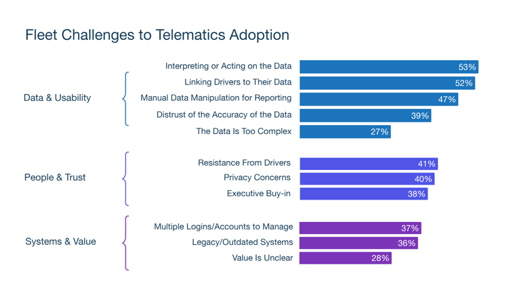
SambaSafety's fourth annual telematics report, based on survey responses from 740 fleets, insurers, and brokers, indicates that 53% of fleets struggle to interpret or act on their telematics data. That now ranks ahead of driver resistance and privacy concerns, the two objections the transportation industry has spent years trying to overcome.
On the other side of the table, insurers are experiencing their own successes and challenges. In 2025, data showed that 48% of insurers said convincing large fleets to share their telematics data is a top challenge. In 2026, the concern faded quickly, falling to 24%. With access largely settled, the harder work moved downstream to what insurers do with the data once they have it.
Insurers are working through the same question fleets are, which is how to turn telematics data into something of value, both for their own operations and for the insureds they cover. In SambaSafety's report, that difficulty now ranks as their leading challenge to using telematics in their operations.
Both findings create a clear picture of fleets with data they can't fully use and insurers with access to data that isn't fully leveraged. Neither is behind the telematics adoption curve, but they are short on turning raw data into actionable insight that reduces risk.
Two Sides of the Telematics Data Problem
For commercial auto fleets, leveraging multiple telematics service providers is common. Each provider defines events differently, scores drivers on its own logic, and delivers data in its own format. The result is several partial views of driver risk across separate dashboards, with the work of reconciling them falling to the fleet.
The challenge is exactly what fleets are experiencing, and many are planning to reduce this friction over the next 12 months. Twenty-nine percent of fleet respondents name improving their ability to interpret telematics data as a priority, with 27% focused on improving their ability to act on it.
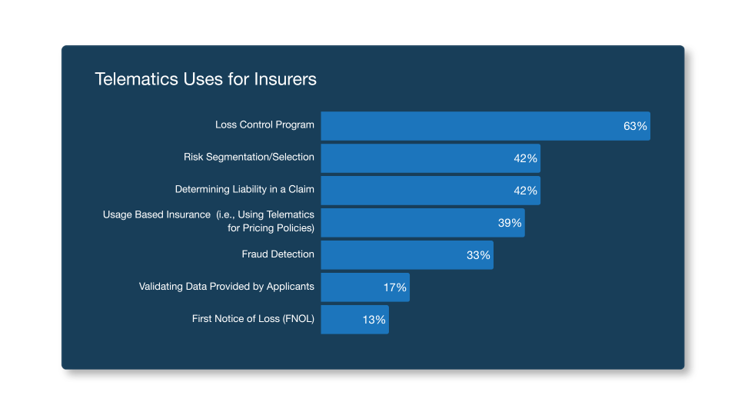
Insurers, as another player in the commercial auto ecosystem, also see the value in telematics data. Loss control is a leading use case for telematics, cited by 63% of insurers, as well as risk segmentation and claims applications. What's missing is the connective tissue between having access to the data and building a program around it for their insureds to use.
"For years, the insurance industry has stayed focused on gaining access to telematics data. That was an important first step, but access alone doesn't improve safety outcomes," said John Barbagallo, strategic advisor at SambaSafety. "The next stage of telematics maturity is helping fleets and insurers act on what the data is telling them. Whether the goal is better loss control or stronger underwriting decisions, value is only created when the data are understood and acted upon."
Insurance companies aren't lacking telematics use cases. On average, they apply telematics data across 2.5 distinct functions, like underwriting or claims processing, making their biggest challenge less about gaining access to telematics data and more about creating value for their insureds.
Applying Telematics to Create Meaningful Value
Insurers and fleets face similar issues from different angles. But the two sides aren't starting from the same place. Insurers possess stronger infrastructure, including loss control programs and expertise in underwriting and claims, while fleets have tremendous amounts of raw data that are difficult to act on.
The opportunity arises when insurers direct this infrastructure to the specific gaps that fleets describe, particularly in interpretation and training to make telematics meaningful for both stakeholders.
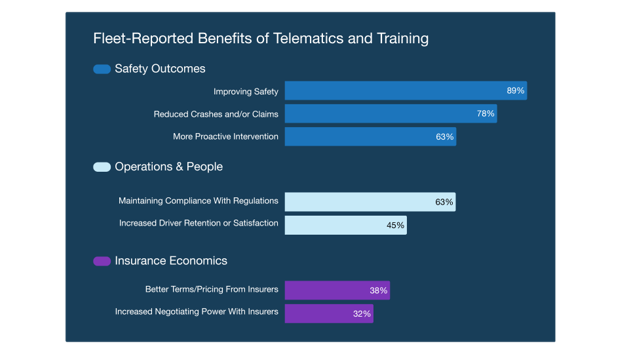
Driver training decisions can be a starting point. Telematics events can alert fleet safety leaders to speeding, harsh braking, or distraction alerts, but report insights suggest that only 26% use that information to decide who gets trained and on what. Most fleets deliver training in a broad sense rather than tailoring it to individual drivers who pose a road risk. And the payoff for connecting telematics to training is one that fleets don't shy away from.
Fleets that pair telematics with structured driver training report fewer crashes or claims 78% of the time, a three-year high, and 89% say their overall safety has improved as a result. For a fix that's specific but straightforward, the report suggests insurers and brokers may be well positioned to help connect the data with loss control or training decisions.
Brokers show how that positioning is still largely unclaimed. Sixty-eight percent of the brokers who use telematics data, according to the report, do so for loss control consulting, up from 45% previously. When taken a level deeper, the use case is more concentrated with national and global brokers, who offer that guidance at 82%, compared to 55% of state and regional brokers.
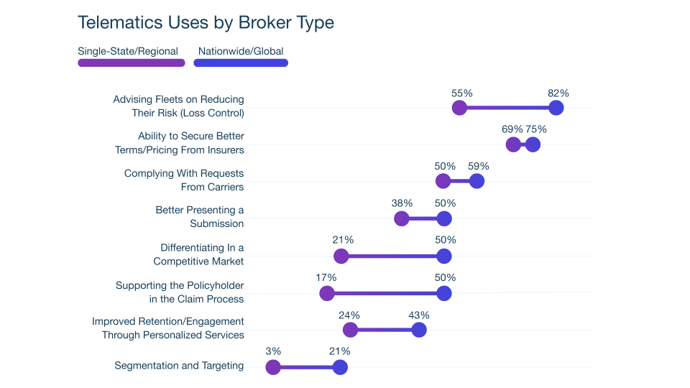
The difference isn't a lack of access to the same data, but whether that data has been turned into something a client can act on — a shared conversion problem all brokers may experience.
Both insurers and brokers with existing loss control programs can add value to their fleet relationships by using telematics data. Converting telematics events into focused training can provide a measurable ROI that fleets are likely to support, effectively completing the data cycle they currently possess.
The Business Case Beyond Telematics Maturity
When it comes to telematics, the next phase won't depend solely on collecting more information. Instead, insurers and brokers now have a straightforward way to explain the benefits of data and how it informs decisions about training, loss control, underwriting, or risk management.
As telematics adoption reaches maturity across commercial auto, the organizations that create the greatest value may not be the ones collecting the most data. They may be those best able to translate telematics insights into improvements in safety and insurance outcomes.