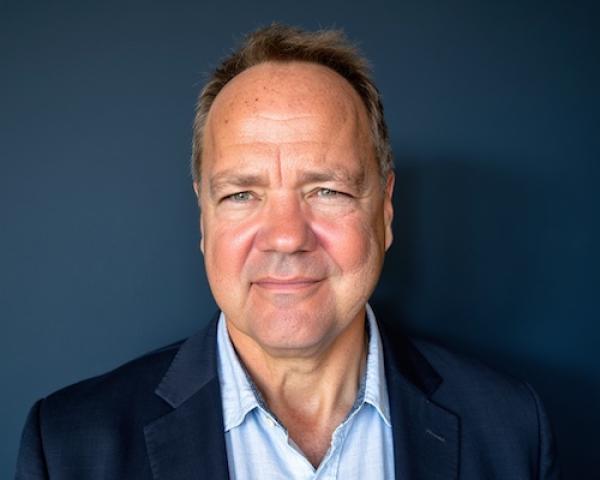
Epic Systems dominates healthcare IT—over 35% of U.S. hospital market share, trusted by most major health systems, and increasingly positioning itself in the insurance/payer space with Tapestry (health plan platform) and Payer Platform offerings. If you work in health insurance and haven't heard of Epic, believe me, you will.
Founded by Judy Faulkner in 1979, Epic built its reputation on customer obsession, deep integration, and never selling out to private equity or going public. For health insurers evaluating Epic's growing footprint in claims, care management, and member engagement, this trust matters. But Epic's AI strategy introduces a dependency chain that should concern any COO or CDO betting on long-term operational transformation.
Epic's AI road map runs almost entirely through Microsoft Azure and OpenAI. Ambient documentation, predictive analytics, revenue cycle automation, clinical decision support—all built on the Epic-Microsoft-OpenAI stack. This isn't a vendor partnership; it's architectural dependency. And Microsoft just confirmed how deep that dependency runs: in its latest earnings call, they reported that fully half of Azure's AI inference load runs on OpenAI models.
For Epic customers, this creates compounded risk. You're not just betting on Epic's execution—you trust Judy Faulkner, and rightly so. You're betting on Microsoft's sustained healthcare commitment and OpenAI's organizational stability.
Microsoft has tried and abandoned healthcare repeatedly: HealthVault (2007-2019), healthcare cloud initiatives that quietly deprioritized. Healthcare represents less than 5% of Microsoft's revenue. Their actual priorities: Azure infrastructure, Office/Copilot, Gaming, LinkedIn. If OpenAI's healthcare AI underperforms or faces regulatory barriers, what's Microsoft's incentive to double down versus pivot Azure AI resources to more profitable verticals?
The OpenAI dependency may be more concerning. Microsoft has invested $13 billion for 49% ownership of OpenAI's for-profit entity, but that doesn't buy control over strategic direction, safety culture, or talent retention. OpenAI's November 2023 board crisis—where the CEO was fired for trust issues, then reinstated via employee revolt within 96 hours—revealed governance dysfunction that never fully resolved. The safety-focused board members and researchers who prioritized responsible development over shipping speed have largely been sidelined or left to found competitors like Anthropic. What remains is a growth-at-all-costs culture increasingly optimized for investor returns. Two years ago, OpenAI laughed off the notion of ads. Last month, they started running ads.
For insurers deploying AI into prior authorization decisioning, claims adjudication, clinical documentation, and fraud detection, governance matters. This isn't consumer chatbot territory where failures mean embarrassing screenshots. This is financial exposure, regulatory risk, and potential patient harm. If OpenAI faces safety incidents, regulatory sanctions, or capability degradation, Epic's AI roadmap stalls and you bear the operational consequences with zero recourse.
Then there's pricing. OpenAI's current API costs are venture-subsidized loss leaders. Post-IPO pressure or when Microsoft demands ROI on their $13 billion investment, inference pricing will spike—potentially three to five times current rates. Epic will pass these costs through as "AI-enhanced module" increases. Your negotiating leverage? Approximately zero. You're a third-order customer with no direct relationship to the entity setting prices.
Microsoft's earnings revelation—that half their AI load runs on a single vendor with documented governance issues—should trigger every Epic customer's (or potential customer's) risk management protocols. Epic has consolidated AI strategy into Microsoft; Microsoft has consolidated its AI capabilities into OpenAI. Three single points of failure, any of which could spike pricing, degrade capabilities, or shift strategy in ways misaligned with your operational needs.
When Epic comes knocking, you can trust Judy Faulkner's execution. But Epic's AI future depends on Microsoft's healthcare commitment and OpenAI's organizational stability—neither of which has a reassuring track record. The health insurers negotiating on this dependency will maintain leverage. Those that don't may find themselves funding Microsoft and OpenAI's margin expansion while paying for the privilege.