Paul Carroll
AI is everywhere in insurance right now. Where do you see it being used especially well?
Dr. Michael Bewley
One mature application is the use of something called supervised machine learning, for aerial imagery. The application provides a way of getting reliable recognition of objects and images, which can be really informative about a property. Then you can use what you see in trusted frameworks. You know, given the roof had large patches of rusting or missing shingles or a hole in it before the event, what's the likelihood of damage in the event? That can be modeled in a pretty clean way.
But there's a whole spectrum of AI from really quantifiable, reliable, and well-understood systems all the way through to things where it's all about creativity. You throw in an idea, and it comes up with some more ideas.
Even traditional risk modeling can be seen as AI. You're trying to predict the likelihood of claims.
Paul Carroll
What are the risks associated with using AI?
Dr. Michael Bewley
You've got to get the newly available data and realize it's amazing but then apply it carefully, because all data comes with uncertainty. Even if we're really confident it's a solar panel on that roof, we'll tell customers we're 98% confident. There's a 2% chance we're wrong, and saying so allows insurers to treat the data in a more nuanced way.
Paul Carroll
There's growing pushback against AI-based property assessments. People are told they have a roof problem through AI and aerial surveillance, and while they may acknowledge the issue is real, they resist being charged based on that information. How do you address this customer trust challenge?
Dr. Michael Bewley
That we can determine a roof's condition remotely is really valuable—not just to the insurer, but to the insured. Not many people climb on their roof on a regular basis. The fact that we can not only say there's an issue with that roof, but we can show the image it comes from is really important.
If we can tell someone their roof is damaged, they can fix it. They can reduce their risk, and that's in everyone's interest.
Paul Carroll
Organizations are dealing with information in countless different forms—one insurance system had 37 ways that San Francisco was described, from San Francisco to San Fran, SF, Frisco and so on. Is this data uncertainty part of the reason property-related decisions are still so difficult to make?
Dr. Michael Bewley
Just having so much more data today doesn't necessarily make for good decisions in and of itself. There are so many questionable sources of information out there, and there are so many sources where it's unclear how accurate they are because you can't actually see the provenance. It's very difficult to ascribe a level of trust.
This is why we've hinged our whole strategy on aerial imagery. We bring in third-party data and other information, but the core is what your eyes can see.
Insurers are being bombarded by a huge range of information from different vendors and open information out there on the Web. So we're very particular about how we form our information, and we make that transparent to the user. Every bit of data that we serve up in our APIs comes with a link so you can go and look at the photo.
It's well-articulated information that matters. Volume can actually be a detractor because you get lost in the noise.
Paul Carroll
The insurance industry has historically moved slowly, but in catastrophe response, speed is critical. Where do we speed things up?
Dr. Michael Bewley
The challenge is that a catastrophe is a continually unraveling scenario. It's not just that the cat event occurs, then we're done, and we all move on. The hurricane makes landfall, properties get damaged, the storm keeps moving, further events occur, there are recovery efforts, and so on. So while speed is good, clarity is important, as well.
If there's an event that we're going to capture with our cameras, we'll get a plane up in the air as soon as it's safe. As soon as we capture some valid imagery, we turn it around as fast as we can, using AI. In Hurricane Milton, I think we flew over 100 flights because there were so many things going on—the weather changes, what's going on on the ground changes.
Paul Carroll
Would you talk a bit more about how insurance can move from the traditional repair-and-replace model to a Predict & Prevent approach?
Dr. Michael Bewley
That's a great question. If we step back from the catastrophe-specific discussion, our regular capture program covers most well-populated areas multiple times a year. We’ve done this for a decade now in the U.S. and 18 years in Australia.
The regular uptake of imagery, year in, year out, shows you where things are today and where they've been historically, and then captures an event in that context. A really good example is our new roof edge product. We've run AI on stupendous quantities of imagery. We've looked at our full imagery archive in the U.S. and run every single house on every single historical date to work out when a new roof got put in. If an event is coming up, you can start to feed that into an understanding of whether the roof is getting to end of life anyway, so maybe it's time to replace it. Maybe that reduces the risk. You can have a mature discussion between the insured and the insurer about that.
The exact same imagery is being used by insurers, by local governments, by construction, by town planning, by environmental groups, by so many different sorts of people. So they can have discussions about how to remediate the risks on a property before an event happens. We can talk about how we plan towns better. It's wonderful if we can all look at that same source of truth.
Paul Carroll
What is one challenge you'd like to offer to insurers about their assumptions on property risk? What are they missing that they should understand?
Dr. Michael Bewley
I think the challenge is really for them to understand that there are new. high-quality sources of information available. They may be used to doing things a certain way with limited information, so they have to understand the incoming information and make good use of it.
In the AI space, the challenge is sifting the signal from the noise. There is genuinely a bunch of AI stuff, particularly the stuff that's in the media a lot, that one needs to treat very carefully. All the large language models and Gen AI imagery stuff—there is a place for that in insurance, but it's different from the more tried-and-tested machine learning approaches, and we have to weave that in carefully. It's very important to understand the full tapestry of AI solutions that there are and not to get them muddled up.
Gen AI opened up a new world. It is absolutely revolutionary. I think it's on the level of the internet being invented or the personal computer. So you definitely don't want to sit by and say, "Well, I'll wait and see what happens," or "This one's not for me." You've got to get involved.
But as with the personal computer and the internet coming online, there's uncertainty about how to use it. There's uncertainty about what the impact will be. You just have to get in there and get involved. But you have to do it with wisdom and care.
Paul Carroll
Yeah, I think we've just scratched the surface. This is quite a ride we're on.
About Dr. Michael Bewley
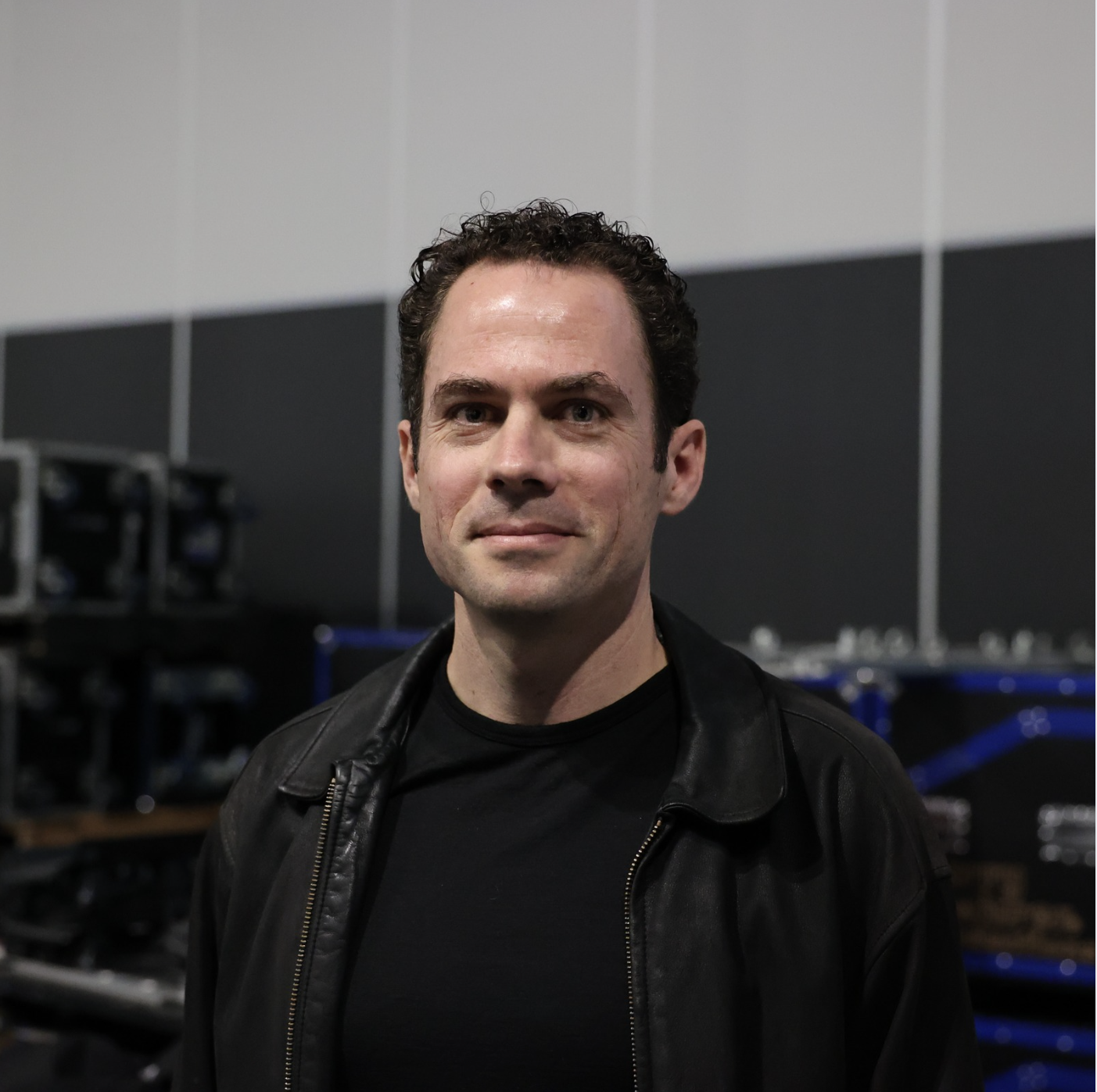 | Dr. Michael Bewley’s passion for AI began in 2007. Graduating with degrees in electrical engineering and physics (University of Sydney), he received the University Medal for using machine learning (ML) on brain scans to detect Alzheimer’s disease. He joined Cochlear to work on implantable hearing solutions, also implementing its first customer-use product analytics. A sea-change led to a PhD program at the Australian Centre for Field Robotics, using ML to interpret sea-floor imagery from autonomous submersible surveys. He also established a data science team as Lead Data Scientist at the Commonwealth Bank. Mike joined Nearmap in 2017 and is now VP of AI & Computer Vision, leading the development of AI technology, applying petabyte-scale deep learning on geospatial imagery and AI data sets. |