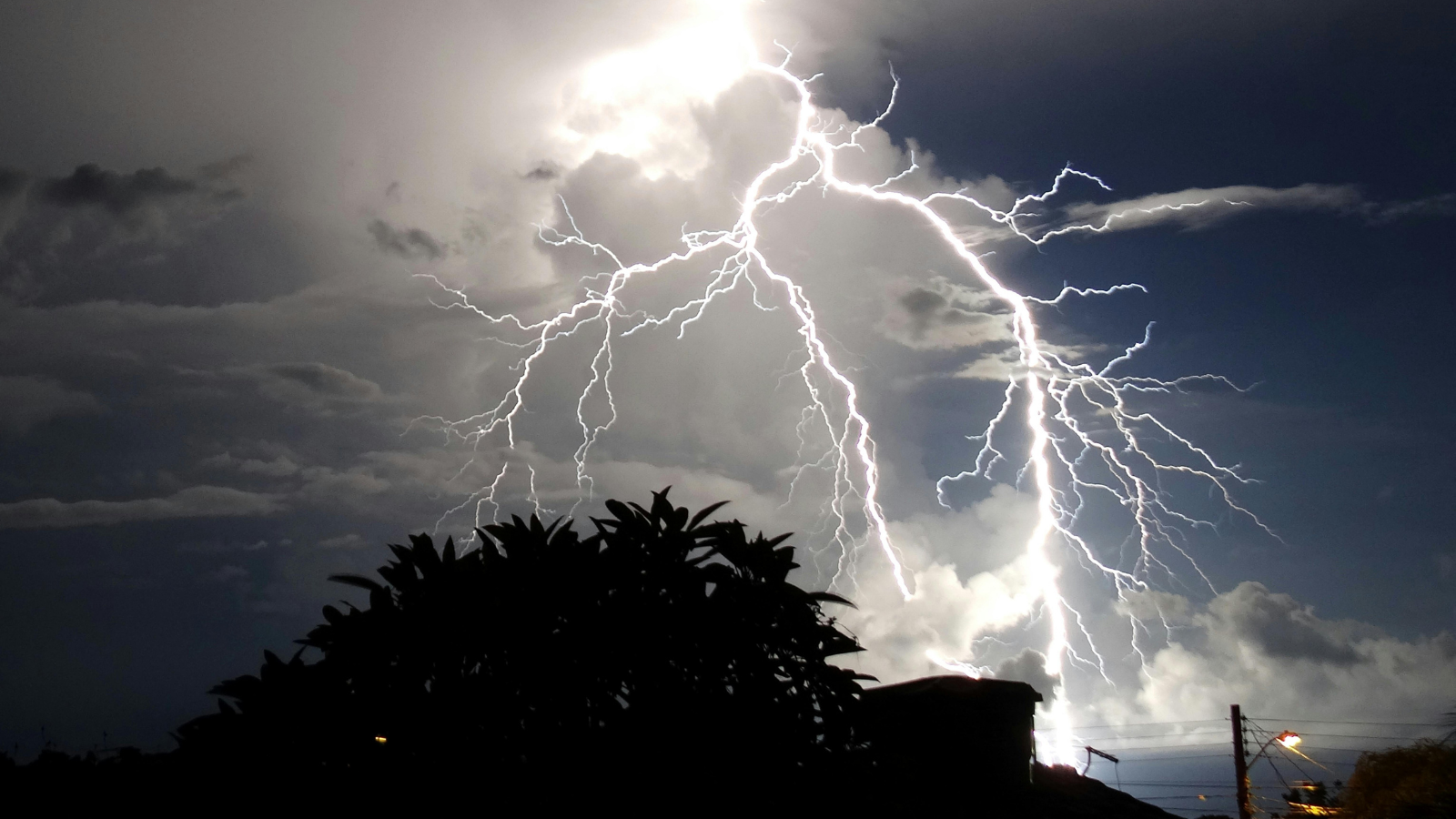
Consider what 2025 demonstrated about the insurance industry's risk assumptions. No major hurricane made landfall in the United States. By the logic of traditional catastrophe modeling, which has always placed tropical cyclones at the center of loss scenarios, 2025 should have been a manageable year. Instead, global insured losses hit $107 billion.
Secondary perils that catastrophe models have historically treated as background noise, including wildfires, severe convective storms and floods, accounted for a record 92% of that total, up from a 56% average over the prior decade. Severe convective storms alone delivered their third-costliest year on record.
The industry did not have the wrong year. It has the wrong product architecture.
The secondary perils mismatch hiding in plain sight
For decades, catastrophe reinsurance was built around a defensible logic: The events that would truly threaten the balance sheet were episodic, high-severity, well-modeled primaries, like a Category 5 hurricane or major earthquake. Secondary perils existed, but they were attritional, manageable, and amenable to the law of large numbers. That assumption is no longer valid. Secondary perils such as hailstorms, flash floods, wildfires, severe thunderstorms, and freezing events, produced $136 billion in total losses in 2024, well above their ten-year inflation-adjusted average of $110 billion.
The more important question is not why secondary perils are growing, but why, after a decade of this data, the market has not produced instruments adequate to transfer the risk. The answer is structural, and it is uncomfortable: The institutions with the capital and sophistication to absorb the frequency of secondary peril risk have rationally opted not to.
After 2022 and 2023 - years of punishing secondary peril losses - reinsurers raised attachment points sharply. Reinsurers redesigned their treaties to keep secondary peril frequency off their books. That was a rational response for their balance sheets, but it created a structural vacuum. Hailstorms, flash floods, wildfires, freeze events mark losses that aggregate across a portfolio but never reach a single-event treaty threshold. They now sit almost entirely on primary carriers, who lack the capital efficiency to hold them and are responding the only way their product architecture allows: raising premiums, tightening underwriting, and in some markets, leaving altogether.
What carriers' market exits actually signal
The consequences of this structural mismatch are accumulating in observable ways. In California, standard carriers have non-renewed more than 1 million wildfire-exposed policies since 2018. The California FAIR Plan, the state's insurer of last resort, grew from around 200,000 policies in 2020 to more than 450,000 by late 2024, a 123% increase driven almost entirely by wildfire-related withdrawals from the standard market. Nationally, approximately one in seven owner-occupied homes is now uninsured, a figure that jumped more than 6% between 2023 and 2024 alone as rising premiums priced households out of coverage. The E&S market has absorbed the spillover, reaching $86 billion in direct premiums in 2023, growing for a fifth consecutive year. But E&S is a pressure valve, not a solution. And 70% of residential flood losses go uninsured annually in the United States, representing roughly $17 billion in losses absorbed by households and taxpayers each year.
The instinct is to read this as a pricing problem: If the industry just charges enough, it will re-enter. But that logic misses the target. Premium increases are not restoring market access. They are accelerating the concentration of risk in residual markets that are structurally worse at absorbing it than the private market they replaced. Market exit is not a correction mechanism. It is the protection gap widening in real time, underwritten by public balance sheets that were never designed for the purpose.
Closing the gap between the trigger event and the realized loss
Traditional indemnity insurance requires an adjuster, a loss assessment, and a claims process calibrated to a world where individual events are large, distinct and infrequent. That workflow is expensive even when functioning correctly, and it was never designed to handle the accumulation of dozens of mid-severity events per year across a portfolio. Parametric structures remove that friction entirely. A defined trigger, such as hail accumulation exceeding a threshold, wildfire perimeter within a defined radius, flood depth at a gauge station, or freeze degree-days above a specified level, is met or not met. Settlement is rapid. There is nothing to negotiate.
There is a further irony that the insurance industry has been slow to absorb: Secondary perils are more parametrizable than primary ones, not less. Hurricane track and wind-field modeling involve genuine uncertainty that makes trigger design difficult. Hail accumulation, flood depth, wildfire proximity, and freeze intensity are all measurable in near-real-time from satellite and ground-based observation networks. The basis risk problem that has historically constrained weather derivatives - the gap between the trigger event and the realized loss - closes considerably when AI-driven models can calibrate triggers at the property level rather than the regional index level. The technical barriers to frequency-risk transfer are lower than they have ever been. The remaining barrier is product design inertia.
Where the unpriced accumulation is building
The geographies that have already experienced market disruption are not the only exposures deserving attention. The next unpriced accumulation is building in the Midwest and upper South, where severe convective storm frequency has been running at record levels for three consecutive years and reinsurance treaty structures still treat hail and tornado losses as below-threshold attritional items.
The carriers and risk managers who treat secondary peril accumulation as a known quantity that can be managed through pricing and underwriting tightening alone will find, in the next five years, that they have been solving the wrong problem. The cat model was built for the kind of disaster that makes the front page. The losses that will define the next decade are the ones that happen every season: individually unremarkable, collectively devastating, and structurally unhedged by the instruments the industry currently relies on.