


The capability of generative and agentic AI to process unstructured data, generate content, and execute decisions with limited human intervention represents a material shift in the technological operating base of firms. These technologies differ from prior enterprise technologies that were largely deterministic, rule-bound, and constrained by structured data. This distinction has caused a frenzied yet justifiable rush to conduct pilots and deploy them.
However, the conversion rate from pilot to scaled implementation surprisingly remains low. The fundamental issue lies in how generative and agentic AI initiatives are conceived and what is implemented. When an organization intends to adopt AI, it does not deploy a simple software solution as in earlier transformation projects. It is initiating a complex, connected set of acquisitions and transformations that previous projects did not require. Understanding this is the starting point for any honest economic analysis. The article discusses some of the prevalent economic misconceptions and recommends the correct approach.
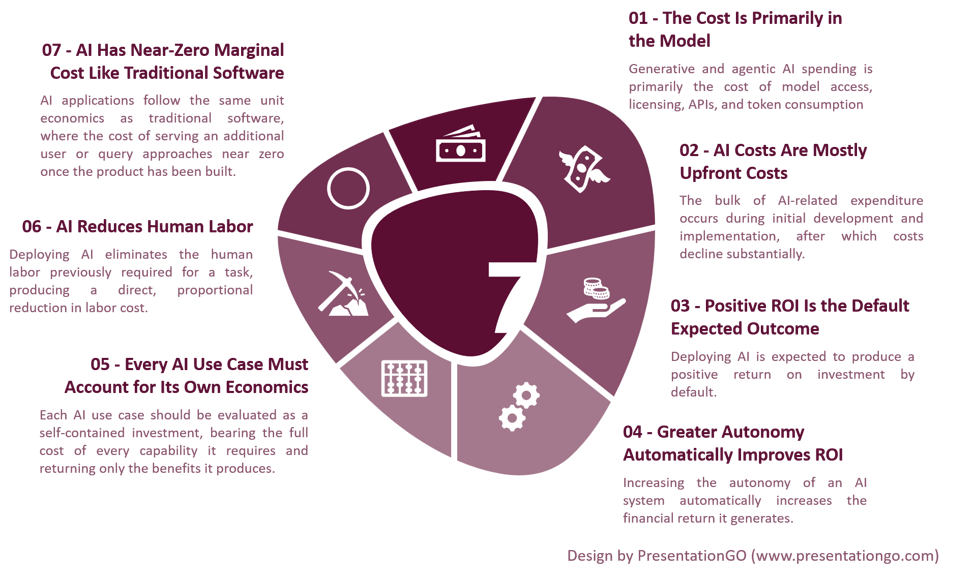
Figure 1: Seven Misconceptions in AI Economics
1. The Cost Is Primarily in the Model
Misconception: Generative and agentic AI spending is primarily the cost of model access, licensing, APIs, and token consumption.
Reality: Generative and agentic AI project budgets mostly focus on model costs and ignore the rest. However, a company adopting AI is not purchasing only the model. While model access is one component of AI spending, the company must invest across seven cost domains, including direct technology (licensing, integration, setup), data preparation (quality, pipelines, retrieval), governance and compliance, infrastructure (computing, storage, monitoring), verification and oversight (human review, exception handling), organizational change (process redesign, training, adoption), and risk management and contingency reserves. Focusing on model costs understates the true cost of ownership.
Recommendation: Organizations must build a comprehensive total cost of ownership (TCO) model before approving the budget plan. As the non-model-related cost domains often represent a larger share of total expenditure, they must be included in the calculations as explicit budget line items rather than contingency estimates.
2. AI Costs Are Mostly Upfront Costs
Misconception: The bulk of AI-related expenditure occurs during initial development and implementation, after which costs decline substantially.
Reality: Many organizations evaluate AI investments using cost assumptions borrowed from traditional enterprise software projects, emphasizing licensing and implementation while underestimating recurring operating costs. However, AI exhibits different cost dynamics, including infrastructure expenses, variable inference costs, continuing model maintenance, governance, compliance, model evaluation, retraining, human oversight, change management, and error remediation. These costs are often underestimated or excluded from initial business cases and can persist throughout the solution lifecycle.
Recommendation: Organizations must build multi-year TCO models that distinguish between implementation costs, recurring operating costs, infrastructure expenses, variable inference costs, human oversight, governance, and contingency reserves for error remediation and vendor transition. Organizations must evaluate AI investments using lifecycle economics that are recalibrated in the AI context rather than implementation economics, and validate projected savings against actual review, correction, compliance, support, and maintenance costs after deployment. Organizations should reassess cost and value assumptions periodically as usage, governance requirements, and operating conditions change.
3. Positive ROI Is the Default Expected Outcome
Misconception: Deploying AI is expected to produce a positive return on investment by default.
Reality: Positive ROI is a possible outcome, not a default. Many AI initiatives may fail to generate sufficient value in the short term to offset implementation and operating costs. Positive value realization depends on use-case selection, adoption levels, process redesign, scale, operating discipline, and the organization's ability to convert productivity improvements into measurable business outcomes. AI initiatives adopted without enabling these dimensions obviously struggle in production to create value.
Recommendation: Organizations should treat ROI as a hypothesis to be tested rather than a premise used to justify funding. A documented business case that specifies baseline metrics, expected benefits, adoption targets, investment requirements, and a defined evaluation period should be created before committing capital beyond the initial deployment. It must be noted that returns may not be purely financial. AI can generate value through improved customer experience, reduced risk, faster decision-making, better compliance, increased employee productivity, or higher service quality. However, these benefits should be linked to measurable business outcomes wherever possible. Organizations should also recognize that AI benefits often emerge gradually, as adoption, process maturity, and workflow integration can take time. Economic success should be evaluated against a realistic time horizon rather than short-term expectations. Some deployments deliver transformational value, while others generate incremental improvements that accumulate over time.
4. Greater Autonomy Automatically Improves ROI
Misconception: Increasing the autonomy of an AI system automatically increases the financial return it generates.
Reality: Increasing the autonomy of an AI system does not automatically increase financial return. While higher autonomy can reduce labor requirements, increase throughput, and automate complex workflows, it also introduces additional costs and risks. As AI systems move from generating recommendations to executing actions, organizations incur costs for greater governance, monitoring, auditing, compliance, security, validation, and human oversight. Higher autonomy may also increase the potential financial impact of errors, operational failures, regulatory violations, or customer harm.
Recommendation: The economic value of autonomy should be evaluated using a risk-adjusted ROI framework that considers benefits, total costs, and risk costs (Net ROI = Gross Benefits − Total Cost of Ownership − Risk Costs). Organizations should measure cost outcomes, including rework rates, human review effort, exception handling, governance overhead, and error-correction costs, in addition to productivity and throughput improvements. Productivity gains should not be reported as financial savings until downstream review, correction, monitoring, and control costs have been validated. In many cases, incremental gains from additional autonomy may be smaller than the governance and control costs required to manage it. Organizations should select the right use case and level of autonomy that maximizes net financial return, not the most advanced model with the greatest technical capability.
5. AI Has Near-Zero Marginal Cost Like Traditional Software
Misconception: AI applications follow the same unit economics as traditional software, where the cost of serving an additional user or query approaches near zero once the product has been built.
Reality: Organizations often assume that AI systems will exhibit economics like traditional software applications, where development costs dominate, and runtime costs remain relatively small. While both traditional software and AI systems incur similar consumption-based operating costs, including computing, storage, network, and infrastructure usage, the difference is that many AI applications introduce additional cost layers such as inference, retrieval, agent orchestration, safety controls, monitoring, and human review. These layers can increase both the magnitude and variability of cost to serve. As workload complexity, context length, reasoning depth, and agent interactions increase, operating costs may rise disproportionately.
AI exhibits a hybrid economic model that combines traditional software-like fixed and variable costs with higher and less predictable service-like usage-based operating costs that affect profitability and pricing decisions. While optimization, caching, model routing, and scale efficiency techniques can reduce these costs, they do not eliminate them. It is pertinent to note that falling prices per unit of model usage do not reduce the cost per completed task, because reasoning-intensive and agentic workflows tend to consume substantially more model usage for each unit of work.
Recommendation: Organizations should calculate the economics of AI systems using per-query, per-workflow, or per-user variable cost assumptions rather than relying on traditional software margin models. Organizations must track inference costs separately from fixed development costs and measure the cost to serve across different user segments, workloads, and usage patterns. They must recognize that AI cost structures can vary significantly by use case, model choice, workflow complexity, data requirements, and human oversight needs. Unit economics should be evaluated at the use-case level rather than relying on a single average cost assumption. Organizations must include consumption-based costs such as retrieval, orchestration, monitoring, guardrails, and human review where applicable. Pricing, adoption, and scaling decisions should reflect actual usage economics and not assume that margins expand automatically as utilization increases. It is also important for organizations to recalibrate cost estimates post-implementation based on real usage patterns.
6. AI Reduces Human Labor
Misconception: Deploying AI eliminates the human labor previously required for a task, producing a direct, proportional reduction in labor cost.
Reality: AI frequently changes human work rather than eliminating it. In many business environments, particularly in regulated or high-risk functions, human oversight remains an irreplaceable continuing operating expense rather than a temporary model training or implementation cost. While AI can automate portions of a process, organizations often incur continuing costs for review, verification, exception handling, governance, compliance, and quality assurance, reducing the net economic benefit. As a result, labor hours displaced by AI do not automatically translate into labor cost savings. Productivity improvements are often offset by the effort required to validate output, manage exceptions, monitor quality, and meet regulatory requirements. In many cases, organizations realize economic value through increased capacity, faster cycle times, improved service quality, higher throughput, or the avoidance of future hiring rather than through workforce reduction. Productivity improvements create economic value only when the resulting capacity is converted into measurable cost reductions or deployed toward activities that generate additional business value.
Recommendation: Organizations should explicitly calculate AI-adjusted labor costs, including oversight, review, verification, compliance, control, and exception handling. Business cases should focus on net labor savings, not gross labor displacement, and should not assume payroll reductions unless staffing levels, contractor costs, or overtime expenses are demonstrably reduced. Productivity gains should be tracked separately from headcount and cost outcomes. Financial savings should be recognized only when increased capacity leads to a measurable reduction in operating costs.
7. Every AI Use Case Must Account for Its Own Economics
Misconception: Each AI use case should be evaluated as a self-contained investment, bearing the full cost of every capability it requires and returning only the benefits it produces.
Reality: Several of the cost domains produce assets that can benefit beyond the use case that funded them. Evaluation frameworks, retrieval pipelines, guardrail infrastructure, governance frameworks, and change-management capability are platform investments. These can be leveraged by another use case at materially lower costs than the first. A business plan that charges the full cost of these assets to whichever initiative happens to build them overstates the cost of that initiative and understates the value the organization retains. Data quality remediation and model risk governance are frequently pre-existing obligations. Charging them in full to the first AI deployment attributes to the AI budget plan, a cost that AI did not create in the first place. The reverse error is equally damaging. Misaligned AI portfolio-based thinking can spread the costs from the first deployment to an implementation roadmap that never materializes, justifying a weak but cheaper first use case based on assumed, but not committed, reuse of components.
Recommendation: Organizations should separate platform costs from use case costs and amortize the former across a defined portfolio of use cases supported by a funded roadmap and named owners. Only incremental costs should be charged to a use case, with pre-existing obligations recognized separately and retained on the balance sheet of the function that already owned them. The first use case should either clear the hurdle on a standalone basis or be explicitly approved as a platform investment. The reusable assets it creates should be identified in advance. Amortization assumptions should be revisited when the roadmap changes, and platform costs should be reallocated to the use cases that consume them.
Reinforcing Economic Justification
AI deployment is economically justified when it creates positive strategic value and delivers positive net value over a realistic multi-year horizon after accounting for technology, verification, governance, maintenance, risk, and data costs. Economics remain favorable when the combined cost of verification, correction, and oversight stays below the cost of the process being replaced, governance expenses remain proportionate to realized savings, data quality is sufficient or economically remediable, and errors are detectable, reversible, and unlikely to generate losses that materially erode expected benefits. The strongest candidates are high-volume, low-risk, repeatable, and verifiable workflows.
Deployment becomes economically questionable for high-context, medium-risk work where validating the output requires reviewing most or all the source material, causing oversight and exception-handling costs to consume much of the expected value. It should be rejected for highly deterministic, zero-tolerance operations where errors carry severe financial, legal, regulatory, or reputational consequences and where risk-adjusted costs outweigh expected benefits. This includes situations where human review must substantially or fully replicate the original task, or where the combined cost of risk management, governance, remediation, and tail-risk exposure eliminates a sustainable net economic benefit.