Expanded Medicaid Changes the Game in Workers’ Comp
For those familiar with its provisions, ACA provides new mechanisms for funding future medical care that can facilitate settlement negotiations.|



Discover 'The Future of Risk™': Innovation, Tech, & Disruption Insights from Industry Leaders!
For those familiar with its provisions, ACA provides new mechanisms for funding future medical care that can facilitate settlement negotiations.|
Get Involved
Our authors are what set Insurance Thought Leadership apart.
|
Partner with us
We’d love to talk to you about how we can improve your marketing ROI.
|

Teddy Snyder mediates workers' compensation cases throughout California through WCMediator.com. An attorney since 1977, she has concentrated on claim settlement for more than 19 years. Her motto is, "Stop fooling around and just settle the case."
Applying analytics for cost and quality control is simple, affordable and can be adopted quickly by all.

Recently, I watched “Moneyball,” the movie, for the third or fourth time. The story is compelling, as is the book by the same name that preceded it.1
"Moneyball" is based on the concept called Sabermetrics, defined as "the search for objective knowledge about baseball." The central premise of "Moneyball" is that the collective wisdom of baseball insiders, including players, managers, coaches, and scouts over the past century, is subjective and flawed. The book argues that the Oakland Athletics general manager, Billy Beane, took advantage of analytic, evidenced-based measures of player performance to field a team that could compete successfully against far-richer teams in Major League Baseball. During the 2002 season, the Oakland A's won enough games to make the playoffs in spite of a meager salary budget and "inferior" players.
Even though the two industries are diametrically dissimilar, distinct parallels can be drawn between baseball and workers’ compensation medical management.
Similar Resistance to Analytics
One similarity is the resistance to adopting analytics as a knowledge tool. Baseball insiders and managers opposed Beane’s analytics, sometimes vehemently. Long-held beliefs among baseball insiders promoted measures of performance such as stolen bases and batting averages. Beane’s metrics debunked the old methods, revealing unrecognized strengths in lesser-known, more affordable players.
Similarly, workers’ compensation leaders have relied on traditional medical provider networks and personal preferences to select medical doctors. If doctors are in a network and offer a discount on medical services, all is good. Yet, industry research has shown that not all doctors are equal. Doctors and other medical providers who understand and acknowledge the nuances of workers’ compensation drive better outcomes. It’s a matter of finding those doctors.
Finding Best Performers
The purpose of "Moneyball" Sabermetrics is the same as workers’ compensation medical metrics—to find the best performers for the job. The way to do that in baseball is to analyze the data defining actual performance in terms of outcome—games won. In workers’ comp, the data must be scrutinized to find doctors who drive positive claim outcomes. In both cases, a variety of metrics are used to support the most effective decisions.
Performance Indicators
As in baseball, the goal in medical management is to apply objective information to decision-making using evidenced-based measures of performance. For both industries, cost is a factor. However, in workers’ compensation, the cost of medical care must be tempered by other factors: What is the duration of medical treatment? What is the return-to-work rate associated with individual doctors? What providers are associated with litigated claims?
As in baseball, the list of indicators for performance analysis is long. However, the sources of data differ significantly.
The Data Challenge
In baseball, all the data necessary for analysis is neatly packaged. Statistics are gathered while the game is in progress. In workers’ comp, the data that informs medical management resides in disparate systems and must be gathered and integrated in a logical manner.
Essential data lives in bill review systems, claims adjudication systems and pharmacy (PBM) systems and can also be found in utilization review systems, peer review systems, and medical case management systems. The data must be integrated at the claim level to portray the most comprehensive historic and current status of the claim. Data derived from only one or two sources omits critical factors and can distort the actual status or outcome of the claim.
Once the data has been integrated around individual claims, meaningful analysis can begin. Indicators of performance can be analyzed with new conclusions drawn about the course of treatment and medical provider performance. Moreover, concurrently monitoring the updated claim data leads to appropriate and timely decisions.
Data Positioned as a Work-in-Progress Tool
In baseball, the data is used as a work-in-progress information tool. Decisions about the best use of players are made daily, sometimes hourly. Workers’ compensation medical management can do the same. Systems designed to monitor claim details and progress can alert the appropriate persons when events or conditions portend complexity and cost.
Industry Status
Analytics in baseball is not exclusive to the "Moneyball" Oakland Athletics. All of Major League Baseball now relies heavily on its use. Unfortunately, there are still only a few visionary Billy Beanes in workers’ compensation medical management. Yet, applying analytics for cost and quality control is simple and affordable and can be adopted quickly by all.
1Lewis. M. Moneyball: The Art of Winning an Unfair Game 2003. The film “Moneyball”, starring, Brad Pitt was released in 2011.
Get Involved
Our authors are what set Insurance Thought Leadership apart.
|
Partner with us
We’d love to talk to you about how we can improve your marketing ROI.
|
The thrill of entrepreneurship is found in this: no matter how high the next hill is to climb, if you believe, work hard and get the right support, you can make it to the top.|

Leap Year Season 2: Episode 10 by Mashable
Now this is where the C3D team is at their best – all working together against a common (and real) foe. It’s all a team effort, so when Aaron neglects his critical task to try and make up with Lisa, his good old slacker/turncoat/thief brother is there to make sure Andy Corvell gets his come-uppance in front of the appreciating crowd. Andy told Bryn that he stole their prototypes, drained their bank account and created a fake competitor to “teach them a lesson.” Turns out this was a lesson that went both ways: C3D learned to think quickly on their feet and Corvell learned that sometimes there are actual, real-life consequences to his actions. Operation Revenge was a winner, but not because Corvell was led out of the auditorium by Detective Doyle. That was sweet, but the positive feedback from the crowd, the many business cards from VCs Jack had in his wallet afterwards and, most importantly, Glenn Cheeky’s kiss of success are what will make a difference in the long run. The product launch was their graduation from a start-up into an all grown up business. So, what’s next? First, they need to keep spreading the word through PR and social media. The reporters won’t always be there and it’s now up to C3D to keep their company and product top of mind. Which leads nicely into their second task. Second, C3D needs to keep influencing the influencers. A positive Tweet or blog post by a tech industry thought leader could be the key to C3D’s commercial success. Sending free C3D conferencing systems to some top Silicon Valley media and investors would be a nice start. Finally, they need to define the C3D brand in the marketplace. This is about meaning something specific to the right people, not everything to everybody. People like to hide behind texts these days, how can C3D get them to invite their friends and family around the world into their living room via hologram? It’s been great to see C3D roll with the punches, keep finding new ways forward and never lose their will – just like thousands of successful startups have before them. This season both the team and the business matured into better versions of themselves. Their next step will be no easier - going from concept, to reality, to actual commercial success. And that’s the thrill of entrepreneurship, no matter how high the next hill is to climb, if you believe, work hard and get the right support, you can make it to the top.
Get Involved
Our authors are what set Insurance Thought Leadership apart.
|
Partner with us
We’d love to talk to you about how we can improve your marketing ROI.
|

Hunter Hoffmann is head of U.S. communications at Hiscox and is responsible for media relations, social media, internal communications and executive messaging. He joined Hiscox in August 2010 and has a B.A. from Trinity College (CT) and an M.B.A. from Cornell University.
I have watched some of the best of the best follow this format in their approach to customers. More often than not, they become trusted advisers on the way to the sale, rather than after the sale.

A CEO recently told me a story of the best sales call she ever received. As she explains, a sales rep for a payroll-processing firm reached her by phone and said:
"I heard you talking about your company on the radio recently, and I was really interested. I've been doing some research on the company and your industry, and I think you are going to be hit with some real challenges on compliance costs and healthcare issues. We've been working on this for a while at our company, and I have some research on where things are going that you might find interesting. Would you be interested in looking at it together?"
They met, and the sales rep presented the research and the implications as to what the challenges were going to mean specifically to employers like the CEO and her industry in general. He made a number of observations and recommendations for the CEO. He did not talk about his products, services, or even much about his company.
He then asked, "What are you going to do about these challenges?"
She told him that she really did not know and was going to have to think about them. He explained that the CEO could take a few different approaches, and he outlined the choices — still not talking about his company or its services. He gave the honest pros and cons of each and then said, "Thanks for the chance to come talk to you about your business, I really enjoyed it."
You probably know the rest ... he's going to get the sale, and the CEO also expressed interest in hiring him to come sell for her. The lesson to be learned here is:
If you want to land sales, don't get caught selling.
Great sales people know this, yet the natural motivation to close deals pushes us to make bad mistakes or to "Always Be Closing." Sorry, but that quote and approach comes from the archives of things that don't work any more.
Let's break down what the sales rep did well:
I have watched some of the best of the best follow this format in their approach to customers. More often than not, they become trusted advisers on the way to the sale, rather than after the sale.
Get Involved
Our authors are what set Insurance Thought Leadership apart.
|
Partner with us
We’d love to talk to you about how we can improve your marketing ROI.
|
Professional liability insurance covers a small business for potential errors from employee acts.|
Get Involved
Our authors are what set Insurance Thought Leadership apart.
|
Partner with us
We’d love to talk to you about how we can improve your marketing ROI.
|
Hunter Hoffmann is head of U.S. communications at Hiscox and is responsible for media relations, social media, internal communications and executive messaging. He joined Hiscox in August 2010 and has a B.A. from Trinity College (CT) and an M.B.A. from Cornell University.
It’s time for life waiver processes to utilize technology to manage claims in a more efficient, effective, and standardized manner.|

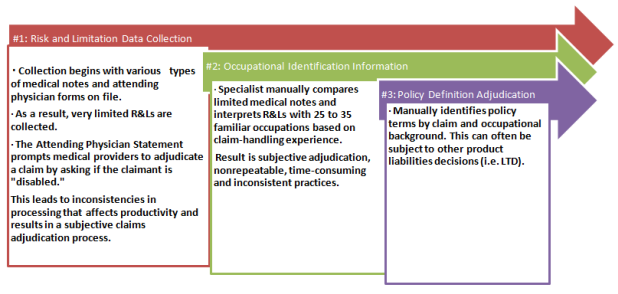 Insurers rely heavily on the Attending Physician Statement (APS) forms to collect medical status data. However, considering the high volume of claims per specialist and the time involved to manually process them, information contained in the APS isn’t always fully translated. Because of this, forms are often lacking the complete information required to fully understand the claim, based on a fair and accurate assessment of the claimant’s physical capabilities, restrictions and limitations. Moreover, this manual process makes it hard to ensure consistency throughout the duration of the claim.
For example, if the physician states that the claimant is unable to work and fails to provide a written medical basis in the APS forms regarding the decision, benefit specialists are unable to accurately assess and match the claim to the appropriate contractual definition of disability as defined in the claimant’s policy. This process makes it difficult to determine if the liability should be accepted or denied.
Managing the risk throughout the duration of the claim can influence claim outcomes by providing the opportunity for better claim management for both the insurer and the claimant.
The Long-Term Disability & Life Waiver Chokehold
It is not uncommon for consumers to have both their long-term disability (LTD) and life insurance with the same insurance carrier. So, when a person goes on disability, there are essentially two claims open and running simultaneously. The problem is the life waiver claims aren’t being treated as disability claims—which is, in reality, what they are.
What typically happens is the LTD claim becomes the driving force while the life waiver claim takes a backseat, often translating into processing delays. Even though these plans usually reflect two very distinct definitions (LTD claims begin as a two-year “own occupation” plan, while life waiver is usually “any occupation” provision from day one), the life waiver claim sits—waiting to see what the LTD claim is going to do first. The life waiver claim essentially becomes more of a contractual definition of secondary importance, and consequently is managed as such.
Insurance carriers must be diligent in applying adjudication decisions consistent with what is underwritten in the life waiver provisions of an insured’s policy, and not based on what’s happening with the LTD claim. This has become increasingly problematic as caseloads continue to grow and life waiver claims follow the LTD claim by default, increasing the insurer’s reserve liabilities (i.e., disability life reserves, morality life reserves and premium reimbursement liabilities), and risk exposure.
Unfortunately, once a disability has been accepted on a life waiver claim, there tends to be minimal risk management. Improved risk management in life waiver claims should include best practices that focus on understanding the severity, restrictions and limitations of the claimant, then matching claimant capabilities to the occupational policy terms.
Better Claim Monitoring, Better Results
What’s missing within life waiver processes is the ability to manage the claim block holistically with information derived from all necessary sources, and integrating it into a unified data platform. By doing this, insurers can quickly identify claimants that have occupational opportunities based on their specific physical capabilities, restrictions and limitations, education, experience, and training. But it doesn’t stop there.
Once an occupational opportunity has been determined, insurers can compare these findings to occupations identified by the department of labor and match the capabilities of the claimant to a specific occupation. In addition, medical details surrounding the claim should be updated continually and combined with historical data, as physical capabilities can change over the duration of the claim. This type of automated vocational support allows adjusters to fully evaluate the claimant’s condition for available occupation opportunities.
Considering the thousands of claims that are processed manually by examiners, it can be difficult to ensure that new claims and the recertification of claims are being completed on time, consistently, and in line with risk management best practices. This becomes an almost unmanageable task for examiners as they struggle to maintain the continuity required to reopen, examine, and research individual claims from day one. It is a continual problem because a claim that is approved today may look completely different a year from now.
“With technology, there is a great opportunity for insurers to make operational changes that will systematically improve their current adjudication processes and minimize the insurer’s reserve liabilities,” explains Thomas Capato, CEO of FastTrack RTW Services & Solutions, whose Life Waiver Tool is the first commercially available technology to automate the waiver of premium process. “This next-generation best practice will not only help improve internal productivity for life insurers but allow waiver reserves to be managed properly and improve future actuarial assumptions.”
An automated claim process allows for continual claim management and tracking that’s set to the claimant’s policy terms, ensuring that all follow-ups are done in a timely and consistent manner — without the need for manual intervention.
Summary
Every claim has unique situations, and insurers need to apply the right risk management principles to that particular claim. This can mean the addition of a single automated application, or perhaps a combination of many, internalizing processes to determine the best solution for enhancing risk management outcomes.
“Technology enhances the ability to fully capture specific information surrounding the nature of a claimant’s disability for better risk management within the life waiver block, providing insurers with an accurate profile of the person, the job, and occupational capabilities,” says Lester, at Legal & General America.
It’s time for life waiver processes to utilize technology to manage claims in a more efficient, effective, and standardized manner. By replacing manual claim tasks with the rigor of automated monitoring, insurers have the opportunity to optimize existing processes and improve overall operational efficiencies within their life waiver claim block. Moreover, it is this technology that can make consistent, supportable and repeatable real-time decisions, bringing value to both the insurer and the claimant.
Insurers rely heavily on the Attending Physician Statement (APS) forms to collect medical status data. However, considering the high volume of claims per specialist and the time involved to manually process them, information contained in the APS isn’t always fully translated. Because of this, forms are often lacking the complete information required to fully understand the claim, based on a fair and accurate assessment of the claimant’s physical capabilities, restrictions and limitations. Moreover, this manual process makes it hard to ensure consistency throughout the duration of the claim.
For example, if the physician states that the claimant is unable to work and fails to provide a written medical basis in the APS forms regarding the decision, benefit specialists are unable to accurately assess and match the claim to the appropriate contractual definition of disability as defined in the claimant’s policy. This process makes it difficult to determine if the liability should be accepted or denied.
Managing the risk throughout the duration of the claim can influence claim outcomes by providing the opportunity for better claim management for both the insurer and the claimant.
The Long-Term Disability & Life Waiver Chokehold
It is not uncommon for consumers to have both their long-term disability (LTD) and life insurance with the same insurance carrier. So, when a person goes on disability, there are essentially two claims open and running simultaneously. The problem is the life waiver claims aren’t being treated as disability claims—which is, in reality, what they are.
What typically happens is the LTD claim becomes the driving force while the life waiver claim takes a backseat, often translating into processing delays. Even though these plans usually reflect two very distinct definitions (LTD claims begin as a two-year “own occupation” plan, while life waiver is usually “any occupation” provision from day one), the life waiver claim sits—waiting to see what the LTD claim is going to do first. The life waiver claim essentially becomes more of a contractual definition of secondary importance, and consequently is managed as such.
Insurance carriers must be diligent in applying adjudication decisions consistent with what is underwritten in the life waiver provisions of an insured’s policy, and not based on what’s happening with the LTD claim. This has become increasingly problematic as caseloads continue to grow and life waiver claims follow the LTD claim by default, increasing the insurer’s reserve liabilities (i.e., disability life reserves, morality life reserves and premium reimbursement liabilities), and risk exposure.
Unfortunately, once a disability has been accepted on a life waiver claim, there tends to be minimal risk management. Improved risk management in life waiver claims should include best practices that focus on understanding the severity, restrictions and limitations of the claimant, then matching claimant capabilities to the occupational policy terms.
Better Claim Monitoring, Better Results
What’s missing within life waiver processes is the ability to manage the claim block holistically with information derived from all necessary sources, and integrating it into a unified data platform. By doing this, insurers can quickly identify claimants that have occupational opportunities based on their specific physical capabilities, restrictions and limitations, education, experience, and training. But it doesn’t stop there.
Once an occupational opportunity has been determined, insurers can compare these findings to occupations identified by the department of labor and match the capabilities of the claimant to a specific occupation. In addition, medical details surrounding the claim should be updated continually and combined with historical data, as physical capabilities can change over the duration of the claim. This type of automated vocational support allows adjusters to fully evaluate the claimant’s condition for available occupation opportunities.
Considering the thousands of claims that are processed manually by examiners, it can be difficult to ensure that new claims and the recertification of claims are being completed on time, consistently, and in line with risk management best practices. This becomes an almost unmanageable task for examiners as they struggle to maintain the continuity required to reopen, examine, and research individual claims from day one. It is a continual problem because a claim that is approved today may look completely different a year from now.
“With technology, there is a great opportunity for insurers to make operational changes that will systematically improve their current adjudication processes and minimize the insurer’s reserve liabilities,” explains Thomas Capato, CEO of FastTrack RTW Services & Solutions, whose Life Waiver Tool is the first commercially available technology to automate the waiver of premium process. “This next-generation best practice will not only help improve internal productivity for life insurers but allow waiver reserves to be managed properly and improve future actuarial assumptions.”
An automated claim process allows for continual claim management and tracking that’s set to the claimant’s policy terms, ensuring that all follow-ups are done in a timely and consistent manner — without the need for manual intervention.
Summary
Every claim has unique situations, and insurers need to apply the right risk management principles to that particular claim. This can mean the addition of a single automated application, or perhaps a combination of many, internalizing processes to determine the best solution for enhancing risk management outcomes.
“Technology enhances the ability to fully capture specific information surrounding the nature of a claimant’s disability for better risk management within the life waiver block, providing insurers with an accurate profile of the person, the job, and occupational capabilities,” says Lester, at Legal & General America.
It’s time for life waiver processes to utilize technology to manage claims in a more efficient, effective, and standardized manner. By replacing manual claim tasks with the rigor of automated monitoring, insurers have the opportunity to optimize existing processes and improve overall operational efficiencies within their life waiver claim block. Moreover, it is this technology that can make consistent, supportable and repeatable real-time decisions, bringing value to both the insurer and the claimant.
Get Involved
Our authors are what set Insurance Thought Leadership apart.
|
Partner with us
We’d love to talk to you about how we can improve your marketing ROI.
|

Kathryn Messer is the principal of KMC Communications. With a graduate degree in journalism, Kathryn has brought together her industry experience and passion for writing. She collaborates with insurance carriers, marketing directors, advertising agencies, editors and independent agents, building strong content marketing materials -- both online and off.
Criminals aren’t committing fewer criminal acts, just different ones. We don’t have fewer criminals, only smarter ones.

All over the nation, the question is being asked, "Why is the overall crime rate in the US on the decline?”
We have the answer: “It’s not.”
In 1930, the FBI was given the task of collecting and publishing crime-rate statistics from across the country, and the UCR (Uniform Crime Reporting) Program was born. This program collects data from across the country, and it is published in several reports, including the often quoted Crime in the United States report. The report separates offenses into two categories: violent crime and property crime.
These two categories appear to provide an adequate sample of the types of crimes that should be captured to measure the overall crime rate, but the four “property crime” categories fall short. There is a simple reason: They have not changed since the 1920s.*
For instance, the category of larceny-theft does not include embezzlement, confidence games, forgery, check fraud, etc. Identity theft, which is growing astronomically, is also not included.
According to the two entities within the federal government that measure and report identity theft rates — the Federal Trade Commission’s (FTC) Consumer Sentinel Report and the Bureau of Justice Statistics — identity theft crime rates continue to increase. Identity theft has been ranked as the #1 complaint reported to the FTC for the past 13 years. Of the 2,061,495 complaints captured from a variety of organizations that share data with the FTC, 369,132 were regarding identity theft.
The Bureau of Justice Statistics uses the National Crime Victimization Survey (NCVS) to capture and report its statistics on identity theft. The last report available captures information from 2005-2010. According to this latest report, approximately 8.6 million households experienced financial identity theft.
The latest statistics available (2012) are from Javelin Strategy & Research Inc., an independent organization not affiliated with the federal government. Their study concluded that there have been 12.6 million incidents of identity fraud.
Identity theft is increasing faster than property theft crimes are declining, but the public isn’t paying enough attention. The reasons for apathy include the misconception that one can’t be a victim without a stellar credit rating (i.e., my identity isn’t worthy stealing) and the conspiracy theorist notion that this is all just a scare tactic promoted by industry to entice consumers into buying services that are unnecessary. Both are misguided.
A change in public perception is required. It has been engrained into us that we must take personal responsibility for safeguarding our possessions and our physical wellbeing, so why not our identity?
Most people realize that they cannot guarantee they will never be burglarized. So they employ tactics to make it harder to break into their home. When leaving for vacation, they secure doors and windows and activate alarms. Often, mail is held at the post office and friends are asked to check in on the place.
People must likewise actively guard their identity components (such as passwords and devices). Taking regular steps to safeguard your identity must become engrained in all of us. It’s absolutely true that you can do everything right and still become a victim of identity theft – but why not make the thieves work hard?
Ask anyone if they would think twice about wandering into a dark alley, alone, at night, in a dicey neighborhood, and they would say, Absolutely! But consumers think nothing of going to strange websites and entering credit card (or even more personal information) without checking the legitimacy of the site, especially when you can get a screaming deal on that flat-screen TV or tablet.
It is widely recognized that fraud and financial crimes don’t scare or shock people in the same way that violent crimes do. Unless they rise to the level of Bernie Madoff or Enron, the crimes rarely make headlines.
Additionally, financial crimes are often cited as much harder to accurately measure because of underreporting and lack of consistent reporting methods.** Some individuals do not believe that financial crime victims suffer true harm, especially if they are eventually made financially whole, as can happen with some identity-theft victims. There is a misconception that once an individual has false charges removed from a credit account, or false accounts removed from a credit report, or a false tax return remedied by the IRS, that they are no longer the victim. The victim label is assigned to the entity that takes the financial hit, such as the credit card issuer/financial institution and the IRS. Regardless, a crime has still been committed. Even if the crimes are difficult to measure and don’t shock, they certainly should be included in our evaluation of crime rates.
The infiltration of technology into our daily lives has not only changed the way we live, it has changed the way crimes are being committed. Much like water, criminal elements will take the path of least resistance. When law enforcement and society become adept at suppressing scofflaws by making a particular crime more difficult to commit, such as through anti-theft devices on cars, criminals move on to other crimes.
Non-violent crimes rates haven’t decreased; they have just changed. Whereas the criminal of twenty years ago was armed with a knife or a gun, today’s criminal is armed with a keyboard or skimming device. The weapon(s) of choice has changed from tools of violence to tools of technology. Criminals aren’t committing fewer criminal acts, just different ones. We don’t have fewer criminals, only smarter ones.
* Upon inquiry, the FBI responded with the historical information to explain how the eight offense classifications known as Part I crimes were chosen as indicators of the overall crime rate in the country. The first seven offenses were originally chosen in 1929. Arson, the 8th offense was added in 1979. The 7 original offenses chosen to illustrate the overall crime rate and used in the annual publication Crime in the United States were not altered at that time. In fact, they have remained mostly unchanged since the 1920s.
** The FBI has a Financial Crimes Report that is listed under its “Other Reports and Publications” section. Other offense data for fraud and fraud type offenses is captured in the FBI’s NIBRS (National Incident-Based Reporting System); however, identity theft is not one of the incident types captured.
The Financial Crimes Report(s) differ in format from the violent crime/property crime format in the UCR and are more difficult to decipher. The data contained in these reports is for cases investigated by the FBI. It does not include financial crimes cases for local jurisdictions throughout the United States as the UCR does. The most recent report shows 5 year trends in various categories. The categories of Corporate Fraud, Securities and commodities fraud, health care fraud, and mortgage fraud (reported cases) all show increasing numbers. Financial institution fraud, insurance fraud, and money laundering case statistics show a decrease in numbers and mass marketing fraud has stayed relatively flat.
The NIBRS report for 2011 indicates there is data on the following fraud type offenses: Bribery - 293; Counterfeiting/Forgery - 74,131; Embezzlement - 17,000; Extortion - 1217, and Fraud Offenses - 245,301. This a total of over 330,000 known incidents that could be counted in the overall crime rate in the UCR. Though small in comparison to the other property crime numbers, it is not a statistically irrelevant number. Identity theft statistics are not captured on this report. Identity theft statistics are published by another department within the USDOJ (of which the FBI is a part), the Bureau of Justice Statistics.
Get Involved
Our authors are what set Insurance Thought Leadership apart.
|
Partner with us
We’d love to talk to you about how we can improve your marketing ROI.
|
If last-minute issues create an impasse when a transaction is nearly complete, Representations and Warranties insurance can be utilized to remove obstacles and facilitate closure.

A Representations and Warranties policy provides coverage for losses incurred as a result of breaches or inaccuracies of the representations and warranties made in business transactions. A seller typically makes numerous representations to the buyer and warrants to the buyer critical facts about the business. These attestations are an inducement to the buyer. While parties both hope that the representations are accurate, disagreements often arise. Such disputes routinely occur in connection with financial condition, accounts receivable or intellectual property. Disagreements can also arise over the scope of representations and warranties made, as well as the duration and amount of a seller’s indemnification obligations.
Often, when a transaction is nearly complete, last-minute issues can create an impasse. It is at this critical juncture that R&W insurance can be utilized to remove obstacles and facilitate closure. The preemptive purchase of R&W insurance can remove fears regarding certain representations that might lead to litigation after the deal closes. An R&W policy can also eliminate the need for a buyer to rely on the seller to make continuing indemnification payments—meaning a buyer wouldn’t need to chase down sellers who might be foreign, insolvent or long gone. In this regard, R&W policies provide both sides of the deal with peace of mind that each party will receive what they believe they bargained for.
HOW are R&W Policies Structured?
Each agreement is unique, and an R&W policy is tailored to meet the specific needs of each deal. Depending on the client’s needs (whether the buyer or seller), R&W policies can be structured to achieve various things. These goals might include: (1) increasing the amount of indemnity available, (2) providing a “backstop” to the indemnity already available, (3) extending the expiration of the indemnity, (4) eliminating the need for collateral for contingent liabilities, (5) providing “ground up” coverage to replace an indemnity, or (6) increasing the scope or breadth of an agreed indemnity.
WHEN should parties consider the purchase of an R&W policy?
Most often, R&W policies are purchased in a mergers-and-acquisitions context. However, R&W policies are also secured in connection with restructurings, insolvencies, liquidations, financings or loans, or in connection with the licensing of intellectual property. In these situations, an R&W policy adds value as it can eliminate or reduce perceived or identified exposures and can address disagreements on the allocation of legal or financial risk for certain perceived or already identified exposures. It can also give one buyer a competitive edge over another.
For example, consider a transaction where the buyer requires that a seller retain liability equal to 30% of deal consideration in respect of breaches of representations and warranties, while the seller is only willing to assume liability for up to 10% of deal consideration. An R&W policy could provide coverage for the buyer for loss resulting from breaches exceeding 10% of deal consideration up to a limit of 30% of deal consideration.
Or consider a situation where the seller’s weak financial position causes the buyer to require that security be posted for seller liability for breach of any representations and warranties. An R&W policy could be designed to cover the buyer for loss resulting from breaches only if the seller is unable to meet the liability it has agreed to assume under the sale agreement.
WHO Buys an R&W Policy?
Buy-side policies make up the majority of R&W policies. A buy-side policy enables the buyer, should a breach occur, to recover losses directly from the insurer without having to make a claim against the seller, often without having to locate and pursue the seller. Such a policy provides the buyer with assurance that the value of the acquired business will not be reduced by unexpected liability. Further, buyers can utilize R&W policies to improve their bargaining position by using the coverage to enhance their bid by reducing the indemnity ceiling and required escrow.
A sell-side policy provides indemnification by the insurer for defense costs and loss resulting from claims made by the buyer for inaccuracies in the transaction that are the subject of seller representations and warranties. Simply put, a sell-side policy also enables the seller to walk away from a closed deal confident that the proceeds it receives in the transaction will not be diminished by subsequent legal claims and claw-back. A sell-side policy provides a structure so that the seller can make a clean break once the sale has been executed by reducing or eliminating the need for an escrow account. This is of great value to the seller as the seller can distribute more of the proceeds from the transaction more quickly, thereby expediting shareholder return (and the purchase of the yacht or sports car that the seller has always wanted).
If I have a client who wants to consider R&W coverage, what information would they need to provide? Generally, underwriters can prepare a non-binding indication with a minimal amount of key information. This information would include (1) the draft purchase agreement, (2) the draft disclosure schedules, and 3) the most recent audited or reviewed financials of the target.
Socius has conferred with Ambridge Partners LLC, a leading managing general underwriter of Representations & Warranties Insurance (R&W), to present this article.
Get Involved
Our authors are what set Insurance Thought Leadership apart.
|
Partner with us
We’d love to talk to you about how we can improve your marketing ROI.
|
Predictive analytics is the tool that will help risk managers make better claim reduction decisions and produce actionable items with real cost savings now and in the future. |

 The real goal of predictive analytics for self-insureds is to help guide and support risk managers’ decisions. Predictive analytics can be applied to both ‘pre-claim’ and ‘post-claim’ loss prevention methods. To aid in claim prevention, pre-claim-focused analyses are used to highlight high-risk (high-cost) employees. The loss costs of various groups are compared to each other, a company average, and to average industry loss costs provided by the National Council on Compensation Insurance (NCCI). Loss categories higher than company or NCCI averages get closer examinations for loss drivers and mitigation strategies. A higher-than-average cost for newly hired employees may signal a need for more training. A higher-than-industry cost for claims in certain states may be noted. A particular type of injury may emerge as the most costly. The potential savings can be estimated as the difference between the current loss costs and the benchmark loss costs, times the percentage of employees or expected claims involved. For example, a self-insured entity may know that its newly hired employees experience a larger proportion of losses than employees with longer tenure. If it conducts an analysis and discovers that low-wage employees working in Illinois with less than six months of experience have substantially higher costs than the average employee, claim prevention resources could be specifically aimed at that employee demographic to control costs. Savings Opportunities A notable benefit of predictive analytics is that it provides quantitative cost-saving information to risk managers. Continuing with the prior example, assume 2,500 employees are newly hired, low-wage employees in Illinois and their average costs have been shown to be three times higher than the company average of USD $1.50/$100 of payroll. We can estimate that a reduction from $4.50 to $1.50 could create $2.25 million in savings. Asking senior management for $100,000 for more new hire training in Illinois facilities will be much easier with the quantitative support provided by predictive analytics. (2,500 employees with an average payroll of $30,000 save $3 = 2,500 x 30,000/100 x 3 = $2.25M) Not only can predictive analytics assist with reducing cost ‘pre-claim’ by focusing on exposure, it can also reduce costs once a claim has occurred. Knowing the easy-to-identify large claims will be second nature to risk managers, however, ‘post-claim’ predictive analytics can look into claim development details to find characteristics that late-developing, problematic claims (and often not the obvious large ones) have in common. After a loss has occurred, one of the most effective ways to manage costs is to involve a very experienced claims handler as soon as possible. The results of effective ‘post-claim’ predictive analyses will assist in implementing cost-saving claims triage. Because the best resource post-claim is good claim management, predictive analytics can get late-developing, problematic claims the timely attention they need to contain the ultimate costs or even settle the claim. Loss savings based on predictive analyses extend beyond claim cost reduction. Being able to quantitatively show potential savings and concrete mitigation plans will make a positive impression on senior company management and excess insurance carriers. Demonstrating shrewd knowledge of the loss drivers and material plans to reduce the losses can aid in premium negotiations with excess carriers for all future policy years. And if the insurer or state is holding any collateral, the predictive analytics' results can be used by the self-insured in negotiating. The key to unlocking further potential cost savings in your self-insured plan is readily available in your own data. Predictive analytics is the tool that will help risk managers make better claim reduction decisions and produce actionable items with real cost savings now and in the future. Risk managers and self-insured companies can look forward to possible benefits such as loss cost reductions along with reductions in excess premium and collateral, and quantitative information to help them with budgeting and allocation. As more self-insureds begin applying predictive analytics to control costs, companies that are not using these tools will be at a competitive disadvantage. For more information on predictive analytics, watch this video of a Google hangout with Michael Paczolt and Terry Wade of Milliman, Inc.:
Get Involved
Our authors are what set Insurance Thought Leadership apart.
|
Partner with us
We’d love to talk to you about how we can improve your marketing ROI.
|

Elizabeth Bart is an actuary in the Chicago office of Milliman. Prior to joining Milliman in 2007, Bart had four years of experience with a large international insurance company. Her area of expertise is property and casualty insurance, including loss reserving and ratemaking.
We are in the beginning stages of a major market revolution. In the end, more product competition and price transparency will lead to more citizens being insured and lower insurance costs will prevail.

While the Patient Protection and Affordable Care Act (PPACA) is sometimes shortened to the “Affordable Care Act” or ACA, the act has few features that will make insurance more affordable. Government studies and industry experts have indicated that strict coverage mandates, limited premium classifications, community rating, added benefits, single risk pools, and price compression will raise premiums more rapidly than if the ACA had never been passed.
The development of exchanges, both government and private exchanges, are part of an evolution that will change the way insurance is sold and bought. It is a new way of connecting products with customers. Government exchanges are likely to be used mainly by those qualifying for a federal subsidy. The standards and restrictions on government exchanges are likely to attract poor risks and high cost claimants. The government exchanges will use government paid “navigators” rather than independent licensed agents. The government exchanges and navigators are not expected to offer supplemental products, life insurance or other products and services.
Private exchanges may be the free market solution to real cost control and lowering the number of uninsureds. With 40-50 million uninsureds, the traditional agent distribution system for insurance is not working. About 60% of the uninsured are under age 35. Studies conducted in Georgia by the Center for Health Transformation Uninsured Working Group showed that 35% of the uninsured could afford insurance but did not know it. Another 40% needed lower cost options that were not available to them either because insurers emphasized high premium products, or because existing state laws or legislative mandates increased premiums and favored insurers over consumers.
Many uninsureds work for a small businesses that do not offer insurance. They may be self-employed, part-time, or doing contract work. In most cases, the need is for individual insurance, not group plans. Selling single policies can be time consuming with little financial rewards for an agent. Many potential individual sales are halted at the kitchen table when in the process of completing an application issues arise that could cause a declination. Information derived by an insurer during the underwriting process is typically fed into an industry association called the Medical Information Bureau. That information is shared across companies and a declined health application could have ramifications for future applications of life insurance, disability coverage and other forms of insurance.
Private exchanges are developing that will offer individual and group products that emphasize wellness and treatment compliance for those under medical care. PPACA requires insurers to “community rate” their products. That is, individuals or small groups will not get direct credit for healthy activities. New entities are forming that will likely attract healthy individuals and the less healthy members interested in getting better. Developing private health cooperatives, captive mutual companies, and new insurers may be unencumbered by an existing unhealthy membership or a current business model that limits attracting customers willing to be engaged in healthy behaviors.
Healthcare consumerism is more likely to emerge through private exchanges than government exchanges. Private exchanges will provide a transition from employer-based insurance to individual-centered or consumer-centered insurance. In theory, both large and small employers will be able to purchase health insurance through the private exchanges, and their employees can choose an individual health plan from those offered by participating insurers.
Time will tell. We are in the beginning stages of a major market revolution. We already know that government exchanges as originally promised for small groups have been delayed one year until 2015. As private exchanges come on line, I believe each will be a little different and offer varying levels of products and services. For awhile it will be a “wild west” show. Ultimately, the success and failure of each exchange’s product and distribution model will lead to consolidation and better products, services, convenience, help, and information for the consumer. In the end, more product competition and price transparency will lead to more citizens being insured and lower insurance costs will prevail. This is the way free markets create successful products and services that consumers want to buy.
Get Involved
Our authors are what set Insurance Thought Leadership apart.
|
Partner with us
We’d love to talk to you about how we can improve your marketing ROI.
|