Download

Captives: Cutting Through the Obfuscation

The only effective way to guard against misinformation regarding captives is to talk to qualified professionals who have nothing to sell but advice.

If you are not a practicing member of the captive community, either as a professional service provider or a captive owner, and are interested in learning about captives, you will most likely turn to the Internet.  Unfortunately, the vast majority of Internet sources are designed to sell you something, or at the very least, tempt you to contact them with some sort of “teaser."

Additional sources of captive information are periodic industry-focused magazine articles and occasional pieces that appear in the likes of Forbes and Fortune magazines, along with the odd newspaper article. These are often interesting to read, but they are almost always written from a particular point of view, and because of time and space limitations, rarely present a truly balanced perspective.

You may recall a few years ago, when a financial reporter for the New York Times wrote what was intended to be an expose of captives’ presumed nefarious financial and tax doings.  The piece was ultimately discredited, its author clearly had an agenda. (For good measure, the Times, turned out to own a captive).

Given the general lack of information about captives, let’s begin with some basics.  Regardless of what you may have read, a captive is first and foremost, an insurance company.  The term “captive” denotes insurance company status.  Insurance company status means that the captive employs insurance accounting.  If the structure cannot qualify for insurance accounting, it must use deposit accounting, which renders it something other than a captive insurance company.

Insurance accounting allows the captive to deduct its loss reserves from its federal income taxes; taxes are paid on earnings, and earnings are recognized once losses for a particular period (usually a year) are no longer expected to occur or become reported.

Moreover, the captive’s contracts (insurance policies) must conform to Financial Accounting Standard (FAS) 113.  FAS 113 requires that the insurance contract provide coverage for a reasonable chance of a significant loss.

Contrary to what you may read, a captive is not a tax shelter, nor is it a bank.  It can be used, however, as an estate-planning tool (more on this later).  To qualify to use insurance accounting every captive must:

  • Establish and document non-tax business objectives and purpose
  • Experience insurance losses
  • No parental guarantees to bail out the captive
  • Have adequate capitalization
  • Avoid substantial loan-backs
  • Engage professional captive management
  • Comply with local insurance regulations and formalities
  • Follow conventional investment strategies
  • Use risk-transferring insurance contracts per FAS 113
  • Make sure risk sharing is sufficient based on IRS safe harbors
  • Transact business at “arms length” using actuarial-based pricing
  • Maintain the business, books, and records separate from the parent company and comparable to other insurers
  • Not have premiums match the maximum limit of liability

The majority of the companies selling captives – not feasibility studies, just captives – sell what is known as the 831(b) captive.  Caompnies will also assist in the creation of standard captives, but their primary stock-in-trade is the 831(b).

This captive’s name is derived from the section of the Internal Revenue Code that enables their use.  Many of these 831(b) companies make little pretense of providing objective risk management advice; their advice centers on estate planning, which is the primary purpose of the 831(b) captive.  The primary benefits of the 831(B) captive are that (1) only investment income is subject to U.S. federal income taxation (income from premiums is tax-free)  and that (2) 831(b) captives are off-balance sheet.

Unfortunately, many firms have a less-than-comprehensive grasp on the rules to which all captives must adhere, to be considered bona fide insures.  Others conflate certain aspects of the 831(b) captive with captives in general, which of course causes confusion and adds to the amount of misinformation available to prospective captive owners.

Because there is so much blatant misinformation on the Internet, it was hard to pick out the best examples for this article, but I think you’ll find the following examples entertaining, if not disconcerting.

Example 1

An article appearing in a respected technical journal on taxation and accounting lists the following as three benefits of captives:

  • "Asset protection from the claims of business and personal creditors” 
  • “Opportunity to accumulate wealth in a tax-favored vehicle”
  • “Distributions to captive owners at favorable income tax rates”

The problem is that none of the three so-called benefits apply to the vast majority of captive insurers.  They apply ONLY to the 831(b) captive, which, as noted above, is used as an estate-planning vehicle.

The vast majority of captives (non-831 (b) captives) are on-balance-sheet, risk-financing vehicles.  Their tax filings are consolidated with their parents’ filings, so they provide no asset protection from creditors.  Likewise, the vast majority of captives are not “tax-favored,” thanks to the 1986 tax law changes.

The fact that the article is actually devoted to only 831(b) captives is never revealed; the term 831(b) is not even mentioned until page three of the six-page article.

Example 2

A promoter advertises itself as offering a “new service” to help clients “take advantage of Captive structures and domiciles to meet their individual risk management needs.”

It is clear that this company has almost no institutional knowledge of captives.  Its litany of captive benefits is a recitation of the generic, non-specific “benefits” cited hundreds of times across the Internet and elsewhere.  It is obvious that this firm is, like many others, describing the 831(b) captive, but it doesn't even use the term.

This firm’s captive “sin” is tax-related.  This is ironic as according to the firm’s marketing literature, it is the leading tax services firm in North America!  Its sales material on captives states that annual insurance premiums (paid to a captive from its parent) are tax-deductible as ordinary and reasonable expenses pursuant to IRC Section 162(a).  This statement is untrue on its face.

IRC Section 162(a) does indeed provide guidance as to tax-deductible business expenses.  However, given the specialized rules (for captives) promulgated by the IRS over the last couple of decades, this firm’s lack of understanding of captives is not only annoying; it’s potentially dangerous.  The IRS has issued a raft of revenue rulings that address the tax status of captives and their parents, in a wide variety of circumstances.

The central theme of many is the notion of what constitutes risk distribution (risk sharing).  These rules are applicable to every captive, including the 831(b) variety.  Briefly, a single-parent captive (such as an 831(b) captive), must have at least 50% unrelated business to qualify as a bona fide insurer.  This means that only about half of the captive’s total annual premiums can come from the captive parent.

To add insult to injury, in the same marketing piece, this firm says that safe harbor revenue rulings provide the tax benefits.  They do indeed, but only if the prospective captive owner can qualify under them!  This firm’s message is that any company that pays taxes is automatically qualified to form a captive.  Bait and switch?

This firm’s marketing literature also says that a captive’s funds can be immediately invested in just about anything the owner wants – real estate, stocks, bonds, mutual funds, etc.  Nothing could be further from the truth.  Some captive domiciles, such as Bermuda, have specific investment guidelines designed to require the captive to hold primarily liquid investments.  In Bermuda, 75% of investments must be considered “relevant,” another way to say liquid.

Some onshore domiciles such as Vermont have no specific investment guidelines for single-parent captives, but I guarantee that the regulator (and your actuaries) will seriously discourage illiquid investments such as real estate and equities.  Bonds are the preferred captive investments.

Example 3

Another firm proclaiming captive expertise provides an exhibit that ostensibly shows captive tax benefits over ten years.  If you’ll recall, the first principle – Establish and document non-tax business objectives and purpose  doesn’t appear to be a priority with this firm.  The exhibit compares after-tax income with and without an 831(b) captive.

On its face, the exhibit shows that with a captive, if the parent company pays about $10 million into its little captive over 10 years, it earns about $5 million over the no-captive scenario.  Unfortunately, the exhibit fails to include a rather important element – captive losses.  Without losses, captives are nothing more than tax-advantaged pools of funds, upon which the IRS frowns.  This omission effectively renders the exhibit worthless.

Conclusion

Unfortunately the snake oil trade is alive and well on the Internet.  How does one guard against such shenanigans?  The only effective way to do so is to talk to qualified professionals (consultants, attorneys, etc.) who have nothing to sell but advice.  My next article will include a few more egregious examples of professional malpractice or prevarication, along with a detailed, unbiased, discussion of the 831(b) captive and its uses.  Stay tuned.

How Data Breaches Affect More Than Cyberliability

Regardless of the size of the company, a data breach can be a significant threat to the survival of a company. Companies should buy a cyberliability policy to help respond to a data breach and a D&O policy to protect the management and board for their plans and decisions.

You’ve probably seen the recent headlines about the Target retail chain being hacked, resulting in approximately 40 million customer credit and debit card numbers being stolen by hackers. It would be easy to write another article about the importance of cyberliability insurance, but we’d like to go a step further. While it is true that a breach of this magnitude will be incredibly expensive and could strain the total limit capacity available in the cyber insurance marketplace, other insurance products that could possibly be triggered shouldn’t be ignored.

On October 13, 2011, the Securities and Exchange Commission’s (SEC) Division of Corporate Finance published the Cybersecurity Disclosure Guidance. Among other recommendations, the guide contained the SEC’s views on the type and extent of cyberliability risks and exposures that public companies should consider disclosing to investors. The guidance was issued to help investors understand the nature of a company’s cybersecurity risks. In quarterly and annual filings with the SEC, companies disclose risk factors that can have a material impact on their operations. When investors sue a corporation for actions that have harmed the company, and in turn their investments, that is a claim typically addressed by a Directors and Officers (D&O) Liability policy. In certain instances, they also might be covered by a dedicated cyber insurance policy or a Side-A excess policy (or both), to the extent the company has purchased such products, which are separate and distinct from a D&O form.

Like other public companies, Target has sought to abide by the SEC’s cybersecurity disclosure recommendations, most recently including cyber risk as one of 17 risk factors in the MD&A section of its February 2013 10-K:

If our efforts to protect the security of personal information about our guests and team members are unsuccessful, we could be subject to costly government enforcement actions and private litigation and our reputation could suffer.

The nature of our business involves the receipt and storage of personal information about our guests and team members. We have a program in place to detect and respond to data security incidents. To date, all incidents we have experienced have been insignificant. If we experience a significant data security breach or fail to detect and appropriately respond to a significant data security breach, we could be exposed to government enforcement actions and private litigation. In addition, our guests could lose confidence in our ability to protect their personal information, which could cause them to discontinue usage of REDcards, decline to use our pharmacy services, or stop shopping with us altogether. The loss of confidence from a significant data security breach involving team members could hurt our reputation, cause team member recruiting and retention challenges, increase our labor costs and affect how we operate our business.

State attorneys general have already initiated demands for information and protection for state residents. The Connecticut attorney general is asking for two years of credit monitoring and identity theft protection for state residents, along with more details on the breach and security protocols. Not surprisingly, there have been threats of consumer class actions against Target. It will also be interesting to see if shareholders, or more importantly the plaintiffs bar, think that the disclosure of the risk was adequate. Given the size of the breach, it would not be surprising to see any number of such suits filed against Target.

In the meantime, certain banks are advising consumers that the consumer will not be held responsible for fraudulent charges on their credit cards.

If we look back at the 2007 breach at TJ Maxx (TJX), which affected more than 90 million credit cards, we could gain insight into how MasterCard and Visa might respond to the Target breach. They sued TJX and collectively recovered over $60 million. Other banks, such as Fifth Third Bancorp, Amerifirst Bank, Eagle Bank and SaugusBank, also made claims against TJX. Media reports indicate that TJX paid in excess of $250 million to resolve the myriad claims against it as a result of the 2007 breach. We would expect that number includes crisis management expenses, such the costs of forensic analyses, public relations expenses, notification expenses and other remedial costs. It also likely accounts for regulatory fines and penalties from the government, PCI fines paid to credit card companies, damages paid to both credit card companies and banks, cash and merchandise vouchers for harmed customers, and probably even credit monitoring. It would be challenging to quantify the lost revenue from jilted customers who chose to shop elsewhere following the breach, but we suspect it was meaningful.

Impact on Investors

A key question is, can investors still sue if the stock doesn’t have a precipitous drop? The answer is probably yes. Typical allegations in a securities claim allege that: 1) the management misled investors; 2) the truth came out; 3) the stock dropped as a result; and 4) the investors suffered financial loss. The damage valuation might be determined by comparing the price of the stock prior to the date the “truth” came out and the price after it had been disclosed. That’s an oversimplification of a securities claim, but still reflects the typical pattern.  For something like the Target breach, shareholders could argue that Target failed to fully disclose the potential cyber-related problems, lost business opportunities which kept the stock from rising and therefore caused the loss of future gains, mismanaged and failed to properly oversee its cybersecurity protection program, and other assorted alleged improprieties.

Other Claims

Apart from securities-related disclosure lawsuits, a company like Target also will likely be subject to consumer class actions and regulatory actions. Such lawsuits could lead to sizeable settlements, which could have an impact on the stock price and raise investor concerns. Target’s earnings similarly could be impacted by the costs of breach remediation and associated expenses. It also stands to lose significant opportunity costs, to the extent its management and staff becomes distracted by the post-breach activities. Whatever surfaces will require a lot of money spent in legal and forensic bills.

It is well-known that litigation naming a company’s directors and officers can arise from a variety of alleged misdeeds. Like other entrepreneurs, the plaintiffs are always exploring new legal theories to establish liability and recover damages in order to collect higher fees. When that happens, you can bet those defendants will quickly be looking to their D&O policy for assistance. For every cyberliability underwriter expressing relief that they aren’t insuring Target for this breach, there are likely two D&O underwriters concerned about their policy limit – assuming, of course, that Target has a sizeable D&O insurance tower in place.

Companies like Target likely employ a robust cybersecurity program to protect consumers’ personal and financial information.  But breaches aren’t limited to large multinational operations. According to cyberlaw expert Richard J. Bortnick of Christie Pabarue and Young, and publisher of the blog Cyberinquirer.com, small- and medium-sized public companies are just as much at risk, perhaps even more at risk, than companies like Target. “Every company of every size is at risk,” Bortnick said. “And if you think of it logically, small- and medium-sized companies are likely more at risk, and subject to greater residual financial harm, than the bigger firms. And in the cyber realm, that means small- and medium-sized companies that almost certainly have not invested the resources necessary for proper cybersecurity.” According to Bortnick, “regrettably, oftentimes clients call me in after a breach, not before. And on each occasion, I tell them that the cost to remediate a breach can be multiples of what it would have cost if I had been brought in before the breach and been able to work with the company to plan and implement a cost-effective, best practices cybersecurity regime. Not only does this approach discourage or even prevent hackers, it provides a company with a ‘best practices’ defense to a privacy suit and, potentially, to a shareholder lawsuit.”

As mentioned in the introduction of this advisory, the risks facing your clients following a data breach go beyond the obvious cyberliability insurance policy. How a company has prepared for a breach, what steps have been taken to prevent a breach and what plans are in place to deal with a breach are all executive-level decisions. Regardless of the size of the company, a data breach can be a significant threat to the survival of a company. Companies should buy a cyberliability policy to help respond to a data breach and a D&O policy to protect the management and board for their plans and decisions.

4 Reasons Why Insurance Must Embrace Social Business in 2014

Insurance companies commonly generate significant business value by enhancing existing customer relationships and expanding business  through social channels.

The past several years provide ample perspective on what it means to grow a business via social media, teaching us what works and, perhaps more importantly, what doesn’t. Early adopters are getting their social strategies down to a science; insurance companies commonly generate significant business value by enhancing existing customer relationships and expanding business  through social channels.

Research shows that the initial rush to get customers to simply “like” corporate pages on Facebook was misguided––“likes” for a brand have little value when compared with interactions between agents or reps and customers on an individual level through social media. Personal interactions can lead directly to sales, whereas a “like” rarely translates to dollars. Our own data at Hearsay Social supports this. One major insurance client shared that its agents who used social media to personally connect with customers and prospects had an average of greater than 20% more sales than those who don’t. Customer retention also improves drastically.

Based on our experiences working with numerous large, multi-line companies, I want to share four simple reasons why insurers need to become “social” businesses.

You will notice that these four principles have always applied to successful agencies and businesses; the communication channels are simply evolving.

1. To get found

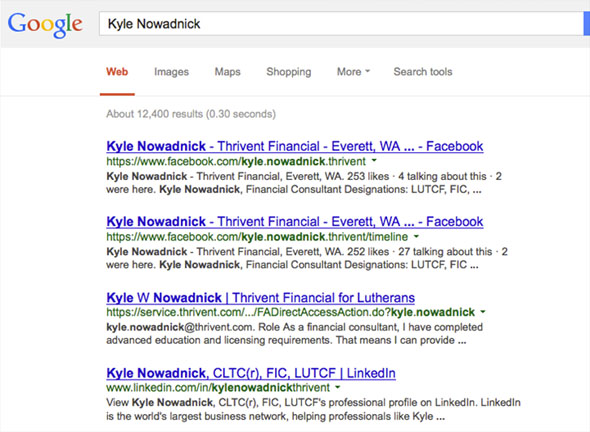
Being “findable” used to require significant up-front marketing effort and spending. Agencies often invested heavily in ads, sponsorships, and prime real estate to be discovered and considered by prospects. But the way people research has fundamentally changed. Today’s buyers go online to research products or services before purchasing. Whether people are buying a book or a complex financial product, it’s safe to assume that digital research factors into the purchase process. Today, social media is one of the most powerful ways to help an agent or business get found. If a customer searches on Google, social media pages and profiles are typically at the top of their results.

Google Search Results
In this example, 3 of the top 4 results in a Google search for the name of a Thrivent Financial Advisor are for his social media pages, demonstrating how a social media presence greatly improves “findability.”

Additionally, with complex products like insurance or financial services, where the decision-maker relies on expert advice, they look for people whom their friends or colleagues recommend. Where one might have previously called friends and colleagues about where to take their business, people increasingly turn to social networks as the easiest way to find the right expert.

2. To grow networks

An extensive network has always been a key indicator of a good businessperson. Historically, new agents were trained to continually build and maintain strong personal networks. The same is true today, and the rise of social networks has made this entire process more efficient and powerful. Social networks online act just like shared connections in the physical world-- online social networks provide the context, familiarity, and trust that allow good sales people to effectively establish a credible rapport to represent themselves and their brand.

Building and maintaining long-term personal relationships is also essential to gaining referrals and repeat sales. On social media, this means connecting with all your friends, colleagues, and business contacts from the offline world. Successful social sales representatives then use social media to connect with customers and continually engage before, during, and after a sales cycle.

3. To “hear” customers and start meetings warm

Listening to and understanding clients is a key characteristic that separates successful relationship managers from the pack. People share valuable information and buying signals on social networks, and gathering insights from posts makes it easy to identify and understand customer needs so that sales reps can truly go into meetings “warm.”

Hearsay Social Signals
Agents and reps can “hear” what is going on in their networks with Social Signals alerts that highlight key life events, such as weddings or new babies, that could be opportunities to reach out.

Companies that embrace social business provide their teams with powerful ways to pay attention to what’s going on with customers, which increases productivity. Information shared by consumers via social networks also helps relationship managers understand the appropriate time to reach out, with exactly the right information.

4. To build credibility

In the insurance industry, customers must rely on their agent, advisor, or wholesaler as an expert. Buyers don’t have the time to do their own research and stay up-to-date. Social media makes an enormously powerful and effective tool for sales reps to demonstrate expertise and consequently build trust. Industry-leading relationship managers share content via social channels to build credibility and educate customers. In addition, sharing content on social networks helps relationship managers stay top of mind with prospects with whom they haven’t yet engaged. When the prospect is ready to move forward, they know exactly who to contact to initiate sales conversations.

Workers’ Compensation Comes of Age

A number of societal, legal, and demographic developments will affect this venerable line of business as it moves into its second century.

With close to $40 billion in net written premium, the workers’ compensation line of business is an important driver of financial success for many property/casualty insurers. It has come a long way since its inception roughly 100 years ago. 

As we move forward into the second century of workers’ compensation, it’s possible to anticipate many of the challenges (and opportunities) that are coming. What follows is a checklist of areas to watch.

CLAIMS FREQUENCY—Many aspects of the U.S. economy should help keep claims frequency flat or negative in the near future, including:

An increasing underground economy

In April, Mark Koba, a senior editor at CNBC, chronicled the growth of a large shadow economy of workers who, because they are unable to find regular employment, are taking jobs under the table with no reportable income or taxes. Since these workers have no workers’ compensation insurance protection, medical costs may shift from the workers’ compensation system to the health care system. With some estimates showing construction employment at just 75 percent of 2007 levels, it’s possible that a portion of these jobs are being filled by under-the-table workers. If that’s the case, these traditional higher-frequency classes may not show up as heavily in the industry’s calculations as they have in the past—moderating frequency trends going forward.

Growth in Social Security disability payments

Also in April, CNN Money reported a 29% increase in the number of Americans with little or no employment income who receive disability payments. For those who were formerly employed, the increase was a staggering 44%. In 2011, according to the CNN report, the federal government spent almost $250 billion on disability payments to some 23 million Americans. Although this is a ballooning liability for the federal government, the impact on workers’ compensation insurers is largely in the opposite direction. As workers who are less than healthy exit the workforce, the remaining pool of healthier workers will lead to claims frequency decreases in the future.

Expansion of other state and federal backstops

Since the recession began, there’s been a dramatic increase in federal and state assistance. A March article that appeared on the MoneyNews website reported that the number of food stamp recipients reached a record high in 2012, with an average of 46.6 million people receiving food stamp benefits each month. According to Supplemental Nutrition Assistance Program (SNAP) data, total food stamp benefits increased from $30.4 billion in 2007 to $74.6 billion in 2012, a 145% increase. As state unemployment benefits and other backstop programs cover more people for longer periods, the pool of future workers’ compensation claimants likely to file claims shrinks. When individuals leverage government backstop programs and choose not to work, workers’ compensation insurers benefit.

Older workers not retiring

People are working longer. For the manufacturing industries, this most likely means a dramatic reduction in the number of new employees entering the workforce. Although older workers have higher claims severity, new workers have significantly higher claims frequency.

Workplace health and safety efforts

The risk management and environmental, health, and safety departments of companies continue to focus on enhancing return-to-work programs, promoting workplace wellness, and improving workplace safety. These efforts continue to bear fruit, especially as the workforce ages and the adverse impacts of obesity receive more attention.

Part-time to full-time bias on frequency

Workers’ compensation frequency is often calculated as a ratio of the number of lost-time claims per an adjusted payroll amount. To the extent that recent payroll increases have been driven by more part-time workers converting to full-time work, the doubling of exposure for current workers isn’t the same as doubling the number of workers. In the short term, a heavier reliance on existing employees working longer hours very likely will help make frequency statistics look better. This trend could reverse if smaller employers keep their head count under 50 employees or reduce employee hours to part time (under 30 hours) to mitigate the impact of the employer mandate in the Affordable Care Act (ACA). Newly added part-time workers are likely to bring higher claim frequency, while workers taken below the 30-hour threshold to avoid employer-mandated health care might have an increased incentive to shift claims to workers’ compensation.

SEVERITY—A number of coalescing factors could drive medical and indemnity severity higher in the years ahead, including:

Rising interest rates

With the Federal Reserve finally winding down its quantitative easing programs, interest rates will be heading higher. To the degree that this coincides with an improving economy, indemnity severity is likely to tick up with rising wage pressure. Medical severity, which historically has run at roughly double the medical consumer price index, is likely to rise from the 3% levels we are experiencing today. Severity trends in the 6% to 7% range may be manageable in light of today’s rate increases, but it will be difficult to expand profit margins over the long term if medical inflation returns to double-digit levels.

Claims predictive modeling

Companies increasingly are using advanced analytics to identify claims for triage as early as the first notice of loss. By identifying the highest severity claims, assigning the appropriate resources for triage, and doing a better job on referrals from special investigative units, companies are favorably affecting the duration and severity of claims.

Obesity

The obesity statistics are staggering. The Centers for Disease Control and Prevention (CDC) estimates that in 2010, 36% of Americans age 20 or older were obese. The Robert Wood Johnson Foundation in a 2012 report predicted that obesity rates for adults over the next 20 years would reach or exceed 44% in every state in the United States, and exceed 60% in 13 of those states. Recent NCCI studies show that the ratio in the medical costs per claim of obese to nonobese claimants at the end of five years is 5.3, and the duration of obese claimants is five times that of nonobese claimants. Given the fact that workers of all ages are struggling with maintaining a healthy weight, workers’ compensation costs will only increase as other comorbidities associated with obesity increase costs.

An aging workforce

As workers age, gradual changes in hearing, vision, strength, and balance may lead to increased probabilities and durations of workplace injuries, including sprains, strains, slips and falls, carpal tunnel syndrome, knee and shoulder problems, hip replacements, and back issues. A 2012 NCCI study, however, concluded that an aging workforce appears to have far less of a negative impact on workers’ compensation claims costs than was previously thought. Although there’s evidence that injured workers older than 35 years have higher costs than those younger than 35, costs associated with injured worker cohorts older than 35 tend to be quite similar. And while older workers have more costly injuries, the NCCI observed that such injuries are becoming more prominent in younger workers.

While the NCCI has presented conflicting data on the claim costs of older workers, we know that the number of older workers in the workforce will nearly double in the next 15 to 20 years. The U.S. Department of Health and Human Services estimates that the 39.6 million persons age 65 years or older today will increase to roughly 72.1 million by 2030. That equates to roughly one in every five Americans being 65 or older. While the jury is out on the precise impact of an aging workforce on claim frequency and severity, an aging workforce increases the likelihood of more severe injuries and longer claim durations.

LONG-TERM TRENDS—On the plus side, several trends are emerging that could benefit workers’ compensation insurers in the long run, including:

Price transparency

When the Surgery Center of Oklahoma in Oklahoma City started posting its prices online four years ago, it forced competing area hospitals to follow suit. Although it will take time to catch hold across the country, greater price transparency in the delivery of health care could benefit workers’ compensation insurers. Running counter to this trend is the pace of consolidation in health care. The ACA, with its focus on accountable care organizations (ACOs), electronic medical records, and other coordination-of-care rewards, is fueling consolidation in health care at an unprecedented rate. With increased consolidation comes increased local pricing power, and workers’ compensation insurers could find themselves on the wrong end of that pricing pendulum.

Opioid use

The epidemic of opioid abuse that had swept the nation is finally starting to abate. State governors, attorneys general, and legislatures are passing laws to toughen criminal and administrative penalties for doctors and clinics, establishing standards of care for doctors who prescribe narcotics, increasing the reporting and tracking of prescriptions, and limiting reimbursements to physicians who dispense prescription drugs to no more than a certain percentage above cost. State agencies, local agencies, and the U.S. Drug Enforcement Administration also are aggressively prosecuting individuals involved in illegal prescribing activity and “pill mills,” causing physicians, nurse practitioners, and pharmacies to surrender their federal licenses to dispense controlled substances. In the most serious cases, the offenders have had to surrender their medical licenses to state medical/pharmacy boards. Physicians and medical boards also have developed resources to guide physicians on responsible opioid prescribing, and there’s been a rise in the number of physicians who have had their licenses suspended by state medical boards for the unlawful distribution of controlled substances and for prescription drug fraud. Organizations like the Federation of State Medical Boards and Physicians for Responsible Opioid Prescribing also have joined the fight.

Given the high-profile nature of these efforts to define the proper use of opioids in treating injured workers, it’s likely the workers’ compensation line will see an effect. With medical expenses exceeding 60% of workers’ compensation costs, 20% of that going toward prescription drugs, this would be a welcome development.

Medical tourism

Medical tourism continues to grow as an option for patients all across America. An airline magazine recently had advertisements from hospitals outside the United States showing savings of 50% to 80% on procedures such as knee and hip replacements that are common in workers’ compensation. The general cost in the United States for a knee replacement was shown at $34,000, versus the overseas cost of just $10,000. A hip replacement was listed as $35,000 versus the overseas cost of just $11,000. Even with the cost of airfare, transportation, and hotel accommodations, the potential savings are significant (acknowledging that we aren’t attempting to control for quality or safety differences). With several companies and health insurers investigating offering medical tourism options to their employees and insureds, there could come a day when workers’ compensation insurers could leverage these tremendous savings to help drive down severity for certain procedures. While businesses may welcome the cost savings, we recognize that persuading state legislatures and injured workers to agree to these practices could be difficult.

The ACA

Several economist and workers’ compensation industry stakeholders have predicted that the ACA will create shifts in the workers’ compensation industry. But exactly how isn’t clear. Many refer to the Massachusetts Health Care Reform Act to bolster the argument that the ACA will lower overall health care costs and workers’ compensation costs. Under Massachusetts health care reform, costs within the workers’ compensation system decreased. Although ACA is more complex, similar provisions in the two laws allow a comparison of the impact on the workers’ compensation system. Analysis by RAND in 2012 found that expanding coverage to previously uninsured individuals resulted in a drop in workers’ compensation costs in Massachusetts. Finding an association between being insured and the frequency of workers’ compensation claims, RAND concluded that expanding the population holding group health insurance could reduce cost shifting to workers’ compensation.

In a May blog posting, Joe Paduda, a principal at Health Strategy Associates, affirmed his belief that the overall effect of the ACA on workers’ compensation would be positive, citing among other things, that it would lessen the motivation for cost shifting and fraudulent claims. Others have argued that increasing access to care and expanding preventive services, coupled with employer-sponsored wellness initiatives, should make the working population healthier overall, leading to a reduction in claim frequency and faster recoveries when injuries do occur.

On the other hand, some speculate that the ACA will increase workers’ compensation costs over time by straining already scarce primary care resources and causing longer wait times for treatment. The projected shortage of primary care physicians could make it more difficult for injured workers to find a physician. This, in turn, could lead to increased costs because of extended disability durations while waiting to see a physician. Others have pointed out that a decreasing supply of physicians and increasing patient demand could drive costs higher. Other factors that could affect cost shifting are significant increases in copayments and high-deductible health plans—costs that employees must bear. This could motivate some employees to file workers’ compensation claims for nonoccupational injuries.

According to findings from a recent study by Assured Research, a connection between increased health insurance coverage and decreased workers’ compensation costs isn’t supported by the data. The study evaluated health insurance penetration rates by state from 1999 to 2011 and corresponding statewide workers’ compensation loss ratios. After adjusting for national workers’ compensation trends, the results showed 31 states with rising health care penetration that resulted in decreased loss ratios. On the other hand, 20 states with rising health care penetration experienced increased loss ratios.

Immigration reform

There are approximately 11 million undocumented people living in the United States. Many don’t file workers’ compensation claims for fear of being deported. The general consensus is that legalizing undocumented immigrants will increase workers’ compensation claims. At the same time, immigrant workers are more prevalent in high-risk sectors such as agriculture, construction, and landscaping. With an influx of workers into a high-risk injury class, the potential impact on frequency and severity in the workers’ compensation system can’t be overlooked.

Anticipate and Plan

British Prime Minister Benjamin Disraeli once quipped, “What we anticipate seldom occurs, what we least expect generally happens.” Still, it’s important to anticipate and plan for the future risk. There’s little doubt that change is looming for workers’ compensation insurers and that actuaries have a key role to play in identifying and managing the transformation.

Authors

Denise Gillen-Algire and Kevin Bingham collaborated with Bill Van Dyke and William Wilt in writing this article.

Bill Van Dyke, an associate of the Casualty Actuarial Society and a member of the Academy, is a specialist leader at Deloitte Consulting LLP in Hartford, Conn. He has extensive actuarial experience in managing and performing workers’ compensation unpaid claim reserve and pricing analyses for state funds, insurers, reinsurers, state agencies, municipalities, self-insured corporations, and captives.

William Wilt, a fellow of the Casualty Actuarial Society, is president of Assured Research, a research and advisory firm focused on property/casualty insurance. Prior to forming Assured, he held diverse roles as an actuary, as a credit and equity analyst, and in corporate development.

This article first appeared in the November | December 2013 issue of Contingencies Magazine and is © 2013 American Academy of Actuaries. Reprinted with the permission of the American Academy of Actuaries.  All Rights Reserved.

Insurance in a Digital World: The Time Is Now

While no single solution can seamlessly integrate digital into a business, there are elements intrinsic to all effective digital strategies.

From market instability to catastrophic losses from natural disasters, insurance companies face many conflicting challenges. But the toughest challenge facing the insurance sector now is the adoption of digital technology.

Digital is transforming consumer behavior and driving insurance executives to reassess their business models. Our 2013 global survey of more than 100 insurance companies explores digital readiness, leadership strength and future strategies. With many insurers on the sidelines of the digital shift, it’s time to make the digital agenda a higher priority and tackle the challenges ahead.

Insurers view digital as a key priority, but are lagging far behind

While the majority of insurers believe in the importance of digitalization to deliver the customer experience, many express concern that they will be left behind as shorter-term corporate priorities lie elsewhere.

79% say they are “not setting the baseline” for digital or are “still learning.”

57% have operating models that do not faciliate digital.

89% don’t consider past interactions when recommending products or services to online customers.

Key findings from the survey

1. Insurers acknowledge their current low levels of digital maturity and the need to take action. Almost 80% of respondents do not see themselves as digital leaders, and are instead trailing the spectrum in customer engagement, analytics and adoption of mobile and social media. The majority believe instead that they “only play the digital game” or are “still learning to use digital capabilities for a competitive advantage.”

2. Companies have high digital ambitions – but are they grounded in reality? While insurers aspire to future digital leadership, they haven’t made the significant improvements necessary to realize their ambitious digital objectives. By their own admission, more than two-thirds of insurers have delivered some easy quick wins, but only 10% cite transformational changes to digital capabilities.

3. Insurers are holding themselves back. Internal factors — legacy technology, slow pace of delivery and cultural constraints — are hindering digital progress. Focusing on key enablers such as culture and innovation will release significant future value and enable companies to better grasp digital business opportunities as they arise.

4. It’s all about retention through improved customer experience. The two biggest drivers of digital strategies are “enriching the customer experience” and “regaining more direct control of the customer relationship.” While the cost of acquisition continues to rise, retaining existing customers is an increasing necessity and should be a critical and measurable benefit of any improvement in the customer experience, digitally enabled or otherwise.

5. Distributors are digital customers, too. Insurers cite intermediary and agent channel strength or resistance as one of the top three inhibitors in implementing a digital strategy. Sharing the benefits of investment in digital and communicating a clear mutual value proposition to deliver a better customer experience will help to minimize channel conflict.

6. Analytics are critical to digital success. Segmentation, customer data analytics and predictive modeling emerged as the digital skill set most in demand, followed closely by technology and marketing capabilities. Analytics capabilities are a prerequisite for extracting maximum value from digital investment.

7. Insurers need to embrace the mobile and social media wave. With mobile and tablet use growing exponentially, neglecting mobile is turning one’s back on the future. Similarly, insurers could be taking social media more seriously, recognizing its value as a relatively inexpensive marketing tool and a means to engage with and influence skeptical, digitally-savvy younger consumers.

How insurers should respond

Adapting to a new digital landscape presents many difficulties for insurers as they face challenges in introducing new channels to market while simultaneously remodeling traditional ones.

While no single solution can seamlessly integrate digital into a business, there are elements intrinsic to all effective digital strategies. Insurers need a vision that focuses on the basics:

  • Framing the investment argument for digital
  • Building the analytics infrastructure
  • Embedding a culture of innovation into the organization

A robust digital strategy begins with a plan and a sound understanding of the practical realities of implementation. Each of the elements – corporate strategies, customer expectations, target operating models and enabling frameworks – will shape each other as digital capabilities develop.

Related Resources
Download the full study
Review an illustrative summary of the survey
View the on-demand webcast
Read the press release

Authors

Graham Handy collaborated with Shaun Crawford in writing this article and in preparing the deeper study based on the survey. Shaun Crawford leads Ernst & Young's Global Insurance Industry across all services; audit, consulting, tax and corporate finance. Although based in London, he spends the majority of his time traveling across the Americas and Asia.

10 Strategies to Combat the Rx Abuse Epidemic - An Insurer's Perspective

Opioid risk management strategies may not only generate dollar savings to workers compensation insurers as workers return to work sooner, but will help improve the quality of life for the injured worker and his/her family.

The misuse and abuse of prescription drugs has taken a devastating toll on communities all across America. For insurance companies, the financial impact of rising opioid costs continues to cause concerns, as medical payments exceed indemnity payments.

In 1987, medical losses represented only 46 percent of the dollars spent on workers' compensation claims. Today, medical losses represent roughly 60 percent of the dollars spent on these claims.1 In the Winter edition of the NAMIC Mutual Insurance magazine, the article “Opioids: A Workers’ Compensation Epidemic" discussed the Accident Fund Insurance’s 60%/40% medical loss/indemnity loss split, in addition to calling opioids workers’ compensation’s current worst enemy.2

With approximately 20 percent of all medical spending going towards prescription drugs, workers' compensation, insurers have been working hard to mitigate these costs. Insurers have negotiated discounts with preferred providers, established comprehensive prescription drug networks, used advanced analytics to identify the most severe claims, promoted evidence-based pain diagnoses, leveraged utilization reviews, and invested in tort reform. All of these measures have been taken with the goal of reducing injured worker reliance on addictive prescriptions drugs and helping workers return to work sooner.

To address the opioid epidemic, a number of strategies have been developed at both the national and state levels in consultation with medical professionals, law enforcement, insurance companies, and public health and drug prevention experts. In October 2013, the Trust For America’s Health (TFAH) issued a report titled, “Prescription Drug Abuse: Strategies to Stop the Epidemic” identifying ten strategies being employed at the State level.3 In this article, we will provide a brief recap of the strategies and share our thoughts on some insurance company considerations.

Although no single strategy is a “silver bullet” that will alleviate the opioid epidemic, each strategy must be considered in the context of the unique circumstances that exist in each state. Ultimately, these efforts could play a role in helping insurance companies mitigate opioid related costs going forward.

A Recap of the 10 Strategies

1. Prescription Drug Monitoring Program: Does the state have an operational Prescription Drug Monitoring Program (PDMP)?

The TFAH report noted that 49 states have an active PDMP. These programs hold the promise of being able to quickly identify problem prescribers and individuals misusing and diverting drugs. The Prescription Drug Monitoring Program Center of Excellence at Brandeis University, the National Alliance for Model State Drug Laws, the Alliance of States with Prescription Monitoring Programs and other organizations have stressed the importance of PDMPs in fighting prescription drug abuse and misuse and improving patient safety. These organizations have also issued a variety of recommendations and leading practices for PDMPs including interstate operability, mandatory utilization, expanded access, real-time reporting, use of proactive alerts, and integration with electronic medical records.

On September 13, 2013, the American Society of Health-System Pharmacists web site discussed how PDMP programs are gaining steam.4  Specifically, they mentioned how New York became the first state to require that prescribers consult the State’s PDPM registry before prescribing Schedule II, III or IV controlled substances.   From an insurance company perspective, understanding how effective PDMP programs are with controlling physician prescriber behavior can help claim adjusters and actuaries gain a better understanding of medical costs going forward.

Of note, Missouri is currently the only state without a PDMP. From our perspective, this raises concerns that Missouri could be targeted by individuals looking to illegally sell/purchase prescription drugs and profit from their misuse and abuse. Without the tracking and monitoring of prescriptions, some patients may find it convenient to cross the border in order to fill their medications in Missouri. Not surprisingly, on November 21, 2013, KCTV News (Kansas City) published a story titled “Missouri a hot spot for 'doctor shopping' for Rx drugs” which seems to support this concern.5

2. Mandatory Use of PDMP: Does the State require mandatory use of PDMPs by providers? (i.e., any form of a mandatory use requirement).

The TFAH report found only 16 States require use of the PDMP by providers (and then only in certain situations) and of those States, only eight States require use of the PDMP before the initial dispensing of a controlled substance. From our perspective, it isn’t surprising that some professionals find the lack of enforcement troubling, especially given the recommendation from the Prescription Drug Monitoring Program Center of Excellence at Brandeis University that utilization of PDMPs be mandated for all prescribers.

Some providers have expressed genuine discontent with the mandatory use of the PDMP, since it increases their administrative burden and may reduce the time they can spend with patients.  However, this additional burden has to be weighed against the benefits of mandatory PDMP usage which can help prevent an addict from filling duplicate prescriptions, identify a stolen prescription pad, or highlight a provider who is obviously writing phony subscriptions. 

Ultimately, the majority of health-care providers rank patient health and safety as a priority, and given the undeniable prevalence of the prescription diversion and abuse, their goal can only be furthered by using the PDMP.  Lastly, from an actuarial perspective, the mandatory use of PDMP’s would increase the ability of States to measure the true value/effectiveness of PDMP efforts.

3. Doctor Shopping Law: Does the state have a doctor shopping statute?

Doctor shopping is the practice of seeing multiple physicians and pharmacies to acquire controlled substances — for a person’s own use and/or for reselling purposes. The TFAH report noted that all States have laws in place that either:

a) Make it a criminal offense to obtain drugs through fraud, deceit, misrepresentation, subterfuge, or concealment of material fact.

b) Make doctor shopping illegal.

c) Prohibit patients from withholding information that they have received either a controlled substance or prescription order from another practitioner, or the same controlled substance or one of similar therapeutic use within a specified time interval.

Doctor shopping laws are aimed at deterring individuals from one method of wrongfully obtaining prescription drugs. In Tennessee, the Office of the Inspector General has used these laws very effectively.

In the Long Island Newsday article “State’s new prescription pain pill system snags apparent doctor shoppers”, New York State’s online system discovered 200 instances of apparent doctor shopping in the first three days of use.6   With diversion and addiction on the rise, anything we can do to keep opioids out of the hands of those who shouldn’t access them is a move in the right direction. The more illegal pills taken out of circulation, the less likely an addicted injured worker will be able to further any bad habits.

4. Support for Substance Abuse Services: Has the state expanded Medicaid under the Affordable Care Act, thereby expanding coverage of substance abuse treatment?

The TFAH report noted that in 2011, 21.6 million Americans age 12 and older needed treatment for a substance abuse problem, but only 2.3 million received treatment at a substance abuse facility. This shortfall represents a “treatment gap” where treatment is not readily available for millions of Americans who are in need of assistance. The TFAH report found that 24 states and the District of Columbia have expanded Medicaid under the Patient Protection and Affordable Care Act (ACA), thereby expanding coverage of substance abuse treatment. However, it is unclear whether the remaining 26 States will expand their Medicaid coverage and substance abuse treatment efforts.

The authors have experienced firsthand the need for additional substance abuse treatment during the radio shows we host on Rx Drug abuse issues.  Several callers have expressed frustration over not being able to receive substance abuse treatment either for themselves or a loved one and want to know where they can go to find help.  Sadly, some Americans have resorted to committing a crime so they could receive free treatment while incarcerated.

Fortunately for some workers’ compensation claimants, a number of insurance companies have been proactively leveraging pain management programs to help wean injured workers off of addictive opioids.  This not only improves the quality of life of for the injured worker and his/her family, but benefits the employer through the employee’s return to work and the insurance company’s lower expenditure on medical.

5. Prescriber Education Requirement: Does the state require or recommend education for prescribers of pain medications?

The TFAH report noted it is important to educate providers about the risks of prescription drug misuse to prevent providers from prescribing incorrectly and/or to ensure they consider possible drug interactions when prescribing a new medication to a patient. The report also noted that most medical, dental, pharmacy, and other health professional schools currently do not provide in-depth training on substance abuse and students may only receive limited training on treating pain.

In July of 2012, the Food & Drug Administration (FDA) approved a Risk Evaluation and Mitigation Strategy (REMS) for extended release opioids that require manufacturers to fund voluntary painkiller training programs, at little to no cost, to all U.S. licensed prescribers. The FDA then issued a letter to prescribers, which was distributed by the American Medical Association (AMA), American Academy of Family Physicians (AAFP), the American Academy of Physician Assistants (AAPA), the American Academy of Pain Management (AAPM) and ASAM, which recommended that prescribers take advantage of those educational programs. However, the FDA did not make attendance by prescribers mandatory, a decision which drew criticism from some individuals that believed REMS should be mandatory.

How critical is the need for re-education regarding prescribing of opioids? In May of 2013, Dr. Thomas R. Frieden, the Director of the Centers for Disease Control and Prevention stated in a PBS interview: “When I went to medical school, the one thing I was told was completely wrong. The one thing I was told was if you give opioids to a patient who is in pain, they will not get addicted.  Completely wrong. Completely wrong. But a generation of doctors, a generation of us grew up being trained that these drugs aren’t risky.”7 If Dr. Frieden is correct, then the TFAH’s finding that only 22 States either require or recommend prescriber education for pain medication prescribers indicates that we have a long way to go in stemming the Rx Drug abuse problem. 

However, it is important to note that some insurance companies are doing their part in helping to educate prescribers. As noted on the Employers’ Insurance Company website, the company’s opioid program takes proactive measures to help control the flow of narcotics by involving the workers’ compensation insurance carrier, injured employees, workers’ compensation physicians and pharmacy benefit managers. The first prong of their program focuses on training physicians to recognize the signs of opioid abuse and encourages them to consider other effective pain management alternatives.8 It is insurance company efforts like this, in combination with FDA REMS, Physicians for Responsible Opioid Prescribing (PROP)9, and state and federal efforts that will help stem the Rx drug abuse problem.

6. Good Samaritan Law: Does the state have a law in place to provide a degree of immunity from criminal charges or mitigation of sentencing for an individual seeking help for themselves or others experiencing an overdose?

Per the TFAH report, 17 states and the District of Columbia have a law in place to either provide a degree of immunity from criminal charges or mitigation of sentencing for an individual seeking help for themselves or others experiencing an overdose. These laws are designed to encourage people to actually help those in danger of an overdose, as opposed to walking away or not even making the call to 911.

The TFAH report noted that a study conducted after passage of Washington’s 911 Good Samaritan Law found that 88 percent of prescription painkiller users indicated that once they were aware of the law, they would be more likely to call 911 during future overdoses. Thus, this strategy may well be critical in helping stem the toll of Rx Drug abuse until prescribing practices can be modified.

7. Support for Narcan Use: Does the state have a law in place to expand access to, and use of, Narcan (a/k/a, Naloxone) for overdosing individuals given by lay administrators?

Narcan is an FDA approved drug that can be used to counter the effects of prescription painkiller overdose. It is not a controlled substance; has no abuse potential; and, can be administered by minimally trained laypeople. The TFAH report found that 17 states and the District of Columbia have a law in place to expand access to, and the use of, Naloxone for overdosing individuals given by lay administrators. In addition, Washington and Rhode Island are currently implementing collaborative practice agreements where Narcan can be distributed by pharmacists.

As was noted in the article “Naloxone Expansion in California Will Enable Family, Friends To Save Lives At Home,” Californians are now able to reverse overdoses at home with a lifesaving injectable drug called Narcan, which can be administered through the nose or intravenously to a person suffering from an opiate overdose.10

8. Physical Exam Requirement: Does the State require a healthcare provider to either conduct a physical exam of the patient, a screening for signs of substance abuse or have a bona fide patient-physician relationship that includes a physician examination, prior to prescribing prescription medications?

Per the TFAH, 44 States and the District of Columbia have such a requirement. Unfortunately, the State laws vary regarding the circumstances under which an exam is required (for example, for all drugs or just specified prescriptions) and the consequences for prescribing without a required examination (i.e., whether there is criminal liability). While this is a promising strategy, wouldn’t unanimity between the States make this strategy even more effective?

The authors question whether “a physical exam requirement” is a better strategy than simply requiring a drug screen. While increased costs may be associated with such a strategy, a urine drug screen is the single most useful test to determine if someone is abusing controlled substances or diverting drugs they have been prescribed.

9. ID Requirement: Does the State have a law requiring or permitting a pharmacist to ask for identification prior to dispensing a controlled substance?

Pharmacists, as the dispensers of prescription drugs, play an important part in the distribution chain. Recognizing this role, the DEA took significant enforcement action in 2013 against national pharmacy chains for allegedly failing to recognize unusual sale volumes of controlled substances in several of their pharmacies.

The TFAH report found that 32 States have laws requiring or permitting a pharmacist to request an ID prior to dispensing a controlled substance. These laws vary in type from requiring presentation of an ID in all circumstances versus those where the purchasers are unknown to the pharmacist. In addition, some States require photo identification and others accept a broader range of government IDs.

The authors note that this “strategy” may represent one of the easier hurdles for drug seekers to circumvent given the ease of falsifying ID’s.  However, the battle against opioid addiction is a battle of inches, and the ID check represents one more step a possible abuser has to overcome to support their bad habit.

10. Pharmacy Lock-In Program:  Does the State’s Medicaid plan have a pharmacy lock-in program that requires individuals suspected of misusing controlled substances to use a single prescriber and pharmacy?

The TFAH report noted that in order to help healthcare providers monitor potential abuse or inappropriate utilization of controlled prescription drugs, some States have implemented programs requiring high users of certain drugs to use only one pharmacy and get prescriptions for controlled substances from only one medical office.  Lock-in programs are believed to help avoid doctor shopping while ensuring appropriate pain care for patients.

Forty-six states and the District of Columbia were noted to have a pharmacy lock-in program under the State’s Medicaid plan where individuals suspected of misusing controlled substances must use a single prescriber and pharmacy.  From discussions with pharmacists, it isn’t always easy for a pharmacist to question a treating physician about whether a prescription is valid.  From the authors’ experience, we have received a number of anecdotal reports of physicians treating pharmacists in a less than respectful manner when a pharmacist questioned whether a prescription was valid.  In these cases, the pharmacists are simply trying to do their best to help curb prescription drug diversion.  In our view, the Lock-In strategy helps strengthen the professional relationships between doctors and pharmacists.

How are the States Doing with Implementing the Strategies?

The TFAH report found that the States’ implementation of the 10 strategies vary widely. For example, 11 States have implemented at least 8 of the 10 strategies. 4 States have implement at least 9, and only New Mexico and Vermont have implemented all 10. Interestingly, in 2010 New Mexico ranked #2 in drug overdose mortality rate per 100,000 residents (which includes both prescription drug and illicit drug overdoses) while Vermont ranked 42nd. It will be interesting to see what advances, if any, New Mexico makes in the Rx drug abuse/misuse war during the next several years with all 10 strategies in place.

On the flip side, South Dakota is the only state with just 2 of the strategies in place.  However, it ranked 50th in drug overdose mortality rate per 100,000 residents in 2010, suggesting the State may not have a misuse/abuse problem of significance. However, two states, Missouri and Nebraska, have only three of the promising strategies in place. In 2010, Missouri ranked 7th in drug overdose mortality rate per 100,000 residents, while Nebraska ranked 49th. With no PDMP, it will be interesting to watch where Missouri ranks in future studies.

With over 60 percent of workers’ compensation payments going towards medical costs, it will be important for insurers to pay close attention to state specific efforts to combat prescription abuse. With the right amount of actuarial research and advanced analytics, workers’ compensation insurers can develop a better understanding of their opioid exposed population and the prescribing habits of the physicians treating their injured workers.  To the extent insurance companies can leverage the above strategies in combination with their own analytics, physician educational efforts, evidence-based pain diagnoses, utilization reviews, and tort reform efforts (e.g., In 2011, the 79th Texas Legislature adopted a closed formulary system which led to a 70 percent decrease in Schedule II narcotic costs11), we believe insurers can move the needle on reducing opioid abuse and addiction.

In the end, these opioid risk management strategies may not only generate dollar savings to workers compensation insurers as workers return to work sooner, but will help improve the quality of life for the injured worker and his/her family.

Footnotes

1 http://www.ncci.com/

2 http://www.namic.org/in/13winterpre.asp

3 http://healthyamericans.org/reports/drugabuse2013/TFAH2013RxDrugAbuseRpt12_no_embargo.pdf

4 http://www.ashp.org/menu/News/PharmacyNews/NewsArticle.aspx?id=3951

5 http://www.kctv5.com/story/24039604/missouri-a-hot-spot-for-doctor-shopping-for-rx-drugs

6 http://www.newsday.com/news/region-state/state-s-new-prescription-pain-pill-system-snags-apparent-doctor-shoppers-1.5995395

7 http://www.pbs.org/newshour/extra/daily_videos/prescription-drug-abuse-can-have-fatal-consequences/

8 http://www.employers.com/AGENTS/BLOG/post/2013/10/07/Opioid-Program-Shows-Results.aspx

9 http://www.supportprop.org/

10 http://www.huffingtonpost.com/2013/10/11/naloxone-expansion-california_n_4081044.html

11 http://www.riskandinsurance.com/story.jsp?storyId=533355286

Authors

Kevin Bingham collaborated with Alix C. Michel and David J. Ward in writing this article.

Alix C. Michel is an attorney at Michel & Ward, a firm based in Chattanooga, TN specializing in the defense of all types of healthcare professionals, hospitals, longterm care facilities, and educating society on the dangers of RX Drug Diversion and strategies to help in the fight against same.

David J. Ward is an attorney at Michel and Ward, a law firm based in Chattanooga, TN. Michel and Ward defends and advises physicians, healthcare providers, longterm care facilities, and others in professional malpractice litigation, professional licensing investigations, and healthcare practice issues.

This article first appeared on December 2, 2013 on PropertyCasualty360.com. © 2013 PropertyCasualty360, A Summit Professional Networks website.


Unified Communications and Collaboration are Increasingly Important for Insurers

Insurers believe the next three years will see a shift in important unified communications and collaboration developments.  

Unified communications and collaboration (UCC) capabilities are becoming increasingly important for insurers and companies in other industries in the rapidly emerging digital marketplace. To determine how enterprises around the globe are using or planning to use UCC, Ovum interviewed over 1,320 enterprise ICT decision-makers in 18 countries in 4Q12 and 1Q13. Ovum's report The Future of Unified Communications and Collaboration: Insurance presents an indicative view of current and planned use of voice and UCC tools in the insurance marketplace, based on interviews with 24 insurance respondents. Specifically, we discuss insurers' ongoing use of telephony (IP-PBX), the gap between insurers' views of employee demands and the reality of what employees want or are familiar with, and the fact that insurers realize that smartphones and tablets will have the largest impact on their operations in the next three years.
 

Telephony (IP-PBX) remains the most widely adopted UCC technology, but IM and web conferencing follow closely behind

UCC suppliers – telecoms and unified communications (UC) vendors and their value-added resellers (VARs) – need patience with the pace at which the insurance industry adopts technology. It is unsurprising that the survey shows that insurers currently use telephony (IP-PBX), instant messaging (IM), and audio/web conferencing as their key UCC technologies; indeed, insurers have decades of experience with telephony and web conferencing. IM might be considered late to the insurance scene, but claim adjusters can use this communication tool to interact with one another and the claims department in the home office, while life and property and casualty (P&C) insurance agents can use it to interact or send quick messages to clients to confirm a meeting time and place, for example.

Insurers believe their employees inhabit the same time warp as them

Our survey asked insurers to indicate their employees' familiarity with nine UCC technologies. Unfortunately, the list of UCC technologies that employees are familiar with and have a significant interest in is, according to insurers, short. Only 42% of insurers state that their employees are familiar with and have a significant interest in consumer applications such as Skype, Twitter, and Facebook. Only 38% of insurers state that their employees are familiar with and have a significant interest in IM. The proportion of insurers stating that their employees are familiar with and have a significant interest in seven other UCC technologies (shared UC such as unified messaging, UC client on smartphones and tablets, audio and web conferencing, personal video, room-based video conferencing, business social media applications such as Yammer, and team workspaces and content tools such as SharePoint) ranges from 3% to 17%. Ovum is incredulous at this. We believe that insurers are wrong, and to improve their accuracy in this area they should periodically ask their employees which UCC technologies they are familiar with and are significantly interested in.

For insurers, cost both poses a challenge and drives investment in UCC

Insurers say they want to determine a business case or identify a path toward the use of UCC to assist with decision-making before investing in it. They believe they need to overcome the hurdle of lack of user demand. But Ovum wonders if insurers have asked their users about their desire to use various UCC technologies generally and which applications specifically; we are skeptical that such employee surveys have actually taken place.

Cost is also driving investment, along with employee productivity and business flexibility. However, Ovum believes these drivers will prevent insurers from investing in UCC as soon as they should; they could even be considered barriers to UCC adoption.

Insurers believe the next three years will see a shift in important UCC developments

Looking ahead three years, insurers believe that smartphones and tablets will have the biggest impact on UCC. We hope this is because they realize the devices represent platforms on which to expose insurance forms and functionality (e.g. claim forms, quoting/rating, and new policy application forms) as apps. This will enable more insurance employees in the field, whether insurance agents or claim adjustors, to be more productive.


How Vulnerability Can Make Us Stronger

How does vulnerability impact your ability to lead? Are you often tempted to hide your weaknesses and present a facade so you don't "lose face" in the eyes of those you'd hope to influence? Take a tip from the Starship Enterprise on how you can lead better with your shields down.

Trust is a key to accomplishment through relationships.

Trust lubricates relationships. It lets people work as a team. Trust provides room to move and enables everyone to perform at their best. Trust isn’t the only key to successful teams, but very few succeed without trust.

One of the key ingredients of trust is vulnerability.

We trust people if we believe they spend their energy for our mutual benefit. We all operate for our own benefit, but we trust people who have some energy for us.

We all manage our appearance. We work out, brush our teeth, comb our hair (if we still have hair). We try to make ourselves presentable. But we also have radar for how much energy people spend on us. If our teammates spend all their energy on themselves, we become skeptical when they tell us they’re for us. We get skeptical if people spend all their time promoting themselves, making themselves look good.

When we perceive others to only be “in it for themselves,” we withhold trust. Remember the old (and new and new and new. . . ) Star Trek series? On the Starship Enterprise, energy was used to support life systems, propel the ship through space, fire the weapons and support the shields. If the shields were up and active, the ship consumed more energy and was less able to maneuver.

Vulnerability is operating with your shields down.

If your shields are up, we don’t trust you. When your shields are down, you’re free to use all of your energy in service to others.

As leaders, operating with our shields down means we’re free to do what’s best for everyone around us. We can spend our best energy to make others successful. We bring our best self and our best energy to serve our team, our customers or our friends. We become a peer, an encourager and someone who is free to truly empathize with our team. We make our team better, and that makes us the best leader we can be.

So, this week, resist the temptation to protect yourself by managing your presentation, trying to look like the boss or always being right. Be as vulnerable and transparent as you can. Your best energy will make you much more beneficial and helpful to others. They’ll grow more and succeed better with your help.

This article was previously published at the Lead Change Group.

Video Alarms Go Mainstream

In the past decade, video technology has fundamentally changed law enforcement with cameras in patrol cars and on highways and even portable cameras worn by officers.  Law enforcement depends upon video, and video verified alarms are another step in this direction.|

Video is now the most popular “option” on alarm systems, a fundamental change for the alarm business. Viewing cameras on a smartphone, known as “self-surveillance,” became a standard feature for all but the most basic burglar alarms.  Now, video is actually being delivered to the central station during an alarm event.  This is the next logical step in security, letting the central station operator verify the alarm and improve police response to deliver greater security. Instead of just viewing a video of what actually caused the alarms, the central station operator can use the cameras to attempt to see why there was an alarm.  In 2004, when the industry standard was created, video verification was reserved for specialized applications.  Equipment was expensive and cumbersome to monitor.  Nearly a decade later, technology has changed, and video verification is moving mainstream. IP cameras and specialized camera/sensor devices are now well under $100 and easy to install.  The last piece of the puzzle to fall into place was driving down central station monitoring costs.  Over the past couple of years, central stations have developed affordable video verification processes that fit the mainstream alarm business model.  These central station processes can be applied to a broad range of hardware, from IP cameras equipped with analytics to specialized sensor/cameras designed specifically for video verification.  Third party central stations are offering dealers video verification for as little as $5 over what they charge to monitor a traditional alarm. Benefits Contrary to common perception, video verification’s value is not primarily to reduce false alarms. From the property owner’s perspective, false-alarm reduction is more a side effect that “reduces a negative” rather than creating value with additional security.  Consumers looking to purchase “security” want the best security they can afford, and they typically equate this with fast police response.  Video verification delivers faster police response.  Because of historical issues, traditional alarms typically receive a “Priority 3” response from law enforcement.  In contrast, video verified alarms typically receive a “Priority 1” response and are treated as “in progress” calls by responding officers.  The difference in response times between a 1 and 3 is significant.   In Fairfax County, the affluent area around Washington, DC, a video-verified alarm receives response more than 12 minutes faster than a traditional alarm.  From a property owner’s perspective, a lot can happen in 12 minutes in a commercial burglary or home invasion.
Jurisdiction Video Verified Traditional Alarm Response Differential
Boston, MA 7:38 21:00 13:22
Charlotte, NC 5:10 13:30 8:20
Chula Vista, CA 5:05 19:18 14:13
Watertown, MA 4:00 23:00 19:00
Fairfax County, VA 6:00 18:02 12:02
Salinas, CA 2:54 39:25 36:29
Amarillo, TX 10:06 19:24 9:18
Barrie, ON 8:02 16:02 8:00
With reductions in municipal budgets affecting many jurisdictions across the US and Canada, law enforcement has downgraded response to non-verified alarms in an effort to save money.  Sometimes this means a “broadcast and file” policy, where the alarm is broadcast over the police radio and officers can respond if they have nothing more important to do.  Sometimes, police refuse to respond to non-verified alarms at all.  But these same financially stressed jurisdictions all continue to respond to video verified alarms. The benefits of video verification extend beyond priority response.  A well-publicized court case recently sent shock waves through the alarm business when an industry icon was forced to pay a multimillion-dollar judgment to a woman who was assaulted after she entered her home.  The alarm system had worked.  The motion detector triggered at 10:00 AM, and the central station, after failing to reach the owner, dispatched the police. They found nothing amiss.   Throughout the day, the motion sensor sent in four additional alarms, but the central station was unable to reach the owner on these, as well.  After this rash of alarms, police told the central station that they would stop responding unless the keyholder met them at the home.  That evening, when the owner returned home after work, she was assaulted by an intruder who had been inside her home throughout the day.  This horrific incident simply would not have happened if the central station had been able to see the intruder who triggered the alarms.  Video verification means greater security because the central station operator becomes a remote eyewitness to the alarm event. Monitoring VideoWhen the industry standard for video verification was created in 2004, self-surveillance on smartphones was not even on the radar. Apple’s first iPhone did not even hit the market until 2007.  The early video verification process required the central station operator to manually access a camera/DVR when an alarm triggered and download the video for review.  This often required working with static IP addresses, firewalls and video management systems that were isolated from the central station automation software that ran the business.   All of this required specialized operators who were trained to manage video and operate multiple video systems remotely.  Technology changed all this.  Video verification is now done by the typical operator in the central station.  Central station automation like MAStermind, Bold, Dice, MicroKey, SIMS, and others have integrated video verification into their standard alarm processes.  In addition, there are third party solutions like I-View Now that enable any central station to do video verification without changing their automation software.  These central station solutions work with a wide variety of hardware, from IP cameras to specialized camera/sensors devices designed specifically for video verification.  Just as smartphones and mobile apps changed the lives of consumers, the central station solutions for video verification have made monitoring video alarms simple and inexpensive for the typical alarm dealer. Market Penetration Self-surveillance and home automation have created a paradigm shift in the alarm business affecting even the most basic alarm offering.  Declining video hardware and monitoring costs mean that video verification now fits the competitive business model of $99 down and a multi-year contract that finances the hardware/installation.  Commercial applications have been the first to embrace video verification.  The newest generations of hardware and monitoring services have finally reached the pricing level necessary to move into the competitive residential market. Partners Grand Prairie PoliceThe alarm business is built upon a partnership with insurance industry and law enforcement.  The insurers encourage their policy holders to install alarm systems to reduce claims and prevent loss.  The alarm industry depends upon law enforcement to respond to their alarms and protect their customers in the event of a burglary or intrusion.  Video verification is already strengthening this partnership. The insurance industry has taken notice of priority response and what it means to them in terms of reduced losses.  In January 2013, Pharmacists Mutual Insurance published the results of a five-year study that linked arrest rates and losses experienced to police response times.  Other major insurance companies like Hanover, CNA, Allstate, and State Farm are working on updating policies to encourage their policy holders to move to video verification.  While this is a slow process, the insurance industry has begun to turn the rudder, and the ship is in motion. In the past decade, video technology has fundamentally changed law enforcement with cameras in patrol cars and on highways and even portable cameras worn by officers.  Law enforcement depends upon video, and video verified alarms are another step in this direction.  While law enforcement understands video verification means fewer false alarms, they also know that video verified alarms mean more arrests.   Officers have always been motivated to “catch the bad guys,” and video verification helps make this happen. As Chief Steve Dye of Grand Prairie, TX, explained to the IACP committee on Community Policing in a recent presentation, “From our perspective, we see no difference between an eyewitness calling to report a crime and a central station operator calling to report a crime they have seen on video.  In fact, the fact that a video exists of the actual event could mean the central station call could even be considered stronger.”  Chief Dye is promoting priority response to encourage his citizens to install video verified alarms to help him in the battle against property crime.  It is making a difference. Currently, the response time for a video verified alarm in Grand Prairie, TX is less than two minutes.



Keith Jentoft

Profile picture for user KeithJentoft

Keith Jentoft

Keith Jentoft is president of RSI Video Technologies. Jentoft pioneered the development of Videofied wireless alarm systems for indoor and outdoor applications. He is also involved as partner liaison with the nonprofit PPVAR (Partnership for Priority Video Alarm Response)

3 Reasons Why Millennials Should Embrace a Career in Insurance - And Why Insurance Needs Them

If we as an industry can attract the right senior-level talent, can effectively communicate the professional and personal benefits we can offer to young people, and can articulate the creative contributions they offer us, then we will be on the right track.

The insurance industry faces an urgent need to attract a new generation with new talent. According to the U.S. Bureau of Labor Statistics and AARP, within 15 years as much as 50 percent of the current insurance workforce will retire. In addition, the industry is changing so fast that it can no longer rely on traditions and standard practices; insurance requires new ideas and new skills.

While all industries eventually face a time when there is a passing of the baton from one generation to the next, insurance is taking a hit now because we have an older than average workforce. So, we must engage with so-called Millennials to show that insurance is, in fact, an innovative and rewarding industry to work in.

In the early 1990s, when the California dairy industry faced a similar dilemma, it came up with the “Got Milk?” campaign. The campaign resonated with an important demographic, kids aged 12-18, who were being drawn away from milk by massive brand campaigns from providers of other beverages. The campaign was wildly successful, reinvigorating milk sales after three decades of declines.

The insurance industry needs the equivalent of a “Got Milk?” branding campaign. It needs to contain three key messages:

1. Insurance is an increasingly savvy industry.

Insurance carriers have had to adapt and evolve for centuries. Today, insurers are incorporating cutting-edge technology, including big data and predictive analytics. Tech is becoming a mainstay in the industry.

Companies such as Vodafone and Burberry have shown how data can transform marketing, and insurers will follow their example. As a whole, the industry will become much more innovative.

So, the industry should be enticing not just to young talent who are inherently tech-savvy and creative but also to those students who have a history in STEM (science, technology, engineering and mathematics).

2. Insurance is a sustainable industry.

In an unstable and uncertain economy, insurance has longevity on its side. As long as people continue to drive cars, buy homes and, simply, work, there will always be a need for auto and homeowners insurance and workers’ compensation. Insurance offers job security for Millennials who may be nervous about the fluctuating job market.

The insurance industry also provides a unique opportunity for young people to establish a solid foundation for a career with room to grow. Whether someone wishes to be an underwriter, an agent, or an actuary, there is a little something for everyone. Millennials tend toward “job hopping,” and insurance can provide young people with enough internal mobility to maintain their interest while keeping them within the industry.

3. Insurance is a service industry.

The insurance industry serves an important common good by allowing all of us to share risk for a small fee (premium) so that an accident or a storm does not ruin people financially. Without insurance, most people wouldn’t be in the financial position to start a business, own a home or even have a car. The core purpose of insurance meshes well with the interests of Millennials, 63% of whom volunteered for a nonprofit in 2011, according to the Millennial Impact Report. People who have a passion for helping others might welcome being a customer service representative and being the first point of contact at an insurer or might enjoy being an underwriter and ensuring that insurance policies are accurately written to provide a customer with the best protection.

Moreover, as young people’s talents and passions are brought into the industry, insurance carriers can expect to become better at what they do. In other words, the expertise stemming from new generations will allow for more accurate and, most importantly, more responsible insurance practices when handling scenarios such as relief from natural disasters.

The insurance industry truly makes a difference in people’s lives, often during difficult times. Young people can transfer their compassion into a career that delivers tangible results not only for themselves but for other people, too.

How will we attract and lead the new generation?

Where do we go from here? How do insurance companies draw talent when the competition is so fierce?

The first step is to use the tools we have – each other. The insurance industry can unite to overcome this talent crisis and collectively focus on appealing to the Millennial generation. An example of collaboration is Tomorrow’s Talent Challenge – an initiative involving industry leaders to motivate college students to explore the career potential in insurance analytics and technology.

We must also recognize that Millennials are looking for leadership they can relate to. Insurers need to hire people with titles such as chief decision scientist and chief data officer to head new departments of digitally savvy experts, if insurers are to draw young, tech-savvy talent. Creating and filling these roles will not be easy. According to McKinsey, by 2018, global demand for technical and managerial talent will exceed supply by 50 to 60 percent. We need to start working on the problem now.

If we as an industry can attract the right senior-level talent, can effectively communicate the professional and personal benefits we can offer to young people, and can articulate the creative contributions they offer us, then we will be on the right track for everyone to be asking the important question:

Got Insurance?