Download

Reducing Claim Costs By Implementing a First Aid Program

Employers can reduce their insurance costs by instituting strong safety measures and preventing losses from occurring. However, in the event of a small claim, employers can minimize their costs implementing a first aid program and reducing their experience modification factors.|

The Worker’s Compensation market in California is hardening. Rates have been increasing on an incremental basis and are expected to continue to rise as the cost of medical care increases. Employers can reduce their insurance costs by instituting strong safety measures and preventing losses from occurring. However, in the event of a small claim, employers can minimize their costs by implementing a first aid program and reducing their experience modification factors. Under the new experience rating formula instituted by the Workers' Compensation Insurance Rating Bureau (WCIRB) as of January 1, 2010, all claims under $7001 now go into the modification on a dollar-for-dollar basis, which means that these claims now impact employers more heavily than they have in the past. Claims under $2001 have always gone into the formula at full value and when we talk about instituting a first aid program, we are focusing on these small claims. The medical costs for any claim that meets the legal criteria for 'first aid' can be paid by the employer, rather than by the insurance company. Section 5401 of the California Labor Code defines first aid as:
"any one-time treatment, and any follow up visit for the purpose of observation of minor scratches, cuts, burns and splinters, or other minor industrial injuries, which do not ordinarily require medical care. This one-time treatment, and follow-up for the purpose of observation, is considered first aid even though provided by a physician or registered professional personnel."
The distinction between first aid and a "medical claim" that MUST be paid by the carrier is based on the type of treatment that an employee receives, not whether or not a physician was seen. It is generally accepted in California that the OSHA guides for recordable injuries can help define what claims can be considered "first aid." This information can be found on the Cal/OSHA website at: http://www.dir.ca.gov/dosh/dosh1.html. If a claim meets the definition of "first aid" and there is no prescription medication and no lost time or work restrictions beyond the date of the injury, the employer may pay the claim costs directly; however, it is still recommended that these claims be reported to the insurance company even if the employer pays the medical costs. When a physician is involved in treatment of a first aid claim, the California Department of Insurance, in conjunction with the Department of Industrial Relations and the Division of Workers' Compensation reminds employers and physicians that they must comply with Labor Code Section 6409(a) which states that a physician who treats a first aid injury must complete and submit a Doctor's First Report of Injury or Illness (Form 5021) with the insurance carrier within five (5) calendar days. With this requirement a claim will be reported by the physician or the employer via the Doctor's First Report of Injury or Illness so it is good practice for employers to be proactive in reporting all claims to their carrier, especially since claims can escalate at a later date. Many employers are concerned about the impact of frequency on their insurance rates if they report all of their claims, even first aid claims, but a good broker will present a strong case to the carrier at renewal that there were no costs to the carrier associated with those claims (because the employer has a good first aid program) and further that the employer is an even better underwriting risk because they report all losses to the carrier so there are no surprises down the road. Remember that all claims under $2001 are grouped together and submitted to the WCIRB by the carrier at the unit statistical filing date. The claims go into the experience modification calculation on a dollar-for-dollar basis and are factored into the experience modification for the next three years. If there are no costs paid by the insurance company for some or all of these claims, an employer can dramatically reduce the modification points associated with these small losses. As one mod point can equate to one percent of premium, there is a strong incentive for employers to reduce their experience modification by paying first aid claims whenever legally permissible. In an ideal situation, the carrier will review the claim to ensure that it meets the first aid criteria and can forward any bills to the employer for payment upon request. Unfortunately, many carriers do not have the time and resources to do this on a consistent basis so it becomes incumbent on employers to take a proactive approach to working with their medical clinic and carrier to implement a successful first aid program. Although it takes some time and coordination, the financial reward for implementing a First Aid Program is worth the effort. You can start by discussing the issue with your insurance carrier and your designated medical clinic. Your broker can also be a resource to facilitate communication, provide education and help to ensure the success of your first aid program.

Jennifer Weathersbee

Profile picture for user JenniferWeathersbee

Jennifer Weathersbee

With a strong belief that claims can be successfully managed using a proactive and comprehensive problem-solving approach, Jennifer Weathersbee oversees the Claim Services Department at InterWest Insurance Services, which provides claims consultation services for key clients, including those in alternative risk programs.

Life Insurance 101: America’s Most Underused Risk Management Tool

Almost four out of five U.S. households own some form of life insurance, meaning that to some degree, there is national consensus regarding the importance and usefulness of life insurance. However, the average household only owns enough coverage to replace 3.6 years of income, creating a significant gap between the amount of coverage families have versus the amount of coverage they actually need. Forty-four percent of U.S. households would agree that they do not have sufficient coverage to meet their potential needs. The question then arises of why so many Americans are underinsured.|

Almost four out of five U.S. households own some form of life insurance, meaning that to some degree, there is national consensus regarding the importance and usefulness of life insurance. However, the average household only owns enough coverage to replace 3.6 years of income, creating a significant gap between the amount of coverage families have versus the amount of coverage they actually need. Forty-four percent of U.S. households would agree that they do not have sufficient coverage to meet their potential needs. The question then arises of why so many Americans are underinsured.One of the primary reasons why we suspect that many Americans are not sufficiently covered is that they are not sure about what type of coverage they need or how much. They have concerns about affordability as well, especially in light of the nation’s current economic struggles. Most families are tightening their budgets in an effort to weather the storm, and unfortunately, life insurance is often one of the first expenses to go. With these issues in mind, we have come up with some basic answers to some of the most common questions that develop as families consider the purchase of life insurance. Why do I need life insurance? Traditionally, life insurance has been viewed as a way to cover burial costs and replace income. However, there are many additional ways that life insurance can serve as a valuable investment and risk management tool. For example, it can be used to pay estate taxes, pay off a mortgage, equalize an estate among multiple heirs, diversify investment and retirement plans, donate a substantial gift to charity, or purchase a partner’s share of a business if he or she passes away. If you do your homework, you will likely be surprised at the variety of life insurance plans that exist as well as their creative uses and how they can benefit you and your family when you pass away and while you are still alive. What type of coverage should I purchase? There are two main types of life insurance. Term life is temporary insurance that is offered for a specified term only; usually 10 years, 15 years, 20 years, or 30 years. Policies expire at the end of the term, much like health insurance, car insurance, or property insurance. In most cases, term policies can be converted to permanent coverage for a period specified in the life insurance contract. Permanent life is just that — it’s permanent! Such policies can last for life if designed and monitored properly. Universal Life, Indexed Universal Life, Whole Life, and Variable Life products would all fall into the category of permanent life. They accumulate a cash value or internal cash reserve that can be used for a variety purposes. The cash value grows based on an interest rate determined by the insurance carrier. Permanent insurance can be flexible and transferable via a transaction called a 1035 Exchange, which is much like a 1031 Exchange in real estate. Typically, permanent life has a variety of uses beyond providing a tax-free death benefit, such as supplying a retirement income, serving as a cash reserve while you’re alive, offering long term care components, and giving you the opportunity to tap into the death benefit while you are alive to pay medical expenses if you become terminally ill. Can I afford life insurance and how much do I need? The cost of life insurance depends on your age, your health, the type of policy you’re applying for and how the policy is designed. Typically, permanent insurance, with its flexibility and multitude of uses, is much more expensive than term insurance. As you get older and/or your health diminishes, insurance carriers identify you as being a higher risk and therefore charge you higher premiums. It is best to lock in coverage while you are young and in good health. How much coverage you need can be calculated based on your income, your projected future income, your net worth, and your age. In the case of key-person business insurance, the potential loss of profitability that would result from you passing would be a key component in the calculation. Insurance carriers consider each of these factors when determining how much coverage you can qualify for. I’ve had some health issues. Will I even qualify for life insurance? Underwriting is the process during which a life insurance company reviews the prospective insured’s medical records and life insurance physical exam to determine which underwriting class should be assigned to the insured. For example, ratings span from Preferred Plus, which means that the insured is as healthy as possible for someone that age, to Substandard, which means that the insured has below average health for someone in that age category. The more health issues you have, the more expensive your coverage will be. One very important fact to consider, however, is that underwriting is subjective. One carrier’s assessment of your health can be completely different from another carrier’s assessment. If you have health issues, there is value in shopping around because you never know which carrier might give you just the offer you were looking for. What if I already have life insurance? Active life insurance policies should be reviewed at a minimum of every two to three years. Changes in interest rates, the market, mortality tables, and product efficiency make it critical for policy owners to have their contracts evaluated periodically to ensure that their policies are still competitive. If you have a life insurance policy currently, it should be your goal to determine the following as part of your periodic reviews: Am I paying the lowest possible premium for the amount of coverage I have? How strong and stable is my insurance carrier? Is my current death benefit amount still sufficient to meet my needs? Is my policy guaranteed? Am I taking advantage of all of the living benefits my policy has to offer? Should my policy be owned by a trust? As your life changes, your policy should change to meet your evolving needs.

Scott Hinkle

Profile picture for user ScottHinkle

Scott Hinkle

Scott Hinkle is a Shareholder of Grant, Hinkle & Jacobs, Inc., located in Solana Beach, California. Mr. Hinkle has over fifteen years of experience in the financial services arena. He specializes in the development and implementation of advanced business succession and estate planning strategies for business owners and high net worth individuals.

Case Note: Elayne Valdez v. Warehouse Demo Services

How important are Medical Provider Networks (MPN) for employers in fighting unauthorized treatment? More important than ever. In a recent WCAB en banc decision issued on April 20, 2011, the WCAB made it clear that when there is a valid medical provider network (MPN), and the injured worker obtains treatment outside the MPN, the employer and carrier will not be liable for the costs of that treatment, and more importantly, those reports will be inadmissible.|

sixthings
How important are Medical Provider Networks (MPN) for employers in fighting unauthorized treatment? More important than ever. In a recent WCAB en banc decision issued on April 20, 2011, the WCAB made it clear that when there is a valid medical provider network (MPN), and the injured worker obtains treatment outside the MPN, the employer and carrier will not be liable for the costs of that treatment, and more importantly, those reports will be inadmissible. In Elayne Valdez v. Warehouse Demo Services (ADJ7048296), the injured worker sustained an admitted injury and was initially sent for medical treatment with a physician within the Defendant's MPN. Approximately three weeks later, the applicant retained legal counsel and she began treating with a physician outside the MPN. An issue arose over the applicant's entitlement to temporary disability based upon that treatment, and the matter proceeded to Trial. At Trial, the Workers' Compensation Administrative Law Judge (WCJ) found, based upon the reports of the non-MPN physician, that the applicant was entitled to temporary disability (TD) benefits for a specified period of time, less any payments received from the Employment Development Department (EDD) during that time period, whose lien was allowed. The Defendant filed a timely petition for reconsideration of the WCJ's decision. The applicant did not file an answer to the Defendant's petition. At the Workers' Compensation Appeals Board (WCAB), a majority concluded that when there is a validly established MPN for which the proper notices have been provided employees and injured workers, the reports of non-MPN physicians are inadmissible and cannot be relied upon. Further, the WCAB went on to say that defendants are also not liable for the cost of the non-MPN reports. In reaching the holding set forth above, the WCAB concluded that a validly established and properly noticed MPN existed. Therefore, it is important that employers and insurance carriers ensure that (1) their MPN is validly established, (2) that all MPN requirements have been met, (3) that the required notices are provided to all employees and injured workers, and (4) that documentation is retained that can establish that the required notices were and have indeed been provided. If accomplished, defendants can ensure that injured workers will be required to receive treatment within the MPN where medical costs can be contained. Also, if injured workers elect to seek treatment outside the MPN, defendants will not be liable for the cost of the reports provided by these non-MPN physicians. Although such law has been in existence since 2004, only now are we seeing the benefit of the legislature's intent. This case clearly exemplifies the original basis for the statutory creation of MPN's — MPN's save employers money. Authors Rick Goldman collaborated with Kristi L. Ellison and Rudy H. Lopez in writing this article. Ms. Ellison currently represents employers, self-insureds and insurance carriers in all aspects of Workers’ Compensation defense. Mr. Lopez currently represents employers, self-insureds and insurance carriers in all aspects of Workers’ Compensation defense, including 132a and Serious and Willful claims as well as coverage matters.

Rick Goldman

Profile picture for user RickGoldman

Rick Goldman

As a Certified Specialist in Workers’ Compensation Law, Rick Goldman has practiced exclusively in all aspects of defense of Workers’ Compensation claims with a vast experience in subrogation, retirement hearings and civil litigation involving the management side of employment and labor matters.

Uses of Life Insurance in Estate Planning

Most people think life insurance is used for only one specific purpose: to replace the lost earnings should a primary breadwinner pass away. Those who subscribe to this theory often purchase low-cost, term insurance that expires soon after retirement. However, such thinking ignores the wide variety of uses for life insurance, especially when it comes to estate planning. Let’s examine several alternative uses of life insurance that many perhaps overlook.|

Most people think life insurance is used for only one specific purpose: to replace the lost earnings should a primary breadwinner pass away. Those who subscribe to this theory often purchase low-cost, term insurance that expires soon after retirement. However, such thinking ignores the wide variety of uses for life insurance, especially when it comes to estate planning. Let’s examine several alternative uses of life insurance that many perhaps overlook. 1. Estate Creation - One of the most obvious, yet most overlooked, uses of life insurance is to create or expand one's estate. Every parent wants to leave their children better off financially than they were. Life insurance can create an immediate estate for one's children, often for pennies on the dollar. In uncertain economic times, life insurance can be an important resource to ensure our children's economic well-being. 2. Liquidity to Pay Estate Taxes - The truth is, the IRS expects all estate taxes to be paid off within 9 months of your death. Federal estate taxes can be as high as 50% of your gross estate. The average Californian's estate is dominated by two assets: their personal residence and their Individual Retirement Account. Neither of these assets is easily liquidated on short notice without triggering substantial tax penalties. Even if your heirs were able to liquidate one or more of these assets to pay taxes, using life insurance proceeds instead may make far greater sense. 3. Estate Equalization - In many families, the bulk of their estate is comprised of assets that aren’t easily divided among heirs, such as the family residence. Often, one heir has expressed an interest in preserving the asset, while others would prefer cash instead. Life insurance may allow you to divide your estate equally among your heirs, while reducing the need to divide assets or provide for joint ownership. 4. Family Business - Many parents who have invested their life's work in their own business dreams that one day their children will follow in their footsteps, and take over the day-to-day management of the company. Often, this simply isn’t the case. A more typical scenario involves one child having an interest (or ability) to take over the family business, while one or more other siblings are interested in pursuing their own life goals. Forcing all your children, regardless of their interest (or business acumen) to participate in running the family business for the sake of receiving their inheritance is often a recipe for disaster. A far more sane (if less sentimental) approach is to hand over the reins of the family business to the child who shows the most interest/ability. Using life insurance to “cash-out” the other heirs is an ideal way to preserve family harmony, as well as the continued viability of the family business. 5. Wealth Replacement - For many families, philanthropy is an integral part of their value-system. These values are often reflected in their estate plans through sizable bequests to charities upon their death. In such cases, amounts transferred to charity may reduce the inheritance of loved family members. An alternative is to use life insurance to replace the assets given to charity in a cost-effective manner. Such win-win thinking helps to preserve family harmony, while instilling the value of philanthropy in the next generation. In Conclusion In each of these scenarios, we can see valuable uses of life insurance that extend far beyond mere “paycheck replacement.” We have yet to meet the family that couldn’t relate to one or more of these examples. Which one applies to your situation? I welcome the opportunity to discuss your needs in more detail. Important Note: When using life insurance in estate planning, it is important to use an Irrevocable Life Insurance Trust (ILIT) to own the life insurance policy. This means that the proceeds of the life insurance policy will be paid directly to the beneficiaries of the ILIT free of estate or income tax. Without an ILIT, a life insurance policy would be included in your gross estate, and your estate tax liability would be increased, not decreased.

John Erik Fraker

Profile picture for user JohnErikFraker

John Erik Fraker

John Erik Fraker is the chair of the Charitable Planning & Philanthropy Practice Group for Ainer & Fraker, LLP. He specializes in high level estate planning, philanthropy, and charitable planning, and provides financial solutions and charitable techniques to help people reduce taxes, provide a lasting legacy, and strengthen the family’s core identity.

What’s the Scoop On Narrow Networks?

For many years, this has been an internal health plan issue. How big should the network be? Care managers preferred concentrated membership by provider to maximize their ability to impact provider’s behavior. Marketing and sales staff preferred broad networks to maximize the attractiveness of the program to as many potential members as possible. Both sides have their point, but in recent years the scale has tilted to the care manager’s perspective which frankly has become the plan’s perspective.|

Duke Helfand’s April 3, 2011 article in the LA Times commented on the shift towards smaller networks. This shift is finally getting the eye of the public as health plans use narrower networks as another tool to control health care costs. Is this something worth noting? Does this work? If so, why does it work? For many years, this has been an internal health plan issue. How big should the network be? Care managers preferred concentrated membership by provider to maximize their ability to impact provider’s behavior. Marketing and sales staff preferred broad networks to maximize the attractiveness of the program to as many potential members as possible. Both sides have their point, but in recent years the scale has tilted to the care manager’s perspective which frankly has become the plan’s perspective. In technical terms this is called provider disruption. How willing will individuals be to sign up for a new plan given the nature of the network and whether or not they will have to change providers to be a part of the new plan? If the network is narrower than normal, there is a greater likelihood that someone’s provider will not be on the list. The broad network includes most everyone and there is only a remote chance the provider is not on the list. Health plans, insurance brokers and many employers review complex provider disruption analysis to determine how much impact a new program will have on their current population. Up until recently, the prevailing thought was bigger is better, at least we can avoid the complaints from our employees and their dependents. Internally it was generally accepted by health plans that a smaller network was easier to control and would likely to reduced health care costs. Today the importance of health cost reduction has led to more plans offering restricted networks which usually claim lower cost of operations. The primary logic for the smaller network having the lower cost is based upon the study of provider behavior and the impact of marketshare on that behavior. For most providers, Medicare is the dominant payer. Providers tend to follow the rules of their dominant payer until another payer gets their attention. Then they tend to gravitate to the rules of the top few since it is almost impossible to act differently for each. Providers are focused on meeting the health care needs of their patients and not the unique care management procedures at each plan. Perhaps only in the requirement of pre-authorization does a provider carefully pay attention to individual health plan requirements. This assures the provider’s eventual payment and this is an important aspect of running their business. From the health plan’s perspective, each plan attempts to manage the care in the best way they know. Sometimes health plans develop special initiatives and care management techniques unique to their own operation. Without meeting a minimal critical mass health plan’s face challenges if dissimilar to what other plans are doing. The quickest way to impact provider performance is to concentrate the membership among as few providers as possible (i.e., the narrow network). Over the past five years health plans have offered narrow networks on an increasing basis. Some have utilized tier networks to do this, others have offered products based upon narrower networks. As significant cost reductions have emerged there are now price reasons to choose the narrower network offering. Some carriers have demonstrated significant savings through the use of their narrow network program. To the extent that price is a key factor in selecting health care benefit options, more and more employers are moving towards these more cost effective programs. From the provider’s perspective, they too are feeling the pinch of being excluded from the narrower network. Health plans use multiple criteria to exclude providers from these programs. Sometimes it is based upon charge levels, sometimes cost, sometimes provider performance. Most of the time the excluded provider is characterized as a least desired provider. This is creating competition among providers and has been used to improve the cost effectiveness of formerly excluded providers. Sometimes this leads to deeper discounts, a clear reduction in cost. What drives the patient’s willingness to change providers? The financial penalties of using an out-of-network provider oftentimes drives change. When a patient is in course of treatment, few patients are willing to change. To the extent that “sick” patients move more slowly, this helps reduce the cost of care of the narrow network program. The lower costing program usually have lower payroll deductions which also motivates individuals to choose the narrow network program. As the cost of care continues to increase faster than desired, more and more individuals will likely select the narrow network option to keep their costs down while maintaining their health coverage. Health plans win with smaller networks. Providers win with smaller networks. Individuals win with smaller networks. Smaller networks offer a valuable cost effective alternate to most benefit offerings.

David Axene

Profile picture for user DavidAxene

David Axene

David Axene started Axene Health Partners in 2003 after a successful career at Ernst & Young and Milliman & Robertson. He is an internationally recognized health consultant and is recognized as a strategist and thought leader in the insurance industry.

Telecommuting: The Future Office or an Insurance Nightmare?

Telecommuting can be defined as the practice of employees working out of their private residences on a regular basis (once a week, twice a week, or more). With advances in technology (e-mail, computer networks, fax modems/machines, phone systems, etc.) telecommuting continues to increase at a steady rate. This virtual office atmosphere (being able to be connected essentially anywhere) has significantly increased the number of employees who can perform their jobs effectively from home. Tens of millions of Americans work at home on a regular basis. Some employers view telecommuting as the cure-all to reduce fixed costs associated with real estate and to lure prospective employees to their workplace. Questions have persisted in the minds of some about the pros and cons of telecommuting. From the risk management standpoint we need to ask: Do we really understand the potential risk ramifications of telecommuting?|

Some employers view telecommuting as the cure-all to reduce fixed costs associated with real estate and to lure prospective employees to their workplace. Questions have persisted in the minds of some about the pros and cons of telecommuting. From the risk management standpoint we need to ask: Do we really understand the potential risk ramifications of telecommuting? Telecommuting can be defined as the practice of employees working out of their private residences on a regular basis (once a week, twice a week, or more). With advances in technology (e-mail, computer networks, fax modems/machines, phone systems, etc.) telecommuting continues to increase at a steady rate. This virtual office atmosphere (being able to be connected essentially anywhere) has significantly increased the number of employees who can perform their jobs effectively from home. Tens of millions of Americans work at home on a regular basis. The Benefits
  • Millions/billions saved in real estate costs including heating/cooling/electrical, etc.
  • Increased productivity to the company -- employees are allowed to work at their own pace/environment with fewer interruptions.
  • Environmental benefits from less fuel consumed and less pollution.
  • Shorter commute times for those who still go to offices as a result of fewer vehicles on the road.
  • “Flex” time for family commitments and increased employee satisfaction.
It is also necessary to provide work-at-home employees with the same safe environment given to office employees. Each employer is required by OSHA to provide employees with a safe work environment regardless where the “work” is located. There was a proposal by OSHA to require home-office inspections but it was quickly dropped. Challenging Insurance Issues
  • When are (are not) employees working?
  • If an employee slips and falls, was the employee working or taking out the trash?
  • What happens if an employee goes to the grocery store during the workday and becomes involved in an auto accident?
  • What if the employee is attacked in their own home during working hours?
  • Who pays for equipment and furniture?
  • Who pays for equipment and furniture if it is damaged in a fire or stolen?
  • What if a fire is caused by excessive electrical requirements of computers, fax machines, copy machines, and other business equipment?
Many of these issues are handled on a case-by-case basis depending on jurisdiction. While it seems clear that there is liability associated with injuries that occur in the home office, it is less clear how you can prove work-relatedness or non-work-relatedness. When accidents happen there are rarely any witnesses. Case law is being developed to address some of these issues but most cases are still decided based on the individual circumstances. The property damage/loss issues need to be established as company policy. Most employers do not provide deluxe home offices for their employees. Many do provide an assortment of equipment (computers, phones, fax machines, etc.) to help the employee stay connected with the workplace. These items are business equipment and probably not covered by the employee’s insurance policies. Employee Perceptions Some employees are very comfortable telecommuting and being away from their fixed, corporate office. Others are concerned about their ability to work with the constant distractions of their home and family. Still others do not have or want to make room in their homes for a home office environment. There are valid concerns about staying visible to their co-workers and their management. Many employees feel isolated and not “part of the team.” The flexibility that telecommuting allows is unquestionably of great value to many employees but it is not for everyone. The positive goodwill generated by the telecommuting environment often encourages employees to work longer and have a better opinion of the company. Ergonomics A majority of telecommuters are computer users. After all, it is technology that has enabled many employees to become telecommuters. The ergonomic concerns for home office workers must be addressed to minimize this significant risk factor. Employee education and training is the most effective tool. Home office inspections by trained ergonomists are usually not completed due to the cost involved and the perception of invading the privacy of the employee. Many employees are not inclined to personally spend the money required for the proper equipment. If their employers do not provide the equipment, the employees use whatever equipment they have. This includes working at fixed height tables with non-adjustable chairs .... generally an ergonomic nightmare. Educational efforts should be focused on the importance of having a good chair and adjusting the chair and workstation surface to minimize awkward postures. Excellent ergonomic training materials are readily available. The issue of laptop computers must be addressed in your ergonomics program. A laptop is not designed for regular use – the keyboard is too small and either the keyboard or monitor screen will be in a poor position with respect to allowing neutral postures. Laptop uses should be provided docking stations with separate monitors and keyboards. At a minimum, employees should have a separate keyboard and mouse such that the laptop monitor can be raised to an appropriate level to allow for neutral postures. The importance of exercise and stretching can not be overstated for computer users. The affects of non-occupational activities (such as additional computer use or video game playing) must also be stressed during educational efforts. Security Issues From a risk management perspective, another important aspect to consider is network security. Dial-up connections are inherently less secure than the network connections in the office. Remote users often neglect back-up storage of critical information. These issues need to be addressed through your business continuity and information technology plans. Also, business interruption exposures may exist at home and between office networks from undetected viruses or lack of anti-virus protection programs. Telecommuters can be a significant component of your business continuity plan (BCP) . If your central office location is destroyed it typically does not impact the telecommuters workspace. Alternate computer networking arrangements are still critical. To be truly effective, your BCP must include a risk assessment at each home office location. Telecommuting Safety Program No matter how small or large your organization may be, every employer needs to establish a Telecommuting Safety Program. Such a program might include the following: Objective To reduce the frequency and severity of work-at-home accidents and incidents by informing telecommuters of their safety and health rights and responsibilities. Program Elements A. Employee training B. On-site hazard assessment C. Safety and health consultation D. Accident investigation E. Provision of appropriate safety and health devices F. Contract with employees authorizing home visits Employee Responsibilities A. Conduct in-home inspections B. Complete training C. Report all incidents Evaluation Mechanisms A. Incident rates B. Incident report forms C. Workers’ compensation claims D. Employee feedback Specific Questions to Consider Home Inspections
  • Is there a functioning smoke detector in the employee’s home?
  • Are there two or more means of exit/egress from the work area?
  • Are aisles/passageways in the work area clear at all times?
  • Are work area properly illuminated?
  • Are electrical cords/wiring adequately loaded/grounded?
Ergonomics
  • Is the workstation properly adjusted?
  • Have employees been trained on ergonomics?
Air Quality
  • Are gas fired appliances provided with exhaust vents?
  • Has indoor air been tested/evaluated for humidity, moisture, radon, carbon monoxide/dioxide, etc.?
Incident/Accident Investigation
  • Have company policies been established and implemented stating who will perform home inspections and incident investigations to address potential “invasion of privacy” issues?
Company Responsibilities
  • Has training been provided in home inspections, ergonomics, fire hazards, trips/falls, etc.?
  • Are computer equipment and office furniture provided and set up to meet employee needs?
Employee Responsibilities
  • Have employees completed all work-at-home training programs?
  • Do employees follow all established policies regarding home inspections and incident/accident reporting?
Evaluation
  • Has an annual evaluation of the Telecommuting Safety Program been performed?
  • Does comparison of telecommuting vs. office incident rates justify continued telecommuting?
Conclusion Telecommuting is here to stay. There are too many benefits for employers and employees. As risk management and insurance professionals we need to acknowledge the risks presented by telecommuters and identify and implement corrective actions to minimize our exposure. Authors Dirk Duchsherer collaborated with Steve NyBlom (CSP, CPEA, ARM, ALCM) in writing this article. Steve is the Assistant Administrator of the Risk Management/Insurance Practice Specialty and is a Vice President with Aon Risk Services in Los Angeles, CA.

Dirk Duchscherer

Profile picture for user DirkDuchscherer

Dirk Duchscherer

Dirk Duchscherer confers with CEOs, risk managers, production supervisors and facility directors to identify problems and suggest cost effective solutions. He reviews compliance with such agencies as CALOSHA, NFPA, ANSI, ASTM and DOT and provides clients with technical information on standards, codes and regulations.

So Do We Really Need Health Care Reform?

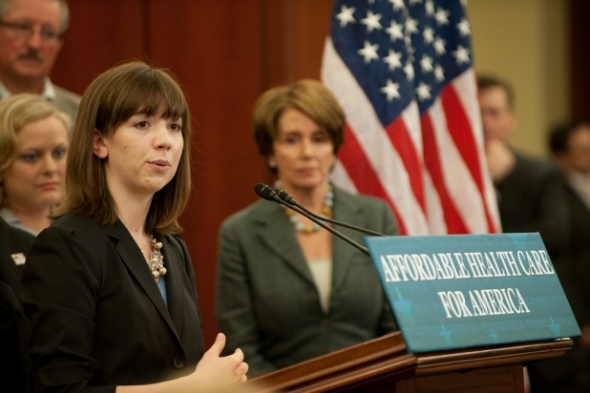
Health care reform in the form of PPACA was signed into law by President Obama on March 23, 2010. Now more than a year later it is still a significant matter of discussion. The House and the Senate continue to discuss whether or not we need it. Yes this topic has its political sides and strong supporters on both sides, but few seem to get to the real issue, “do we really need it?” Health care reform has been widely discussed for most of the past forty years. Many have feared its coming, others have anxiously awaited it. Now that it is a reality, it continues to dominate much of the discussion.|

Health care reform in the form of PPACA was signed into law by President Obama on March 23, 2010. Now more than a year later it is still a significant matter of discussion. The House and the Senate continue to discuss whether or not we need it. Yes this topic has its political sides and strong supporters on both sides, but few seem to get to the real issue, “do we really need it?” Health care reform has been widely discussed for most of the past forty years. Many have feared its coming, others have anxiously awaited it. Now that it is a reality, it continues to dominate much of the discussion.The key reasons for wanting health care reform have included:
  • Significant numbers of uninsured and underinsured individuals (i.e., more than 40 million or about 1 out of 7 individuals)
  • High expense of health care services in excess of 17% of the GDP (i.e., more than 1 out of 6 dollars spent on healthcare)
  • Need for improved quality in healthcare (i.e., continuing medical errors as reported by the Institute of Medicine leading to more than 130,000 deaths per year)
  • High rate increases for insurance products limiting the public’s ability to purchase insurance
Most of these reasons are inter-related. The high cost of care forces up premium rates which in turn impacts the ability of individuals to obtain health insurance. This in turn stresses our excellent health care system with the large number of individuals without health coverage, sometimes leading to more than expected medical errors. Although more needs to be done, PPACA attempted to deal with most of the above issues. It enabled the creation of exchanges to maximize the availability of coverage options to those without coverage. It created a mandate to force individuals to obtain coverage. It provided a significant subsidy for those who could afford it the least. It attempts to fold in to the current Medicaid and Medicare system many, and hopefully most, of those without coverage. It created a concept known as value based reimbursement to improve quality and minimize medical errors. It instituted loss ratio limits to constrain the prices of health insurance products. All of these were attempts at trying to get at the key issues. Were they enough? Probably not, but many of them were focused in the right direction. The big question remains, do we need health care reform? Did PPACA do enough in the right direction to be worth the effort and expense to continue it? Although this, on the surface, seems to be a simple question with strong supporters on either side of it, it remains a challenging question. One of the biggest issues inadequately discussed is the second bullet above which deals with the percent of GDP spent on health care. Yes we all know how expensive health care is, but have we seriously considered the economic impact of increasing health care costs. Although I am not an economist, I have spent most of my professional career studying the health care system at both the micro and macro levels. I understand that different sectors of the economy are continually in battle for their share of the economy. Whenever one sector grabs more than its fair share, the rest of the economy essentially fights back wanting it back. For years this has happened without concern. The economy has demonstrated amazing levels of elasticity, responding to new demands, new technology, etc. As long as the economy was strong there seemed to be an endless supply of resources for any sector of the economy. However, as the economy has become more sluggish, dollars more scarce, with more concern about the economy’s viability, there has been increasing concern about sectors of the economy that are consuming more than expected or more than desired. In the past several years the discussion about elasticity of the general economy has become more common. In a stagnant economy, one without growth, some economists have raised the perspective that the residual elasticity might be as low as four or five percentage points. If true, this suggests that there may be no more than four or five percentage points of the economy available to any current sector without an offsetting reduction by another sector. Most projections for the health care sector show continuing increases with demands for more than four or five percentage points by 2014. What does this mean? This simply means that health care could by itself consume all of the available elasticity by 2014. This is delayed with a robust recovery in the economy, but still presents a serious problem if the economy fails to rebound. The impact of an economy without any additional elasticity is its inability to respond to needs for resources. Without available resources sectors of the economy will potentially decline and die. In our “just in time” economical world, the economy relies upon smooth transition and free access to resources. Without this serious economic problems emerge. The bottom line is that we need to conserve the available elasticity of our economy to preserve our economy. To the extent that any sector is consuming more of the economy than its reasonable fair share, that sector needs to be restrained to protect the economy. Perhaps the biggest reason for health care reform is this restraint. Without it, our economy is at significant risk. We as a country cannot afford this economic risk. We need health care reform, there is not doubt. However, we need to thoroughly question whether or not adequate controls exist in PPACA to restrain the health care system’s desire to consume more than its fair share.

David Axene

Profile picture for user DavidAxene

David Axene

David Axene started Axene Health Partners in 2003 after a successful career at Ernst & Young and Milliman & Robertson. He is an internationally recognized health consultant and is recognized as a strategist and thought leader in the insurance industry.


Adam DeGraide

Profile picture for user AdamDeGraide

Adam DeGraide

Adam DeGraide is the CEO and founder of Astonish. DeGraide and his team are the driving forces behind a vision to help insurers grow their businesses by using the Internet.

Astonish was recently ranked 267th on the Inc. 500 list of fastest-growing private companies in the U.S. Astonish currently serves more than 7,000 insurance industry users in America.