Legacy businesses are feeling the pressure. Pressure to modernize, to adapt, to adopt this new AI tool or that new automated process. Pick up the pace. Cut production time in half — and do it all with half as many humans on the payroll. The message is loud and clear: Get on board or get left behind.
But the real threat to legacy businesses isn't AI. It's not a massive influx of new technology or dramatic changes in the workforce.
The real threat is resistance to change. It's the belief that what worked for the last 50 years will continue to work for the next 50.
I understand the instinct to operate from an "If it ain't broke…" mentality. In many legacy businesses, long-standing systems and processes aren't simply operational choices; they're often tied to memories, milestones, or moments of success and growth in the business. But in an era where the newest technology is driving the conversation and shaping the industry, it would be naive to believe a legacy business can thrive by simply maintaining the status quo.
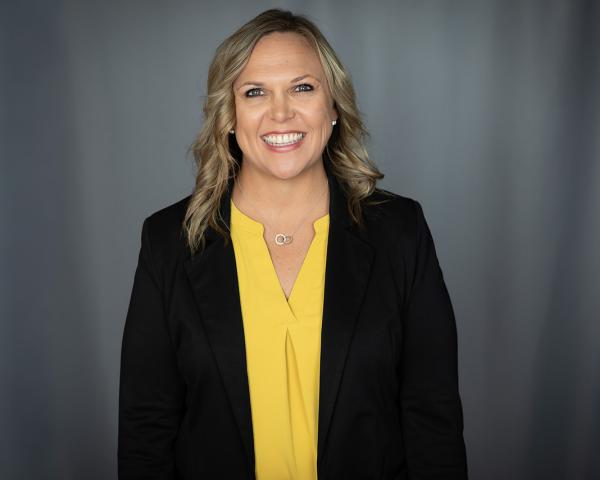
As a second-generation leader, I feel this conflict personally. I grew up in The Brokerage Inc., watching my parents build it from the ground up, making difficult decisions along the way, never losing sight of their purpose. I saw their work ethic, their dedication, and the sacrifices they made to turn their dream into a reality — a legacy that would outlast them.
When your business also carries personal, emotional ties, leadership comes with a different kind of weight. Every decision must be viewed through several lenses: Will this make the business stronger? Will it help us better serve our customers? Does it require us to sacrifice our core mission or ideals? Can we adapt and stay competitive without losing the values that made the company worth preserving?
So how do legacy business leaders keep up with rapidly changing technology, shifting workforce expectations and a competitive marketplace, while preserving what our predecessors built and entrusted to us?
Reinvent Without Replacing
Reinventing your business does not mean abandoning your identity. In fact, the strongest companies are often the ones that know their identity well enough to inherently understand what should and shouldn't be changed.
Insurance is still a deeply relationship-driven business, especially during major life, health, and financial decisions. Trust matters. Service matters. The ability to guide people through major decisions matters. Those are not outdated values. They're intertwined with our core beliefs and a major part of who we are.
But the way we support those relationships can and should evolve.
With AI bursting onto the scene, many legacy business leaders see it as a disruptor — the antithesis of that deeply personal, human connection that makes up the very foundation of their business. Customers need more than just information. They need guidance. They need confidence. They need someone who can help them understand their options and make the right decisions.
The fear of losing that personal touch is causing some leaders to dig their heels in and double down on their "business as usual" attitude. But what if we could shift our perspective a bit? If we view AI as a multiplier for strong organizations, instead of a replacement for human connection, it could be that extra ingredient that makes already-strong teams even stronger, helping them make an even bigger impact, be more responsive, more efficient, and more focused on meeting the needs of their customers.
Supporting Tradition Doesn't Mean Stagnation
The same balance applies to tradition. I sometimes hear people talk about legacy businesses as if their longevity came from doing things the same way forever. But no business survives for decades without adapting. The founders of long-standing companies have all faced disruption at some point. It may not have been AI, machine learning, or automation, but they had to navigate change, take risks, adjust their thinking and make hard decisions in real time.
A company that is still standing in its second or third generation is not proof that change can be avoided. It is proof that someone before us was willing to change when change was needed.
This perspective has helped me reframe modernization. Change is not a betrayal of what previous generations built. In many cases, it is the most respectful thing we can do for it.
If my parents had not been flexible, determined, and willing to evolve, there would be no legacy for me to help carry forward. So, the question for leaders like me is not, "How do we keep everything the same?" The better question is, "How do we protect the purpose — the reason we do what we do — while adapting to new methods of doing it?"
Guiding the New Generations
That question applies to people, too. There's concern in our industry about whether younger generations are even interested in insurance, sales, agencies, or ownership anymore. I understand the concern, but I choose to view it differently. In my experience, younger generations are interested in this industry, particularly when they see opportunity, mentorship, entrepreneurship, flexibility and purpose. It's our responsibility to provide these opportunities, help nurture their curiosity, demonstrate our purpose, mentor and guide the new generation coming in.
Last week, an old friend and teammate from my college volleyball days called me out of the blue. She coaches a young woman who is about to graduate and start her career in life insurance sales. She and a few friends will be joining a captive agency.
But my friend didn't call to ask if I would recruit the student or entice her to come work with us instead. She called because she knew I would be genuinely excited to hear that a college graduate was entering the industry and that I would love the opportunity to speak to her and encourage her.
She was right. I was excited.
Here's this young woman, fresh out of college, choosing to pursue our industry. She wants to learn how to network, build relationships, generate leads, and maybe one day open her own agency. I told her I thought starting captive could be a great path, because it can provide structure, training, and exposure to the business.
I hung up feeling hopeful. Excited for the future.
There are important moments when we, as leaders, need to recognize our role in preserving and growing this industry. If we only make time to mentor young talent working for us, we're doing ourselves, the industry overall, and this up-and-coming generation a disservice. The industry needs capable, ethical, motivated people entering the business, regardless of where they begin.
And who knows? Maybe one day, when she decides to go independent, I'll be her first call. Maybe not. Regardless of where she ends up, the industry is better off with her in it.
Succession and Stewardship
Another big question that surrounds legacy businesses today is succession. But it's about more than transferring ownership. Of course, ownership matters. Governance matters. Titles, roles, and responsibilities matter. But those are only part of the handoff.
The harder question is whether the next generation understands why this business exists, what core values we uphold that should never be compromised, and how to keep evolving when the market changes again. Because it will.
My parents wanted me to have the opportunity to lead one day, but that opportunity came with the expectation that I understand every aspect of the business, from the ground up. Starting in an entry level position was not a formality. It was crucial for me to see, experience, and respect every moving part of this business, the people doing the work, and the responsibility that comes with every decision.
That experience shaped how I think about change. The farther you are from the day-to-day work, the easier it is to talk about transformation in theory. But when you understand the people, processes and relationships inside a business, you realize change has to be both bold and thoughtful. It must move the company forward without dismissing the people who helped build it.
The Balancing Act for Legacy Businesses
We have to ask ourselves difficult questions. Are we protecting our values, or are we protecting our comfort? Are we honoring our history, or are we hiding behind it? Are we preparing the next generation to preserve what we built while also pushing it forward?
The future will not belong only to the newest companies or the most technologically advanced ones. It will belong to organizations that can combine trust and tradition with flexibility and adaptability. It will belong to leaders who understand that legacy is not a reason to resist change. It's a reason to embrace it and use it to shape the future of your company — so the relationships, trust, and culture it was built on can endure for another generation.