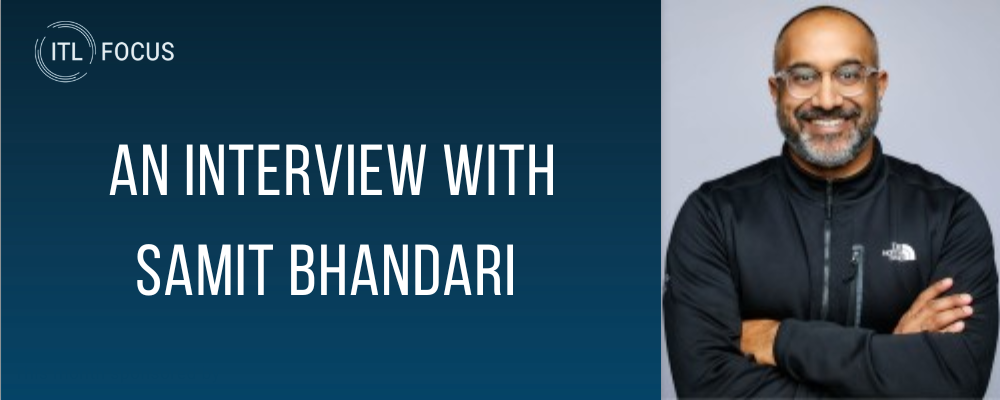
Some two decades into the insurance industry's digital transformation, companies have spent hundreds of billions of dollars on new core systems, cloud migrations, digital portals, and AI tools — but the technology was rarely the hardest part. The hardest part was the people. The people part has long been treated as a supporting act in large technology transformations. But as the pace and complexity of transformation accelerates, that approach is showing its limits. Employees nod along, say they're using the new system, and then quietly find workarounds. Leadership mandates adoption from the top while alignment quietly fractures below. Organizations sprint to the go-live date and then discover that the real work hadn't started yet. Samit Bhandari has watched this pattern play out across the P&C insurance industry for 20 years as a partner at PwC. He's worked with carriers of all sizes through core system replacements, AI rollouts, and full-scale digital transformations — and has seen where these programs succeed and where they quietly go off the rails. He acknowledges there has been improvement—he says the assumption that most large technology programs fail is increasingly out of date. But he says organizations keep making a lot of the same, old mistakes, including the tendency to underinvest in what happens after a go-live, to confuse executive messaging with genuine alignment, and to treat transformation as a one-time event rather than a continuous process. Read the full interview to find out what red flags signal a change management program in trouble, why smaller carriers are often better at transformation than their larger counterparts, and what Bhandari thinks the industry has stopped doing that it should start doing again. |