


AI adoption is spreading faster than enterprise value. McKinsey's 2025 survey found that 88% of organizations use AI in at least one business function, yet nearly two-thirds have not begun scaling it across the enterprise. Only 39% report any enterprise-level impact on earnings.
The gap is usually described as a failure to move pilots into production. That description is accurate but incomplete. A deeper change is underway inside large organizations: AI has altered who can create intelligence, how quickly they can create it and where that intelligence lives.
For most of the software era, development capacity was scarce. New applications waited for funding, platform teams and long delivery cycles. That scarcity concentrated authority. A central group decided what would be built, which data would be used and how the work would be represented.
Generative AI weakens that constraint. A team close to a client, a market or an operational problem can now create an analysis, assistant or small application in days. The people with the problem no longer have to wait as long for the people who build software.
This is a healthy redistribution of capability. It also creates a coordination problem that most AI strategies were not designed to handle.
AI changed what can be local
A local application often succeeds because it sits inside a dense network of shared understanding. Its users know which source to trust, what counts as an exception and whether an answer looks plausible. They can resolve ambiguity in conversation. Much of the application's reliability comes from the team around it.
AI makes that local operating knowledge easier to turn into software. A broker can build a view of carrier appetite. An underwriting team can assemble a submission assistant. A regional operation can create a portfolio view around the definitions it already uses. These tools may overlap, but that does not make them wasteful. They encode knowledge near the point where the work happens.
The difficulty begins when the output has to cross an organizational boundary. Another team may use a different grain, timing convention or source of record. The same term may carry a narrower scope in one specialty than another. A decision that appears self-explanatory locally arrives elsewhere without the assumptions that produced it.
Two property teams can each produce a correct portfolio view while one organizes business by policy and gross written premium and the other by location and net booked premium. The conflict appears only when someone asks for one global answer. The example is small; the organizational pattern is not.
The enterprise has spent years making data portable. AI is now exposing how little of the meaning around that data was designed to travel.
Coordination becomes the binding constraint
When intelligence was scarce, organizations worried about access to skills, models and infrastructure. Those constraints remain, but they are loosening. As more teams can build, the scarce resource shifts from intelligence itself to organizational coherence.
Organizational coherence can accommodate different regional workflows and product structures. Insurance depends on local regulation, market practice, product nuance and professional judgment. Those differences carry real knowledge.
Coherence means that differences are visible when they matter. A definition has a scope. An exception has an owner. A decision has evidence and a rationale. A local variation can be understood by an application or person outside the team that created it.
Coordinating meaning becomes more valuable
This changes the enterprise AI agenda. Model selection, tool access and data quality still matter. They cannot settle which interpretation of premium should govern a global view, who has authority to approve a regional variation or when a past decision stops applying. Those are questions of organizational knowledge and decision rights.
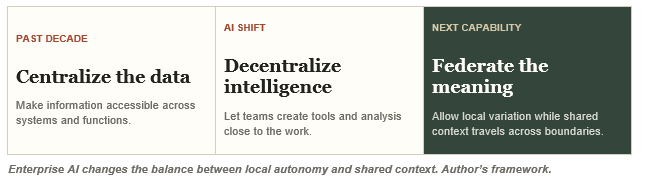
FIGURE 1 · THE NEXT PHASE OF ENTERPRISE AI
Shared meaning is infrastructure
Organizations tend to treat business meaning as documentation. Definitions sit in glossaries, operating procedures, data catalogs and the heads of experienced employees. Applications then rebuild the relevant context through requirements, mappings, prompts and meetings.
AI raises the cost of that arrangement. A person can notice that "written premium" means something different in a particular conversation and ask a follow-up question. An agent operating across several systems may apply the wrong definition consistently and at speed. The more autonomy organizations give AI, the less they can depend on context that remains implicit.
Shared meaning therefore belongs in the same category as identity, security and data lineage: persistent infrastructure that many applications can use. It connects business objects, definitions, sources, decisions and owners. It also records scope and time, because a definition that was valid for one region or period may not apply elsewhere.
The technical expression might be a semantic layer, knowledge graph, metadata system, or combination of approaches. The management idea matters more than the label. Business context must persist outside any one prompt, application or person.
The centralization choice has changed
The traditional response to fragmentation is to centralize applications. One platform, one roadmap, and one set of standards should produce consistency. In practice, full centralization can distance development from the work and turn every local need into an enterprise prioritization decision.
AI makes that trade-off harder to defend. Local teams now have the means to solve some problems faster than a central program can absorb them. Blocking that capacity would preserve consistency by giving up learning and speed.
A federated model separates what can remain local from what must travel. Domains retain authority over their workflows, specialist judgment and legitimate variations. The enterprise establishes identity, interoperability, security and the rules by which shared definitions are published and changed. Accountable owners decide contested meaning; the platform makes those decisions inspectable and reusable.
This is an organizational design choice before it is a technology program. It requires leaders to decide which concepts must remain consistent across boundaries, where variation creates value, and who has authority when definitions conflict.
AI can lower the cost of coherence
Organizations have tried to make knowledge explicit before. Expert systems, rule engines and enterprise ontologies worked in bounded settings, then became expensive to maintain as products, regulations, sources and operating practices changed.
Generative AI changes the maintenance equation. Models can read schemas, documents and conversations; propose relationships and mappings; and flag definitions that appear to conflict. They can help knowledge systems change at a pace closer to the business.
People still decide what disputed terms mean. That boundary is useful. AI can do more of the discovery and drafting while domain owners spend their time on the decisions that require authority and judgment.
This suggests a different measure of AI maturity. The number of pilots says little about whether an organization is learning. A stronger signal is whether each new application leaves behind context that the next application can reuse.
Leaders can test that capability with three questions. Which business meaning must remain consistent when work crosses a boundary? Which differences should remain local because they reflect real market or product knowledge? Who can approve a change and make it available to the rest of the organization?
The answers define the operating model beneath enterprise AI. The test is whether a decision made in one part of the business can be understood, challenged and reused elsewhere without a meeting to reconstruct what everyone meant.
Source: McKinsey, "The State of AI in 2025: Agents, Innovation, and Transformation," Nov. 2025. Survey of 1,993 respondents across 105 countries.
Editorial note: The property example is an illustrative composite. It does not describe a specific company's systems or operating practices.