Paul Carroll
The insurance industry has long operated in a paper-driven, inefficient way, with only about 60 cents of every premium dollar going out in claims. Improving operational efficiency could help get more people insured while reducing costs—which is why we delve into the topic every year for ITL Focus. To start us off: How does Eagleview's technology make the claims process for property insurance more efficient than it has been historically?
Patrick Gill
Eagleview has been in existence for more than 25 years. We started with government use cases such as tax assessment but quickly expanded to other industries such as insurance based on the notion that what works for government tax assessors likely also works for inspectors and appraisers of any type, including insurance claims use cases. We're flying airplanes with proprietary camera technology over the entire U.S. and large parts of Canada on a regular basis. We capture high-resolution imagery both with orthogonal—so, top-down—views, as well as views from each 45-degree angle. This enables us to build 3D models of properties. From that, you can extract measurements, study the roof condition, and analyze other attributes of a property.
One of Eagleview's most significant contributions to the insurance industry has been providing precise, independent, and objective property measurements. One of the big parts of the claim is the reconciliation between what the adjuster thinks needs to be done to repair a property and what the contractor or homeowner thinks. This frequently resulted in unnecessary disputes and inefficiencies—arguing over the size of a roof, for example, with people up there with competing tape measures coming up with different numbers. Eagleview created a standard that both contractors and insurance adjusters could agree on and made that go away.
There are plenty of other things to debate, but suddenly, the measurement portion of building a roof repair or roof replacement estimate went away. To your core thesis here, Eagleview has always been about trying to deliver operational efficiency into the insurance claims process.
How much detail you can have about a property before you have to physically roll out to it creates all kinds of opportunities for efficiency. Our capabilities have expanded well beyond measurements to include a broad range of property intelligence.
Our mantra is: How much better can you operate if you know more before you go? A lot of money is spent on third-party ladder assist companies going up and doing the tall and steep structures, for safety reasons and lots of other things. But if you don't know for sure what property is tall and steep, oftentimes you're sending out your own adjuster. If he gets out there, then realizes that it's tall or steep and then needs to order a third-party ladder assist, that costs time and maybe means another visit to the property—waste that can be eliminated if you can have that information upfront.
That's one example. Where we've been moving is: How much more data can we serve into the claims triage and routing process to make sure they're intelligently managed, with the right resources the first time for the cleanest, fastest, most efficient resolution?
Paul Carroll
I imagine that once a hailstorm hits an area and you fly a plane over it, aerial imagery can help insurers make decisions about the whole area and recovery process, beyond what they can know about individual houses.
Patrick Gill
Resolution hasn't quite gotten to the point where you can see actual hail hits. We're almost there, but not quite. The long-term vision is straightforward. A huge hailstorm hits Colorado Springs, we quickly get a plane over the area, and then claims can be handled remotely.
But I'll tell you what the first phase in that direction is: There's a lot you can do by starting to integrate several different data sources to get to smarter expectations about the damage from that hailstorm in Colorado Springs.
There's weather data that, on its own, you're not going to make claims decisions on, but it's excellent input. What if you know the age of the roofs on all those properties that were likely hit? What if you knew the roof condition of each of those properties? All of a sudden, you can quickly assess the higher-risk properties, the ones that are most likely going to need to be addressed, versus the ones that may fall outside of scope and may be less likely to be a valid claim.
So you can categorize better what types of claims these are, which then gets back to who are the right people to go do the adjustment. If I know there was a storm with two-inch hail, and I know this group of properties has 20-year-old roofs, it may be more efficient to go ahead and write the roof replacement check right away and not send an expensive, experienced adjuster out there to do an assessment. Maybe send someone to grab some photos and confirm the situation.
We’re in an in-between state, but you can already be much smarter about what has likely happened than you could even three years ago based on the data.
Paul Carroll
The historical data you've accumulated, giving you multiple images of the same property over the years, has to help with claims assessment after a storm, right?
Patrick Gill
That's correct. In places where there's a lot of activity, whether it's hail or a hurricane, we have more looks at what's happened. When I mentioned roof age earlier, that's exactly how you determine it. We look back to find where there's been a significant change in that roof, then count forward to understand the roof's age.
We have a new AI product—I know everybody has a new AI product, but we have an agentic AI solution called Eagleview Horizon that is in early access mode with customers right now. It allows a claims leader to do exactly the type of thing you're asking. Show me all the older roofs in poor condition in the path of that particular storm so I can sort them into the proper workflow.
What would have been a data science project even a year ago—probably hard to fund internally and would have taken weeks to pull all the different data sources together—you can literally do in five to 10 minutes now.
Paul Carroll
What about drones? Are they something Eagleview would do directly, or are you focused on collaborating with drone operators?
Patrick Gill
We have experimented with drones and operated a network of pilots but have decided not to provide that service ourselves. It's a complicated, messy thing to manage a pilot network.
Our focus is on building the capability to ingest imagery captured from drones and other aerial platforms, then applying our AI and damage detection models consistently across those data sources.
Paul Carroll
Looking ahead two or three years, what features do you hope to add?
Patrick Gill
The most exciting development is the pace at which the underlying technology continues to advance.
Flying over properties on a regular basis, you don’t just see changes in roof condition. You see changes like a new presence of a pool or the evolution of a particular property. These are very interesting to the insurance industry. They're also interesting to our large customer base in local county government—tax assessor's offices, but also 911 emergency services for understanding how you access a location.
On the underwriting side, obviously you could spot a negative change—the degradation in condition—but you could also see an improvement if there's more defensible space for wildfires, there's no more tree overhang. You can actively monitor the state of a property in a way that hasn't been available.
Insurance has dealt in static data. So the notion of change detection at scale is going to be, in my mind, game-changing in terms of how the insurance industry and other industries can understand what's going on in the real world.
Paul Carroll
One of the things I find interesting and exceptionally powerful, having covered information technology for decades, is that when you start wiring the world and collecting all kinds of data you find other uses for it. There's a company called Ting Labs that produces a device that you plug into your wall, and it detects electrical problems that could cause house fires. But they're also finding that they can detect problems in the grid, and they can let utilities know when there's an outage because a whole bunch of homes lose power at the same time. If power goes off in the winter, pipes may freeze, and you may have a flooding issue; they can alert people to that, as well.
I can imagine all kinds of uses for the kinds of data you're collecting.
Patrick Gill
Today, you literally have to look at side-by-side images of the same property at different times to draw conclusions. The way computing power and AI have evolved, you can now do that without manual review, which means you can do it at scale and then feed that intelligence into other systems where insurance carriers are making decisions, so much more cleanly and easily.
We’re on the cusp of this all being in plain language and queryable. Claims managers will be able to get much, much more sophisticated about how they plan broadly. Carriers will be much, much smarter about what's going on in their book of business or in their preparation for a particular CAT event.
Getting back to your premise around how you drive operational efficiency, there's going to be substantial opportunities to improve efficiency.
Paul Carroll
Here’s hoping.
This is great. Thanks, Patrick.
About Patrick Gill
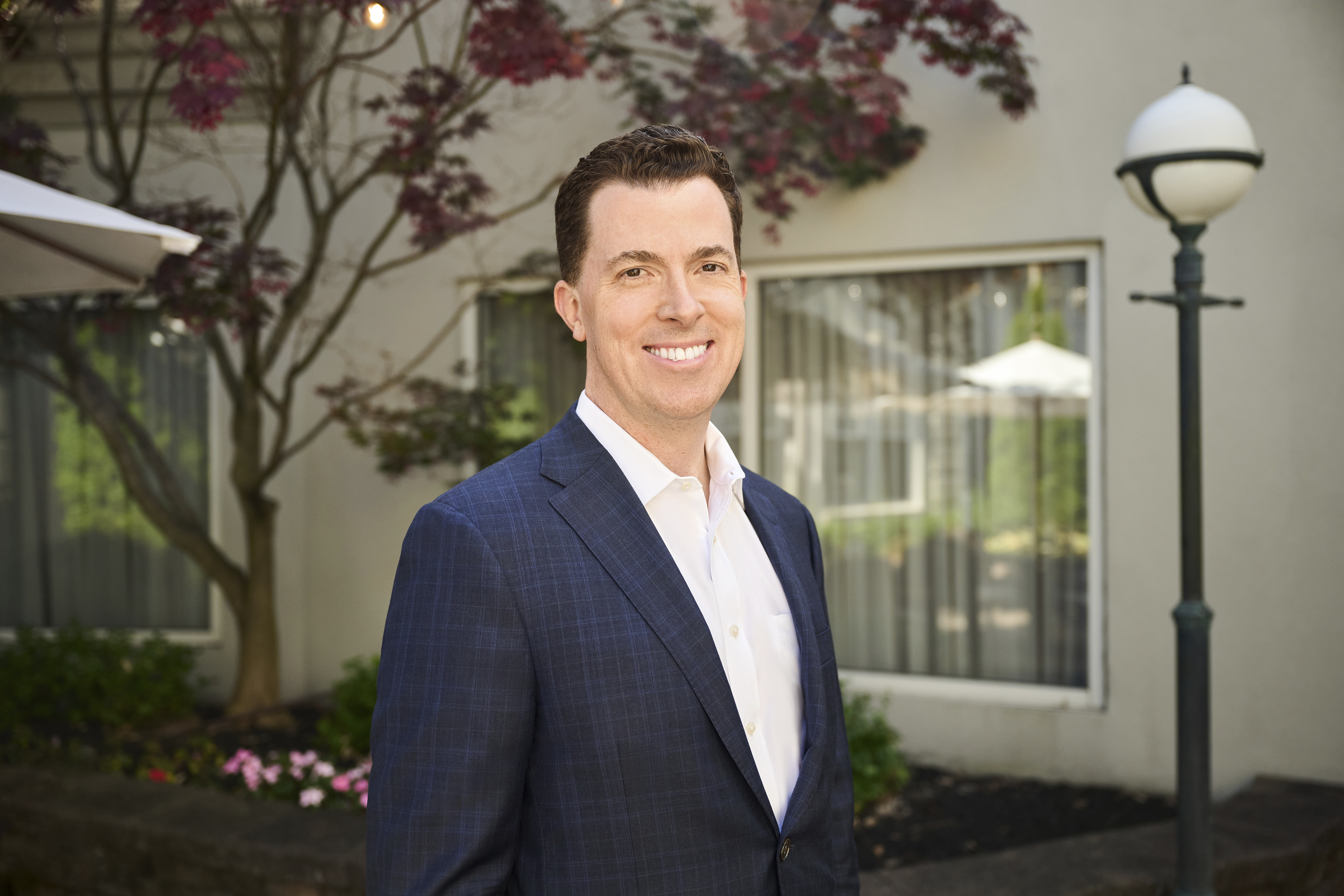
Patrick Gill is Senior Vice President and General Manager of Insurance & Commercial Solutions at Eagleview where he is focused on expanding customer value and strengthening Eagleview's leadership across property intelligence markets.