Download

US Insurers Must Contend With Federal Overseers

Ovum publishes report about the 2013 US insurance regulatory landscape.|

Since 1851, when the first state insurance regulator was established, the US insurance industry has had to comply only with the laws of a regulatory system that is state-based. However, that changed when the Dodd-Frank Wall Street Reform and Consumer Protection Act (the Dodd-Frank Act) passed into law on July 21, 2010. The Dodd-Frank Act, which is the US Federal Government's response to the 2007-2008 financial crisis, created several entities including the Federal Insurance Office (FIO) and the Financial Stability Oversight Council (FSOC). Both of these entities are authorized to be involved in the insurance regulatory system, albeit with different degrees of authority and oversight. Ovum's recently published report 2013 US Insurance Regulatory Landscape discusses the strengthening presence of the federal government in US insurance regulation, four interdependent initiatives that US insurers need to implement to comply with regulations, and the expanding role that technology can play in supporting US insurers as they prepare for regulatory compliance. Federal Presence In The US Insurance Regulatory System Has Strengthened State-based insurance regulators can be forgiven for believing that the regulatory system they have in place, and are continually reshaping to align with market realities, has continued to prove worthy to both consumers and insurance companies. Be that as it may, the Dodd-Frank Act is now law and the FSOC and the FIO are now active participants in the US insurance regulatory system. Both entities have authority and responsibilities that could transform the US insurance system. Only time will tell whether their existence is a net positive for insurance companies domiciled in the US and international insurers conducting business in the US. Insurers should familiarize themselves with the roles and responsibilities of the FSOC and FIO. The FSOC will identify and respond to threats to the financial stability of the US and promote market discipline. The FIO has a number of responsibilities, including: recommending to the FSOC when an insurer (and its affiliates) should be designated a "systemically important financial institution" (SIFI), thus making it subject to additional capital requirements set by the Federal Reserve; representing the US in matters relating to international insurance regulation; monitoring the extent to which traditionally underserved communities, consumers, minorities, and those of low-to-moderate income can access affordable insurance products; and assisting the Secretary of the Treasury and other officials in administering the Terrorism Risk Insurance Program. Insurers Must Implement Four Interdependent Initiatives To Enable Readiness To Comply With State And, Potentially, Federal Regulations Insurers should create and continue to strengthen four interdependent initiatives to ensure their readiness to comply with regulation, which encompass monitoring, management, analysis, and reporting.
  • Monitoring initiatives include monitoring and capturing: any legislative bills available for public comment; discussions from the insurance legislators in each state, the NAIC, the FIO, the FSOC, the various influencer groups, and online trade press articles and commentary concerning legislative issues impacting the insurance industry; and existing regulations and proposed and actual changes to these regulations for each state in which the company conducts and wants to conduct business.
  • Management initiatives include storing, cleaning, tagging, and otherwise preparing the primarily unstructured content captured above, for analysis and preliminary preparation of regulatory compliance initiatives.
  • Analysis initiatives include analyzing the captured content's potential impact on existing company regulatory compliance initiatives or the resources needed to create new initiatives. The analysis is likely to encompass financial analysis and modeling if the regulatory discussion impacts the amount of capital reserves the insurance company will need, or alters the investments it can make or the mix of risks it can insure. It also includes the creation of interactive dashboards that enable insurance executives and legal, compliance, and other insurance departments to track compliance with state and, where necessary, federal regulations.
  • Reporting initiatives include creating reports for internal insurance company use, for each state insurance commissioner's office for the states in which the company conducts business, and, where necessary, for the FIO and the FSOC.
Technology Has A Growing Role To Play In Enabling Insurers To Comply With Regulations To remain knowledgeable about what is happening, be prepared for any changes to requirements, and comply with existing regulations, insurers should use:
  • Text data mining/semantic technology to create a tagged and searchable repository of existing and pending regulations.
  • Master data management (MDM) applications to establish, maintain, and update a repository of existing and proposed industry regulations.
  • Analytics, including predictive analytics, to measure the company's capital adequacy and ensure it complies with state and, where necessary, FIO and FSOC requirements, and to model and project the company's current and projected density of risk (i.e. total exposure across all insurance lines of business that the insurer is selling for all or specific geographies).
  • Data visualization to create dashboards to track the company's alignment with regulatory deadlines and capital requirements, and its progress toward adopting insurance regulatory initiatives (e.g. uniform producer licensing).
  • Database technologies to create, store, and manage producer demographic, insurance experience, training, and licensing information for every insurance company producer (i.e. agent/broker/financial advisor) for each insurance line of business, for every state (or jurisdiction) in which the agent is legally authorized to sell insurance.
  • Collaboration and communications technologies within the insurance company, including the agent/broker/financial advisor intermediaries, to discuss progress toward regulatory compliance including concerns or problems and potential solutions if the company believes it is non-compliant on certain issues.
  • Reporting capabilities to create compliance reports and send them to internal insurance departments, to each state insurance commissioner's office for each state in which the company conducts business, and, where necessary, to the FIO and the FSOC.

Barry Rabkin

Profile picture for user BarryRabkin

Barry Rabkin

Barry Rabkin is a technology-focused insurance industry analyst. His research focuses on areas where current and emerging technology affects insurance commerce, markets, customers and channels. He has been involved with the insurance industry for more than 35 years.

Speed To Detection: A Progressive And Strategic Concept Using Advanced Anti-Fraud Analytics

Insurers must transform strategies for combating complex crime rings.

The recent natural disasters in Oklahoma and New Jersey, and the wildfire season in the western United States, have a lot in common when one thinks both of insurance risk — plus the intended and unintended consequences of these events.

The insurance industry knows natural disasters will happen. The industry thus creates and follows protocols and response plans. For the most part, the industry and public-safety officials handle the crisis, and restore calm and order in our communities.

The insurance industry knows these events will occur, and planning is generally pretty solid per the axiom, "If it's predictable, it's preventable."

But in the world of insurance fraud, many sectors of the insurance industry seem to lack the same energy to mitigate this crime. Using the same acumen gained from restoring order after disasters, the key is to apply the same proven strategies of history, response, performance and mitigation of future risks. This approach will better help combat insurance fraud with equal success.

The modern strategy of "speed to detection" is a uniting principal and operating strategy for mitigating the epidemic of fraudulent claims.

Optimizing speed to detection involves synchronizing all layers of insurer personnel into informed, enterprise-wide fraud fighters. They are well-trained to spot warning signs of this crime, personally motivated, and encouraged to follow internal processes that allow open lines of communication about fraud leads, needed process improvements and action solutions.

Bogus claims thus can be discovered and mitigated faster. Quick detection also is an intimidating deterrent that can convince more fraudsters to avoid trying to breach that insurer. The risk of arrest and conviction is too high, and odds of financial reward are too low.

Speed to detection is a timely precept: Insurers today are confronting a persistent crime that is morphing, in many respects, to higher levels of sophistication and ability to steal insurance money.

Insurance fraud harms law-abiding consumers (higher premiums), aids the underground economy, facilitates other illegal enterprises such as trade-based money-laundering, and poses a public-safety threat (e.g., staged automobile collisions, arson, murder for life insurance, needless medical procedures).

Conservatively, fraud steals $80 billion a year across all lines of insurance.1 Some estimates rate the annual losses much higher.

And the problem is growing. Questionable property-casualty claims in the U.S. have increased 27 percent in 2012 over 2010, the National Insurance Crime Bureau (NICB) says in an analysis of its database of claims released in May.

That reflects 91,652 questionable claims in 2010 compared to 116,171 claims in 2012.2 Similarly, most consumer research reveals a disturbing public cynicism about this crime, and even a backslide toward higher consumer tolerance of fraud.3

Confronting this epidemic is a large network of organizations dedicated to minimizing fraud as a virulent national threat.

Insurance companies have teams of experts (the Special Investigation Unit, or SIU) trained to deal with suspicious claims.

State law-enforcement agencies have created specialized departments and bureaus dedicated to thwarting this crime.

State insurance departments have strengthened their processes for identifying, investigating and reporting suspicious claims for potential prosecution.

States also have enacted numerous fraud laws and regulations that further strengthen enforcement. More are being added or bolstered every year.

At first glance, these processes appear sound, prudent and presumably effective. A lot of money, personnel and effort have been thrown at insurance fraud. Shouldn't schemes be going down instead of up? Or at minimum, leveling off?

Many of the following observations are guided by my 32 years of combating insurance fraud, including several years as a Bureau Chief, and one year as the Division Chief with the nation's largest anti-fraud unit, the California Department of Insurance, Fraud Division. Some academic backup also is cited for added information.

Despite the large defense shield, growing numbers of insurance executives at the decisionmaking levels — inside and outside the anti-fraud ranks — are frustrated about how fraud persists as a costly national epidemic.

To illustrate: In recent years, I have provided consulting and analysis and review of first-party bad-faith cases involving fraud, the actions of SIUs in a claim or series of claims, and expertise for qui tam civil actions by insurance companies.

In these many interactions with insurance executives, anti-fraud directors and other colleagues throughout the industry, the frustrated question they ask most often about fraud is: "Why do we keep throwing money at a crime that never seems to go away?"

Typically they offer two reasons why fraud remains so vexing and persistent:

"The insurance system invites fraud." Indeed, our insurance system is one of the best in the world. But the most skillful fraudsters effectively exploit weaknesses when the system is not synchronized and calibrated among partners to create a hardened shield.

"We need the best team to investigate these crimes." Insurance companies and government entities are constantly working to create an elusive Dream Team for investigations. Key ingredients of team members are passion, creativity, and ability to wade through a series of complex conspiracies either to deny a claim, or have an offender arrested and prosecuted.

Many insurers are frustrated because qualified people with the acumen to investigate fraud are hard to come by. Time after time, when insurance carriers lose bad-faith lawsuits involving the SIU and fraud, some of the common denominators are training, unqualified people and bad leadership decisions.

An important reason fraud appears to keep rising is that insurance companies and regulators are slow to recognize the value and impact of anti-fraud technology leveraged with best business practices.

The anti-fraud community needs to rethink its strategies, and examine ways to identify problems and risks before they become crimes.

Resources should be synchronized to optimize speed to detection.

This requires insurers to have their anti-fraud operations well-aligned with their internal corporate structure, strategies and practices — and with external partners such as state fraud bureaus, law enforcement and NICB.

Reaching this goal must start with an honest discussion about technology and other best practices. A major problem is that too many insurers use outmoded methods of fraud detection. These methods have little impact on modern, sophisticated fraud rings that are a significant source of money outflow.

Meanwhile, insurance fraud is evolving and organized crime increasingly is infiltrating fraud. Such rings have been around for years, but their sheer number and growing sophistication are changing the criminal landscape. Many insurers aren't equipped to counter this new breed of criminal, especially using indicators.

Recently, I gave a presentation at the Insurance Fraud Management Symposium (IFM). This is the largest annual conference of insurer anti-fraud directors, executives and other personnel.4 The presentation covered a major criminal investigation and prosecution involving a staged accident ring in Southern California.

This case illustrates two frequent insurer vulnerabilities: a) over-reliance on weak fraud indicators that allowed fraudsters to penetrate the insurer's anti-fraud defenses relatively easily; and b) how vulnerable insurers become when they compromise their business processes by speeding up claims payouts by compromising vigilance.

The leader of this criminal enterprise joined me in the presentation. He was under court order to assist the California Division of Insurance in public education after his conviction.

He related how he ran the operation, who he involved, and how and why he targeted specific insurance companies with bogus injury claims from the setup collisions.

He made a chilling point:

"You will never win the war on fraud."

He urged insurers to avoid over-reliance on the so-called "indicators" they use to identify fraudulent claims. Indicators are a relatively basic investigative tool. Insurers look for specific actions or behaviors that are red flags of possible fraud during the claims process. With staged accidents, for example, indicators might include flags such as multiple people in both vehicles, expensive treatment at the same clinic, and similar last names to suggest a possible family fraud ring.

This ringleader knew the indicators well, probably better than some claims staff. Thus he could rig his crashes and phony claims to easily avoid being detected by common flags. Just as important, he also relied on inexperienced and untrained claims representatives to give in and pay claims with little scrutiny.

"It is a game of poker: Who is going to bluff the best, and who will stay in the game with a winning hand?" he warned.

In a similarly illustrative case, Greg Foshee was educated, articulate and knew the insurance claims system well. He should have. Foshee was a claims representative for one of the nation's largest property-casualty insurers. He saw large profit potential when his supervisor ordered him to "just process the claims."

So Foshee went to the "dark side." He started staging vehicle accidents and then helped process the ensuing bogus injury claims without insurer scrutiny.

He staged more than 82 vehicle collisions that stole $1 million worth of insurance money. During questioning after his arrest, Foshee said his supervisors told him: "Don't ask too many questions, just get the claims off your desk."

Foshee used multiple individuals with multiple valid drivers licenses from several states. He kept the operation simple to avoid detection. He had only 13 ring members, with just three cohorts working full time and controlling the group.

Nor did Foshee involve attorneys and physicians. They would have slowed the claims, and he would have had to split the ill-gotten insurance money with them.

He made smaller claims just for vehicle damage and minor medical treatments in order to stay under insurer radars. The treatments usually consisted of an emergency-room visit for subjective injuries such as whiplash that are typically associated with minor traffic accidents.

Foshee also knew that if his ring members went to emergency rooms too often in a given city, someone might notice and start asking questions. So instead he created false medical bills and treatment reports using letterhead and forms stolen from the hospital.

If the targeted insurance companies had simply called the hospitals to verify patient information, they would have discovered that the so-called patients were never treated there. This would have confirmed that the treatment reports and bills were false.

Foshee averaged $10,000-12,000 income per staged accident, and went undetected for several years. He knew how the claims process worked, and how to avoid scrutiny and detection. The California Highway Patrol's Investigations Unit completed the investigation in 1988. Foshee was convicted of insurance fraud, conspiracy, grand theft, and was sentenced to several years in state prison.

Let's think about this for a minute ... These aren't isolated cases. Over the last 30 years, large segments of the insurance industry, law enforcement and other government agencies have relied heavily on old-fashioned indicators of false claims, and similar basic tools. These indicators have been identified, written, promulgated, and used in the daily business of receiving and closing insurance claims.

Reality check, please?

The crime rings knew the insurers' fraud indicators, and avoided them. The insurers also compromised their internal anti-fraud processes to turn around claims quickly. Many other organized fraud groups and bold criminal entrepreneurs like these are operating daily, skillfully compromising the insurer claims systems. Collectively, they likely steal millions of dollars everyday. Whether detected or undetected, usually it is too late to recoup the stolen money.

Rethinking The Fraud Fight
If speed to detection is to move from an energizing concept to transformative anti-fraud practice, fraud fighters must step out of the indicator box and rethink their entire approach to combating modern, emerging threats such as complex and organized crime rings.

Some insurers just seem to be going through the motions of fighting fraud, indicators and all. But the more progressive insurers are transforming their internal cultures and business practices to create a coordinated, enterprise-wide response to this crime.

They are taking the fight more directly to the criminal underworld instead of waiting for the underworld to come to them. As a result, these insurers are also far more resistant to schemers of all kinds.

Insurance companies and government agencies need the ability to change direction quickly to address emerging fraud schemes, trends and problems. Nimbleness is a key attribute of sophisticated fraudsters. It also should be a core trait of every insurer's speed-to-detection process.

The goal is not to eliminate fraud indicators or other basic tools. These tools may play a role in the overall mix of anti-fraud business processes and strategies each insurer custom fits for its own anti-fraud challenges.

Several strategic best practices can help optimize speed to detection.

Advanced Analytics
Advanced analytics rank among today's most transformative best practices for increasing speed to detection and allowing better-informed decision making.5

Analytics involves the discovery and practical use of meaningful patterns of anti-fraud data. Properly marshaled, advanced analytics can quickly move insurers miles beyond indicators. Analytics can reduce the ineffective pay-and-chase mindset of many insurer detection processes. Analytics also can put insurers quickly on the offensive, and thus dramatically increasing speed to detection.

Advanced analytics tools come in many flavors. Each organization must customize an analytics strategy to its unique challenges. Rarely is there one off-the-shelf software solution. Analytics solutions increasingly are being adopted by some insurers. Among the solutions that are gaining momentum:

Predictive analytics. Allows insurers to uncover suspicious activity in close to real time, and even to forecast the likelihood of potentially fraudulent behaviors.

Text analysis. Insurers can ferret out previously inaccessible data such as an adjuster's field notes — even handwritten notes.

Social network (link) analysis. Helps an insurer examine relationships among organizations, people and transactions to discover suspiciously related claims that appear unrelated on the surface.

Social media analysis. More insurers recently have begun mining social media for clues. A workers compensation insurer, for example, might uncover a supposedly disabled worker posting photos of his Hawaiian surfing vacation on his Facebook page.

But analytics alone — whether advanced or more basic — cannot reverse the tide of fraud. Analytics must be supported by other best practices and processes.

Some insurers and smaller regulatory agencies believe the cost of advanced analytics platforms is too high, or that they do not have the data to support such robust systems.

But analytics can be affordable by starting small (don't try to boil the ocean), and strategically planning to gradually layer in advanced analytics into the business process and technology platform. Start small, and build upon the new platform incrementally, first addressing immediate business needs and problems.

Marshall Big Data
Mobilizing big data is gaining wider attention in anti-fraud circles. Insurers are sitting on troves of data, hard and soft. Much is never accessed for fraud-fighting. Insurers can dramatically increase their anti-fraud assertiveness by insightfully accessing, analyzing and mobilizing their large volumes of untapped data.

But the terabytes and even petabytes can overwhelm an insurer's analytical capabilities.

Insurers must invest in analytic expertise to retrieve, filter and use big data properly. Insurers also must know what questions to ask when mining for big data. This information will be more focused and useful, and avoid the confusion and fuzzy results that too much data can impose.

Limit Pay And Chase
Insurers must re-evaluate their reliance on the ineffective "pay-and-chase" model that drives the anti-fraud-strategies of so many insurers. Using this model, insurers routinely pay claims and then investigate afterward.

But the money is gone by then, and the trail is growing cold. It is rare for an insurance company, self-insured or government program to recover much or any stolen money. In fact, usually no money is recovered.

This is especially true of the larger, complex fraud rings that often operate internationally. They are adept at trade-based laundering of stolen insurance money through shell corporations.

Some insurance rings are learning from criminal brethren such as drug cartels in Mexico and South America. They are effectively laundering stolen money (e.g., proceeds from human trafficking, firearms and narcotics). They wash the money through sophisticated shell companies and corporations involved in global commerce. The money is difficult, if not impossible, to trace and recover.

In the public sector, Medicare once was the poster child for ineffective pay-and-chase practices. But the federal health program for seniors is replacing that approach in part by installing predictive analytics to uncover more false claims before payment.

Take On Difficult Cases
Simply going after safe, low-level frauds (i.e., low-hanging fruit such as an inflated claim from a home burglary) might look good on the anti-fraud unit's statistics reports.

But this also may ignore the largest fraud problems and sources of claims-money outflow such as modern rings that steal safely and efficiently.

They often are organized like a classic cell network. Ring members do not know each other, nor do they know all activities in the enterprise. But advanced analytics can expose these complex groups and their crimes much faster and more efficiently.

Insurers must commit to taking on the difficult higher-dollar cases such as those perpetrated by organized crime rings, even if it entails considerable cost and personnel. This is essential to diminishing what for many insurers is a significant source of false claims payouts.

Collaboration
Better collaboration is essential to turning the corner on America's fraud epidemic. This collaboration must include all stakeholder organizations and personnel.

Internal. Collaboration within an organization should be an enterprise-wide endeavor and operational commitment. For example, a) agents and brokers must speak with the claims staff; b) claims staff must communicate with the SIU team about suspicious claims; and c) employees at all levels must be encouraged to speak up and identify vulnerabilities, process breakdowns and needed solutions.

To underscore this point, visit another statement the fraud-ring member said at the IFM conference:

"We know when the insurance company will pay based on the actions and interaction with an inexperienced, and not properly trained, claims representative. And we also know which companies pay claims easily."

External. Insurers must retain open lines of communication with state fraud bureaus, local law enforcement, state attorneys general, the FBI and other stakeholders.

Insurers in different lines of insurance also must collaborate. Auto, workers compensation and health insurers, for example, may find synergy by comparing best practices and exchanging case leads that may uncover hidden crimes.

Insurers in the public and private sectors also must better collaborate for the same reasons. Many organized crime rings, for example, defraud numerous insurance programs. A large Armenian crime ring in California, for instance, staged car crashes against auto insurers and also bilked Medicare. If public and private insurance programs share case leads, they can dramatically increase the joint knowledge base needed to more speedily break down that ring.

One promising collaborative effort is the new Fraud Prevention Partnership. It was formally announced last July by HHS Secretary Kathleen Sebelius and U.S. Attorney General Eric Holder.6

Medicare, private health insurers, automobile insurers and others are formalizing closer lines of cooperation. The partnership is building up its operating structure, and partnership members are beginning to share fruitful case leads. It could become a model for collaborative techniques.

The Payoff
Marshaling analytics and big data with current rules and indicators into a seamless and unified anti-fraud effort creates an expansive world of possibilities.

Imagine the ability to search a billion rows of data and derive incisive answers to complex questions in seconds.

Imagine being able to comb through huge numbers of claim files quickly.

Imagine more-quickly linking numerous ring members and entities acting in well-disguised concert. These suspects likely could not be detected with sole or even primary reliance on basic methods such as fraud indicators.

Ultimately, imagine analyzing entire caseloads faster and more completely, thus addressing the largest fraud problems and cost drivers in any of an insurer's coverage territories.

Conclusion
Insurance companies are not in the anti-fraud business. They are in the business of managing a risk pool, mitigating those risks and returning a fair profit. Government law-enforcement agencies are specifically charged with preventing crime and disorder.

To prevent fraud, all involved organizations must scrutinize their systems with a fresh view and openness to evaluating how to better combat this crime.

Advanced analytics, coupled with sound business practices and preventive measures, will yield better anti-fraud results. For insurance swindlers, speed to detection should mean speed to jail.

1 Coalition Against Insurance Fraud, estimate of annual fraud losses.

2 U.S. Questionable Claims Report, National Insurance Crime Bureau, May 16, 2013.

3 Four Faces of Insurance Fraud, Coalition Against Fraud, 2007; Poor Service Leads to Fraudulent Claims, Accenture consumer survey, 2010.

4 An Insider's Perspective on Automobile Insurance Fraud — Why It Is So Easy to Steal From Insurance Companies, and What To Do About It. White Paper by SAS, 2013.

5 Competing on Analytics, The New Science of Winning. Thomas H. Davenport and Jeanne Harris, Harvard Business School Press. 2007.

6 New Anti-Fraud Partnership is a Force Multiplier, news release, Coalition Against Insurance Fraud, July 25, 2012.
Health Insurance Exchange Scam Alert: Beware of Fake Websites

The Identity Theft Resource Center is hopeful that there will be strong and coordinated efforts to educate consumers as to the authentic websites for the Health Insurance Exchange websites.

The Identity Theft Resource Center (ITRC) has growing concerns regarding the potential for new scams concerning the implementation of the Health Insurance Exchange (HIE) websites as part of the Patient Protection and Affordable Care Act (also known as Obamacare). These exchanges are currently online with enrollment due to start on October 1st.

According to the Act, each state must implement insurance exchanges. These exchanges are to serve as online marketplaces (websites) for consumers to compare rates and make choices about which health insurance coverage is best for them. Each state has the ability to determine the best way to manage these exchanges in order to meet the needs of their uninsured residents.

The open enrollment period for these exchanges begins on October 1, 2013. There have already been some predictions that there will be "bugs and glitches," to quote President Obama, during this process. IT professionals are already voicing concerns regarding the ability to handle the amount of traffic anticipated on the first day of the rollout. However, no one is talking about ensuring that consumers actually know and understand where to go in the first place.

There is huge potential for misinformation and misunderstanding with this new insurance exchange program. Consumers will now be mandated (or face a penalty come tax time) to purchase health insurance if they don't have existing coverage. The official website, www.healthcare.gov will be used by the majority of the states. But 17 states have opted to manage their own unique exchange with a different URL. This has the potential to cause much confusion for consumers. While it may appear that this information would easily be located via an internet search, our experience was that the official website was not easy to locate. In fact, when we searched for "health insurance exchange official websites" (rather than "website") the websites for the 17 states that have their own unique URLs appeared, but www.healthcare.gov did not appear on the first page.

From our experience with scams and fake websites, we believe it would be extremely easy for scammers to create multiple websites that will trick consumers into thinking that it is either the federal health exchange website or one of the alternative state websites. Without known and reliable sources, there exists a great opportunity for gaming of the Internet search engines to attract consumers to websites intent on harming them by eliciting the fraudulent collection of personal identifying information (PII). There is a need to present factual information about which websites represent the accredited websites for the new insurance exchanges.

While there is a comprehensive list of insurance exchange websites on www.healthcare.gov, we are concerned that consumers may not find their way there in the first place. Already our searches indicate that there are organizations using keywords such as "Obamacare" and "Health insurance exchange" in the paid advertising section that are not the official insurance exchange websites. While these websites may not be scams, our concern is that it will only be a matter of time before imposter websites intent on real consumer harm surface.

This concern has a historical basis. The Fair Credit Reporting Act (FCRA) requires each of the Credit Reporting Agencies (CRAs: Experian, Transunion, and Equifax) to provide consumers with one free credit report annually. Confusion still exists between www.annualcreditreport.com, which is the court-mandated website hosted by the credit reporting agencies that actually provides annual free credit reports to consumers, and other websites that offer free credit reports or free credit scores such as www.freecreditreport.com, hosted by one of the credit reporting agencies. Soon after the creation of the original mandated website, dozens of look-alike websites were created. Consumer protection organizations, including the Federal Trade Commission, continue to educate consumers about this to this day (Consumer Information: Free Credit Reports) even though the mandated free website was launched in December 2004.

With the operational launch of these new insurance exchanges just a few short months away, consumers will be scrambling to comply before the January 1st, 2014 deadline. We already stated that we expect consumers to use search engines to locate the particular website they are supposed to use, and that the searches are inconsistent. With that knowledge, will regulators put provisions in place to identify, deter, monitor and address imposter websites? Or do they presume that the existing regulatory or enforcement provisions will deter those who create malicious fake websites intended to capture the personally identifiable information of consumers? Information provided to a fake insurance exchange website could be used to commit identity theft and other frauds.

There will be two types of imposter websites that will require redress. Not all imposter websites are created equal. There are differing levels of harm depending upon the type of imposter website consumers discover. There are legitimate businesses cutting corners and engaging in misleading tactics to secure new business and there are outright scam websites, whose intention is to secure personally identifiable information for malicious use.

Phishing and smishing could eventually come into play.

In 2012 "Imposter Scams" ranked 6th (out of 30) in the list of most complained about fraud events according to the FTC Consumer Sentinel Report. The 82,896 complaints represented 4% of the total complaints received by the FTC.

This category is defined by the FTC as "complaints about scammers claiming to be family, friends, a romantic interest, companies, or government agencies to induce people to send money or divulge personal information." Complaints included the following: Scammers posing as friends or relatives stranded in foreign countries without money, scammers claiming to be working for or affiliated with government agencies, and scammers claiming to be affiliated with a private entity (a charity or company).

By far, the largest subtype of scam was regarding government agency imposters, with over 43,000 of the total in that category. Previous years' statistics indicate that year over year, government imposters were the most complained about subtype: 47,454 in 2011 and 49,321 in 2010.

This demonstrates that the scammers continue to find impersonating the government to be a lucrative enterprise. Since this is a new program, even those consumers who normally know not to click on strange links in emails or respond to unknown senders of text messages, may feel compelled to respond and potentially share their personally identifiable information via these means. Why should we believe that the health care exchanges will be immune to this kind of impersonation?

If past behavior is an indicator, we can be sure that there will be financial harm to at least some of these victims.

The Internet Crimes Complaint Center (IC3) 2011 report states that it received approximately 39 complaints per day regarding FBI impersonation email scams. IC3 presented a total loss for this type of impersonation scam (via phishing emails) as over $3 million dollars. This number is just for the complaints that the IC3 received and does not take into account all the unreported losses.

A fundamental part of the Identity Theft Resource Center's mission is to serve as a relevant national resource on topics such as this. In an effort to provide consumers with the important information they need about potential insurance exchange scams, the Identity Theft Resource Center has developed a scam alert and posted additional information on its website to help educate consumers.

The Identity Theft Resource Center is hopeful that there will be strong and coordinated efforts to educate consumers as to the authentic websites for these exchanges. As they differ from state to state, universal messaging will be difficult to coordinate. Of course, there will be glitches, and as with any new process, we will only discover what these are when the actual user experience is reviewed. However, these efforts need to take place now.

Am I Covered For Cyber-Terrorism?

In light of the ongoing activities of terrorists and state-sponsored hackers, it remains a good time to look at Cyberliability insurance.

Are you covered for cyber-terrorism? If you have not purchased Cyberliability insurance, the answer is likely no. A General Liability policy needs bodily injury, property damage or possibly an advertising injury to respond. Property insurers don't view data as tangible property, and a property policy needs a peril like wind, fire or hail to respond to a loss. Crime policies cover embezzlement by employees. In the event of a cyber-terrorism loss, you can look to all of these policies for coverage, but there is only one policy that is designed specifically for this type of exposure — Cyberliability.

The next question is, what constitutes cyber-terrorism? When you think of activities committed by a terrorist, your first thoughts might be actions that lead to death or destruction of property. There are other ways terrorists can inflict harm, including through electronic means.

Below are scenarios that might be covered by a properly structured Cyberliability policy:

Sadly, the array of bad things for a terrorist to try extends far beyond the items listed above. They are out there working on ways to cause mayhem without leaving the comfort of wherever they may call home.

  1. Hackers funded by a foreign government get into your insured's network and cause private information to be leaked into the public domain.
  2. Hackers funded by a hostile party hijack an insured's network and computers and use them to cause a denial of service attack against other third parties, who then sue the insured for not preventing such an event.
  3. Unnamed hackers from a foreign nation deliver a virus to an insured's network and wipe out 30,000 company laptops causing a business interruption loss.
  4. Foreign-sponsored hackers launch denial of service attacks at everyone in the insured's industry in retaliation for some action taken by our own government. The business interruption may be covered, as well as a security breach arising from the attack.
  5. Hackers penetrate the control system for a manufacturing client's assembly line and prevent them from producing their product.
  6. Hackers replace a client's website with offensive or politically motivated content that causes people to sue for emotional distress, libel or slander.
  7. Hackers penetrate an insured's network and threaten to release private records or intellectual property.

To most insurers, it won't matter who is behind the security breach. The hackers can be foreign-sponsored, the kid next door, a disgruntled former employee or an organized crime gang. Coverage should apply regardless of who funded the attack. Cyberliability insurance policies are there to respond to liability claims arising from a security breach as well as some first-party expenses. There are also policies that include coverage for data restoration expenses and business interruption losses.

You probably won't see a policy that states, "You are covered for cyber-terrorism;" however, you should look for any definition of what constitutes a hacker. We have yet to see any definition that differentiates between prankster hackers, criminal hackers, political hackers, organized crime hackers or any other group. It is in the policyholder's favor that the definition isn't limited by a detailed description.

Most policies will be silent regarding the origin of the network attack; it remains your responsibility to be vigilant for any terrorism exclusion as well as acts of war exclusions. If you have been reading the newspapers lately, you have seen articles alleging that other nations have sponsored network attacks against companies and defense contractors in the United States. Some of those alleged foreign nations include Iran, China and North Korea. Our government hasn't classified those as acts of war, but at some point those actions could be deemed a precursor to war. A declaration of war usually requires a vote by Congress, which could take months, meaning that an insurer would likely have to wait to respond until the point a formal declaration of war is made. Insurers aren't intending to cover an aspect of war between two countries, but if an insured's computer network is collateral damage, they should provide coverage for the damages and liability.

A commonly asked Cyberliability question concerns the theft of intellectual property by a foreign nation, company or other party. Unfortunately that first-party loss is not contemplated in current Cyberliability insurance policies. There are intellectual property policies out there designed to defend and enforce patents, but it can be challenging to prove who took the information and how to find them. Those policies usually respond to claims once a competing product with the same or similar design(s) is sold on the open market. The theft of digital blueprints may not be enough to trigger these policies. There are also issues regarding the enforceability of intellectual property rights outside the United States.

A quick search of our major metropolitan newspapers shows that a number of industries are in the sights of a variety of hacker groups. The current list of primary targets includes financial institutions, power companies and defense contractors. In light of these ongoing activities of terrorists and state-sponsored hackers, it remains a good time to look at Cyberliability insurance. Your clients may not specifically be targeted by cyber-terrorists, but their network could suffer collateral damage or be used to inflict damage upon others.

"Multi-Tasking" Managers May Not Be Overtime Exempt

Employers must be aware that even if a manager never stops monitoring and managing, once the manager engages in non-exempt duties, there is a risk that the entire time performing those duties will be counted as non-exempt time when evaluating the "primarily engaged" test for exempt status.

Lawsuits based upon the misclassification of employees as overtime-exempt have been extremely common in California for the past 10 years. Given the incentives for filing such suits, it's not surprising that the trend continues. A new case involving an assistant manager working for a major grocery chain provides importance guidance on proper classification and should serve as a reminder for employers to audit any position potentially misclassified.

The rules on employee classification can be tricky and a number of tests must be applied. One of the most important tests focuses on the employee's job duties. In order to be properly classified as exempt, an employee must be "primarily engaged" in exempt duties. This means that an employer facing allegations of misclassification must prove the employee was performing exempt duties more than 50 percent of the time. This can be difficult when an employee also performs non-exempt duties.

This was exactly the issue with the grocery store assistant manager, and the jury was charged with determining whether or not she was misclassified as exempt. The jury was informed that duties such as forecasting sales, scheduling the work of employees, interviewing and hiring employees and preparing reports were exempt. Duties such as stocking shelves, gathering shopping carts and cashiering were non-exempt.

The jury was further instructed that the grocery store was required to prove that the plaintiff spent more than 50 percent of her time engaged in exempt tasks. This quantitative test requires, first and foremost, examining the actual tasks performed by the plaintiff. The jury was told that merely because an employee has the duty of managing is not sufficient to establish exempt status. They were instructed to examine the time spent on all of the plaintiff's activities and classify the time as either exempt or non-exempt. If the plaintiff was simultaneously doing exempt and non-exempt work, the jury was to consider the primary purpose for which the activity was undertaken in counting the time as exempt or non-exempt.

The grocery store argued that the instruction on how to count the time of simultaneous exempt and non-exempt activities was wrong. It proposed a different standard for determining whether a manager is performing exempt or nonexempt work. The standard was based upon the notion that a manager does not stop managing just because she performs some non-exempt tasks. So long as the manager is still actively functioning in her managerial capacity, and addressing her attention to managerial tasks such as observing how the store is running and considering how to make the store perform more efficiently and profitably, how to best model and train the store's employees in proper service activities, how to resolve any employee or operational problems that have arisen or are arising, and instructing employees in that regard, all the time should be considered exempt.

The plaintiff countered that the grocery store's proposed standard is inconsistent with California law. She relied upon an opinion from the Labor Commissioner which concluded that it would be impossible for an employee to be engaged with managerial work while at the same time performing other, non-exempt duties. In other words, there can be no activity which is concurrently exempt and non-exempt. It must be one or the other. The plaintiff argued that where she merely answers a question while stocking shelves, she is not performing managerial work. Rather, she is primarily engaged in non-exempt production work. In order to count as exempt work, the manager must clearly disengage from the non-exempt activity and engage in the exempt activity.

Although the court stated the grocery store's argument had some intuitive appeal, it ruled that California law did not support the "concurrent activity" approach. The court noted that the applicable regulations recognize that managers sometimes engage in tasks that do not involve the actual management of a department or supervision of employees. In those circumstances, the regulations do not say that those tasks should be considered exempt so long as the manager continues to supervise while performing them. Instead, the regulations look to the manager's reason or purpose for undertaking the task. If the task is performed because it is helpful in supervising the employees or contributes to the smooth functioning of the manager's department, the work is exempt; if not, it is non-exempt.

It is extremely common for managers to "roll up their sleeves" and pitch in with non-exempt production work. This is not a phenomenon isolated to small businesses. Employers must be aware that even if a manager never stops monitoring and managing, once the manager engages in non-exempt duties, there is a risk that the entire time performing those duties will be counted as non-exempt time when evaluating the "primarily engaged" test for exempt status.

The court's opinion can be found here.

Sales Advice: Are You An Expert Or A Consultant?

What buyers need now are experts who bring a consultative touch.

The concept of "consultative selling" revolutionized the world of selling back in the 1980s, and held the stage for almost three decades.

Once upon a time, salespeople were encouraged to be product experts, capable of answering any detailed question about their wares and cheerfully demonstrating the long list of advantages of their offering over the competition's.

"Consultative selling" turned this idea on its head: Instead of memorized presentations and choreographed demonstrations, a salesperson should enter the sales meeting as a consultant — asking questions and letting the customer guide the conversation. By asking questions and probing for customer issues, a salesperson could demonstrate attentiveness, service orientation and a tailor-fitted solution to a customer's needs.

Time For A Change?
These are great qualities — and they've served professional salespeople well for the better part of 30 years. But they are no longer enough. The world has changed and buyers now respond to a very different type of salesperson: the Expert.

Buyers have become more demanding in the buying process. Many have less experience in their own position. Recent studies indicate that what they want is a salesperson who knows enough about the prospect's business to be of value. They want a salesperson who can teach them something, interpret the tea leaves of their own market and guide them.

Which kind of salesperson are you? Here are a few important differences to understand.

1. Experts Tell; Consultants Ask
An expert enters a conversation with a prospect knowledgeable about the buyer's industry, marketplace and competitive position. The expert should be able to speak to what the top business pressures are of the buyer based upon that background with specificity. The old approach of asking, "What's your pain?" or "What are the big issues you are facing right now?" has been replaced with "Organizations in your industry with whom we work are facing these top three business pressures ..."

2. Experts Lead; Consultants Follow
An expert can take a prospect through a process of assessment compared against best practices in the market, to let the prospect know where the prospect stands. Instead of saying, "Where do you want to be?" the expert can ask. "Here is where you are in comparison to others and here is where they are going."

3. Experts Teach; Consultants Learn
An expert shows up in the sales call with insights that are valuable to the buyer regardless of purchase outcome. This gives the buyer additional motivation to take the meeting, because of the promise of stand-alone value.

4. Experts Are Full; Consultants Are Empty
There was a time that showing up with an empty pad of paper to take notes, "learn about you and your business," and ask lots of questions was a sign of respect and openness. Now it looks like a lack of preparation. Buyers expect you to come with answers as well as questions. More than that, they want you to establish value and credentials by leading with the answers.

One Caveat
I have cast this comparison in stark tones to demonstrate the differences — but of course I recognize, as you probably do, that the consultative approach is still an important part of the sales process. It's just no longer enough on its own.

Through questioning, openness and discussion, we can get the important details necessary to craft a solution. If all you bring is knowledge, with little inquiry, you risk being seen as a blowhard — not a trusted advisor.

Let's leave this article with the idea that the world has changed — and that what buyers need now are experts who bring a consultative touch.

Fiduciary Liability Insurance in the Nonprofit Sector - What You Need to Know

In order to attract responsible board members, nonprofit agencies need to have directors and officers liability coverage in place that includes fiduciary liability.

As a national insurer of nonprofits we are often asked what do their directors and officers need to know about their fiduciary responsibilities and can they insure for their errors or omissions. Just do an Internet search on "fiduciary duties of nonprofit directors and officers" and be treated to 150,000 articles describing the responsibilities, but only a few that drill down very deeply on the insurance issues.

You'll frequently see references to the duties of care, loyalty and obedience, how the "business judgment" rule can work both for and against directors and officers, and how indemnification is achieved. So once you're up to speed on all that, let's look at how the insurance mechanism fits in.

What It Is, What It Isn't
Fiduciary liability insurance (FLI) is not fidelity bonding that would respond to claims of embezzlement or other criminal activity. For that you need a fidelity bond or employee and volunteer dishonesty coverage.

FLI can cover ERISA liabilities, although ERISA coverage is more commonly found in the bond market.

For the most part, FLI protects the organization, its directors, officers, and employees. It is common in the nonprofit sector for coverage to extend to volunteers and in some cases even to interns and students-in-training. The coverage will attach if a claim is made that the organization or an insured person breached its duty as a fiduciary. Some carriers use the Side A (insured person), Side B (each claim) approach, while others combine all insureds into one form.

There are also a variety of exclusions related to claims by one insured against another. For example, some forms exclude claims brought by or on behalf of the "Organization" (usually a defined term). Others exclude claims by or on behalf of an individual "insured person" (also defined).

In underwriting fiduciary liability coverage in the nonprofit sector, carriers require certain controls be in place including, but not limited to:

  • Articles of Incorporation filed with the respective state
  • Bylaws have been accepted by the Board of Directors
  • Board meetings are held at regular intervals and minutes are on file
  • 501(c)(3) status has been granted by the IRS
  • State tax exemption status has been granted
  • Filing has been completed, where required, with the Registry of Charitable Trusts or similar state entity
  • Payroll and other taxes are timely paid
  • Workers' compensation is in place for employees
  • Reports to regulatory and funding agencies are submitted timely
  • Regular review of financial and business dealings to protect the organization's tax exempt status
  • Full disclosure of any self-dealing transactions
  • Annual review and approval of budget
  • Review periodic financial reports at least quarterly
  • Annual review of executive compensation
  • Ensure that appropriate internal controls are in place

Some of the more common exclusions include:

  • Breach of contract (typically found in CGL forms or endorsements)
  • Fines, penalties and sanctions
  • Punitive damages (unless insurable in the respective jurisdiction)
  • Personal profit or advantage
  • Fraud or dishonesty
  • Costs of complying with equitable relief, including but not limited to, injunctions, restraining orders or restitution

It is this last exclusion that can be the most troublesome. While fiduciary claims are rare in the nonprofit sector (see below), the most common involve audits or investigations by grantors and funding agencies that conclude funds were improperly used or distributed. If the claim is for restitution, the agency will need to manage that with its own funds.

And From The Claims Files
Data from over 23 years of directors and officers claims files at the Nonprofits Insurance Alliance Group indicates the very low frequency of fiduciary liability claims.

Of the 1,633 claims reported during that time, 85% involved employment liability claims, including ADA discrimination. That's a whole other article.

Another 7% were breach of contract claims, for which we provide defense costs only coverage.

Wage and hour claims totaled 5%, for which we also provide defense costs only coverage.

A mere 3% (52 claims over 23 years) were for fiduciary liability. Interestingly, many of those involved investigations by state attorneys general. None of those involved any loss payments and only one involved defense costs over $5,000. Only one claim required a loss payment to a client who had improperly been denied services.

So In Conclusion
In order to attract responsible board members, nonprofit agencies need to have directors and officers liability coverage in place that includes fiduciary liability. We recommend that such coverage also include:

  • Defense costs payable as they are incurred (rather than through a reimbursement mechanism)
  • Defense costs in addition to the liability limits
  • Broad definition of who is an insured
  • Broad employment practices liability coverage
  • No deductible (other than for large nonprofits)
  • Broad definition of what constitutes a "claim"
  • Event trigger or occurrence basis rather than claims made

With that said and in place, the good news based on our data is that fiduciary liability claims are very infrequent in the nonprofit sector and generally cost little to defend.

5 Top Challenges Carriers Face In A Rapidly Changing Industry

Executives now find themselves at a crossroads: identify the relevant issues and adapt, or continue using outdated approaches, which are quickly becoming relics of a bygone era.

Are We In A Hard Market?
According to MarketScout, the average property/casualty rate increased by 5% from 2011 to 2012, with this same upward trend continuing into 2013. And yet, just last week the Council of Insurance Agents & Brokers (CIAB) reported that rate increases in the second quarter did not keep pace with the previous two quarters. CIAB believes the hardening market is moderating. Fitch Ratings also weighed in, noting that the increased premiums in Q1 and Q2 are helping, but they "believe this trend is likely to diminish as strong capital levels and ample underwriting capacity promote market competition." However, it's unlikely that short-term price increases will be enough to make up for several years of pricing inadequacy. The reality is that, while carriers are seeing much lower returns on investment income, there is an increase in total surplus dollars relative to total premium. This dynamic makes sustaining a hard market difficult and therefore pricing competition for the best risks continues to be fierce.

From an underwriting perspective, there's some good news to report as well as mixed results when you look more closely at specific lines of business. Overall, the Property & Casualty market saw improvement in underwriting performance with combined ratios falling to 103.2 in 2012, down from 108 in 2011. Within specific lines of business, workers' compensation also improved to a combined ratio of 109 in 2012 compared to 115 in 2011. The homeowners market, a historically volatile line with wide performance swings year-to-year, has an average combined ratio of 113 from 2008 to 2011. Bottom line, there's still more work ahead to make underwriting profitable.

The gains in underwriting performance may signal an intentional focus from carriers to counter the significant losses in investment income. But, making up for these losses is a long-term proposition that cannot be remedied quickly. Recently, the CEO of a global insurer compared declining investment returns to one of the biggest catastrophic weather events. "The lack of investment income continues to be an issue that the industry hasn't fully addressed," the CEO said. "We call it 'the hidden catastrophe,' equivalent to more than a Katrina-sized hit to profitability every year relative to the long-term baseline."

Tackling Economic Stagnancy
A sluggish economic recovery affects insurance premiums. For commercial lines carriers, the slow growth in payroll means that overall exposure is not increasing at the same rate as medical inflation. Various estimates put medical inflation in the 4% range for 2012 and payroll growth under 2%. This puts pressure on both claims and underwriting. Underwriting must be more stringent and selective to avoid unnecessary loss on the front end while mitigation strategies need to improve in claims. These new challenges require advanced tools and methodologies that provide real-time information and relevant data in order to reduce the insurer's risk, and simultaneously generate more profit per policy.

Regulation Woes
According to the 2013 KPMG survey, 60% of executives stated that regulatory and legislative pressures served as the most significant inhibitor of growth in the coming year, a 13% increase from the 2012 survey, and 19% from 2011's. Contrarily, 59% of executives noted cost as being their primary growth concern in 2011. Healthcare and tax reform are two of the most significant regulatory pressures weighing down on insurers, with over half of those surveyed naming the Affordable Care Act as the most significant individual measure.

The non-renewal of the Terrorism Risk Insurance Act (TRIA) poses a similar challenge, as the probable addition of a terrorism premium to policies will put added pressure on discretionary pricing, especially for the better risks.

"Insurers have experienced a significant shift in the marketplace; in just two years, industry executives have abruptly diverted their attention from pricing concerns to regulatory matters," said Laura Hay, national leader of KPMG LLP's insurance practice, as reported in the 2013 KPMG survey. "This turnabout is even more significant when you consider that economic conditions have only slightly improved during this time period, so the combination of these two factors creates an exceptionally challenging market."

Further to this point, the head of KPMG's U.S. insurance regulatory group, David Sherwood, added to the survey news saying, "Regulators continue to ask tough questions and regulatory intrusion is set to increase in the coming years. More than ever, regulations and agendas established internationally, in Washington, as well as in local jurisdictions, have as much influence on the industry as market conditions and consumer confidence."

Data Access & Literacy
Plain and simple: big data helps carriers leverage empirical evidence in their decision-making. Combining data with analytics allows underwriters to take a holistic approach to their craft, which exponentially increases the efficacy of the process.

According to the same KPMG study, only 55% of execs claimed that their company demonstrated advanced data and analytics literacy. That means that just under half of U.S. insurance companies are still not using big data to its full potential, crippling their ability to improve underwriting performance. If the other 45% wants to stay competitive, they need to make analytics a top priority moving forward.

As carriers increase their "data literacy", they will become more concerned about issues like selection bias. When carriers are limited to a selective or small data sample, it is impossible to draw accurate conclusions. As an example, if a carrier does a great job selecting the best roofing companies to insure and they model future policy performance using only their own data, the analysis will conclude that all roofing companies are good risks. Intuitively we all know that's not true — it's a simple example to illustrate the importance of a diverse and large data set when making important business decisions.

Big data is now a board level conversation, and carriers are being asked: "What is your big data strategy?" When that question arises in your meeting, will you have a good answer?

Talent Crisis
Not only do you need advanced data and analytics to meet the financial challenges of the current insurance climate — you need these more sophisticated tools to keep your company competitive in the employment race. In addition to the increases in risk-pricing competition, the competition for the top mindshare of the best agents is increasing substantially. The industry is estimated to have 400,000 positions to fill by 2020, and 20 percent of underwriters will retire in the next few years. This up-and-coming generation of workers expects to be equipped with sophisticated tools and advanced technologies in the workplace. Young people have been raised in a technologically driven world and are inherently tech savvy; the industry must match their technological expectations if we hope to recruit the next generations' best and brightest. The more technology savvy carriers will be able to use this as a recruiting tool.

Of course, implementing data and analytics across your organization is not something that can be done overnight. Do not be afraid to start small. Whether your company already has some form of predictive analytics in place, or you're just at the conceptual stage, you can build on early wins to develop measurable results in securing organizational buy-in. Good advice is to start small and build from there — don't cross your fingers, go all-in and hope for the best. The best advice is to begin now, this is no time to sit back and wait, letting the fast-paced changes in the industry pass you by.

Oklahoma And Beyond: Significant State Workers' Compensation Reforms In 2013

It is important for companies to stay informed on state-level changes to workers' compensation laws as they can have significant impact on costs and approaches to managing this key risk area.

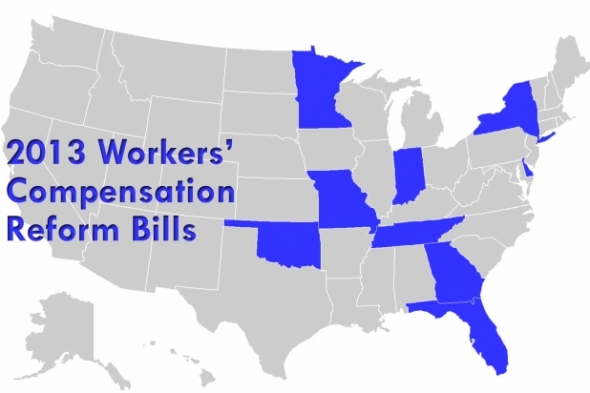
The cost of providing workers' compensation insurance is one of the top issues for companies of all sizes and across industries. Because it is regulated at the state level, companies need to stay abreast of issues in any state in which they do business. To date in 2013, nine states have seen significant workers' compensation reform bills signed into law. Highlights from the legislation in each of the nine states follows.

Oklahoma
Oklahoma's workers' compensation reform laws have received the most attention lately because of the inclusion of an opt-out provision, known as the Oklahoma Option. This legislation takes effect on February 14, 2014, and applies only to injuries occurring on or after January 01, 2014.

The ability to opt out has been a significant component of the Texas workers' compensation system for a number of years. Wyoming also has a limited opt-out provision. Approximately one-third of employers in Texas participate in the opt-out, including many large national retailers. The significant cost savings employers saw in Texas was one of the driving forces behind the Oklahoma Option.

The Oklahoma Option's application form is significantly different from that in Texas. Employers that opt out in Texas cannot simply endorse their excess liability policy to cover Oklahoma. Rather, employers in Oklahoma that choose the option are required to provide a written benefit plan that serves as a replacement for the workers' compensation coverage. This benefit plan must provide for full replacement of all indemnity benefits offered in the workers' compensation system. The plan can be self-insured, or coverage can be purchased from a licensed carrier. At this time, carriers are developing policies to provide both first-dollar and excess self-insurance coverage for the benefit plans under the Oklahoma Option.

The key component of the Oklahoma Option for employers is that it gives them full control of the medical treatment through their benefits plan. More than 60% of workers' compensation costs are medical treatment. With full medical control, employers will be able to ensure that injured workers receive the appropriate medical care from medical providers who follow widely accepted occupational medicine treatment protocols. This will eliminate doctor shopping, which is a significant cost driver in many states. The hope is that full employer medical control will eliminate unnecessary treatment, produce shorter periods of disability, and ultimately improve medical outcomes for the injured workers.

Unlike the Texas opt-out, the Oklahoma Option does not permit employees to pursue a negligence action through the civil courts. Workers' compensation is usually the exclusive remedy for an injured worker for any work-related injuries. In other words, the employee cannot usually pursue a separate tort action in civil court. In Texas, injured workers for employers who opted-out are free to pursue remedy in the civil courts. With the Oklahoma Option, any litigation must proceed through the normal workers' compensation administrative processes. This exclusive remedy has a narrow exception for injuries that were intentionally caused by the employer. Attorneys will have to overcome this very high burden of proof in order to pursue a civil complaint for a work injury.

Another difference between the Oklahoma and Texas opt-out scenarios is that the Oklahoma system is backed by a guarantee fund, which provides benefit payments in the event that a carrier or self-insured employer becomes insolvent and is unable to continue paying claims. The Oklahoma Option coverage offers guarantee funds for both self-insured employers and carriers. These are separate from the workers' compensation guarantee funds.

The Oklahoma reforms also include the switch from a court-based system to an administrative system. Oklahoma was one of the few remaining states where all workers' compensation disputes were adjudicated in the civil courts. Civil litigation is both very expensive and time-consuming. This change to an administrative system should reduce employer costs associated with litigation and produce more timely decisions, which are key elements of controlling claims costs.

Overall, the changes made in Oklahoma are positively viewed by employers and should improve Oklahoma's ranking as a top ten state for loss costs.

Delaware
The recently passed reform bill in Delaware was designed to control medical costs and encourage return-to-work efforts.

Medical cost savings will be achieved by:

  • Suspending for two-years the annual inflation increase on medical fees.
  • Lowering the inflation index on hospital fees.
  • Creating new cost-control provisions on pharmaceuticals.
  • Establishing a statute of limitations for appealing utilization review decisions.
  • Expanding the fee schedule to capture items that were previously exempted.

Other changes included more emphasis on return-to-work efforts, which will be considered in calculating the workplace credit safety program.

These changes are expected to lower employer workers' compensation costs in Delaware.

Florida
The use of physician-dispensed medication has been a significant issue in Florida workers' compensation. Physicians were charging several times what the same medication would cost from a retail pharmacy, and the costs were not regulated by a fee schedule. SB 662, which was recently signed into law, creates a maximum reimbursement rate for physician-dispensed medication of 112.5% of the average wholesale price, plus an $8 dispensing fee. Although the bill is expected to produce cost savings for employers in Florida, the fee schedule amount for physician-dispensed medications is still significantly higher than that for the same medications at retail pharmacies. There are savings; however, this will continue to be a cost driver in the state.

Another issue impacting workers' compensation costs in Florida is that the First District Court of Appeals, in two separate rulings, has found sections of the workers' compensation statutes unconstitutional. Under the Westphal decision (Bradley Westphal v. City of St. Petersburg, No. 1D12-3563, February 2013), the court decided that the 104-week cap on temporary total disability (TTD) benefits was "unfair" and violated the state's constitutional right to access the court and "receive justice without denial or delay." Injured workers are currently limited to 260 weeks of TTD benefits, which was the cap under the prior law. There is concern that the arguments used in Westphal could also be used to invalidate the 260-week limit. The Court has agreed to review this decision en banc, so the ruling is not final.

In the Jacobson case (Jacobson v. Southeast Personnel Leasing, Case 1D12-1103, June 5, 2013), the court found unconstitutional a section of the Act that prevented injured workers from hiring an attorney for motions for costs on disputed claims, as this violated their right to due process.

The Jacobson case is very narrow in scope and has limited impact, but the Westphal decision has potential to significantly increase employer costs. With these cases, there is growing concern in Florida that attacks on the constitutionality of the workers' compensation statutes will continue, further eroding prior reforms that produced significant employer savings.

Despite savings produced via the fee schedule for physician-dispensed medications, if the court upholds the decision in Westphal, the associated costs will outweigh any savings from the recent legislation.

Georgia
Legislation passed in Georgia should have a positive impact on workers' compensation costs for employers. Effective July 1, 2013, medical benefits for non-catastrophic cases are capped at 400 weeks from the date of accident, whereas previously, injured workers were entitled to lifetime medical benefits for all claims. This change significantly shortens the claims tail for non-catastrophic cases. By eliminating exposure for lifetime medical coverage on all claims, it also reduces the potential exposure on any Medicare Set-Aside, as Medicare's rights on a workers' compensation claims are confined to the parameters of the state law.

In order to receive this concession from labor on the medical costs, employers agreed to increase the indemnity rates for temporary partial disability (TPD) and TTD. The indemnity rate increases are as follows:

  • TPD: $334 to $350 for a period not exceeding 350 weeks from the date of injury.
  • TTD: $500 to $525 per week for a period not exceeding 400 weeks from the date of accident.

Indemnity rates in Georgia had not increased since 2007.

Another change involves a requirement that an injured worker make a legitimate effort to return to work when a modified-duty position is offered. The employee must complete a full work shift or eight hours, whichever is longer. If the injured worker feels that he or she is unable to work beyond that, benefits must be reinstated and the burden is on the employer to show the work offered was suitable. If the employee does not complete that full shift, then the burden of proof does not shift back to the employer and the employer can suspend benefits.

The cost savings from capping the medical benefits is expected to slightly outweigh the cost increases associated with the indemnity maximum rate increase. Thus, the net impact to employers should be a slight reduction in workers' compensation costs.

Indiana
Research indicates that workers' compensation medical fee schedules lower medical costs. In Indiana, legislation was passed that establishes a hospital fee schedule at 200% of Medicare rates. This is consistent with other states that base their fee schedules on Medicare rates. The bill also capped the price for repackaged drugs and surgical implants. Since repackaged drugs and surgical implants were previously outside the fee schedule, these caps will help to reduce employer costs. The fee schedule takes effect on July 1, 2014.

The legislation also included changes to indemnity benefits:

  • Gradual average weekly wage (AWW) increase of 20% over three years, beginning with a 6% increase on July 1, 2014, and up to 20% over current AWW by July 1, 2016.
  • An increase of 25% in permanent partial impairment or disability (PPI or PPD), from $1,400 per degree from 1 to 10 degrees to $1,750, gradually over three years. Higher PPI ratings, above 10 degrees, increased from 16% to 22% incrementally over the same period.

Indiana had not increased its maximum indemnity benefit for many years, so the general consensus is that the increase was overdue.

Given that medical costs typically account for 60% of the total workers' compensation expenditure, the decrease in medical costs from these reforms should offset the increase in indemnity benefits. The expectation is that this legislation will produce a small degree of savings for employers.

Minnesota
Minnesota joined most other states in amending its statutes to allow for mental-mental injuries (a psychiatric disorder without a physical injury). The law provides that the employee must be diagnosed with post-traumatic stress disorder (PTSD) by a licensed psychiatrist or psychologist in order to qualify for benefits. However, PTSD is not recognized as a work injury if it results from good faith disciplinary action, layoff, promotion/demotion, transfer, termination, or retirement.

Other changes include a cap on job development benefits and a restructuring of how attorney fees are paid. There is also an increased cost-of-living adjustment (COLA) for permanently disabled workers and an increase on the maximum indemnity rate. Lastly, rulemaking authority is now in place to include narcotic contracts as a factor in determining if long-term opioid or other scheduled medication use is compensated.

The job development benefits and narcotic use in Minnesota are significant cost drivers, so these are positive limitations for employers. However, the increase in indemnity rates, COLA, and coverage of mental-mental claims all add to employer costs. Thus, a slight overall increase in claim costs is expected as the result of the legislation passed in 2013.

Missouri
Missouri's reforms were focused on addressing the insolvent second injury fund and returning occupational disease claims to the workers' compensation system.

The Missouri Second Injury Fund has been plagued by problems for several years. It was heavily utilized by injured workers to supplement permanent partial disability awards. The fund became insolvent when prior reforms capped assessments that were supporting it while not reducing the claims that were covered by it. Under these new reforms, which are effective January 01, 2014, PPD claims are excluded from the second injury fund. Access to the fund will be limited to permanent total disability (PTD) claims where the total disability was caused by a combination of a work injury and a pre-existing disability. In addition, employer assessments to cover the funds' liabilities are increased by no more than 3% of net premiums. These increased assessments expire December 2021.

The new law also indicates that occupational diseases are exclusively covered under the workers' compensation statutes with some exceptions, which are noted below. The Act also establishes psychological stress of police officers as an occupational disease under workers' compensation.

Bringing occupational disease claims back under workers' compensation came at a cost. Trial lawyers in Missouri had significant influence in crafting this legislation. The act defines "occupational diseases due to toxic exposure" and creates an expanded benefit for occupational diseases due to toxic exposure other than mesothelioma — equal to 200% of the state's average weekly wage for 100 weeks to be paid by the employer. For mesothelioma cases, an additional 300% of the state's average weekly wage for 212 weeks shall be paid by employers and employer pools that insure mesothelioma liability. These expanded benefits are in addition to any other traditional workers' compensation benefits that are paid. Also, these enhanced benefits are a guaranteed payout to the injured worker or his or her estate. It is very unusual to see guaranteed payout of benefits in workers' compensation, so there is potential that this will lead to an increase in toxic exposure claims being filed under workers' compensation.

In addition, employers will no longer have subrogation rights on toxic exposure cases. This is a potentially significant issue. Often, attorneys do not bother filing for workers' compensation on such cases, as their focus is on larger awards available on the tort side. Attorneys know any workers' compensation benefits have to be repaid under subrogation. There is concern from some employers and defense attorneys that eliminating subrogation rights will actually encourage filing more toxic exposure claims under workers' compensation.

The establishment of a "Meso Fund" is also creating confusion. Employers must opt into this fund, and it is supported by additional assessments against the employers in an amount needed to cover the liabilities. If an employer does not opt into the Meso Fund, their liability for a mesothelioma claim is not subject to the workers' compensation exclusive remedy and action may be pursued in the civil courts. Most employers do not have exposure to mesothelioma claims, so it is expected that the only employers who will join the Meso Fund are those who frequently see such claims and are looking to spread their risk to others.

Between the increased assessments, expanded benefits for toxic exposure, and the loss of subrogation on toxic exposure cases, it is expected that this legislation will increase costs for employers in Missouri.

New York
Governor Cuomo has indicated that the workers' compensation reform legislation he recently signed into law will reduce employer costs by about $800 million annually. These savings are derived primarily by streamlining the assessment collection process and eliminating the 25-a fund and its associated assessments. New York's workers' compensation assessments are the highest in the nation, so employers welcome any relief in this area.

Many employers are questioning whether this legislation provides any real savings. Because the streamlining process is not known, whether or not assessments will be significantly lowered is still unclear.

The 25-a fund covered claims that were reopened for future medical treatment. Eliminating this fund does not save employers money. As occurred when the 15-8 fund (second injury fund) was eliminated under the last reforms, the claims previously paid by these funds will now be paid by employers directly, so there is no net savings realized. In addition, running off the 15-8 and 25-a funds will take several years, so the assessments — in particular those for the 15-8 — will continue. Because of the continued assessments, shutting down these funds will actually increase employer costs in the short-term. The long- term impact should be cost neutral, with the employers paying the claim costs directly, instead of through assessments.

Finally, the minimum weekly indemnity benefit was increased from $100 to $150. This will have a negative impact on employers who hire part-time workers earning near the minimum wage.

Until the impact of the streamlined assessments is known, it is impossible to quantify the overall impact this bill will have on employers. However, after the legislation passed, the New York Insurance Rating Board recommended a double-digit rate increase for the second consecutive year, indicating that they are skeptical the law will produce significant savings.

Tennessee
Tennessee also moved its workers' compensation dispute resolution process from a court-based system to an administrative system, leaving Alabama as the only state that still uses the trial courts for all such litigation. As mentioned in regard to Oklahoma, this should reduce employer costs associated with litigation and provide more timely resolution of disputes.

Tennessee also amended its law to provide for strict statutory construction of the Workers' Compensation Act. The law previously required that close disputes be adjudicated in favor of the injured worker. The switch means that the administrative courts no longer can favor either party and must strictly follow the statutes. In theory, this should lead to a much narrower interpretation of the statutes and reduce the courts' expansion of what is covered under workers' compensation. However, strict construction can work against the employer if the language in the statutes is vague. For example, several years ago Missouri switched to strict construction, which resulted in some unintended consequences. The courts in Missouri issued many decisions that were unfavorable to employers because the statutes in Missouri did not strictly indicate that occupational disease was subject to the exclusive remedy of workers' compensation or that permanent total disability benefits stopped at the death of the injured workers.

Calculation of permanent partial disability (PPD) has also been changed in the new Tennessee law. The multipliers for not returning an injured worker to employment have been eliminated in favor of a system based primarily on the impairment rating. Overall, PPD is expected to decrease under the new system. Until cases are adjudicated under the new system, however, this remains to be seen.

Tennessee also now requires a higher burden of proof on causation. Employees must prove that the workplace is the primary cause of any injury, meaning that the employment contributed more than 50% percent in causing the injury. This is expected to significantly reduce claims where an employee's pre-existing conditions are the main cause of the work injury.

Finally, a medical advisory committee was created to develop treatment guidelines for common workers' compensation injuries. In other states, these treatment guidelines have helped to lower medical costs. Until these guidelines are actually in place, the exact impact is unknown.

The workers' compensation legislation in Tennessee was designed to make the state more attractive for businesses. Employers should see lower costs as the result of the reforms.

Pending Legislation
At the time of this article, some state legislatures were still in session with pending workers' compensation bills. It is important for companies to stay informed on state-level changes to workers' compensation laws as they can have significant impact on costs and approaches to managing this key risk area.

Author's Note: I would like to thank members of the National Workers' Compensation Defense Network (NWCDN) for their assistance with this article. They are a tremendous resource in my efforts to monitor workers' compensation developments nationwide.

Leap Year: Season 2, Episode 8 - Behind the Hologram

A general liability policy can cover a small business for potential claims of advertising injury.|


Leap Year Season 2: Episode 8 by Mashable Maybe Olivia actually learned something about marketing from her paramour, the Livefy CEO, after all. Turns out she was secretly filming the C3D team and posting their startup adventures as a new online series — Behind the Hologram. A startup web series as a plot point in Leap Year, a web series about a startup — it doesn't get much more meta than that. And in both cases viewers are watching these series to see if C3D can actually get their product launched on time. Now Bryn's threatened Andy Corvel's life and kidnapped June Pepper. Nothing like raising the stakes just when things were starting to feel a little more like a regular old boring startup just trying to make the next billion dollar product. It's hard to tell exactly what's going through Bryn's mind right now, but her witty repartee with Remy the Detective was straight out of Law & Order or some old detective novel. But, for all her quick, acid responses, she might have actually exposed C3D to some real potential issues through the videos she posted on Behind the Hologram. It's not so much that Bryn threatened to kill Andy Corvel, that's serious, but something for the police to address. However, the incendiary remarks she made about both Corvel and Livefye could potentially open C3D up to charges of slander or libel from their competitors, or their benefactor. Most startups don't threaten anyone with physical harm, but quite a few have gone a little overboard in promoting their product and putting down the competition. Of course, there's small business insurance to cover this. C3D would be protected from potential claims of advertising injury through their general liability policy. What's not covered? Kidnapping and death threats. That's something the team will need to deal with on their own. So, if the Livefye office is fake and Andy Corvel paid off Derek's lawyer fees, what exactly has been going on this whole season? And who actually stole their prototypes?

Hunter Hoffman

Profile picture for user HunterHoffmann

Hunter Hoffman

Hunter Hoffmann is head of U.S. communications at Hiscox and is responsible for media relations, social media, internal communications and executive messaging. He joined Hiscox in August 2010 and has a B.A. from Trinity College (CT) and an M.B.A. from Cornell University.