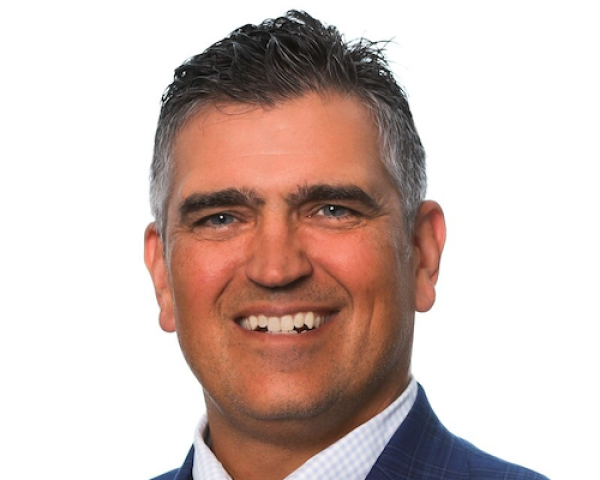
Everyone is talking about AI, automation, and how fast insurance needs to move. Those are important conversations to have. In my role, none of that matters if the fundamentals are not in place.
That was one of the central themes in Send’s recent INFUSE webinar, “Getting the Foundations Right: Building an Underwriting Engine for 2026,” that I participated in recently. The discussion brought together perspectives across technology, consulting, and underwriting, from me, Matt Carter from Altus Consulting and Daryn Upil of The Hartford. What stood out most was how often we came back to the same point: If you want underwriting to be faster, smarter, and more scalable, you must get the foundation right first.
That foundation is not just about technology. It is about underwriting discipline, clarity of decision-making, trustworthy data, and making sure the organization is focused on the things that create value.
The market is changing, and underwriting must respond
Underwriting has always evolved alongside the market, but the pace of change now feels different. In the U.S., we are dealing with increasingly complex catastrophe exposures and continuing legal system abuse. Across markets, customer expectations are rising, data is expanding, and the pressure to make better decisions faster continues to grow. That creates real opportunity, but it also creates risk.
It is easy to get caught up in the promise of new tools. Every insurer is hearing about what AI can do, what automation can unlock, and how quickly operations can be transformed. But underwriting is not improved by technology alone. It improves when technology strengthens sound decision-making.
That, to me, is the key distinction. We should absolutely be looking at how to use AI, data, and automation to build an underwriting engine. But the engine only works when it is built on a solid underwriting foundation.
Technology can accelerate decisions, but it cannot replace underwriting fundamentals
Great underwriting starts with the fundamentals. Do you have clear underwriting rules? Do you understand your appetite? Do your people know what good business looks like? Can you make consistent decisions and explain why they were made?
If those things are not in place, adding more technology does not solve the problem. It just speeds up the wrong process.
That is why the conversation around modernization should begin with the underlying operating model and not just the tools. We need to ask if our processes are designed the right way, is the data useful, and are the outputs we are generating trusted by the people making decisions every day.
There is a lot of noise and urgency in the market right now. Leadership teams are asked every day how they are using AI and how quickly they can implement it. We need to remember that underwriting is a balance of art and science; you can change backwards and forwards, but the art will never go away. We need to stay focused on what matters most to the business and build from there.
Legacy systems are not just a technology problem
Legacy systems remain a challenge for many carriers both operationally and from a people perspective.
A lot of insurance organizations, especially long-established carriers, have systems that have been around for decades. In many cases, those systems have done exactly what they were designed to do. But the industry is now asking more from them…more data, insight, integration, and flexibility in how we deliver underwriting. This is where the strain starts to show.
We also can't ignore the talent piece. When new people enter the industry, they are used to modern technology in almost every part of their lives. If they join a company and immediately work on outdated systems that feel disconnected from how they expect technology to function, it creates friction from day one. Modernization is not just about efficiency. It is also about creating an environment where talented people can do their best work.
Data should support decisions, not create distractions
Data came up repeatedly during the webinar, and better data is one of the biggest unlocks for underwriting.
The goal is not to collect as much data as possible. The goal is to have the right data to support better decisions.
As underwriters, we have more technical information at our fingertips than ever before. We can find out what a building is made of, when it was built, if it is in a hail zone, or sits in a higher crime area. Those, and other risk indicators that may apply, are incredibly valuable. They help us work faster and with greater precision.
We can get all the technical data and risk about a property and still not know enough about the person or business behind it. You may not know how seriously that business owner takes safety. You may not know the quality of their management practices. You may not know how they operate day to day. Those things still matter. They are often what separates an acceptable risk from a great one.
That is why I don't believe technology will replace underwriters. I see it changing where they spend their time. The more we can automate routine tasks and surface technical data quickly, the more valuable underwriters become in the areas where judgment, conversation, and commercial understanding matter most.
The future of underwriting is still human
There is understandable concern in the market about what AI means for the underwriting profession. My view is that the role is not disappearing; it is evolving.
The science side of underwriting is going to become stronger, faster, and more accessible. We will have better tools, broader data sources, and more intelligent workflows helping us evaluate risk.
But underwriting is still a business of judgment. It still requires negotiation, relationship management, pattern recognition, and the ability to see beyond what is immediately visible in the data.
The human element is not going away because as the technical aspects of underwriting become more automated, the softer skills are going to be even more important. Underwriters will need to ask better questions, challenge assumptions, interpret signals, and make thoughtful decisions in situations where there is no perfect answer. That is not something you can simply hand over to a model.
Leadership has to create focus
One of the questions raised during the webinar was how leaders make time to understand the real problem when there is so much pressure to move quickly. I think the answer comes back to focus.
Every leadership team today has more opportunities than they can pursue at one time, so they need to prioritize and decide what matters most to give comfort and confidence to their teams.
The differentiator could be service for some, underwriting expertise, product design, or distribution for others. Technology should help strengthen those advantages and not distract from them.
Leadership should always encourage innovation, but remember they need to be aligned around the right kind of innovation.
Foundations create flexibility
My main takeaway from this webinar is that building an underwriting engine for 2026 and beyond starts with getting the foundations right. If not, technology will just add complexity. This is an exciting time to be in the industry, and we all need to stay focused, prioritize, and bring people along on the journey.