
Download

An Inside Perspective On Automobile Insurance Fraud, Part 2

The fight against insurance fraud may be a never-ending war, but there are still skirmishes to be won.

This is Part 2 in a two-part series on automobile insurance fraud. Part 1 in the series appears here.

Who Participates In This Type Of Insurance Fraud?

Just about anyone. You'd be surprised. Even people who consider themselves upstanding citizens will get drawn into the business, because they see it as a victimless crime. One of the first cases I investigated involved a college-educated, former Farmers Insurance adjuster from Ohio. One day, he just decided to go to the dark side of the earth and started staging collisions from Ohio to California. He got away with $11 million before we caught him and put him in prison. He had so much activity going on that he carried a briefcase with him, and in that briefcase were 13 valid licenses from Colorado, Ohio and Texas — all valid — along with lots of crib notes from all of his activity. In an unlucky turn of events for the fraudster, he was stopped for speeding one night. As he opened his briefcase to get out a driver's license, that sheaf of crib notes was visible to the highway patrol officer, who reached right over his head and grabbed it. Lesson learned. Keep your crib notes to yourself.

People don't necessarily set out to go into insurance fraud as a career, but it's easy to see the attraction, said Borloff. "When you're first introduced to the people in this business, they say, 'This guy, he's in the insurance business,' and everybody understands he doesn't have an insurance company, he's in a different side of the business. But he's a well-to-do guy, with a house in Beverly Hills, with a car, with everything. And you ask yourself, 'Why can he do it and I can't?' And then you start to learn."

It starts easily enough. The newcomer becomes the defendant in one staged accident, and voilà, $1,000 just falls into his lap. "It's a big deal for this guy," said Borloff. "He just calls the insurance company, and that's it, he's a rich man. He wants to do it again. Trust me, he wants to do it again and again." However, a savvy criminal enterprise will not use this guy again. They will use another guy, then another. So now our newcomer is intrigued to work it from the other side of the fence, to run his own business.

First he needs to recruit lawyers and doctors — and that's surprisingly easy, said Borloff. Where would you find an attorney willing to take such a risk? "Word of mouth or the Yellow Pages," Borloff quipped. "Any attorney wants more business." The business is so attractive that it is relatively easy to find professionals who want to be a part of it.

"Think about it. Who is this lawyer guy? He spent three years in law school, and he spent a lot of money. He is out of school now, and he has a lot of debt. What can he get? He can get a job for about $40,000 to $50,000 a year at the most, if he is lucky. So he opens his own office. He has just one secretary, and he's waiting for clients. But there are no clients, because there are a lot of lawyers around with the big names, big firms and so on. He is desperate.

"If you come to this guy and say, 'You know, I can give some business to you,' what will he say? As a lawyer, he is like an innocent girl — he wants seduction. You should not say to him, 'It's a staged accident.' No, you say, 'I can give you some business, but you will have to follow my instructions and pay me 50 percent.' He says, 'Of course,' and he agrees. If you teach him properly, he will properly do his business for you."

Is it really that easy? Are there attorneys willing to look the other way at the likelihood that their cases are fraudulent? Yes. In a separate case, when I had an attorney in an investigation room and got him to confess, I asked him, "What were you thinking?" This was an aha moment. He said, "It's quite simple — there aren't enough real accidents to go around." It's that simple.

Besides, real accident cases get complicated and messy, Borloff said. "Attorneys don't like real accidents because there are so many problems. There isn't a cooperative defendant — he says, 'No it didn't happen.' There are too many problems. It's easy for me to work with defendants who say, 'Yes, I hit him, I was not paying attention,' and with attorneys who want money."

Many of the people involved in these schemes don't quite see it as wrong but rather as a rightful Robin Hood redistribution of monies. "I had one good, white-bread American guy. He was the perfect defendant," said Borloff. "He did the accident, and then on the way home, he sees somebody not driving the proper way. He gets on the phone, calls the police, and gives them the license plate number. I said, 'You turned him in? You broke the law too.' He said, 'No, that was the insurance company.' Sometimes the insurance company is not seen as the good guys."

Fraud Ring Leader: "This Is A War That Will Never End"

"If you want to win this war, you can't do it," said Borloff. "It's like the Cold War between the USA and Soviet Union. There was intelligence and counterintelligence, and it went on for a long, long time." Insurance companies develop more sophisticated fraud detection and prevention tactics, but the criminal enterprises adapt and become more sophisticated too. An insurance company known to have strong defenses may repel fraudsters, but only for awhile. Pitted against the fraud rings, insurance companies are at a disadvantage, said Borloff.

They lack depth in claims adjusters. "A good, educated adjuster knows how to work — he has some police experience, maybe some counterintelligence experience," said Borloff. "I ask you, how many adjusters do you have with these credentials? I can tell you 1 percent is a generous calculation."

Even if you can recognize staged collisions, there's still generally a payout. "You can try to fight it, but it's probably just to reduce the amount you have to pay," said Borloff. Adjusters can try to bluff — say that the examination of the car indicates there weren't four passengers, or that damages are inconsistent with the accident description — but that doesn't work. The stager knows a lie when he hears it.

The legal system doesn't offer much redress. When a claim looks suspicious, a smart adjuster asks for a deposition and asks smart questions of the plaintiff in front of him. He may do his best, probing for details, hoping to ferret out inconsistencies. "But it's worthless," said Borloff. "It doesn't matter what the answers are. If the people said back pain the first time, and neck pain the second time, what does it prove? It proves nothing. You can't go to court with this stuff. After the deposition, the adjuster doesn't have a lot of choices. He has to negotiate the price."

The adjuster can make a lowball offer, but a good defender will push back, knowing the adjuster's supervisor will approve more, and the insurance company doesn't want to go to court. In court, the insurance company can only argue on the facts, but the facts are that the incident did happen, and the plaintiffs do report that they suffered pain and injury from it. Can you prove they didn't? You can't pressure defendants to recant, because they're in bed with the criminal enterprise. They've got the money and face jail time if they confess.

"In small claims court, insurance companies have no chance," said Borloff. "A claims adjuster can come and represent the company, but if it happened, it happened. If you say you have pain, I have pain, we have a medical bill, and you have to pay toward this. I have a limit of $5,000, and each defendant can ask about this amount of money. And what does this situation get insurance companies? Nothing but a lot of trouble, and more trouble. The adjuster doesn't want this problem. His supervisor doesn't want this problem." The fraud enterprise wins.

Let's have a reality check here. The insurance industry will never stop this. People are going to try to scheme our insurance system as long as the system we have in place today exists, and ours is one of the best in the world. It takes care of consumers when they get in trouble. But with that, you will always have people thinking of ways to scam the money. Change the system, and they come up with a new scheme. This is just what people do.

How One Investigative Team Won

The fight against insurance fraud may be a never-ending war, but there are still skirmishes to be won. I led a five-year undercover investigation of a large and sophisticated organized crime ring in Southern California — Borloff's, in fact — and won.

We started with 63 suspected fraudulent claims that were on file in the San Diego office of the Department of Insurance. There were quite a few interesting outliers in those claims. For one, everybody was of Russian descent. These were all rear-end collisions, sudden stops. Now, we all know that sudden stop rear-end collision is a quick pay. It's pretty easy to determine at-fault in these collisions — a couple hundred of them happen every day in Southern California. It's not that big a deal.

Then an individual in custody for an unrelated matter came forward and offered information that made these claims look particularly interesting — even named two primary players. A formal task force was established with the equivalent of a joint powers authority between federal, state and municipal law enforcement. An undercover officer was introduced into the San Diego community to try to identify the ring leaders and learn how they were recruiting others into the organization and conducting business.

I didn't want to chase stuffed passengers or street offenders at the lower level. I wanted to go deeper into the organization — to identify the stagers, attorneys and physicians who facilitated those claims. And it worked.

A Collaborative Effort
The undercover operation was a joint effort of the California Department of Insurance's Fraud Division, the FBI, the San Diego Police Department, the Immigration and Naturalization Service (INS), and the National Insurance Crime Bureau (NICB). Undercover agents came from the California Department of Insurance, the San Diego Police Department, the California Department of Health Services, and the Bureau of Narcotics Enforcement.

Seven major insurance companies cooperated by providing pretext policies set up solely for the purposes of the investigation. Only the companies' regional vice presidents of claims and Special Investigations Unit directors knew about the investigation. They agreed to have the claims legitimately paid, so the money could be tracked and there would be no suspicion of law enforcement involvement.

A lot of thought and effort went into this to backstop the identities of the undercover people. If a private investigator or lawyer ran these people, they would show up as true legitimate people with valid Social Security numbers, credit histories, houses, vehicles — it was backstopped to the hilt. You'd have no idea that it was law enforcement.

Working From The Inside
We successfully infiltrated this ring for more than 18 months and were staging collisions in San Diego, Los Angeles and San Francisco. Borloff was identified in the very first staged collision, and then the lead undercover detective partnered with Borloff to stage more collisions and car thefts. Borloff gave instructions to his new business partner about how to get involved in this game. For every car and policy he provided, the undercover officer received $2,500 – a total of $75,000 over the course of the investigation.

Little did Borloff know these cars were coming from the NICB salvage pool, and every move was being recorded. During the five-year period, Borloff was responsible for staging more than 100 automobile collisions, exposing the insurance industry to an estimated $2 million in fraud losses.

Five Years To Success
It was kind of dicey. The [cooperating] insurance companies paid out more than $230,000 in claims into this. However, everybody had the bigger picture in mind — the potential economic loss prevented (PELP), an FBI metric that forecasts the money that would have been lost if the criminals continued their activities unabated.

When it was time to strike, the United States Attorney's office in San Diego handled federal prosecution and the Los Angeles County District Attorney's office handled the state prosecution. This was a seminal case that eliminated the issue of double jeopardy. In the State of California, you can arrest and convict someone in federal court for mail and wire fraud with a scheme of insurance fraud, and then charge them at the state level with insurance fraud, and it's not double jeopardy.

I brought the investigation from cradle to grave. I started as the supervising agent in the San Diego Fraud Division of!ce, and by the time the investigation was over, I was captain of that office. The investigation netted attorneys, physicians and chiropractors along with their office staff, eight cappers and 44 claimants — and effectively shut down one of the largest such rings in Southern California.

The Information Imperative

"The main problem for insurance companies is they don't have enough information," said Borloff. "When the adjuster discusses the case, he knows nothing. He knows just this is the car, this is the car damage, these are the people. He can check the records — see these people didn't have an accident for two years, three years and think they sound like nice people. But he's still suspicious, he pursues it all the way, and still he gets nothing, because it's still trouble, still problems."

In order to detect suspicious claim activity, insurance companies need access to transaction information and supporting detail that typically resides in different systems. Transactions viewed in isolation could appear normal, but they might look quite different if you could correlate those transactions across related entities. However, a unified view based on multiple internal data sources is rare. Rarer still is the organization that has augmented that view with external data as well.

As part of an 18-month Command College program of graduate study, I designed a virtual office environment for a law enforcement environment. After graduation, that work led to an assignment to design a fusion center to promote information-sharing among federal, state and local entities. The fusion center I designed was the first in the nation to incorporate law enforcement data and financial data, which led to new discoveries. For example, we threw the system up for a test run, and investigators in the San Francisco Bay Area were playing with it. From working with the data and social networking analysis, we found two chop shops in Dallas that the local police department didn't know about.

Smarter integration and analysis of data will be a strong defense to the growing fraud problem, as well as a way to meet the pressures to achieve more with less. The data being gathered through the claims process is growing bigger and bigger, so you need to start looking at things differently and working smarter, and that means leveraging your data together. A number of statistical approaches can be created to build a solid predictive solution. For instance, when you combine business rules, anomaly detection (finding outliers), and social media analysis, you can identify suspicious claims even if there is no prior claim history.

Getting a handle on the fraud problem is not about processing more cases. It is all about working the right cases to make an impact to reduce fraud. If you do not identify the true cost drivers in fraud — the licensed professionals, administrators, cappers, stagers and other individuals controlling the criminal enterprises — you will never truly reduce the amount of insurance fraud in our communities. But when you apply best practices and analytics together, you create a powerful tool and business model to reduce fraud and provide great ROI for anti-fraud programs.

This series of articles is taken from the SAS white paper of the same name. © 2013, SAS Institute Inc. Used by permission.

An Inside Perspective On Automobile Insurance Fraud, Part 1

Why it's so easy to steal from insurance companies – and what to do about it. Insights from a presentation by a fraud investigator and a fraud ring mastermind.

This is Part 1 in a two-part series on automobile insurance fraud. Part 2 in the series can be found here.

Introduction

Traffic engineers would love to unblock the clogged arteries of Southern California's freeway system, where rush hour is anything but "rush" — more like gridlock.

But in a land where one's car is one's empire, one's freedom and personal statement, carpooling is a tough sell. The high-occupancy vehicle (HOV) lanes have scant occupancy.

In fact, cars carrying multiple passengers are such a rarity that this scenario alone raises red flags for auto insurance claims adjusters.

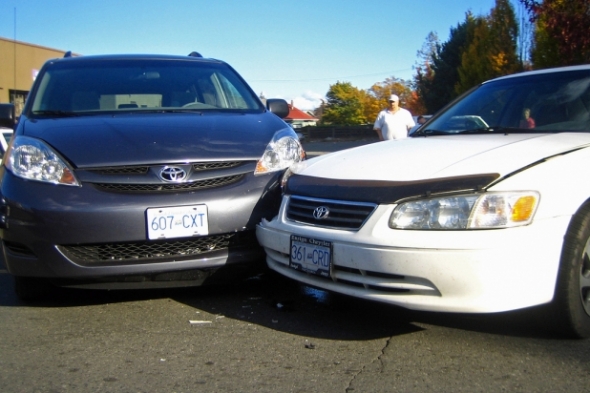
Operating under the radar is a fast-growing segment of the so-called "underground economy" — organized criminal enterprises that stage automobile collisions with the intent to defraud insurance companies of medical payments. In some cases, the entire incident is created on paper, with fictitious vehicles and false identities. In other cases, the perpetrators take real vehicles with legitimate insurance policies out to vacant lots or remote fields to crash them and then fill out a counter report. The most compelling cases are the ones where participants intentionally ram vehicles together on city streets — often a rear-end collision in a left turn lane — then dial 911 and wait for police and emergency medical services (EMS) to arrive. This approach triggers a police report and EMS records, which lend an air of legitimacy to the event. It really happened.

Based on instructions from a stager, the driver and two or three passengers — who are known as "stuffed passengers" — report neck and back injuries. The passengers later visit a physician or chiropractor who is in collusion with the criminal ring. The patients sign in and leave without receiving any treatment. If the insurance company balks at paying the specious claim, the claimant enlists the help of an attorney who is also party to the scheme. The attorney is tenacious, willing to go to court, generally able to bluff until the insurance company backs down and settles.

In the process, everybody except the insurance company gets easy money. Property damage to the vehicle is paid to the owner of the vehicle, while multiple players split the proceeds of the settlement for medical payments. In a typical case where the insurance company settles for, say, $6,000, each vehicle occupant might get $1,000, the lawyers and doctors collect their fees, and the enterprise leader retains 50 percent of the professional services fees plus the balance of the claimants' settlement, if any. If the enterprise leader successfully stages dozens of such incidents a month, it's a lucrative business.

This practice exploded in Southern California in the mid-1990s. If you are a Special Investigations Unit investigator, you are dealing with this every day. The average caseload for an adjuster or claims representative might be 150 or 200 a day, depending on the size of the company. At least 25 percent of that is some flavor of fraud. It's either a false claim or an embellishment to it. People are doing it. Even people who think of themselves as law-abiding are doing it, because they don't think of insurance companies as victims. This type of activity is so prevalent that our undercover investigators would hear paramedics on the scene saying, "Okay, which one of you is going to the hospital this time?"

Automobile insurance fraud is such easy money that the business is even creating unlikely bedfellows. For example, in South Central Los Angeles, the Bloods and Crips — gangs that have had an intense and bitter rivalry — are now cooperating with one another in organized insurance fraud, because it's more powerful and profitable to join forces.

Six Steps to a Successful Insurance Scam

Constantin Borloff (not his real name), the former leader of a successful and sophisticated fraud enterprise that operated in San Diego, Los Angeles and San Francisco, shares his top tips for making fraud pay. Having paid his debt to society, the ring leader now tells insurance companies how he was able to steal so much money from them, who does it and why it's so easy.

Go For The Med Pay Money
Borloff would insist that vehicle insurance policies have med pay coverage — coverage for reasonable expenses to treat accident-related bodily injury. Since this coverage follows the vehicle, passengers in a vehicle that has med pay coverage will likely be covered as well. Borloff gave vehicle owners a list of insurance companies who would freely provide these policies.

In theory, claimants are supposed to repay med pay money if they receive a settlement, but that doesn't happen according to Borloff. "For all history, maybe two times the insurance company asked for money back. If you say you don't have money and can't pay it back, they say, 'Okay, don't pay back the money.'"

Find the Inattentive Insurance Companies
Borloff also selected insurance companies with a reputation for laxity, the ones whose claims representatives didn't take a stand and ask the hard questions. "Big companies like State Farm or Farmers have millions of policies, good special investigation units and more experienced adjusters, so that's where you would see more problems. It's better to go to the smaller company or where it's not their main business. These companies usually pay more, while the big companies usually pay a little less."

Insiders in the business share this information, so they know which companies to avoid and which ones would pay off like loose slot machines in Henderson, Nevada.

What would make an insurance company an unattractive target? "I don't know what will stop me," said Borloff. "All insurance companies are bound by law to pay. So for us, the system is working perfectly. The insurance company can fight, and they have a lot of resources to fight, but eventually they have to pay something. Maybe more, maybe less, but eventually they have to pay something."

Choose Participants Who Won't Raise Suspicion
In a perfect world, your participants are white American citizens with clean driving records and their own drivers' licenses. Judges and juries look most kindly upon this type of claimant, according to Borloff.

It is equally important that their behavior fits accepted patterns. For instance, policies would be active for four to eight months before the staged collision. Claims would be modest, usually no more than $5,000 or $6,000. Activities were choreographed to avoid triggering red flags. "I know insurance companies have about 25 red flags," Borloff says. "What the claims adjusters know, the criminal enterprise knows twice. I knew about all these red flags, and I tried to avoid them."

Distributing the cases is one way to avoid detection, said Borloff. "If the enterprise will do, say, 20 collisions a month, the claims will go to five different insurance companies, each to a different attorney — 10, 15 or 20 different attorneys — and any given adjuster will have at most two cases to a specific attorney. Will the adjuster be suspicious about it? I don't think so. It's very dif!cult for the insurance company to catch these people in this situation."

Borloff tells of a fringe case where a woman, working against the advice of her stager, staged four accidents in a single week. She submitted claims to four different insurance agencies. All four claims were paid, but this pattern of activity could have exposed everybody in the fraud enterprise to scrutiny and discovery.

Pay More Than Lip Service To The Medical Treatment
When private investigators were first sent to wait outside medical clinics to observe and videotape (the comings and goings of visitors), the first people they caught were the ones who walked in, signed in and left within a minute. People quickly learned to stay longer inside the clinic and have follow-up visits at intervals that would seem appropriate for their injuries and type of care.

Keep Your Stories Straight
Cappers and stagers write notes for people so they can remember their stories when talking to claims representatives, and later on, if they meet with an attorney and go into depositions. Somehow, somewhere, there is a record of all this. If the ring is dealing in volume, there must be good notes, or they won't remember the details of a case, and that's how they get tripped up. Some stagers get tripped up simply by having these notes in their possession — in their offices or briefcases, waiting to be found during a routine traffic stop or search.

Insulate The Players From Each Other
These groups tend to function as classic cell networks. In an effective cell network, the claimant may or may not be exposed to the other people involved, or may be only exposed to the doctor but not to the attorney. That's how these people are protected from one another. Participants may not have a knowledge of what else the group is doing. When we arrested 72 people on a state level and brought them into interrogation rooms for 72 hours, it was pretty clear that they only knew their own activities or those of friends they had brought into the group. They had no knowledge of the bigger scheme. That's how you protect your enterprise.

The parties in these fraud rings learn never to admit to anybody that the accident was staged. Everybody in the enterprise knows it, but if you tell even one person, there's a point of vulnerability. It is especially important to insulate the medical and legal providers, because their professional licenses are critical to facilitate these claims. They take it all the way and never back down.

How often would a criminal enterprise walk away from a case because an insurance company's Special Investigations Unit got involved? "I would not walk away, but I would accept lower settlement, for sure," said Borloff. "One time one of my colleagues made a terrible mistake, and sent 63 cases to Allstate — one attorney, same office. They came to me and said, 'What should we do now, SIU is after us?' I said, 'Don't give up, try to fight,' but they decided to give up. It was the biggest red flag. They lost money. It upset people." Giving up is tantamount to an admission of wrongdoing.

This series of articles is taken from the SAS white paper of the same name. © 2013, SAS Institute Inc. Used by permission.

The Value Game™: A New Class Of Business Methods For The Condominium Reconstruction Market

The Value Game is a new class of business methods that alters the incentive structure of a distorted market such that everyone acting in their own best interest is in fact acting in the best interest of the community.

Part 1: Correcting a Distorted Insurance Market

For many condominium associations, the maintenance, repair, and reconstruction industry has devolved into a minefield of distrust and dysfunction. Countless lawsuits have taken their toll on the industry to the point of near dysfunction where many contractors simply walk away from condominium projects. The worst form of "capitalism" ensues where everyone acting in their own best interest is in fact acting in the counter-interest of their community. The Value Game promises to reset this negative incentives condition while enhancing community resilience.

Here's How The Problems Start:
The board of directors of a homeowner's association is entrusted by the residents to hire a contractor to perform a complicated reconstruction project. Unfortunately, condominium board members are not very good at writing contracts or issuing requests for proposal or collecting bids. When a contractor is selected, the scope of work is often poorly established. The expectations between the community and the contractor begin to diverge. Soon, a law firm is engaged my some residents to sue the contractor for damages. After a long battle, a settlement is awarded, but it is not enough to fix the problem after expenses are paid.

A Chain Reaction:
Fortunately, the contractor in the suit was insured, but this does not cover the personal, professional, and opportunity hardship of defending against the suit. The insurance company also increases the premium for coverage for condo projects. Most good contractors say, "it's just not worth the trouble." As the pool of available contractors dries up and the price for reconstruction increases, many condos are forced into deferring maintenance in a distorted market.

Cascading Failures:
After a while, a condominium springs a few leaks in their piping system. Each leak results in a relatively small water damage claim. When the insurance company notices several claims in the same building, they begin to fear that a mainline is about to rupture next, and threaten the condominium with cancellation of their policy unless the community replaces the entire system immediately. Now the insurance industry is in a double jeopardy: they force the contractor out of the market and they force the condo out of the market to basically avoid suing themselves.

The Dysfunction Deepens:
Banks will not make construction loans to condominiums that are not insured. Likewise, they will not make mortgage loans to buildings that are not insured. The property values plummet and the owners are sent under water. Soon they begin to default on the mortgages that the banks already hold. More maintenance is deferred as owners move out and renters move in. Buildings fall apart and become unsafe. Banks pull out of the market to avoid defaulting on themselves. The wider community suffers.

The Value Game
The Ingenesist Project is currently deploying The Value Game to the condominium reconstruction market with remarkable success. The Value Game is a new class of business methods that alters the incentive structure of a distorted market such that everyone acting in their own best interest is in fact acting in the best interest of the community. Clearly the intention is to demonstrate that asset preservation is the domain of engineering and not the legal system.

Here Is How The Value Game Is Formed:
The first thing is to identify the "shared asset" in whose best interest it is for everyone to preserve. In this case, the shared asset is the physical condominium building where preservation is the context about which a community interacts.

If we look at each of the players individually, we see some consistent patterns.

  • It is obviously in the best interest of the residents to have a safe and well-maintained home.
  • It is in the best interest of the contractors to have a successful and profitable interaction with the building.
  • It is in the best interest for the Insurance industry to reduce the risks that they underwrite.
  • It is in the interest of the financial industry to loan money into a viable, organized, and disciplined community.
  • It is in the best interest of the real estate industry to represent strong values and complete insurability of assets.
  • Finally, the broader neighborhood benefits from the presence of a viable condominium community.

In short, it is actually in everyone's best interest that the others are successful.

About The Value Game Game Board
The first rendition of the Internet was populated by static websites built for a person, or to sell a product, or to deliver entertainment, or to provide information. The next level of the Internet included social media, where users actually create the content that populates a website such as Facebook and Twitter, etc.

The next level of the Internet is taking on a form consistent with the Value Game where a social network is built about an asset that communities share.

Part 2: Case Study — High Rise Condominium Re-piping Project

The current case study is a condominium re-piping project in Portland, Oregon. The actual community consists of 200 units (400 residents) who occupy a single high-rise tower that must undergo a major reconstruction project that will impact everyone. The total value of the project is about 3 million dollars. This is real money in a real Value game.

For this project, we built a website for the physical building with its own social network where all of the different (and willing) players can interact with each other to preserve each other's best interests.

The first thing to accomplish is to reduce the likelihood of diverting incentives that can result in litigation. This may be accomplished by introducing strong community management. In this particular case, a professional engineering firm was hired to represent the best interests of the asset. The engineers represent the needs of the homeowners association to selected construction technologies, defined project scope, wrote the RFP, wrote the contracts, selected the contractors, and managed the project.

The Social Network Dynamics
The website used in this case study is a common open source Wordpress platform with a Buddy Press backend to provide "Facebook-like" features (except with privacy). The engineering firm submits all reports, surveys, test results, assessments, photographs, schedules, products, accessories, and plans onto the website for members to see equally (there are some exceptions to protect financial data).

Individual residents are invited to form "groups" and start "threads" in topics for which they have an interest or a concern. People naturally migrate toward other people with similar interests and they build relationships.

Contractors are able to see all of the assessments, conditions, and work scopes directly from the website instead of paper submittals. They can ask questions and post ideas of their own for community review.

Engineering firm(s) can monitor discussions and collect frequently asked questions, which are posted in a FAQ. Everyone gets the same correct answer to their questions without rumors or speculation.

Communities: Community meetings are held. There is no bickering or infighting because everyone is educated and prepared to ask unique and relevant questions of the presenters. When a community is unified, they can easily come together to make important decisions that impact the quality, cost, and schedule of the project.

The insurance company is given limited access to the website which demonstrates that the community is acting to mitigate the risks that the insurance company underwrites — this keeps the policy in force.

With website access, the insurance industry can also see that licensed engineers professionally manage the project in a vibrant community. This reduces the likelihood of litigation against contractors. The insurance industry can now classify this project among "commercial" insurance pool instead of the litigious condominium insurance pool.

Contractors feel comfortable with this professional engineering management and insurability, which brings more contractors to market thereby increasing the talent pool and reducing costs. At the end of the project they may get 400 likes on Facebook, YELP!, and Angie's List.

The bankers will have access to the website to monitor progress. With insurance policies fully enforced, banks will lend favorably to the homeowner's association which needs to fund a major reconstruction project. Banks will also lend favorably to mortgages in this structure because it is well maintained.

It is in the best interest of the community to be civil and thoughtful in their discussions knowing that they are being observed by some of the other stakeholders. This eliminates the incentive to be disruptive and increases the incentive to be engaged and productive in the project.

Over time, the website becomes a forensic record of all matters associated with the project. Everyone knows who said what, when, where, and why with an electronic time stamp. There is little to be disputed.

Interaction With The Wider Community:
Real estate agents always describe property in poetic hyperbole — they rarely tout the improvements that a community works so hard for. The website could be a place where a real estate agent can advertise their services in exchange for a promise to mention the re-piping project. The market will respond to a well-maintained building by an engaged community, which will drive real estate valuations up.

Hotels, restaurants, theaters, art galleries, service groups and civic organizations benefit from prosperity and resilience in their community.

In the end, the shared asset is preserved and everyone is profitable.

Update: Important Observations

In deploying the Value Game, we need to be careful of how much collaborative innovation we are able to introduce to a system that is normally adversarial. A general distrust of new ideas and the technological platforms that they depend on is still fairly high. For this reason, we estimate a 40% adoption level of the principles discussed here.

Outlook For The Private Directors & Officers Marketplace

We've had a sustained period of underpricing in the private Directors & Officers/Employment Practices Liability area as insurers compete for market share. With the loss frequency where it is and expenses rising, it is indeed time to reevaluate.

Private Directors and Officers Liability (D&O) policies are generally combined policies including D&O and Employment Practices Liability (EPL). Although they are typically marketed as Directors & Officers policies, and there are definitely D&O claims, claims frequently come from the Employment Practices Liability side of the form. Private Directors & Officers carriers find it challenging to cope with the high frequency of Employment Practices Liability claims that come with this line of business.

The premiums associated with these policies have been creeping up over the past few years, and now is an appropriate time to investigate and report on the causes. Rather than give you generalities that claims are frequent, here is some of the data that supports what the insurers are telling us.

2012 EEOC Complaints
Top Five States Total Complaints Percent Change Since 2010 2010 Total Complaints Total Population 2010*
Texas 8,929 -4.1% 9,310 25.1 million
Florida 7,940 2.1% 7,779 18.8 million
California 7,399 3.3% 7,161 37.3 million
Georgia 5,903 2.3% 5,771 9.7 million
Illinois 5,490 3.8% 5,288 12.8 million
Year Total Total Complaints - All 50 States
2012 99,412
2011 99,947
2010 99,992
2009 93,277
2008 95,402

* The population totals are included to show that the highest volume of claims generally come from the largest states.

The Equal Employment Opportunity Commission (EEOC) isn't the only regulatory body bringing employment actions against employers — state agencies like the California Department of Fair Employment and Housing (DFEH) are filing cases as well. In its 2010 annual report, the California DFEH notes that they filed between 17,500 and 20,000 cases each year between 2007 and 2010 (2011 and 2012 numbers are not yet available). The department also estimates that the average post-accusation case settled for more than $40,000.

Let's put this into perspective. The Betterley Report: Employment Practices Liability Insurance Market Survey 2012 (December 2012) estimates the total Employment Practices Liability market at around $1.6 billion in premium. Just for discussion purposes, let's assume that the Department of Fair Employment and Housing estimate is applied to all claims. At $1.6 billion in total premiums collected, the insurance marketplace could handle 40,000 claims and break even (40,000 claims X $40,000 average settlements = $1.6 billion). Considering we know there are more than two times that many EEOC complaints, plus tens of thousands of other state agency claims, we know that the volume of insured claims exceeds 40,000 per year.

Since we know that there are more than 40,000 claims a year, the second half of the debate is what these claims cost. The Department of Fair Employment and Housing has their estimate for out of court settlements at over $40,000. Jury Verdict Research, a publication that puts out jury trial settlement trend data, indicated in its 2011 report titled, "Employment Practices Liability: Jury Award Trends and Statistics," that the average awards range from $600,000 for discrimination claims to as much as $790,000 for wrongful termination claims. Their median award range is from $200,000 to $260,000 based upon their research. This data implies that the average claims are going to be far greater than $40,000 to settle on a nationwide basis. These reports only show us awards, which do not include the defense costs paid to get to the award stage.

If we take this one step further and assume that the average claim will cost approximately $120,000 — though the Jury Verdict data tells us it's higher — then the amount of claims the insurers could handle in a year, and possibly break even, is more like 13,333 claims per year ($1.6 billion total annual premium divided by $120,000). If we factor in underwriting expenses and other transactional costs, then even less money is available for defense costs and settlements.

So, what's the bottom line? The insurers have been struggling to make a profit on this line of business for many years. While competition for market share has continually lowered the premiums they could charge and still write business, we've gotten to a crossroads and blown right through the stop sign. The pricing has been creeping up over the past three to four years, and we are still far from a corrected market. The dilemma for insurers has been how to adjust their pricing and terms in a way that still provides a valuable policy for insureds. The responses have varied from insurers pulling out of a specific region (like southern California), gradual elevation of retentions, increasing premiums, reducing limits available and declining risks with specific employee count ranges.

Bertrand Spunberg, Senior Vice President, Hiscox USA: "We have strived to maintain 'sustainable underwriting' since we opened up in 2009, even when the market was still very soft. That discipline is now starting to pay off as other insurers are adjusting their rates and retentions up to a point that's more comparable to what we have been all along. We are seeing some insurers revising their appetites or pulling out of jurisdictions and segments altogether. Other carriers are taking a portfolio view of the business, making them more prone to declining rather than underwriting around account-specific exposures. This creates an environment that is increasingly difficult to navigate for both insureds and brokers. EPL claims have been leading the way, but we are also seeing D&O claims arising from financial issues, such as bankruptcy. In response to that, we have seen insurers indicate that they would be looking to limit or even remove entity coverage."

Mr. Spunberg's comments should serve as a warning to all brokers. While pricing and retention changes are typically obvious changes to renewal terms, you need to pay extra attention to any other changes in coverage terms. On some policy forms, the inclusion of entity coverage may only be signified by an "X" in a box on a declarations page or quote letter. It could be easy to miss the removal of this subtle notation. Also watch out for changes in endorsement numbers and titles. You may find an insurer substituting an endorsement with the same title as previous years but adding a new clause that removes or restricts coverage from what you've come to expect.

Steven Dyson, Executive Vice President, ERisk Services, LLC: "We track a lot of data on our insureds and claim performance. Rather than penalize all insureds in every state, we have evaluated where our claims are coming from and adjusted our rates in a targeted fashion. Difficult venues like southern California, Illinois, southern Florida and metro New York, are getting more rate adjustments than less litigious parts of the country. We drill down to the county level when evaluating the performance of our book and adjust accordingly."

As brokers, we appreciate ERisk's targeted approach. As insurance professionals, it can be a difficult message to give to insureds that an underwriter is penalizing them for the poor performance of another risk, or that the underwriters may have misunderstood the risks of the businesses they underwrite.

No insured likes to see their premiums rising. It helps when underwriters are doing their best to stabilize the marketplace and articulate the logic behind rate changes.

Joseph Casey, President, ACE Westchester: "At Westchester, we have seen a significant increase in the number of Private Company D&O submissions, apparently based in part by some markets reacting to an increase in Employment Practice Liability claims. The increase in EPL litigation and the corresponding rise in defense costs require, more than ever, greater underwriting discipline. However, the right carrier, with an expertise in EPL and a flexible approach, has the ability to look at the type of company, the jurisdictions in play and other factors unique to the insured, and provide suitable coverage."

Our wholesale-dedicated markets like ACE Westchester and ERisk are less prone to some of the broad brush underwriting approaches taken by many of the standard markets. The wholesale markets are always looking for a way to differentiate and uncover risks that are neglected or underserved by the standard markets. When the retail-focused markets head out the door, our markets are usually running in; that appears to be what we are currently experiencing. We've had a sustained period of underpricing in the private D&O/EPL area as insurers compete for market share. With the loss frequency where it is and expenses rising, it is indeed time to reevaluate. While the wholesale markets are noticeably more competitive in a challenging market, they also do a great job when things are going smoothly.

Even More Tips For Building A Workers Compensation Medical Provider "A" Team

When behaviors of doctors are analyzed using clean, integrated data, the well-informed and well-intentioned in Workers' Comp will rise to the surface.

Fact
Significant dollars can be saved by getting injured workers to the best doctor. Evidence supporting this fact is the mounting Workers' Comp industry research clearly stating treatment by well-informed and well-intentioned medical doctors results in lower costs and better outcomes.

Belaboring A Point
As repeatedly stated in this series, many doctors in networks are not well-informed or well-intentioned regarding management of Workers' Comp claimants. As a consequence of their involvement, claim results are lacking, costs are high, and outcomes are precarious. This series of articles, "Tips for Building a WC Medical Provider A Team," is intended to describe how to identify doctors who know the ropes in Workers' Comp using indicators in the data.1

Beyond the indicators discussed in the previous articles in this series, additional salient data elements are available in the data to broaden the scope of medical management evaluation. What makes this approach so feasible is that solid knowledge of who demonstrates best practices is revealed in the data. However, to find that knowledge, some operational processes and the data itself need refinement. Access to the data and its quality must be addressed.

Getting To The Knowledge In The Data
Regrettably, access to the data by the right persons is often a problem. Those who know best what to look for, the business and clinical professionals, cannot use current data in a practical, work-in-progress manner. The reasons are many.

First, relevant data resides in separate databases that must be integrated to understand all activity in a claim. Moreover, in most organizations, provider records are simply inaccurate and incomplete. Until now, the need for them was for reimbursement purposes only, not performance evaluation. Yet another problem is that provider records are frequently duplicated in the data, making it difficult to accurately evaluate individual medical providers' treatment process and results.

Data Silos
Critical data for analyzing medical provider performance is still fragmented in most payer organizations. While people have long complained about data silos in Workers' Comp, little has been done to correct the problem. If anything, data sources have increased. Pharmacy databases have been added, for instance. Yet the databases are not integrated on the claim level, thereby portraying the claim as a whole. Data silos too often lead those who are attempting to evaluate provider performance to rely on a single data source.

Single Source Analysis
Relying on one source of provider performance data is foolhardy. Nevertheless, bill review data is often used, but by itself is inadequate to tell the whole story. Claims level data is also critical to weigh return to work data, indemnity payments, and legal involvement associated with claims and ultimately, to individual doctors. None of these data items are found in bill review data, yet these are essential to complete analysis of provider performance. Because in Workers' Comp, doctors drive the non-medical claim costs as well as the direct medical costs, these data items are essential to evaluating the quality of their performance.

Data Quality
The problem of data quality can be even stickier. Traditionally, medical provider records are kept in the claims database, along with records of other vendors for payment purposes. All that is needed for bill payment is a name, address, and tax ID. Unfortunately, the same provider is frequently added to the database when a new bill is received. This outdated database management practice leads to slightly different records added for the same provider.

Data Optimization
To evaluate medical provider performance, more information about individual providers is needed such as accurate physical addresses. PO Boxes will suffice for mailing checks, but injured workers cannot be sent there for treatment.

Merge Duplicate Records
Tax ID's are still important for reimbursement and 1099 purposes, but often multiple doctors are represented by one Tax ID. To evaluate provider performance, individuals must be differentiated in the data. State medical license numbers and NPI (National Provider Identification) numbers are needed. Frankly, some doctors deliberately obfuscate the data by operating under multiple Tax ID's and multiple NPI numbers. Consequently, provider records must be merged, scrubbed, and optimized before any analysis can begin.

What To Do
For most organizations, choosing best practice providers by analyzing the data is challenged by the shortage of accurate and complete data. Therefore, those wanting to control costs by choosing the best providers should obtain provider performance analysis and scoring from a specialty third party, one that is expert in data integration from multiple sources, as well as provider data scrubbing and optimization.

When behaviors of doctors are analyzed using clean, integrated data, the well-informed and well-intentioned in Workers' Comp will rise to the surface.

1 Tips for Building a Medical Provider "A" Team and More Tips for Building a WC Medical Provider "A Team"

Captive Insurance Reinsurance Pools - Where's My Money?

As the number of captives, captive managers and risk distribution pools continues to grow rapidly, the opportunity for a scandal in the captive industry also grows.

As smaller captive insurance companies proliferate, so do reinsurance pools or exchanges that attempt to deliver sufficient "risk distribution" to satisfy the requirements of the Internal Revenue Service. Without risk distribution, the captive would not be considered an insurance company for tax purposes and would then lose many of its potential tax benefits, including the election for the exclusion of insurance revenues from income under section 831(b) of the Internal Revenue Code.

Previous articles I have written have explored the mechanics of these pools and have questioned whether the majority in fact meet the risk distribution requirements as a matter of law. This article will explore a more basic issue ... are the funds being held by these pools secure?

Many captive managers have formed risk distribution mechanisms whereby the captives under management "swap" risk by ceding a portion of each captive's risk to the other captives and accepting a "retrocession" of risks from those other captives. Frequently, this exchange of risk is accomplished by a transfer of 50% or more of a captive's annual premium income to an entity that is affiliated with the captive manager, either as a "fronting" company to the captives or as a reinsurance company.

In either event, half of the funds paid by the insured to the captive are held for a year or more by this entity. Once losses are settled for the year in question, the balance, if any, is remitted to the captive. In the meantime, of course, if the captive has renewed its insurance policy to the insured, another annual premium has been received by the reinsurance entity and handled in the same manner.

The potential for abuse is immense. Cash is fungible. Whose money was remitted to the captive? The half that was held from last year or half of the latest premium received? This could create a classic case of a "Ponzi" scheme, where the money held from last year is spent and new money is used to cover the obligations from the previous year. The scheme collapses, of course, if there is a net drop in new captive formations for that captive manager.

These fronting companies or reinsurance companies are often domiciled offshore where annual audited statements may not be required and where litigation over mishandled funds would be difficult for the captive owner. Not all risk distribution mechanisms involve the retention of client funds; unfortunately, however, most of them do.

This article does not suggest that any captive manager has in fact mishandled client funds as described. But it is important to recognize the temptation and ask what, if anything, is being done to be sure that the temptation is never tested. A captive manager with 100 captives under management — each with $1,000,000 in annual premium — will have $50,000,000 or more of "float" to tempt him.

At a minimum, captive owners should require an accounting of retained funds by an independent CPA firm. Ideally, the captive owner should require that retained funds be held in a separate trust account by an independent trustee. But neither of these practices appears common in the captive insurance industry. In some cases, captive mangers have returned the "withheld" funds early, easing the fear of loss of the funds, but potentially making a mockery of the risk distribution mechanism itself.

What is the role, if any, of the captive insurance regulator? Captive legislation is not consistent when it comes to reinsurance pools. A review of the legislation of 14 of the most active captive domiciles reveals that 8 of them have no provision in their statutes to monitor or limit the activities of reinsurance pools (other than actual reinsurance companies licensed in their own domicile). The other 6 have specific language as follows:

The Commissioner may require any other documents, financial information, or other evidence that the pool, exchange or association will be able to provide adequate security for its financial obligations. The Commissioner may deny authorization or impose any limitations on the activities of a reinsurance pool, exchange, or association that, in the Commissioner's judgment, is necessary and proper to provide adequate security for the ceding captive insurer or segregated account and for the protection and consequent benefit of the public at large.

The domiciles break down as follows:

Specific language: Vermont, Missouri, District of Columbia, Kentucky, Montana and Tennessee.

No language: Delaware, Utah, South Carolina, Nevada, Arizona, Hawaii, Alabama and New Jersey.

It is interesting that the majority of small captives that use these reinsurance pools are domiciled in the 8 states that give the regulator no direct statutory authority to address the security of retained client funds. Of course, the regulators do have broad authority to question the overall efficacy of a captive's business plan. This review arguably could address concerns about the security of the captive's funds in the hands of third parties, particularly in the early years of a captive's life. But do they?

This author polled a number (but not all) of the regulators in these 14 states and got few responses from the 8 states without the specific language referenced above. Those few responses indicated that their view is that the relationship between the captive and the fronting company or reinsurer was a matter of private contract not subject to their regulation (other than determining that the reinsurance itself was real and met industry standards).

As the number of captives, captive managers and risk distribution pools continues to grow rapidly, the opportunity for a scandal in the captive industry also grows. The industry would not fare well if such a scandal made the front page of the Wall Street Journal. Captive owners should be aware of this risk and take action accordingly. And captive regulators should become more alert to possible abuses in this area and take action consistent with the powers available to them under their respective statutes.

The Rest Of The Story: In Defense Of Liens And Good Faith Negotiation

I predict that an increasing number of lien claimants will assert that bad faith actions are taking place, even during active negotiations. Do not be afraid to assert that nothing more is owed if you have complied with bill review and timely payment, if your Medical Provider Network is secure, or if your arguments are sound. Otherwise, pick up the phone and talk.

In late February 2013, the Audit Unit of the California Division of Workers Compensation provided a newsline release which dealt with good faith negotiations and liens. The release stated:

The Audit Unit of the Division of Workers' Compensation has received an increasing number of complaints from individuals and entities providing services on a lien basis in workers' compensation claims. The complainants report that some payors have adopted a policy of refusing to discuss negotiating the provider's liens until the provider of the services demonstrates it has filed a lien with the WCAB and paid the applicable lien filing or activation fee required by the enactment of SB 863. Such a policy is both unsupported by the plain language of Labor Code sections 4903.05 or 4903.06, and directly contrary to the legislative intent of those sections and existing law.

If a claims administrator has reasonable grounds to contend that nothing is owed, then good faith negotiation does not necessarily require an offer of compromise. In the absence of a good faith contention that nothing is owed, however, a refusal to negotiate prior to payment of the filing fee would not be in good faith.

Additionally, Title 8, California Code of Regulations, section 10109(e) mandates that "[a]ll Insurers, self-insured employers and third-party administrators shall deal fairly and in good faith with all claimants, including lien claimants."

Title 8 California Code of Regulations, section 10250(b) requires a moving party state under penalty of perjury that the moving party has made a genuine good faith effort to resolve the dispute before filing the Declaration of Readiness (DOR). Forcing a provider to file a lien and pay the filing or activation fee before the payor will discuss informal resolution of their billing amount prevents the provider from complying with this mandate. Such conduct could expose the payor to the imposition of sanctions, attorney's fees and costs under Labor Code section 5813. This practice also exposes the payor to audit penalties for violation of Title 8, California Code of Regulations, section 10109(e). As is the Audit Unit's existing practice, the Audit Unit will review all complaints received about this practice during the next random or targeted audit of any payor about whom such a complaint has been received.

This release has prompted quite a bit of commentary. Most have discussed the impact the directive will have on the ongoing lien problem that plagues the Workers' Compensation system in California as a whole. Many comment on the sins of the defense-side of the system. Shortly after I read this release, I read a blog update from David DePaolo, President and CEO of WCCentral. If you do not read Mr. DePaolo's blog or his updates, I would encourage you to do so. They are excellent reading. In his blog article, he stated that the Division of Workers Compensation has finally listened to the various lien claimant representatives who are complaining that the defense is not negotiating in good faith with them when they contact examiners regarding their liens. He had previously written a blog on what he argued was "despicable behavior."

I acknowledge that there are claims examiners and other support staff who may not deal in good faith when it comes to liens. However, does the blame for the inability or refusal to negotiate in good faith fall solely at the feet of the defendant? As a former claims examiner, I would loudly proclaim, "No!" There are two sides to the story. It is time to examine both.

SB 863 brought back a common sense approach to liens. Lien claimants can no longer simply paper a defendant with a green (or any other color) lien sheet and "claim" a lien is filed. They now must demonstrate they are a proper lien claimant by paying a filing fee to activate new or existing liens, and prove to both the payor (defendant) and the Workers' Compensation Appeals Board that they are justified in their demands for the time needed to negotiate.

Further, as the Torres decision states, they must also prove up their lien and assertion that the recovery they are seeking is due and proper. I would also argue that the Torres decision shed some light on one of the biggest challenges to negotiating liens: a lack of solid proof provided by the lien claimant. I believe it was the intent of SB 863 to take large steps to end frivolous lien filings and lien practices that clog every Workers' Compensation Appeals Board across the State.

The Division of Workers Compensation claims that requiring a lien to be filed and activation fee to be paid before lien negotiations commence is contrary to the plain language of Labor Code § 4903.5 and § 4903.6, as well as the legislative intent behind those sections and existing law. These sections deal with time frames and a statute of limitations for lien claimants to file their liens. They also protect the injured worker from the underlying obligation to pay for the service if a lien is not properly filed.

In my reading of these Labor Code sections, nowhere do I see an obligation for the defendant to address liens without a proper filing, as they can pay their fee well before the requirement to file a Declaration of Readiness is completed. In fact, these sections specifically require the lien claimant to adhere to the requirements of filing and proof of the same. SB 863 instructs the lien claimant to activate a lien by paying the fee.

The Division of Workers Compensation also states that a requirement to pay the activation fee prevents the lien claimants from negotiating in good faith prior to filing for a hearing. How does requiring the payment of a lien fee prevent the lien claimants from later asserting they could not negotiate in good faith prior to filing a Declaration of Readiness? I would argue that the filing fee lets the defendant know that the lien claimant is a proper party to the action. The lien claimant is not required to pay the filing fee at the same time the Declaration of Readiness is filed. The Division of Workers Compensation appears to indicate otherwise. Lien claimants have every opportunity to file their activation fee and then negotiate with the defendant over genuine disputes regarding payment and services.

We must also remember that SB 863 placed safeguards for lien claimants to recover filing fees as well as interest. They simply need to make a demand 30 days prior to filing a Declaration of Readiness. If the defendant fails to respond within 20 days and the Workers' Compensation Appeals Board and/or arbitrator eventually awards the amount of the original demand or more, they will be able to collect. Therefore, it appears the intent of the legislature was to hold both the lien claimant and the defendant accountable for good faith actions.

The lien claimant acts in good faith by paying a filing fee to activate their lien and then make a good faith demand. The defendant then has the responsibility of addressing the demand and negotiating in good faith, or pay the price for the failure to do so. I would add that the Division of Workers Compensation requires that a lien claimant file their activation fee and show proof of payment prior to the filing of a Declaration of Readiness, or by the date of the lien conference if they are not the party who filed for the hearing. See instructions at http://www.dir.ca.gov/dwc/liens.htm.

We have already seen a host of cases where lien claimants were dismissed for failure to show proof of their activation payment either at the time they filed the Declaration of Readiness or alternatively, prior to the hearing. However, we have also seen instances where the Workers' Compensation Appeals Board allows lien claimants to file on the morning of the hearing, even when the lien claimant was the party who filed the Declaration of Readiness. Why are we asserting a lien filing fee under SB 863 if we are permitting lien claimants to file and then argue on the day of court they are in "compliance" because on the morning of, or immediately prior to the hearing, they paid their filing fee?

Greg Jones of www.workcompcentral.com recently published statistics on the surge in liens filed in the latter half and most notably, the final quarter of 2012. His article stated that the largest unknown is how many of the liens filed will be "activated" and what the impact of the filing fee has on liens. Recall for liens filed after 1/1/13, the $150 activation fee applies. For liens filed before 1/1/13, it is $100. In both instances, the fees do not have to be filed until the matter is addressed at a hearing, or as late as 1/1/14. That allows for up to an entire year of negotiations on what would be considered an "inactive" lien. I see the mass filings in 2012 as evidence that lien claimants do not wish to process the filing fee. At the same time, they demand the defendants deal with them regardless of whether or not their liens are active.

I believe there were good intentions behind the Division of Workers Compensation's mandate. They are letting everyone know that negotiation during the claims process benefits everyone. And, it will help relieve the unbearable pressure the Workers' Compensation Appeals Board presently faces from dealing with an endless sea of liens. That being said, defendants should consider exactly what "good faith" really means, and how certain scenarios could result in a different number of conversations. I can assure you that your definition and the definition of most lien representatives will be different.

With all of this in mind, let us discuss specific scenarios and recommendations.

  1. Negotiation during active treatment: I would argue that unless the case has been settled and the treatment is future medical in nature, or if the lien claimant can document they will not treat the applicant again, the lien cannot be addressed. Some examples would be certain diagnostic testing, former physical therapy locations, or prior treating physicians.
  2. Future treatment: If you are negotiating prior to the resolution of the claim, ensure that the lien claimant will not be providing treatment in the future if at all possible. It makes no sense to deal with a new lien from the same lien claimant.
  3. MPN arguments: If the treatment is based on non-MPN care, and if you can establish a proper Medical Provider Network was in place and proper notices were provided, litigate the Medical Provider Network issue as soon as possible. Prior to medical-legal evaluations and prior to the lien drastically expanding in size, as we know it will.
  4. Petitions vs. liens: Certain groups such as copy services and interpreters, are arguing that a Petition for Costs is appropriate for their services. This is an ongoing issue that will require further litigation. At minimum, I would argue that if this is asserted after the case in chief has resolved, they are too late to assert the Petition as one of the parties (i.e. the applicant) has resolved their portion of the claim.
  5. Claims notes: Document your files and claims notes often. Make your arguments clear and understandable. Claims notes can be used as evidence if needed. Also document calls when you leave a message.
  6. Appeals: If a lien claimant is arguing fee schedule with you, ask them to submit their bill and supporting documentation, with a proof of service, for an appeal of the claims administrator's prior findings. The appeal will either generate new money for the provider, or firm up your argument that nothing is owed.
  7. Zero dollars: If you truly believe nothing further is owed, it is not bad faith to assert the same. You paid per fee schedule. There is a Medical Provider Network issue. They have not proven their services were reasonable, approved, or rendered. The list is endless. The key is to document your case for $0.00 recovery and make sure your foundation actually exists.
  8. Help your cause: Provide your attorney with all Explanations of Benefits during administration of the claim and after the case has settled. Provide them with any and all objection letters and involve them in the ongoing objection and negotiation process. Your attorney will need these to negotiate in good faith.
  9. Aggressive representation: Make sure your attorney is aggressive. It may surprise you to know that the many providers use the same representatives to handle Workers' Compensation Appeals Board matters. Your attorney likely deals with a few people time and time again. They remember the aggressive attorney who knows their file. Additionally, make sure your counsel is not too cozy with them. They can be polite and friendly. Your attorney should never speak ill of their client, or their position.
  10. Make them prove their case: Require the lien claimant serve you with all of their supporting documentation, not simply a bill and a report. If they intend on relying upon case law, statute, "usual and customary" arguments, or anything else, ask them to submit it to you prior to negotiation. They will ask the same thing from you. See the Torres decision.
  11. Assignments: Make sure the lien claimant or representative has complied with the rules regarding assignment. If they have not properly notified the parties of the assignment of the lien (or multiple assignments) a recommendation to dismiss the lien should be made at the time of hearing.
  12. Pick your date and time: The Division of Workers Compensation requires you negotiate in good faith. However, there is no requirement that negotiations must occur every day at any time. Many of my clients designate one or two days out of the week to devote to liens. In my opinion, this is acceptable, as long as you are actively answering the phone, or responding to a fax or email.
  13. Verify: If a lien claimant states that they have filed their lien activation payment, request it to verify. You are not asking for the lien filing fee to be paid. You are merely asking for verification to determine if a lack of filing fee will be an issue at the time of the hearing.
  14. Release the small fish: Resolving the very minor liens during the claims adjusting process will often make your outlook appear brighter. As the lien list shrinks to only a handful of large lien holders, the final lien process will seem more palatable.

I predict that an increasing number of lien claimants will assert that bad faith actions are taking place, even during active negotiations. Do not be afraid to assert that nothing more is owed if you have complied with bill review and timely payment, if your Medical Provider Network is secure, or if your arguments are sound. Otherwise, pick up the phone and talk.

15 Traits A Medical Device Firm Should Seek In An Insurance Broker

Dream Teams are monikers more often associated with US Olympic basketball squads than with med-tech enterprises. Device firms can help build gold medal caliber businesses, though, by incorporating savvy insurance brokers as part of their own risk management Dream Team!

Success in the medical device business is a team sport. One crucial member of a device firm's team is often an insurance broker. The right insurance brokers can help you get the most affordable coverage at the broadest terms. They can help guide you through the insurance maze and help you build a financial bulwark against various risks. If you face a crisis or a claim, they can partner with you and offer resources to come to your aid. In short, they can be invaluable business partners. Thus, a key part of any medical device firm's risk management program should be wise broker selection.

For starters, let's differentiate between an insurance agent and a broker. An insurance agent typically represents the insurance seller, i.e., the insurance company. An agent may have exclusive or non-exclusive contracts with certain insurance companies, and can place coverage only with those insurers.

An insurance broker brings buyers and sellers of insurance together, but represents you, the buyer. A broker can survey the entire insurance marketplace to find the best deal for you — assessing price, service and scope of coverage. For many medical device companies, an insurance broker will be their chief insurance advisor.

What should medical device companies look for in an insurance broker, or when evaluating their current one? Recently, I queried several insurance brokers who work in the medical device and life science space. Here, in no particular order, is a shopping list of fifteen qualities to look for when selecting this key business partner:

1. A broker who can grow with you and evolve with your insurance needs. Mike Tanghe of Falcon West Insurance Brokers, Inc. (Twin Cities, Minnesota area) says, "Make sure brokers can help not only with present needs, but insist they also have the expertise and capabilities to adapt as your firm grows and changes. Insurance needs for early-stage R&D firms differ from those of mature companies with several products on the market."

2. Look for low staff turnover and high longevity. Tanghe also recommends focusing on the individuals with whom you'll be working. Ask the broker, "What is your historical staff turnover ratio?" He urges that firms look beyond "dog and pony shows," and focus on a broker's customer service role. This should not only protect the client from exposures, Tanghe maintains, but also make a client's job easier as it navigates the complexities of insurance.

3. Device industry specialization. Byron Yankou, a broker with AVID Insurance and Risk Management in Toronto, notes that the device area is highly specialized. Take one small area, he says, such as an early-stage company. A new insurance broker isn't likely to build an insurance program that addresses Directors and Officers risk, or anticipate a seamless transition to a public listing.

4. Global perspective and resources. Yankou notes that with clinical trials occurring throughout the world — where even large international underwriters have limited resources — it's imperative that brokers have global connections to place international coverage.

5. Deep bench to provide a range of risk management/mitigation services. One can't be all things to all people, Yankou notes. "A good broker should have contacts to contract out certain aspects to outside specialists," he says. Specifically, he cites post-loss claims management or business interruption settlements. As a company emerges from an early stage into a growth stage or mature stage, determine if the broker has other value-adds like global capabilities and/or in-house claims advocacy.

6. Trade show/conference visibility. According to Russ Jones, a broker with Summers Thompson Lowry (North Carolina), brokers must "be visible at life science conferences so that prospects know they are serious about the business. Do you see the brokers attending industry trade shows? Do they read the trade journals in your industry niche? This is a sign they are steeped in your business.

7. Brokers must understand the science. They should have a basic grasp of the science the client is working on. If the broker does not understand your product — whether it is a drug-eluting stent, a retractor or an ophthalmic implant — he or she cannot "sell" you as a sound risk to an insurance underwriter.

8. A broker steeped in life science, who can view the business from an investor's perspective. Sam Fairley, Senior Vice President at RT Specialty in New York City, suggests finding a broker actively involved with life science accounts and who has assembled programs for start-ups and early-stage investment companies. This includes a broker who has used venture capital and private equity investment, right up through IPO and beyond. Get a broker, he says, that understands loss exposures from the investor side, from a regulatory angle and who has negotiated coverage at each stage, up through Phase III trials and product approval.

9. Passion and interest in the medical device sector! Shane Aiken, Account Director at Indemnity Corporation (Sydney, Australia) believes that a good broker is passionate about the science, the thrill of the ride from a capital and discovery standpoint, and wholeheartedly embraces their role in the business network. Andrew Tamworth, a life science underwriter with CFC Underwriting (UK), says a good broker has an interest in, and understanding of, the medical device sector.

10. An understanding of lifecycle risk. Medical device firms strive to build shareholder value. Procuring insurance is not as thrilling as buying that sexy new BMW you've been eyeing. Device firms face cost pressures. A good broker breaks through this, understanding the full discovery lifecycle — from capital raising to registration — and articulates to management the true nature of complex risk exposures that threaten balance sheets throughout the lifecycle, providing best practice solutions that provide protection.

Matt Heinzelmann, Executive Vice President at Higginbotham & Associates (Dallas) notes that, from early to mature stages, each insurance buyer is focused on different objectives. Part of a broker's value-add is understanding client's financial objectives, then (and only then) articulating specific insurance coverages with unique strategies that dovetail with short- and long-term goals. For example, early stage companies, focused on R&D, he notes aren't typically preoccupied with product liability, but might want a specialized insurance product that covers them for complications arising from human clinical trials.

11. A perspective that goes beyond insurance-buying, encompassing risk management and strategy. Michael Cremeans, who leads the life science practice at the Oswald Companies (Cleveland) says, "It's really not about insurance. A good broker truly acts as a business advisor and not as an 'insurance person.'" Any insurance placement results from hard work and analysis. Weaving insurance and risk management into a strategic plan, along with experience in dealing with contractual liability, are key components to adding value, Cremeans states.

12. A broker that breaks out of "insurance product" silos. Cremeans observes that the insurance industry often organizes itself into product-type silos, but many device firms dislike that approach. A broker that can apply knowledge across multi-insurance disciplines to the medical device industry has great value.

13. Ability to offer bespoke solutions. "Medical device companies are not cookie-cutter risks," Cremeans insists, "and may need something other than cookie-cutter insurance solutions and products." He cites as key success traits for brokers the ability to think laterally and design an insurance program around the client's needs rather than pushing off-the-shelf products.

14. Accessibility and pro-activity. A good broker stays in touch with the client — not just at policy renewal time — and communicates with you proactively as a device firm's risk profile changes. This, Cremeans says, enables the firm to re-calibrate the structure of the insurance program as needed. Crises and problems for device firms do not always conform to 9-to-5, Monday-through-Friday schedules. A good broker comes through in a pinch, even if a problem arises during "off hours."

15. Opens strategic alliances, resources and partnerships. Bruce Ball, Chairman of Britton Gallagher (Cleveland) says, "A good broker is steeped in the tangible and regulatory risks that a device company faces and offers substantive dialogue with senior management about risk and dealing with its consequences." He stresses, though, that a good broker doesn't stop there. An A-player, he adds, helps clients grow their businesses by opening up relationships with other clients, VC contacts/strategic consolidators and makes strategic introductions to their spheres of influence. "Being a CEO of a life science company can make you feel like you are on an island," Ball states, adding, "it doesn't have to be that way."

"Dream Teams" are monikers more often associated with US Olympic basketball squads than with med-tech enterprises. Device firms can help build gold medal caliber businesses, though, by incorporating savvy insurance brokers as part of their own risk management Dream Team!

This article originally appeared in the April 2013 issue of Medical Product Outsourcing Magazine.

When Terrorism Becomes A Reality

For all of us in the insurance industry, we have to be asking ourselves 1) if we are offering terrorism coverage to our insureds; 2) are we going beyond the offer of the Terrorism Risk Insurance Act and offering stand-alone terrorism insurance; and, 3) are we carefully documenting our conversations with our insureds about the terrorism offer?

This week's tragedy at the Boston Marathon has touched each of us on a very personal level and puts fear in our hearts that this could happen again. As the dust settles at the site, there will be many unanswered questions, and some of those issues will concern terrorism and insurance for terrorism.

What do we know at this point?

  1. It is being speculated that this is an act of terrorism.
  2. It is uncertain if it is an act of domestic or foreign terrorism.
  3. It is, also, unlikely at this point that this will be a Certified Act of Terrorism.

What are the immediate insurance issues that we see from this event?

  1. Severe injuries and death
  2. Direct damage to buildings and structures
  3. Direct damage to property (including vehicles)
  4. Closure of areas due to direct loss and civil authority
  5. Debris removal and damage
  6. Workers Compensation

For all of us in the insurance industry, we have to be asking ourselves:

  1. Are we offering terrorism coverage to our insureds?
  2. Are we going beyond just the offer of the Terrorism Risk Insurance Act (TRIA) and offer stand-alone terrorism insurance, which is available in the insurance market place?
  3. Are we carefully documenting our conversations with our insureds about the terrorism offer?

The Insurance Community University has two important classes for you to attend:

Update on Terrorism Exposures and Insurance — May 7, 2013

  • Overview of terrorism risk and exposure
  • Review of TRIA (Terrorism Risk Insurance Act)
  • Terrorism Insurance

Insight on Errors & Omissions — April 25th and 26th

We have heard it a thousand times — "documentation;" but in light of the bombing, we have to take a harder look at what we are doing: your files must speak for themselves and contain the notes on discussions, offers, acceptances, rejections, and follow ups. The Errors & Omissions class is approved with various insurance companies, including Fireman's Fund for credit on your agent's Errors & Omissions renewal insurance.

The Most Dangerous Place In The World

Until families make it clear to hospitals that safety matters to us, none of us, not even Harvard professors, can depend on safety when the ambulance arrives.

One Friday afternoon three years ago, Harvard Professor Ashish K. Jha found out his father had been taken to "one of the most dangerous places in the world." Knowing as I do the energetic and courageous Professor Jha, I pictured a more senior version of him sky diving or climbing Mt. Katahdin. Unfortunately, the reality was far more banal, though still dangerous — Dr. Jha's father was taken to an American hospital.

The good news is Dr. Jha's father made a full recovery after only a few days in the hospital. The bad news: at least three potentially harmful errors occurred during those days. "On Saturday afternoon, he was given an infusion of a medicine intended for another patient — an infusion that was stopped only after I insisted that the nurse double-check the order," recounts Dr. Jha. "After she realized the error, she tried to reassure me by saying, 'Don't worry, this happens all the time.'"

Indeed, Dr. Jha agrees this "happens all the time," but it's not reassuring to him at all. In addition to being a concerned son, the professor is an expert in patient safety. He knew only too well the dangers his father faced — the legions of rampant errors, accidents and infections in hospitals throughout the United States.

The safety problem is an open secret among people in the health care industry. "When I tell this story, most of my colleagues shake their heads, but they are rarely surprised. We have come to expect such failures as a routine part of health care," says Dr. Jha. The statistics are staggering. Each year, one in four people admitted to a hospital suffer some form of harm, and more than 500 patients per day die.

Dr. Jha has three recommendations. First, he calls for a better approach for tracking harm in the hospital. For a variety of reasons, this is not as easy as it should be.

Second, he says that hospitals need to feel the financial consequences of providing unsafe care. "A large proportion of hospitals have not adopted cheap and easy interventions that substantially reduce harm," he points out.

Why is this? For one thing, the financial incentives aren't there. Most hospitals get paid for all the work they do, regardless of whether it helped or harmed the patient. The more they do, the more they make. There have been efforts to address this nonsensical financing system by paying hospitals for achieving the right outcomes for patients, including in the Affordable Care Act. But a recent study by Catalyst for Payment Reform found that only 11 percent of payments to hospitals or doctors are in any way dependent on good quality or safety.

Professor Jha's third recommendation is to create accountability for patient safety: "Senior health care leaders have to feel that their jobs depend on delivering safe care." I would add another level of accountability implied but not stated in this recommendation: accountability to the American public. Hospital performance data should be publicly available to consumers, so we can choose doctors and hospitals with the best records. Hospitals that fail should lose market share. Last year, my organization, The Leapfrog Group, initiated one such effort, the Hospital Safety Score, a letter grade rating the safety of 2600 hospitals, which Dr. Jha advises us on. The Score is available to the public for free on our website or as an app, and it holds promise for driving a new market for safe care.

The Hospital Safety Score is useful to consult before you or your family members are admitted. But what should you do when you're already in the hospital and worried sick? Every hospital inpatient in America should navigate right now to this just-published AARP Magazine article and its virtual hospital room. The magazine noted features used in safer hospitals that all of us should look for in our own hospital. Among them:

  • readily available faucets with infrared lights that remind people entering the room to wash their hands when they see a patient;
  • IV poles, bed rails and faucets made with copper alloys, which prevents transmission of germs;
  • sensors that alert nurses when patients are attempting to get out of bed;
  • linen closets designed so staff can replenish supplies without having to enter the patient's room, which minimizes the spread of infection and disruption of the patient's rest.

The article also notes how safer hospitals use electronic systems for managing prescriptions — the best known way to prevent the kind of error Dr. Jha encountered during his father's hospital stay.

No doubt hospital leaders will read the AARP coverage without much surprise; all of this is well-known among clinicians and taught and studied throughout the health sciences. The premier textbook on patient safety advises most of what AARP found in its observations of excellent hospitals. Yet, too many hospitals still don't have the right precautions in place, and most consumers don't know to look for them. Until families make it clear to hospitals that safety matters to us, none of us, not even Harvard professors, can depend on safety when the ambulance arrives.

This article first appeared on Forbes.com.