Download

The 3 Best Websites on Healthcare

One website explores topics ranging from morality and religion to post-surgery respiratory problems. Another always provides a hearty laugh.

These are three websites I read every day and from which I draw a huge amount of useful information:

  1. The Doctor Weighs In, hosted by Dr. Patricia Salber. TDWI is truly mind-expanding. She explores topics from the relationship between morality and religion to detecting post-surgery respiratory problems. Here is a link to The Doctor Weighs In.
  2. They Said What?, hosted by the inimitable Al Lewis and Vik Khanna. They go about exploding one healthcare myth after another and do so with appropriate satire, hilarious quotes and self-immolating vendor screenshots. I can't go to this website without learning valuable information and having a good laugh. Who doesn't like a good satire? Here is a link to They Said What? My advice: start with "This is your brain on wellness."
  3. Not Running a Hospital, hosted by Paul Levy. Not Running a Hospital goes way beyond what the title implies...and way beyond healthcare in general. It, too, is mind-expanding. He covers topics from math education to healthcare myths and back again. Here is a link to Not Running a Hospital.

I urge you to add these websites to your bookmarks and visit them often.


Tom Emerick

Profile picture for user TomEmerick

Tom Emerick

Tom Emerick is president of Emerick Consulting and cofounder of EdisonHealth and Thera Advisors.  Emerick’s years with Wal-Mart Stores, Burger King, British Petroleum and American Fidelity Assurance have provided him with an excellent blend of experience and contacts.

Is Insurance Ready for Virtual Reality?

Virtual reality has moved beyond gaming and should take on significant insurance roles through simulations, training, advertising and more.

|

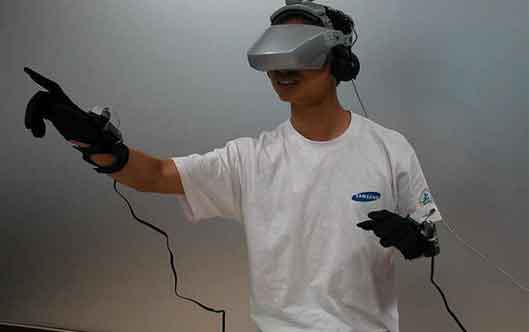
Virtual reality (VR) is no longer a technology reserved for the gaming industry. The applications are manifold in industries such as education, engineering, healthcare, insurance, sports and telecommunications. But, unlike other technology disruptions such as telematics, IoT, mobile, digital and cloud, which I have outlined in a previous blog, VR is yet to catch up in terms of adoption by insurers.

However, there are some applications from which the early adopters of this technology have started benefiting and others from which they could soon start benefiting.

Current Enterprise Applications

The Applications: VR simulation of car crashes - Insurers better understand what happens in a car crash for a safety demonstration

The Benefits: Improvement of driving behavior by creating awareness on safety and reducing accident claims

The Early Adopters: Australian insurer NRMA Insurance built a car crash simulation in collaboration with an ad agency and a film production studio and provided the experience to customers through an Oculus Rift headset in a crashed car showroom exhibit.


The Applications: Training - Safety experts and workers in manufacturing plants and warehouses are trained on safety practices and risk handling by creating a virtual world with various scenarios

The Benefits: Immersive and effective training experiences

The Early Adopters: Travelers insurance is working with AppliedVR in developing a VR mobile application aiming at industrial safety


The Applications: Advertising - Ad campaigns in VR gaming and on other platforms

The Benefits: Connecting better with the tech-savvy audience

The Early Adopters: Axa partnered with Google Niantic Lab Ingress to protect the gamers in a virtual real world using Axa Shield.


Ideas Insurers Can Explore

The Applications: Risk Assessment - Underwriters can look at all the possible risk hazards in a building without actually visiting the building.

The Benefits: Cost saving on travel and hiring

The Early Adopters: Insurers can steal ideas from the travel industry and see how they can customize VR for their needs. Marriott Hotels "teleports" guests to places like Hawaiian beaches and downtown London with sensory experiences.


The Applications: Analytics - Data scientists can analyze and visualize large dynamic datasets in VR, and executives can interact with the dashboards and take decisions

The Benefits: Quick and informed decision-making, scenario analysis

The Early Adopters: Insurance industry can draw inspiration from solutions developed for power, oil and gas and logistics industries. Space-Time Insight has recently demonstrated the capability of big data analytics and VR for power substation maintenance using Oculus Rift.


As an array of companies such as Google, Facebook, Samsung and Sony beef up their investments in VR and the number of enterprise applications spread across industries, the technology will soon prove to be disruptive for the insurance industry. Though customer experience, product demos and employee engagement are the key applications for the insurance industry, the ideas could be limitless as the technology matures. The day when we will compare the insurance product, take a driving test, purchase by interacting with an agent and talk to the customer care executive for claims, all through VR, is not too far away.


Karthick Paulraj

Profile picture for user KarthickPaulraj

Karthick Paulraj

Karthick Paulraj is a consultant for technology industry and has worked for Fortune 500 clients in consulting on IT services and analytics opportunity identification in the insurance industry. He closely tracks how disruptive technologies are affecting different industries, including insurance.

Innovation Awards for Solution Providers

Solution provider winners include Livegenic, which uses video to cut claims costs while increasing customer satisfaction.

Three solution providers have been recognized for truly ground-breaking projects and initiatives with demonstrable real-world impact, following the recognition of three insurers. SMA also published a collection of case studies on all the solution provider award submissions this year, showcasing the remarkable innovation taking place in the industry today.

The insurance ecosystem encourages the holistic spread of innovation, with insurers and solution providers working together to create new capabilities and adopt new technologies. Next-Gen Insurers that are reinventing the business of insurance for the 21st century depend on advances in four main areas: business models, infrastructure, products and services and customer engagement. The solution providers to watch understand and support these changes, helping insurers to actualize the value from the market's shifts and ultimate evolution.

This year's submissions for the SMA Innovation in Action Award for Solution Providers demonstrate the strides that solution providers are making in those areas. By developing creative solutions that are embracing new technologies and leveraging innovative approaches to solve important business challenges, the 2015 award winners show what kind of value insurers can gain from their solutions and their partnership.

This year's solution provider winners are:

Livegenic, which offers a patented, mobile, real-time video platform to help insurance organizations reduce claims handling costs and improve customer satisfaction. Livegenic connects a policyholder with a claims customer service representative through live video without disconnecting the phone call. Claims professionals can see what the customer sees while on the phone, enhancing first notice of loss, underwriting, field operations and supplemental claims.

Social Intelligence, which offers a sophisticated scoring platform that leverages publicly available social media data and the Internet of Things for improved risk assessment. The solution helps insurers by aggregating data and offering access to new predictive, reliable and less expensive data sources. Social Intelligence's Social Media Risk Scoring provides another layer of risk assessment that insurers can utilize in real time across life and personal and commercial P&C lines of business at critical stages in the policy lifecycle, including point of sale, claims filing, first notice of loss and renewals.

Wallflower Labs, which offers a patent-pending solution to reduce the number of unattended cooking fires and associated claims. Wallflower's Electric Range Smart Cord and Gas Range Smart Valve enable ranges and cooktops to remind homeowners that they are operating, through smartphone push notifications, and to allow for remote or automatic shutoff. Wallflower solutions can also provide insights into cooking behavior and trends by capturing information about household range/cooktop use to improve how insurers price their homeowners insurance products.

By delivering new tools that help insurers to improve their businesses, the winners of this award are blazing a trail with innovative approaches and raising the bar for solution providers everywhere to provide creative offerings and help insurers achieve real-world value. This year's submissions for the solution provider awards show the vital role that innovation plays within the industry and offer commendable examples of innovation in action.


Karen Furtado

Profile picture for user KarenFurtado

Karen Furtado

Karen Furtado, a partner at SMA, is a recognized industry expert in the core systems space. Given her exceptional knowledge of policy administration, rating, billing and claims, insurers seek her unparalleled knowledge in mapping solutions to business requirements and IT needs.

The 'CURES' for Work Comp Claims

Getting physicians to use CURES (Controlled Substance Utilization Review and Evaluation System) is essential.

When an injured worker submits a claim, it initiates processes aimed at returning the injured worker to gainful and sustainable work at the earliest possible time. In this journey, checkpoints and milestones are the best means to monitor progress. Checkpoints generally relate to visits with a medical practitioner where medical conditions are checked against expectations and, if necessary, treatments are adjusted. Milestones are associated with reaching a goal.

At the first medical appointment, the physician is required to prepare a report for the claims administrator based on a comprehensive medical examination of the injured person, including a review of the medical history. At the same time, the physician can access CURES (Controlled Substance Utilization Review and Evaluation System) to check whether the patient has received any scheduled controlled substances in the prior 12 months. Through this access, the physician can identify an at-risk patient and accordingly establish a treatment plan that considers both medications and adjunctive treatments. Also, if a patient is identified as an addict, he can be referred for rehabilitation and social re-integration. With subsequent medical appointments, the physician can again use CURES to check for any changes to the patient's scheduled controlled substances usage since his last visit.

The importance of a physician using CURES to check a patient's use of scheduled controlled substances cannot be overemphasized, especially in workers' compensation, where a patient may not be forthcoming in sharing comorbidity information because of a lack of trust. Not knowing if a patient is currently taking scheduled controlled substances, the physician could jeopardize the patient by prescribing inappropriate medications.

In addition to the medical profession, CURES is available to Department of Justice investigators and law enforcement agencies to identify persons who visit a number of physicians to obtain supplies of scheduled controlled substances for abuse and diversion (i.e. physician shopping). Pharmacists and numerous regulatory boards from the medical board to the veterinary board also have access to CURES, providing them with the opportunity to monitor the medical profession for aberrant prescribing of scheduled controlled substances.

While states like Florida implemented a PDMP (prescription drug monitoring program) as late as 2011, California has monitored Schedule II controlled substances since 1940 and with the introduction of CURES in 1996 extended its monitoring to include Schedule III and IV controlled substances. Online access to CURES has also been available to the medical profession since 2009. Consequently, California has not experienced the abuse and diversion that Florida has with its "pill mills."

Access to CURES by claims administrators or their representatives (i.e. third party payers) will not deliver improved quality of care or reduce prescription drug fraud and abuse and will add unnecessary costs through duplication of efforts already being performed by others using CURES. Close monitoring of checkpoints, however, by the claims administrator will provide benefits. Monitoring is accomplished through what is commonly referred to as "encounter data" and includes diagnoses, services performed and medications dispensed along with amounts charged and paid. Diagnoses, medical procedures and pharmaceuticals translated into coding systems such as ICD-10 (International Classification of Disease, 10th revision), HCPCS (HeathCare Common Procedure Coding System) and NDC (National Drug Code) provide excellent opportunities to automate the monitoring of encounter data.

Have claims administrators been able to implement technology solutions to automate the monitoring of encounter data and achieve outstanding results? Over the past two decades, many claims administrators have opted to outsource the management and control of critically important functions such as utilization review, medical bill review and pharmacy monitoring. Many of the outsource organizations only focus on that part of the encounter data that directly applies to their function -- for example, pharmacy benefit managers only monitor the pharmacy. But using all the encounter data can promote a vibrant synergy very capable of achieving outstanding outcomes and results for the injured worker.

Losing control of encounter data eliminates the claims administrator's ability to establish and monitor adherence to best evidence-based practices. When physicians have not adhered to their proposed treatment plans, opportunities to trigger yellow and red flags for investigation are lost.

Claims administrators who have automated the monitoring of their encounter data can assist states in reducing abuse and diversion by monitoring the quantities of medications being dispensed in a progressive or step therapy pain management plan, for example, and encouraging unused supplies to be returned to the physician at the next appointment. This can be achieved at no additional cost to the claims administrator and reduces the quantities of unused or unneeded prescription medications in circulation, which has been the focus of the DEA's (U.S. Drug Enforcement Agency) "take back" initiatives. To date, the DEA has collected in excess of 1,400 tons of unused medications, which could otherwise have found their way into the illicit drug market.

For as long as the U.S. remains the biggest licit and illicit drug market in the world, claims administrators will remain challenged to deliver on their workers' compensation claims handling obligations.

With a changing workforce, claims administrators will need to move more and more toward a biopsychosocial approach to managing medical conditions. They must provide quality care at the lowest possible cost, which can only be achieved through the fine analytics of consolidated encounter data.

Capturing encounter data through the claims administrator's processes and fine analytics will consistently yield the best claims outcomes, from earlier return-to-work to lower costs associated with medical treatment through to automated overseeing of a claim, including provider performance monitoring and evaluation. All of these are the essence of superior workers' compensation claims management.


John Bobik

Profile picture for user johnbobik

John Bobik

John Bobik has actively participated in establishing disability insurance operations during an insurance career spanning 35 years, with emphasis on workers' compensation in the U.S., Argentina, Hong Kong, Australia and New Zealand.

3 Game Changers -- and How to Survive

A new approach to leadership is required to address the three game changers: data collection, bot-sourcing and autonomous vehicles.

The follow-the-leader principle works on a trail that has proven to be relatively safe from perils and predators. However, when new frontiers are breached, a new kind of leadership is required for survival.

Insurers have generally been able to just follow the leader for ages, but now a new frontier has been breached. The insurance industry is vulnerable to three game changers that consumers are eager to embrace.

Drawing on remarks I made recently at a keynote for the National Association of Mutual Insurance Companies Annual Conference, here are the game changers:

The first big disrupter is data collection. Insurance is built on the principle of using accurate data and statistics to build underwriting financial models that serve to predict behavior and events from an actuarial or probability standpoint. London's Edward Lloyd figured this out when he opened his coffee shop in 1688, and people started selling insurance to merchants and ship owners. His motto was fidentia, Latin for confidence. We now refer to "confidence factors" when estimating future losses.

Insurers have been notorious for using forms to collect data. But, today, a person is subjected to more new information in one day than a person in the Middle Ages saw in his entire life. If modern competitors to the insurance industry can obtain more accurate data in a faster and more in-depth manner, they may beat insurers at their own game.

With cloud computing and its infinite data storage/retrieval capability, trillions of bits of information relating to insureds are available. Data sources track things like profile patterns, such as personal Internet searches or satellite surveillance data. Relevant data can be mined and analyzed to build a risk model for every insurable consumer or business peril from property and vehicle insurance to earthquake and weather insurance.

The five biggest data collectors on the planet are Google, Apple, Facebook, Yahoo and Amazon. These high-tech companies have the ability, financial resources and potential desire to foray into the insurance industry. Keep in mind that in 2014 the world's top 10 insurers received $1.2 trillion in revenue, yet surveys have shown that people around the world have grown to use and trust the products and services provided by the five biggest data collectors.

Accessibility and familiarity are allowing profitable new brands to replace old brands. Consumers also prefer and use third-party validation and independent comparisons found on websites.

What does this spell for the insurance industry? Sadly, consumers have grown more uncomfortable with reliance on and interaction with agent relationships. John Maynard Keynes once said: "The difficulty lies not so much in developing new ideas, as in escaping from old ones."

The second emerging threat to insurance is botsourcing -- the replacement of human jobs by robotics. The robots haven't just hatched in agriculture or auto assembly plants -- they're expanding in a variety of skills, moving up the corporate ladder, showing awesome productivity and retention rates and increasingly shoving aside their human counterparts.

Google won a patent recently to start building worker robots with personalities. Move over, Siri.

Author and entrepreneur Martin Ford, in his book Rise of the Robots, argues that artificial intelligence (AI) and robotics will soon overhaul our economy. Increasingly, machines will be able to take care of themselves, and fewer jobs will be necessary.

Reassessment of the way we employ our workforce is essential to cope with this new industrial revolution. The lucrative insurance realm of personal and product liability insurance lines and workers' comp is being tempered as human risk factors -- especially in high-risk areas -- give way to robotics. The saying goes: "Management is doing things right, but leadership is doing the right things."

How will the insurance industry react to the accelerating technology of bot-sourcing?

The third emerging threat to the insurance industry that has received enormous attention this past year autonomous vehicles. More than a half-dozen carmakers, as well as Google and Uber, predict that self-driving vehicles will be commonplace on our roads between 2017 and 2020. Tesla Motors CEO and general future-tech proponent Elon Musk has predicted that human drivers could someday be outlawed. Humans cannot outperform an autonomous vehicle, which can assess and react to more than 7,000 driving threats per second. There are no incidents of driver impairment, reckless driving, DUIs, road rage, driver texting, speeding or inattention.

With a plethora of electronic distractions, increased safety can only be achieved when human drivers are removed from the equation. Automakers have employed an incremental approach to safety in their current models. These new technologies are clever and helpful but do not remove the risks. There's a phenomenon called the Peltzman Effect, based on research from an economist at the University of Chicago who studied auto accidents. He found that, when you introduce more safety features like seatbelts into cars, the number of fatalities and injuries doesn't drop. The reason is that people compensate for it. When you have a safety net in place, people will naturally take more risks. Today, 35,000 vehicle occupants die in the U.S. because of auto accidents. Autonomous vehicles are expected to cut auto-related deaths and injuries by 80% or more.

One of the biggest revenue sources to insurers is vehicle insurance. As autonomous vehicles take over our roads and highways, you need to address all the numerous unanswered questions relating to the risk playing field. Who will own the vehicles? How can you assess the potential liability of software failure or cyberattacks? Will insurers still have a role? Where will legal liabilities fall? Who will lead the call to sort these issues out?

Clearly, the lucrative auto insurance market will change drastically. Insurance and reinsurance company leadership will be an essential ingredient to address this disruptive technology.

As I told the conference: Count on Insurance Thought Leadership to play a significant role in addressing these and other disruptive technologies facing the insurance industry. A Chinese proverb says: "Not the cry, but the flight of a wild duck, leads the flock to fly and follow."


Jeff Pettegrew

Profile picture for user JeffPettegrew

Jeff Pettegrew

As a renown workers’ compensation expert and industry thought leader for 40 years, Jeff Pettegrew seeks to promote and improve understanding of the advantages of the unique Texas alternative injury benefit plan through active engagement with industry and news media as well as social media.

Unnecessary Surgery: When Will It End?

The amount of unnecessary surgery hasn't diminished even though the problem was identified decades ago. But there is a simple answer.

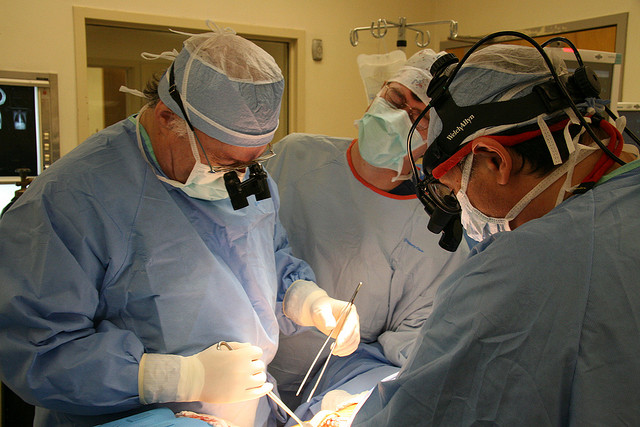
Unnecessary surgery: When is it going to end? Not any time soon, unless a documented and proven approach is used by health benefit plan sponsors.

I began my healthcare career 35 years ago when, as a graduate student at Columbia University School of Public Health, I was awarded a full scholarship as a public health intern at Cornell Medical College in New York City. Dr. Eugene McCarthy at Cornell was the medical director of a Taft-Hartley joint union/management health benefits self-administered fund at the time and my mentor. I worked on the Building Service 32 B-J Health Fund, which was the focus of an eight-year study sponsored by the then-Department of Health, Education and Welfare (now Health and Human Services, or HHS) and which was the first study on second surgical opinions.

The study (1972-1980) followed union members and their families who were told they needed elective surgery and documented that roughly 30% of recommended surgeries turned out to be medically unnecessary. The study found 12 surgeries that generated the most second opinions that didn't confirm the original diagnosis. This list comprises: back surgery, bone surgery and bunions of the foot, cataract removal, cholecystectomy, coronary bypass, hysterectomy, knee surgery, mastectomy, prostatectomy, hip surgery, repair of deviated septum and tonsillectomy.

What has changed on this list 35 years later? Very little, if anything.

USA Today on March 12, 2013, reported on a study that found that; "tens of thousands of times each year patients undergo surgery they don't need." After the release of this study, a former surgeon and professor at the Harvard School of Public Health stated that: "It is a very serious issue, and there really hasn't been much movement to address it."

A CNN special on March 10, 2013, reported that the U.S. spent $2.7 trillion on healthcare per year and that 30%, or roughly $800 billion, was wasted on care that did not improve outcomes. Sound familiar? The Cornell study said the same thing 31 years earlier.

Public and private employers, health, disability and workers' comp insurers and state and federal programs such as Medicare and Medicaid are doing very little, if anything, to effectively address this problem. The solution to preventing unnecessary care and surgery is not in raising co-pays and deductibles and other out of pocket costs unless they are tied to consumer education and well-designed second-opinion programs.

In response to the USA Today article, a leading medical expert said, "You can shop for a toaster better than prostate surgery, because we don't give patients enough information." Another leading surgeon stated; "Far too many patients are having surgeries they don't need, with associated major and severe complications such as long-term disability and even death." Furthermore, "I see patients with neck and back problems, and at least 1/3 are scheduled for operations they don't need, with no clinical findings except pain."

What is the principal focus of today's multibillion-dollar managed care industry, especially in workers' compensation? Provider discounts, that's what. But how is it a savings if the patient receives a discount on an operation he doesn't need?

Most often, when I ask that question I am met with blank stares.

The New England Journal of Medicine in 2009 stated that a common knee surgery for osteoarthritis "isn't effective in treating patients with moderate to severe forms of the disease." Yet, according to federal researchers, 985,000 Americans have arthroscopic knee surgery each year, and 33% (more than 300,000) are for osteoarthritis "despite overwhelming medical evidence that arthroscopic surgery is not effective therapy for advanced osteoarthritis of the knee."

According to the chairman of cardiovascular medicine at the world-renowned Cleveland Clinic, the U.S. health system is "doing a lot of heart procedures that people don't need." For example, angioplasty stent surgery in heart patients will likely relieve pain but "will not help a person live longer and will not protect against having another heart attack... What's worse is that many of these surgeries will lead to bad outcomes." He said, "This procedure should be performed for patients having a heart attack, but 95% of patients who have angioplasty surgery are not the result of a heart attack."

The estimate on the direct medical costs to American businesses for low back pain is $90 billion a year; this doesn't include workers' compensation indemnity and litigation costs, disability costs, sick days and indirect costs such as lost productivity. As reported in my previous article, The Truth about Treating Low Back Pain, the Journal of the American Medical Association (JAMA) estimated that 40% of initial back surgeries, which amounts to more than 80,000 patients per year, have "failed back surgeries." These unsuccessful back surgeries most often lead to a lifetime of debilitating back pain and billions more in long-term disability and Social Security Disability Insurance (SSDI) costs. These patients -- four out of every 10 -- all wish they had received a second opinion now. Yet when I recommended a second-opinion program to a union health fund in New Jersey, the manager said: "I am not going to tell my union members they need to get a second opinion." True story.

Although we were scheduled to have an informal lunch meeting, after I recommended the fund consider a second-opinion program the "lunch" part of the meeting disappeared, even though I had driven two hours to get there. Maybe that is where the expression there is "no such thing as a free lunch" comes from? The health fund manager was downright indignant about my suggestion even though the first-second opinion program was conducted on behalf of a union health fund and was overwhelmingly successful.

He did describe, however, how upset he was about the fund's rising healthcare costs. I guess he just wanted to be able to complain about it instead of actually doing something about it on behalf of his members. (The president of the union confided in me afterward that he had failed back surgery many years ago and wished he had gone for a second opinion.)

A colleague of my mine who is a senior vice president of product development for a leading third-party administrator (TPA) confided that insurance companies and TPAs will not implement programs that I could design and implement for their clients because they would never admit it was a good idea, given that they didn't invent it.

I also hear all the time from so-called experts that second surgical opinions don't work and don't save money.

But large self-insured employers and health, disability and workers' comp insurers should follow the lead of the top sports teams who send their top athletes for second opinions all the time to places like the Hospital for Special Surgery (HHS) and New York-Presbyterian Hospital/Columbia Medical Center in Manhattan or UCLA Medical Center in Los Angeles.

When I send client employees or friends and neighbors for second opinions, they often tell me that their appointment was with the same doctor Tiger Woods or Derek Jeter went to. My response is, "exactly." Very often, conservative treatment is recommended and produces great patient outcomes, especially for back injuries and diagnoses for conditions like carpal tunnel syndrome. (See Carpal Tunnel Syndrome: It's Time to Explode the Myth.)

Most, if not all, top surgeons I have met welcome second opinions for their patients because, when surgery is recommended, they want their patients to be assured that another expert also believes it is in their best interests.

I interned at the first second-surgical opinion in the country. I wrote my master's thesis at Columbia on what I learned and how to improve upon the design and administration of the very successful Cornell program. Although the phrase, "I want a second opinion," is now common terminology in America from auto repair to surgery, it has not reduced the overall amount of unnecessary surgery. If your program is not successful or not saving money it is because there is a serious flaw in the design and administration.

What I have documented since I designed or administered the first corporate second-opinion benefit programs back in the early 1980s are several key components of a successful program. First, it must be mandatory for the plan member to receive a second opinion for selected elective surgeries. Remember, elective surgery, by definition, means scheduled in advance, not for life-threatening conditions. Second, the second-opinion physician must not be associated with the physician recommending surgery. The physician must truly be an independent board-certified expert. Third, the second-opinion physician cannot perform the surgery; this provision removes any conflict of interest.

In addition, although a plan member should be required to receive a second opinion to receive full benefits under the health plan, the decision on whether to have surgery is entirely up to the patient. The whole idea is to educate the patient on the pros and cons of proposed surgery and the potential benefits for non-surgical treatment or different type of surgery (lumpectomy vs total mastectomy, for example). (I also developed a process of administrative deferrals for instances when it would be impractical to obtain a second opinion or when the conditions were so overwhelming that the need for a second opinion could be waived.)

It is only by helping to make patients truly informed consumers of healthcare and educating them on the benefits of alternative surgical treatments that a program can be successful. Voluntary programs simply don't work. Rarely do patients seek second opinions on their own, and most often do not know where to obtain and arrange for a top-notch second opinion. In addition, they often feel uncomfortable and do not want to tell their physician they are seeking a second opinion. That is why I found that a program only really works when patients can state that their "health plan requires that I get a second opinion." The mandatory approach reduces unnecessary surgery dramatically and saves the plan sponsor money with at least 10:1 return on investment.

The most amazing reduction of unnecessary surgery and resulting savings to the plan sponsor comes simply by implementing and communicating the benefits and requirements of the program design that I outlined above. The reason is known as the "Sentinel Effect." What the original Cornell study and others have documented is at least a 10% reduction in the amount of recommended elective surgery simply from announcing the program is now in effect. No need for an actual second opinion; merely require one!

Now that is cost-effective!

Was Your Data Taken in Experian Breach?

The Experian data breach is a big, timely reminder of how a robust identity theft protection plan is absolutely necessary.

A breach to one of Experian's servers - discovered on Sept. 15 - has resulted in 15 million compromised records with personal information like names and Social Security numbers. The breach included information about T-Mobile customers from as far back as 2013. Here are the details and action steps you can take if you think you’re a victim.

The server that was attacked housed records of those who applied for T-Mobile's services between Sept. 1, 2013, and Sept. 16, 2015. Overall, the compromised information included…

  • Names
  • Addresses
  • Dates of birth
  • Driver's license numbers
  • Social Security numbers
  • Passport IDs

The affected server was not part of Experian's consumer credit bureau; nevertheless, a data breach is good reason to check your defenses when it comes protecting your personal information, and there are plenty of ways you can protect yourself.

Make sure hackers didn't steal your information and use it for their advantage. Annually check your credit reports and bank statements for suspicious activity, like a new line of credit or purchases you didn't make.

Be cautious! When a breach like this occurs, fraudsters may call the victims and say they're from the affected companies. They may ask you for your personal information, so they can "help" you. Keep in mind that T-Mobile and Experian made it clear that they will not send a message or call and ask for personal information connected with the incident.

Consider some of the major data breaches we've had in the past couple years:

  • JP Morgan Chase - 76 million customer records
  • Anthem - 87.6 million
  • Home Depot - 56 million
  • Target - 110 million

Whether or not you think you're a victim, employing an identity theft protection plan is relevant and important.

Ironically, T-Mobile is offering resolution services through Experian's ProtectMyID, for those who were affected by the data breach; however, full, continuing coverage demands an identity protection service that has more robust features than those provided through the complimentary membership.

ProtectMyID's complimentary membership includes SSN and credit-card monitoring, but you also need monitoring for high-risk transactions and data sweeps. ProtectMyID includes credit monitoring and an Experian credit report upon entry, but you also need your credit score and identity risk score (showing how vulnerable you are to identity theft). ProtectMyID has lost wallet/purse assistance and alerts for suspicious activity, which is good. It is backed by $1 million identity theft insurance coverage, too, but you also need coverage that will reimburse you for the expenses you incur while returning your life to normal. ProtectMyID has fraud resolution agents who can offer assistance to victims, but you also need a financial consultation, a legal consultation and more.

You need stronger layers of protection against identity theft, help creating an action plan and professional assistance with addressing compromised information and accounts.

The Experian data breach is a big reminder of how a robust identity theft protection plan is absolutely necessary.


Brad Barron

Profile picture for user BradBarron

Brad Barron

Brad Barron founded CLC in 1986 as a manufacturer of various types of legal and financial benefit programs. CLC's programs have become the legal, identity-protection and financial assistance component for approximately 150 employee-assistance programs and their more than 15,000 employer groups.

It's Time to Rethink Flood Coverage

The floods in the Carolinas show it is time to "loosen the exclusion" on coverage. Otherwise, we'll just keep making the same mistakes.

"The boat is safer anchored at the port; but that's not the aim of boats." -- Paulo Coelho

The scenes are now all too familiar. Waters rising, dams breached, cars drifting away, homes and properties inundated with water. As of this writing, 13 people have died in the Carolinas as the "one in a 1,000 years" flood continues to ravage the area. Losses should easily exceed $1 billion.

If all of that was not bad enough, what's worse is that you and I will be paying for this.

Unfortunately, the song remains the same after all these years:

  1. Property insurance policies exclude flood coverage
  2. Property owners either believe they have coverage or choose not to purchase it
  3. The biblical rains arrive, causing damage, and property owners seek help from the largest wallet available and willing to help...the U.S. government
  4. (Alternatively, and unfortunately, property owners may buy flood coverage, but, because the coverage was mispriced, the National Flood Program will not have the funds to pay the claims and will need to borrow from us taxpayers).

The system is a mess, and my criticism lies directly with the insurance industry. We can solve this problem. These floods are insurable events. We are flush with capital, and each week it seems another technology firm is releasing a flood model to help us manage this risk.

But that sound you hear is crickets. We are not making much progress at all.

The solution cannot be separate, private, flood coverage. That is a nice start but is not the solution, because it's more of the same, just with a different wallet writing the check.

What we need is to "loosen the exclusion." Flood needs to become a standard component in the homeowners policy. Just as fire, wind, lightning, theft, vandalism and liability are all standard components of a homeowners insurance package, flood needs to be included as that form of standard coverage.

The advantage to homeowners is true peace of mind.

  • Every homeowner has some ground water risk, and we can eliminate this coverage concern once and for all.
  • We can eliminate policy juggling, with one single policy.
  • A single claims adjuster can determine any losses without needing superhuman insights to know whether water or wind caused the damage.

The enterprising insurer gets to differentiate its personal lines business with a non-correlated premium source. The insurer eliminates the headache of defending flood exclusions and the bad publicity and court judgments around those issues.

Some insurers will be rightly concerned about the increased risks. But isn't this the business we are in? It may feel safe to exclude coverage, but our role in society is not to exclude coverage. Our role is to find a way to profitably make our capital available for these type of events.

We have all the tools and capital we need to make this happen. Do we have the will?


Nick Lamparelli

Profile picture for user NickLamparelli

Nick Lamparelli

Nick Lamparelli is the managing partner of Insurance Nerds and chief program officer for Latin International Reinsurance Group. 

He is also CEO of the Insurance Advocacy Forum of Florida.

Lamparelli is a three-decade insurance executive, starting as a local agent and evolving to middle market broker, wholesaler, underwriter and catastrophe insurance expert.

How to Measure the Value of ERM

Firms that invest in enterprise risk management (ERM) must quantify the value, even though it can be ephemeral. Here are four methods.

When the question of whether ERM is a success or failure comes up, it raises a further question: Why aren't companies doing a better job of measuring the value it generates?

The reasons that the value of ERM is not quantified by companies include:

  • It is extremely hard to know when a loss did not happen because of ERM.
  • It is just as hard to quantify the cost of loss that did not happen.
  • It is difficult to quantify the "soft" benefits of enhanced reputation because ERM is practiced or because of improved strategic alignment in the organization; ERM requires an understanding of the company's strategic goals and objectives to identify the risks that might derail their achievement.
  • It is often hard to justify the time and expense of measuring something that is not easy to measure.

Having acknowledged some of these obstacles, the only way that companies will know if their ERM efforts are successful is to create some measurement scheme that makes sense for their particular situation. Without measurement, how would a company know not only if it wants to continue an ERM implementation but also how much to invest in it.

Let us look at a few possible approaches to measuring the value of ERM:

Before-and-After Approach

Once an ERM process has gained some level of maturity in an organization, this approach would take the form of looking at fairly common and reliable metrics on a before-ERM and after-ERM basis. (There are ERM maturity models, developed by experts, that can be used to evaluate how far along the path to full or optimal implementation a company has progressed.) In fact, each of the approaches described would only be reasonable if the ERM process had been in place and well-executed for some period.

Naturally, there will multiple variables, not just the practice of ERM, that play into these metrics, but that is true for most metrics, and explanations can and should accompany the numbers to explain such variables.

Such metrics would include: 1) number of insurance claims, 2) number of worker injuries, 3) number of lawsuits related to a risk/loss events, 4) number of days or hours production is lost because of a risk/loss event, 5) cost of insurance and 6) total cost of risk (TCOR). Thus, when reviewed before and after ERM, the metrics can be charted to show absolute changes in value as well as trend lines. It might even be possible to notice on a relative basis that there are fewer risk-related surprises brought to management’s attention because ERM effectively identified risks while there was still time to deal with them.

Each company will be able to come up with its own unique metrics based on what it is currently capturing, what it could capture and what is important to its business operations.

The value of ERM would be evident or could be computed from the before-and-after metrics.

"What If" Approach

In the "what if" approach, one or more of the most significant risks in the risk register, which did not materialize when expected because of mitigation by the company, would be selected. Perhaps this was a regulatory change that would have harmed a product line, but the company took lobbying efforts or did product redesign because the risk was appropriately identified, prioritized and mitigated.

The amount of the loss that the risk would have likely have produced would be computed. Even if it were an insured loss, the estimate would take into account such things as the potential increase in insurance rates, management time and all other attendant expenses not covered.

Since the risk did not produce a loss, the amount of the "what if" loss is the value of ERM.

Alternatively, a significant loss event that affected key competitors but did not affect the company using ERM could be used to assess value. Perhaps it was a natural catastrophe that the company was better protected for or a demographic shift that the company anticipated and reacted to because of ERM.

To get at ERM's value, the company would have to approximate what the risk, if ignored, would have cost.

Lacking Any Other Explanation Approach

In "The Valuation Implications of Enterprise Risk Management Maturity," a wholly independent and peer-reviewed research project conducted by Mark Farrell of Queen's University Management School and Dr. Ronan Gallagher of University of Edinburgh Business School, pub­lished in The Journal of Risk and Insurance, using data from the RIMS Risk Maturity Model, the case is made that, failing any other explanation, the companies with greater maturity have higher valuations because of it. Specifically, the study found that there was "clear and significant statistical correlation between mature enterprise risk management practices and a firm's value." Organizations exhibiting mature risk management practices-as assessed with the RIMS Risk Maturity Model-realize a valu­ation premium of 25%.

Discretionary Approach

Yet another approach that does not rely on metrics, per se, is a discretionary approach. In other words, the board, CEO or C-suite could attribute a value to ERM that is based on the recognition that the ERM process has, for example: 1) created a risk aware culture, 2) helped to identify and ameliorate risk, 3) made recovery from risks that have materialized much faster and more efficiently and 4) enhanced the brand among stakeholders.

The discretionary approach does require that management is involved in the ERM process, has an open mind about its contribution and will articulate its conclusions about ERM's value so that the entire organization is aware of this assessment. Without management's giving voice to its success, the question of whether it is a success or failure will haunt ERM.

Conclusion

There are undoubtedly other approaches that could be used. The key point is that companies that have invested in introducing ERM should do so in a vigorous way and should measure and communicate its value. This will ensure that the entire organization maintains a commitment to this important process.


Donna Galer

Profile picture for user DonnaGaler

Donna Galer

Donna Galer is a consultant, author and lecturer. 

She has written three books on ERM: Enterprise Risk Management – Straight To The Point, Enterprise Risk Management – Straight To The Value and Enterprise Risk Management – Straight Talk For Nonprofits, with co-author Al Decker. She is an active contributor to the Insurance Thought Leadership website and other industry publications. In addition, she has given presentations at RIMS, CPCU, PCI (now APCIA) and university events.

Currently, she is an independent consultant on ERM, ESG and strategic planning. She was recently a senior adviser at Hanover Stone Solutions. She served as the chairwoman of the Spencer Educational Foundation from 2006-2010. From 1989 to 2006, she was with Zurich Insurance Group, where she held many positions both in the U.S. and in Switzerland, including: EVP corporate development, global head of investor relations, EVP compliance and governance and regional manager for North America. Her last position at Zurich was executive vice president and chief administrative officer for Zurich’s world-wide general insurance business ($36 Billion GWP), with responsibility for strategic planning and other areas. She began her insurance career at Crum & Forster Insurance.  

She has served on numerous industry and academic boards. Among these are: NC State’s Poole School of Business’ Enterprise Risk Management’s Advisory Board, Illinois State University’s Katie School of Insurance, Spencer Educational Foundation. She won “The Editor’s Choice Award” from the Society of Financial Examiners in 2017 for her co-written articles on KRIs/KPIs and related subjects. She was named among the “Top 100 Insurance Women” by Business Insurance in 2000.

Debunking 'Opt-Out' Myths (Part 5)

Opt-out programs in Texas and Oklahoma produce far less litigation than workers' comp programs do -- a powerful endorsement for options.

Option programs in Texas and Oklahoma produce substantially less litigation than workers' compensation systems do, which provides a powerful endorsement for states considering such programs.

A look at litigation for workers' compensation and option programs must consider three main exposures: (1) claims for employer liability, (2) claims that the law violates the particular state's constitution and (3) claims for wrongful denial of benefits.

Claims for Employer Liability

Public policymakers have long understood that it is not fair to require employers to pay a high level of statutorily mandated injury benefits and also be exposed to legal liability damage claims regarding the cause of injury. There are several approaches available to state legislators in striking that balance in a workers' compensation system or an option to workers' compensation, but each approach must reflect this inverse relationship between the extent of an injury benefit mandate and the extent of employer exposure to liability.

Employer exposure to liability has been almost entirely removed from workers' compensation systems because of extensive benefit mandates that include medical coverage for life. However, the option to Texas workers' compensation takes the opposite approach. It has no injury benefit mandates but exposes employers to broad liability for negligence.

That formula will be pursued by few, if any, other state legislatures because of the risk that certain irresponsible employers would provide no injury benefit coverage to their workers. However, the Texas option liability exposure does provide an additional incentive for employers to focus on workplace safety. It also provides employers with an incentive to make a strong commitment to take care of the injured employee’s medical and indemnity needs.

Employer liability exposure under the Texas option is real. There have been more than 80 liability settlements or judgments of $1 million or more. This unlimited risk of liability is ever-present.

However, option programs experience less than half as many disputed claims as the Texas workers' compensation system (which is widely acknowledged as the one of the best-performing systems in the U.S.). The tiny percentage of disputed option claims is, primarily, because of legal requirements to fully communicate all rights and responsibilities (at program inception and continuing) in language that employees can understand -- a requirement that is quite hard to find within any workers' compensation program.

Option programs are also legally required to use claim procedures that ensure a full and fair review of benefit claims, including access to state and federal courts.

Yet only 1.5% of Texas option claims have any attorney involvement, and less than one in 1,000 liability claims actually go through formal litigation. So, this liability exposure has a positive impact on workplace safety, while still proving to be manageable and fully insurable in a highly competitive option marketplace.

It took more than a decade for the insurance industry and case law development to create the current balance that is delivering injury benefits to more than 95% of Texas workers through either workers' compensation or option injury benefit plans. The existing Oklahoma option and the proposed Tennessee and South Carolina options all mandate some level of injury benefits and reduce employer exposure to liability to simplify the public policy debate and avoid this long period of industry maturation.

Constitutional Challenges

In existence for more than 100 years, the Texas option has never faced a challenge on constitutional grounds. Texas courts have long respected an employee's right to work, employer rights to tailor employee compensation and benefits and the legislature's right to determine an appropriate balance between mandated injury benefits and employer liability exposures.

The Oklahoma Supreme Court has now twice rejected lawsuits challenging the constitutionality of the Oklahoma option in 2013 and 2015. Oklahoma trial lawyers have filed more than a dozen lawsuits at the Oklahoma Supreme Court challenging the constitutionality of the 2013 workers' compensation reforms. Oklahoma courts may further consider different provisions of the option law, but attorneys from the claimant and defense bar now agree that the Oklahoma Employee Injury Benefit Act is here to stay.

Oklahoma and Texas employers can freely move into and out of the workers' compensation system at any time. So, even if the Oklahoma option is ever stricken down on constitutionality grounds (as unlikely as that prospect is), the law provides a 90-day grace period for employers to move back into workers' compensation, without penalty. Similar provisions are in the pending Tennessee and South Carolina legislation.

Claims for Wrongful Denial of Benefits

Day-to-day legal challenges by injured workers regarding their rights to benefit payments are a normal feature of all workers' compensation systems, and the same is true of option injury benefit systems. It is an unfortunate fact of life that, as with any line of insurance business, not every claim will be handled well. But as we have seen in Oklahoma over the past year and in Texas for more than two decades, dramatically fewer claims are disputed by injured workers under option programs.

Twice as many Texas workers' compensation claims for benefits are disputed as compared with Texas option claims. This is true even when combining all injury benefit plan disputes and employer liability disputes under the Texas option.

Option opponents love to allege these programs only save money by failing to fully compensate injured workers. But, if this were true, why do we see fewer disputes in option programs?

Option program savings are achieved through more employee accountability for injury reporting, earlier diagnosis, persistent medical care from the best providers and more efficient resolution of fewer disputes. Option programs help ensure that employers and injured workers are communicating, engaged at the table (with or without legal counsel) and working together for better medical outcomes and return-to-work. This model must be contrasted with employers and injured workers routinely fighting through the complexity contained in thousands of pages of workers' compensation statutes, regulations and case law that necessitate attorney involvement for basic system navigation.

A large cadre of workers' compensation claimants and lawyers can be found in the hallways and hearing rooms of the Oklahoma and other state workers' compensation commissions and courts on any given day. But there have been few day-to-day Oklahoma option benefit challenges. Oklahoma option programs now cover more than 22,000 workers, and almost every claim that has arisen over the past year has been fairly and efficiently resolved through the injury benefit plan's claim procedures -- essentially the same claim procedures that have applied to private employer group health and retirement plans across the U.S. for more than 40 years.

Over the span of 26 years in Texas and the past year in Oklahoma, not one state or federal employee has ever been hired to specialize in the oversight or administration of the approximately 50,000 option injury program claims that are successfully resolved every year. In contrast, tens of millions in taxpayer dollars are spent in many states every year to oversee and administer day-to-day workers' compensation claims.

As further testimony to employee appreciation for the full disclosure of their rights and responsibilities under option injury benefit plans and the customer service they receive, not a single workforce in the past 26 years has organized a union as a result of the employer electing an option to workers' compensation in Texas or Oklahoma. For workforces that are already unionized, their members and leadership appreciate the fact that option programs routinely pay a higher percentage of disability benefits, with no waiting period and no (or a higher) weekly dollar maximum.

Plus, disability benefits are paid on the employer's normal payroll system, which allows employers and injured workers to seamlessly continue deductions for group health, retirement, child support and union dues. Successful Texas option programs have been in place for many, many years that cover textile, communications, food and commercial workers, teamsters and other collective bargaining units.

Conclusion

With liability exposures clarified and injured workers clearly more satisfied and getting better, faster under option programs in Texas and Oklahoma, legislators and employers in other states no longer need to "wait and see." Single-digit annual cost savings can still be achieved through traditional workers' compensation reforms, but option-qualified employers are seeing strong, double-digit cost reductions. Option programs support tremendous productivity, reinvestment and economic development gains for injured workers, employers and communities.

So, in spite of rhetoric from trial lawyers trying to survive and from their allies in the workers' compensation insurance industry who fear free-market competition, there is no reason why workers' compensation option legislation and program implementation should not be pursued by state legislators and employers as fast as their other priorities permit.


Bill Minick

Profile picture for user BillMinick

Bill Minick

Bill Minick is the president of PartnerSource, a consulting firm that has helped deliver better benefits and improved outcomes for tens of thousands of injured workers and billions of dollars in economic development through "options" to workers' compensation over the past 20 years.