
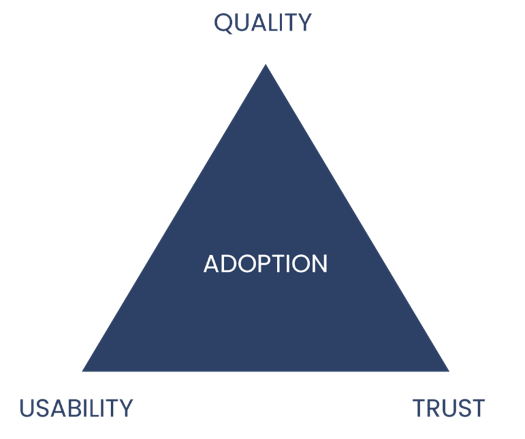
Every insurance company wants a single, trusted source of truth to power analytics, operations, and AI. The common response is to build sophisticated pipelines - often medallion architecture - to cleanse, conform, and enrich data. Quality and usability improve. Yet something unexpected happens: the more we touch the data, the more trust erodes. Key consumers start requesting the original sources instead. They want different grain, different views, or the ability to apply business rules. Traceability becomes more important than curation.
This lack of trust directly slows adoption. When people do not fully believe the curated layer, they route around it. The single source of truth we worked so hard to create ends up underused.
Why the tension is especially sharp in insurance
Insurance data is complex by nature: different systems, grains, effective dating rules, and business meanings of the same concept. When we force everything into one clean gold layer, we make choices that are not always visible or acceptable to every consumer. Actuaries, claims teams, and underwriters often need to reconstruct the original state. Their skepticism is rational.
One size does not fit all
Different consumption use cases demand different types and levels of enrichment and shaping. A dashboard for claims operations needs different treatment than an actuarial model or an AI feature set. Treating all data the same way in a single curated layer creates friction. What is highly usable for one group can feel restrictive or opaque to another.
A pragmatic approach
Instead of chasing one universal table, build shared data foundations, consistent processes, and rich metadata. Then deliver fit-for-purpose data products.
Shared foundations and metadata give everyone a common, well-governed base and clear lineage. Data products package the data in consumer-ready form: the right grain, the right enrichment, the right quality guarantees, and transparent provenance for each major use case. Patterns such as Data Vault help by connecting data early while postponing heavy business harmonization, preserving original history for those who need it.
When consumers can see exactly how the data was shaped and still get a product tailored to their needs, trust rises, and so does adoption. The true goal is a trusted foundation that supports multiple legitimate, well-documented views of the truth. That is how data management moves from a technical exercise to something the business actually uses.