


The World Cup always produces breakout stars. Think of 2018, when the teenaged Kylian Mbappe announced himself to the world by scoring four goals as his French team won the title. So far this year, you might lean toward Folarin Balogun as the possible breakout; he scored twice for the U.S. and looked brilliant as it dominated Paraguay in the opening round. For a team? Perhaps you're partial to Cabo Verde, a country of 500,000 that I confess I did not know existed but that tied mighty Spain, 0-0, on Monday.
For me, the clear breakout star is Freddy.
The young German has taken social media by storm, growing his follower count on Twitter to 635,000 from the 11,000 he had when he arrived in the U.S. with some friends in early June for a six-week road trip to experience the World Cup. His earnest observations about the U.S. have made him so popular that when he posted that the group was headed to Houston, he arrived to find that former Houston Texas J.J. Watt had paid for a huge room for the group at a posh hotel, and that local businesses had stocked the room with gifts. When Freddy expressed admiration for the music of country music star Ella Langley, she invited the group to meet her backstage after a concert in Oklahoma City. A resort offered to send its plane to pick the group up in Oklahoma City and fly them to Las Vegas for a watch party for a game involving the U.S. men's team.
There's a reason Freddy has become a sensation, and it suggests something that all businesses, including those in insurance, should do periodically.
An adage attributed to Marshall McLuhan (though with earlier roots) says, "We don't know who discovered water, but it wasn't a fish" — the notion being that anyone immersed in an environment can't understand it the way someone outside that environment can. And Freddy (@FreddyLA7 on Twitter/X) is an outsider providing an unvarnished, unbiased view of America to those of us immersed in it.
He has shared video of his drive through Alabama and Mississippi and marveled at how beautiful the landscape is — something I certainly missed when I drove through the states on my way from Georgia to Louisiana. Freddy posted a picture of a pile of food at a Taco Bell and called it "the holy land." He wrote: "We were about to walk an hour to the stadium in the rain to save on an Uber, and the receptionist at the hotel we were parked in front of decided to drive us there." Freddy discovered that a Bass Pro Shop had a shooting range inside.
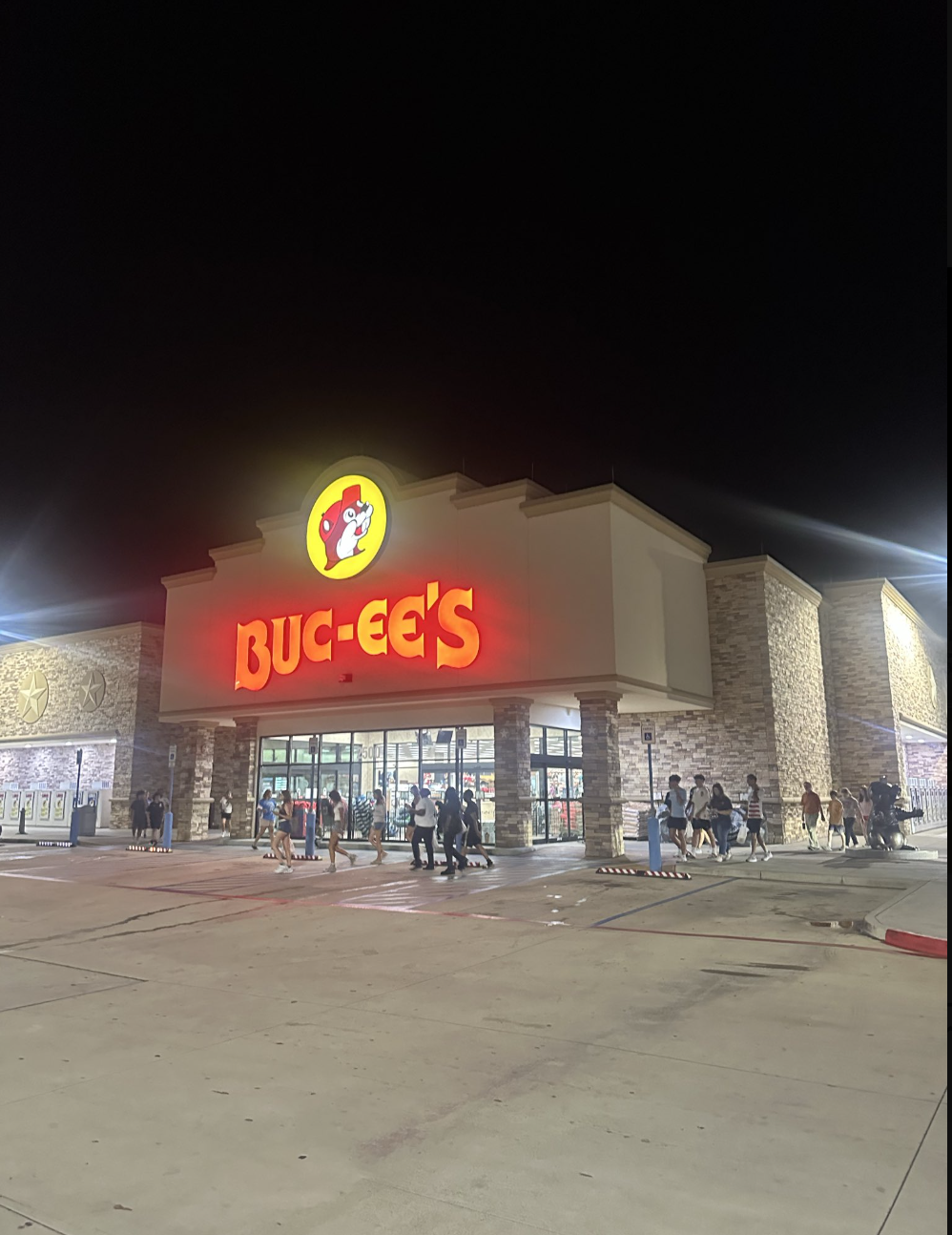
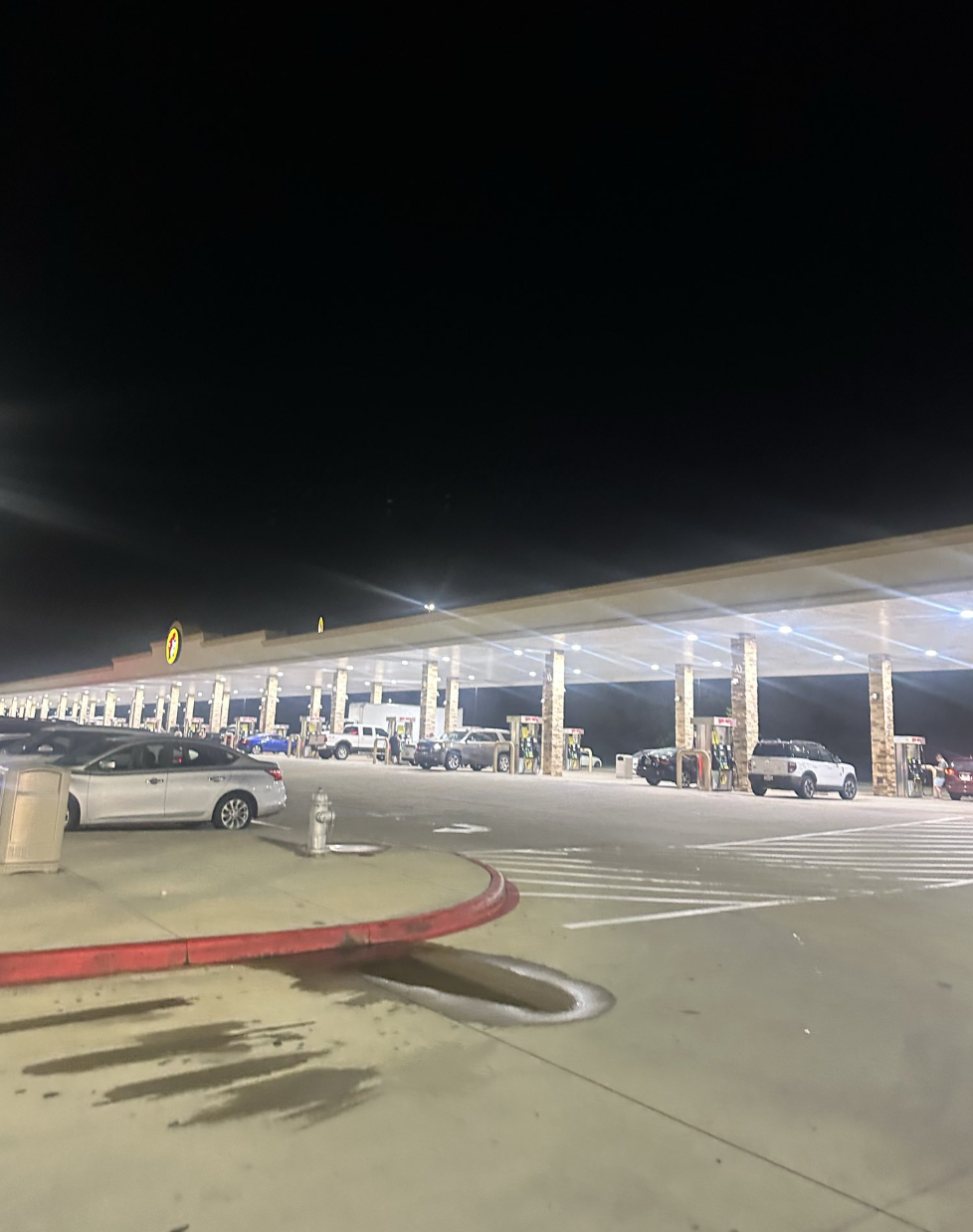
My favorite is a post with two pictures. On the left is a building so big and lit it up it looks like it could be the entrance to an amusement park. On the right is a line of gas pumps stretching way out into the distance. Freddy wrote: "DUDE LMAO THIS IS A GAS STATION." (Someone else said there are 120 pumps and wondered if the travel stop was designed to refuel the U.S. Air Force.)
 .
. 
Freddy then added a photo of the mountain of barbeque he bought inside the Buc-ee's in Texas.
He has surely resonated partly because he's so positive about what he's experiencing in the U.S. Everybody likes to be told they're great. But he still demonstrates the power of outside, objective observation, which is something every company and every individual should solicit as a regular exercise.
A BCG study I've cited before and will surely cite again found in the early 2000s that 80% of senior executives thought their product was superior to competitors' — and that 8% of customers agreed. Businesses unintentionally erect filters that distort what insiders see, so they have to try extra hard to either remove those filters for themselves or solicit feedback from Freddies who never faced those filters to begin with.
I once interviewed Colin Powell, between his time as the chairman of the Joint Chiefs of Staff and his term as Secretary of State, and he described what I thought was an insightful way to get around the filters. He set up half a dozen phones in his office and gave the number of each phone to a single person whom he trusted to provide a smart, non-DC perspective and reliable, unfiltered information. He told his assistant to never answer any of those phones, to hide the identity of the callers. (I note that the interview was before his time as Secretary of State under President George W. Bush because, after initially resisting the plan to attack Iraq, Powell let himself be sold a bill of goods and made a speech at the United Nations that relied on distorted intelligence to sell the world on the disastrous invasion.)
As I've written before, I think the best way to get unfiltered insight is to experience your company without identifying yourself or to sit with randomly chosen customers as they interact with your company. Make up a persona and call your call center or text it, so you can see what your chatbot actually does. Sit with a relative as they try to decipher the language in the policy you've issued them, without helping. Call people after they've had a claim processed to see just how smoothly your theoretically seamless handoffs from call center and app to adjuster to collision repair shops and rental car companies actually went. And so on.
You surely won't get the sort of joyful feedback Freddy is giving to the U.S., but you'll be able to improve faster than the companies you're up against — and business, like soccer, is a harsh competition.
Cheers,
Paul
P.S. For those of you who, like me, have been immersed in America so long that the environment feels completely natural, here are a few other observations from visitors for the World Cup:
To start with the negatives, Americans are loud, the U.S. is expensive, and the distances are inconvenient. Traffic is awful. The culture of tipping is baffling. And why are so many items, such as toiletries, locked up in stores?
That said, Ranch dressing seems to be quite a hit. One woman marveled at being able to order a chicken waffle with Ranch dressing and ice cream in an iHOP. Another wrote: "Ranch dressing should be a human right." He added: "The portion sizes are hilarious."
Our grocery store culture has struck a chord, too — the enormity of Walmarts and Costcos, the extraordinary variety of foods offered, and the quality in some of the upscale stores. A Frenchman posted a hilarious screed about how he arrived in the U.S. intending to be a snob but has to admit that the bathrooms in Buc-ee's are nicer than in his apartment. He says, "You could eat the brisket off the floor. It's cleaner than a hospital."
One woman wrote: "I can’t lie… the food in America is ridiculous. Everyone talks about portion sizes, but nobody talks enough about how GOOD everything tastes. Even the ‘quick’ food feels elite compared to what I’m used to in the U.K."
Portion size does come up a lot. One man wrote: "Nobody warned me that American portion sizes are actually a threat to your health. I ordered a medium coffee and received what my country would classify as a bucket."
My favorite, non-Freddy post is a lengthy, almost poetic, one from a Japanese tourist about the biscuits and gravy that a waitress recommended to him at a breakfast counter:
"When the plate arrived, I thought something had gone wrong in the kitchen. I say this with shame. The dish looked like a construction site after rain. Pale mounds. Gray ladle-fall. Speckles I could not identify. In my land, the eye eats first. A meal is arranged like a garden. This meal was arranged like weather.
"I must now formally apologize to the biscuits, the gravy, the waitress, the kitchen and the entire breakfast tradition of the American South.
"It was magnificent. Warm. Peppered. The biscuit drank the gravy the way a field drinks rain — THAT is why it is shaped like that, you fool — and every mound I had insulted was a soft fold of comfort that my homeland, in 800 years, never once thought to invent."
I'll never look at biscuits and gravy the same way again.