Between April 1 and April 6, 2025, a storm crossed the south and eastern Midwest of the United States, bringing strong winds, tornadoes and heavy rainfall to a large area ranging from North Dakota to Texas. The most significant damage occurred in Iowa, Missouri, Arkansas, Kentucky, Oklahoma, Tennessee, Indiana and Mississippi. The National Weather Service warned a week beforehand that the storm had the highest possible risk, allowing emergency managers to prepare.
April 2025 storm outbreak
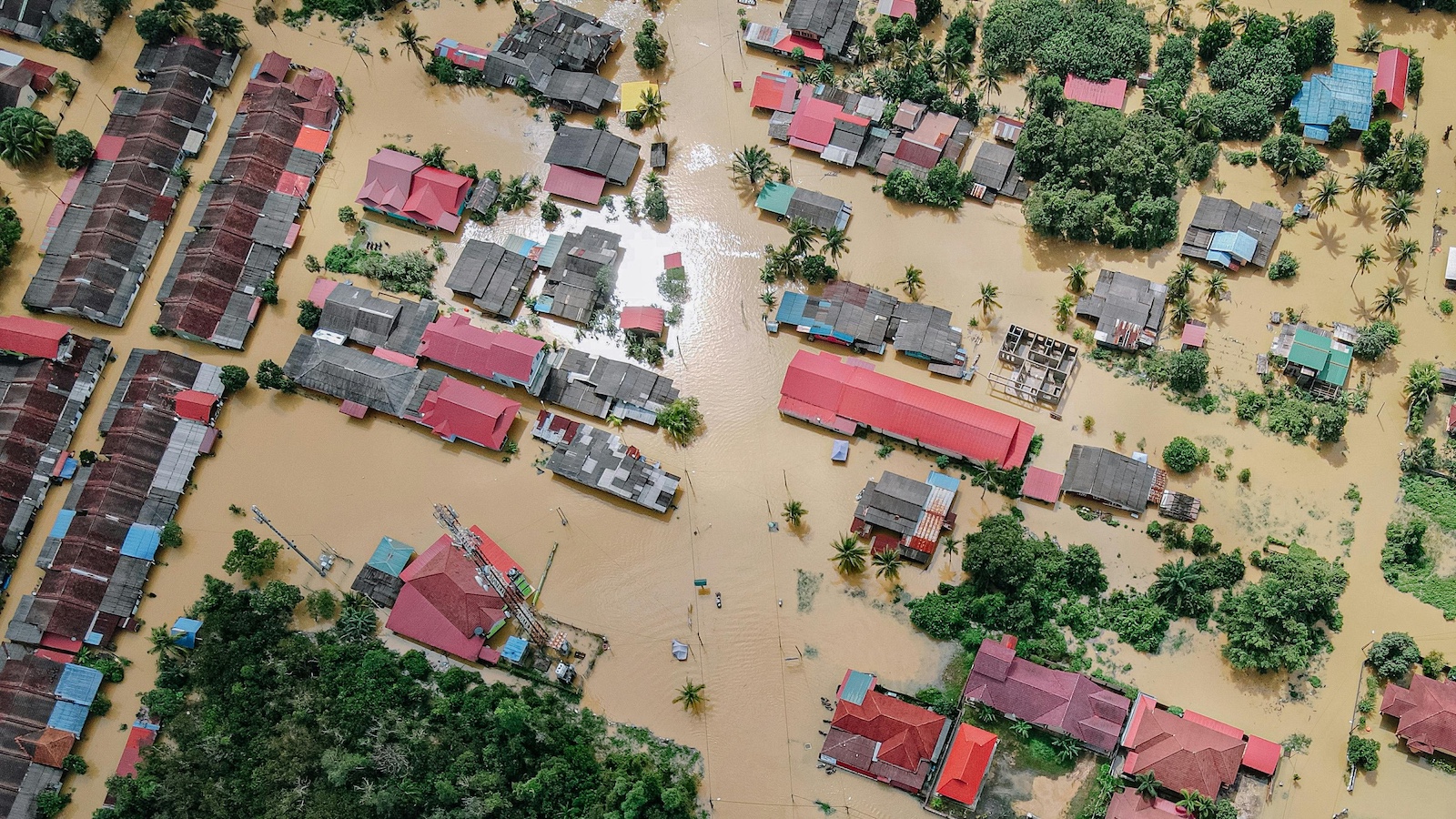
The storm produced over 156 tornadoes, including at least six rated EF3 (i.e. with estimated wind speeds between 136 and 165 mph). It received a score of 96 (classified as "devastating") on the Outbreak Intensity Score, with recorded hail seven centimeters in diameter and straight-line wind speeds of up to 110 mph. Fed by an atmospheric river drawing moisture up from the Gulf of Mexico, over 200mm of rain fell over a wide area, with western Kentucky experiencing nearly 400mm in four days. Widespread surface water flooding and numerous rivers reaching moderate or severe flood stages, with several setting records, caused devastation and power cuts. Kentucky faced the most severe impact, with scores of bridges destroyed and hundreds of roads closed. Mountaintop removal mining in Kentucky is known to have changed the hydrological response of the area during previous floods and likely exacerbated the flooding in this latest event.
Leading up to this storm, Gulf of Mexico sea surface temperatures were 1.2C above average, which helped the atmosphere to hold more moisture and fuel the atmospheric river. Post-event analysis suggests that climate change made the event 40% more likely and 9% more intense.
In Arkansas, the Burlington Northern and Santa Fe Railway restored service just two days after a derailment and bridge washout, demonstrating the benefits of early warnings and good emergency planning. Overall, the storm affected nine million people, resulted in 24 fatalities and inundated more than 15,000 homes and businesses. Insured losses are estimated at $2 billion or more, with economic losses already exceeding $3.5 billion.
The limited scope of flood insurance in America
The Federal Emergency Management Agency (FEMA) established the National Flood Insurance Program (NFIP) in 1968 to provide flood insurance and sponsor flood risk reduction projects. However, since then, climate change, exposure growth and inflation have significantly increased the costs of rebuilding after natural catastrophes. An additional challenge for the NFIP is the low take-up rates outside high-risk coastal counties. In recent years, claims from tropical-cyclone flooding have resulted in NFIP accumulating $20 billion in debt to the U.S. Treasury.
These debts have required several congressional bailouts. While NFIP participation is mandatory for federally backed mortgage holders, it is capped at levels often considered inadequate for flood restoration. As illustrated by 2024's Hurricane Debby, much of the flooding occurs outside FEMA mapped flood areas, where flood insurance uptake remains stubbornly low. In 2021, Risk Rating 2.0 was introduced by FEMA to move the NFIP toward actuarially-sound pricing, with staged increases that will double prices for many policyholders, especially those at high risk.
It is possible to source private insurance, but flood cover is an add-on in most cases. Between 2021 and 2024, private insurance costs rose by 24% on average, with some states experiencing 40%-60% increases.
NFIP penetration rates in the area affected by these floods are among the lowest in the country. Impoverished communities in the U.S. have a disproportionately high flood risk exposure, and insurance affordability is contributing to a widening insurance protection gap.
A common challenge to insurers worldwide
Globally, disaster financing responses are under many of the same pressures. Approaches vary from country to country, with each insurance market using a range of levers to reduce flood exposure. One approach is restricting access to credit or rebuilding aid for those without insurance, thereby providing incentives for or even mandating coverage uptake. Another strategy is balancing public and private involvement, with models ranging from fully government-backed systems to entirely private markets. Some countries require disaster insurance, while others leave it voluntary or have the state cover disaster recovery costs. Additionally, the choice between offering comprehensive (all-risks) versus hazard-specific policies depends on the structure and capacity of national insurance systems. Finally, applying risk-based versus subsidized pricing is a critical consideration, where premiums may reflect actual risk or be offset by cross-subsidies or government support.
For example, in France, carriers are supported by the Compagnie Centrale de Reassurance, a public-sector reinsurer that provides a low-cost reinsurance plan for natural catastrophes and uninsurable risks. Though this service does undermine the private reinsurance market, it has allowed France to achieve penetration rates for natural catastrophe coverage close to 100%.
Under an unusual model in Switzerland, cantonal (provincial) insurers offer all-perils cover; however, they also participate in land use planning and donate significant amounts to measures that reduce risk. Insurers should expect that nation states will commit to effective flood management and land use planning in new and existing developments, while property owners must make their homes more resilient. How this is achieved will vary by country and market. But as losses continue to rise, long-term policies should be reviewed to ensure the most vulnerable are not left behind as climate change increases risk.