Download

Leap Year: Season 2, Episode 3 - Of All The Gin Joints

If a company adds a commercial crime package to their business owner's policy, they can be reimbursed for fraudulent transfers, employee theft, forged checks, and other dishonest acts that might happen during the course of business.|


Leap Year Season 2: Episode 3 by Mashable Just when you thought things couldn't get any worse for C3D, they really did. Even without any equipment or prototypes, a trashed office, an accelerated launch schedule (thanks Jack!) and no insurance money to rebuild (thanks Glenn Cheeky!), it still felt like the team could pull it off. But, having the company bank account drained is just the perfect sour cherry on top of their sad sundae of a business. It's no wonder Olivia wanted to quit. I'm sure she's not the only one. The bank account hack really threw C3D for a loop. Unfortunately, this type of thing happens more often than you'd think and it's often an inside job. But, just like their coverage for the damaged equipment from last week's break-in (if they could report it), there's a way to protect a company from employee theft. If C3D added a commercial crime package to their business owner's policy, they'd be reimbursed for fraudulent transfers, employee theft, forged checks and other dishonest acts that might happen. So, about that rival company, Livefy. It's hard to believe that the office being destroyed and the bank account hack aren't tied together. Jack's romantic wanderings have once again caused trouble for the team. It seems like June Pepper was very busy while she had Jack detained on her couch at the beginning of the season. What about Sam the Livefy CEO that Jack and Aaron invited over to threaten and dress down? That didn't exactly work out as planned. Jack is going to have to pull of a miracle to make this work and regain the support of his team. But, why was Sam so harsh to Jack and Aaron and so sweet with Olivia? I've got a hunch her feelings might change once she realizes she's sleeping with the enemy. If their rival Livefy really did all of these things why wouldn't C3D want revenge? The only problem is, the notion of getting revenge is always better than actually doing it. They say revenge is a dish best served cold, but C3D needs to do something now before they transform from a hot startup into Silicon Valley's latest cold leftovers.

A Tale Of Two Broken Hearts

Under California Labor Code section 3212, any heart trouble that develops or manifests itself during a period while a member of a sheriff's office, the California Highway Patrol, a district attorney's staff of inspectors and investigators, or a police or fire department is in the service of the office, staff, department, or unit shall be presumed to arise out of and in the course of the employment.

Imagine, if you will, twin boys born on some sunny day not too long ago. Neither one of the boys, nor their parents, nor even the delivering doctors knew that both boys were born with a heart condition. This congenital heart anomaly, a patent foramen ovale, left a small hole open in the walls of each brother's heart, exposing them to higher risks of stroke.

These twin brothers, let's call them Keven and Kenny, seemed to be joined at the hip. They enjoyed all the same activities, all the same food, went to the same school, and, when they decided it was time to purchase homes of their own, bought two adjacent houses. Being as close as they were, they tore down the fence between their properties and right in the middle built a small gazebo where they could enjoy breakfast with their families every weekend morning.

In choosing a profession, Keven wanted a job that would keep him physically fit while allowing him to serve the community and even save the lives of his fellow citizens. So he became a firefighter. The job kept him physically fit and allowed him to maintain a clean bill of health ... except for that congenital heart anomaly, which no one knew about.

Kenny, on the other hand, decided to pursue the absolute highest calling — the profession which the bravest and noblest aspire to. He didn't want to become a physician, or an engineer, or even a scientist. He decided to become a workers' compensation defense attorney (not unlike your humble author).

Still, the two twin brothers were in every other respect exactly alike, and spent every Sunday morning having breakfast together in that shared gazebo, along with their wives and children.

Then, tragedy struck! One morning, as Kenny and Keven sat next to each other, enjoying the morning air, each with a newspaper in the left hand and a piece of toast in the right, they suddenly sat straight up, looked into each other's eyes, and both collapsed to the ground with strokes.

Their families rushed them to seek medical treatment and, fortunately, each of the two brothers recovered. Before long, they were sitting next to each other in their shared gazebo, when Kenny had an idea. Why not file workers' compensation claims for the strokes — surely, the stress of being a firefighter caused Keven's stroke. And, if being a firefighter is stressful enough to cause a stroke, then being a workers' compensation defense attorney is even more so!

As the cases progressed, each of the two brothers agreed to use an Agreed Medical Evaluator, and each AME came to the same conclusion: the AMEs both found that, in their respective cases, the "stroke ... occurred in an individual whose only major risk factor for stroke in terms of this industrial analysis appears to be his congenital heart defect ... all of his conditions apportion 100% to non-industrial causation."

Kenny was crushed — his case was effectively at an end as the workers' compensation Judge ordered him to take nothing. After all, the Agreed Medical Evaluator had found that there was only one cause for his stroke — a non-industrial condition acquired at birth. How could any legal system, short of denying a defendant-employer due process, require workers' compensation payment for something so patently and obviously unrelated to any work causes? Keven's case, on the other hand, was just warming up.

Keven's attorney argued that, under Labor Code section 3212, "any heart trouble that develops or manifests itself during a period while [the firefighter] is in the service of the office, staff, department, or unit ... shall be presumed to arise out of and in the course of the employment."

Now, isn't that presumption rebutted? After all, as in both the case of Kenny and Keven, the Agreed Medical Evaluators have found that the sole reason for both strokes was the congenital heart condition — exactly 0% of the causation had anything to do with work as a firefighter or as a workers' compensation defense attorney.

Well, as Kenny feels once again misused and ignored by the system he so gallantly serves, Keven has another line of defense: "The ... heart trouble ... so developing or manifesting itself ... shall in no case be attributed to any disease existing prior to that development or manifestation."

Keven's attorney would have to prove that Keven is a firefighter — something he could establish without much difficulty (showing up at the Board with a fire axe is not recommended, even if you believe you've got "an axe to grind"). Then, he would have to prove that Keven's injury could be considered "heart trouble." This should be no problem, considering the fact that case-law has established that there are very few non-orthopedic injuries that might be considered not heart trouble (Muznik v. Workers' Comp. Appeals Bd. (1975)).

But what about that pesky requirement of "in the service of the office ..." as required by Labor Code Section 3212? If the firefighter is sitting in his and his brother's gazebo, drinking coffee on a beautiful Sunday morning and indulging in that antique of an information-delivery device that people so often read, is he really in the service of the fire department?

For example, the Court of Appeal in Geoghegan v. Retirement Board (1990) upheld a retirement board's denial of benefits for a firefighter who sustained a heart attack while skiing.

Now, before the applicants' attorneys out there start mumbling something about a ski-lodge burning and a San Francisco firefighter being called in to ski down the slopes and shovel ice onto the flames, your humble author assures you, this was a vacation. The treating physician found that the heart attack was caused by the altitude and Mr. Geoghegan had recently passed the fire department's physical exams with skiing flying colors.

The Board of Retirement had rejected Geoghegan's application for retirement benefits, and he appealed. There, the Court of Appeal rejected Geoghegan's argument that Labor Code section 3212 applied and that he should be, at that very moment, counting his money instead of appealing his case, because the trial court had found that "the conclusion is inescapable that plaintiff's disability was due to the myocardial infarction caused by the cold and altitude encountered while skiing."

Previous decisions, as cited by the Geoghegan Court, included Turner v. Workmen's Comp. App. Bd. (1968) and Bussa v. Workmen's Comp. App. Bd. (1968). In Turner, a police officer's heart attack sustained while on duty after a day off spent abalone fishing was found non-industrial, and the presumption of Labor Code Section 3212.5 was rebutted. In Bussa, a firefighter's exertions on a second job were used to rebut the presumption of industrial causation for his heart attack.

Well, Keven's attorney could easily fire back that those three cases can be distinguished because they don't touch on the anti-attribution clause ("[t]he ... heart trouble ... so developing or manifesting itself ... shall in no case be attributed to any disease existing prior to that development or manifestation.") And, as the Agreed Medical Evaluator in Keven's case had found that 100% of the disability was caused by a congenital heart defect, that leaves (let me get my calculator here ...) 0% available for causes not "attributed to any disease existing prior to that development or manifestation."

Geoghegan was already a firefighter when he sustained his heart attack; Turner was already a police officer when he sustained his heart attack; and Bussa was already a firefighter when he had his heart attack. On the other hand, each of these cases showed an injury attributed to something other than a condition in existence prior to the start of the applicant's career with the fire or police department.

Keven, on the other hand, was not exerting himself at all — he was having coffee with his twin brother and their respective families over a relaxing Sunday breakfast.

But doesn't something seem strange about sticking the fire department with the bill for a condition which existed at birth? After all, we're talking about medical care and temporary disability and permanent disability and maybe even a pension. That's not to mention the litigation costs. The city in which Keven is a firefighter could be deprived of a firetruck or several firefighters' salaries if it is liable for Keven's stroke.

Your humble author directs you to the recent case of Kevin Kennedy v. City of Oakland. Mr. Kennedy, a firefighter, had sustained a stroke while he was off work and filed a workers' compensation claim against the City of Oakland, reasonably arguing that the stroke was "heart trouble" as contemplated by Labor Code section 3212. After an Agreed Medical Evaluator found that Mr. Kennedy's stroke was entirely caused by a congenital heart anomaly, and had nothing to do at all with any work-related activities or trauma, the workers' compensation judge found that the City of Oakland was not liable for the injury.

Mr. Kennedy's attorney made a fairly logical argument: Labor Code Section 3212 prohibits the attribution of heart trouble to "any disease existing prior to that development or manifestation" of heart trouble. Additionally, the same Labor Code section requires heart trouble in firefighters to be presumed industrial, although this presumption may be rebutted by other evidence. Here, there is no evidence available with which to rebut this presumption, because the AME found that 100% of the causation should be attributed to the congenital heart condition.

The workers' compensation Judge, however, found that Mr. Kennedy could not recover — based on the opinions of the AME, the stroke had absolutely nothing to do with Mr. Kennedy's employment.

Applicant petitioned for reconsideration, and the Workers' Compensation Appeals Board granted reconsideration, reasoning that Mr. Kennedy's patent foramen ovule was a condition existing prior to the development or manifestation of the stroke, and that Labor Code Section 3212 necessitated a finding of compensability. The Court of Appeal denied defendant's petition for a writ of review.

In issuing its opinion, the Workers' Compensation Appeals Board was consistent, echoing a similar decision in the matter of Karges v. Siskiyou County Sheriff, finding a deputy sheriff's congenital heart condition compensable under Labor Code section 3212.5.

So ... what's to be done? Common sense and a basic inclination for fairness militate against this outcome. We're not talking about a weak heart being aggravated by work conditions, but rather a firefighter at peak physical fitness succumbing to a condition with which he was born and an illness in which his work played no part. It's entirely possible that if Mr. Kennedy had spent his life behind a desk, much like his imaginary twin brother Kenny, his heart would have been strained by office junk food and a sedentary lifestyle, much like your humble author's.

As promised, here are a few crackpot arguments to be used only by the most desperate in such cases. Your humble author doesn't know if these will work, but if they are the only alternative to writing a big check, perhaps they are worth exploring.

  1. As with the Karges decision, the argument should be raised that Labor Code Section 4663 is the more recent law, and therefore reflects the more current legislative intent. In litigated matters, judicial authority should be used to further this Legislative intent and not find impairment caused entirely by non-industrial factors to be compensable.
  2. In the writ denied case of Michael Yubeta v. Workers' Compensation Appeals Board, a corrections officer's claim for heart disease was ruled non-compensable when the Agreed Medical Evaluator found cardiovascular disease manifested prior to the start of his tenure with the Department of Corrections. In the Kennedy, matter, the defense might argue that the patent foramen ovule is the "heart trouble" contemplated by section 3212, and it manifested itself at birth, before the term of service with the fire department. Mr. Kennedy's stroke, being directly and exclusively caused by this manifestation, should not be presumed compensable.

    After all, the poor guy had a hole in his heart — not in the sense that he couldn't love or open up to other people, but the wall to his heart had an actual hole. Studies had shown that this practically guaranteed that he would sustain a stroke at some point in his life. (Understandably, this one is a stretch).

  3. Webster's dictionary defines "attribute" as "to regard as resulting from a specified cause." However, as the Labor Code does not use the words "apportionment" and "attributed" interchangeably, we can only suppose that they mean two different things. So, while section 3212 prohibits us from attributing heart trouble for purposes of AOE/COE (Arising Out Of Employment/In The Course Of Employment), perhaps we are still permitted to "apportion" the heart trouble to non-industrial causes. If such is the case, the Kennedy matter should have found the stroke compensable, and yet apportioned 100% to non-industrial causes.

    In other words, Mr. Kennedy should get the medical treatment but not the permanent disability indemnity.


Leap Year: Season 2, Episode 2 - One Of Those Nights

For many businesses, a business owner policy can be a lifesaver and keep a temporary setback like a break-in or a fire from becoming something that truly threatens the future of their businesses.|

From the looks of things, C3D has started to attract a lot of attention in Silicon Valley. Some of this is positive buzz from the press like the semi-successful appearance Jack made last week on What's Trending. But the specific attention to the C3D office — that is smashing it up and stealing their latest prototypes — is much less welcome. Not only did Jack promise a product launch in three months, three times faster than they planned, now Bryn will need to start from scratch to get their new product ready in record time. Maybe their benefactor Glenn Cheeky can help? Kind of, but while he did put them in touch with detective Smiley, he also instructed them not to file a police report and suffer the related bad publicity. Glenn's advice makes sense. Bad press can quickly rub the shine off an exciting new company for analysts, investors and consumers. But operating without funds can do just the same — and probably quicker. The C3D team is in a unique situation with the intense media and gossip network of Silicon Valley influencing their judgment. But what if this was just a normal business? How would they get back on their feet after a break-in? Well, if C3D had a business owner policy (BOP), they would have been able to get compensated for their damaged equipment to start out, even if it's leased. This policy typically also pays to remove debris left behind from the break-in and for damaged personal items. It will even pay to restore electronic data destroyed on electronic files (luckily Bryn learned from last year and started to back their files up off site) and for business interruption claims for lost income due to the break-in. Since C3D is a startup working to get a new product on the market, business interruption might not apply, but for many businesses this coverage can be a lifesaver and keep a temporary setback like a break-in or a fire from becoming something that truly threatens the future of their businesses. So, what's the next step for C3D? Finding the people who broke into their office could let them exact some revenge, but will it help them get their product to market on time?

Leap Year: Season 2, Episode 1 - A Train Wreck

Small businesses can raise their public profile through providing helpful news and information and avoiding risks and possible mistakes.|


A Train Wreck - Leap Year | S2E1 by LeapYearTV The whole crew is back for Season 2 of Leap Year, and things haven't slowed down a bit. The mad scramble at the end of Season 1 to get the C3D holographic messaging prototype finished has now been replaced by a push to get their product finalized, generate buzz and start selling. To top that all off, they've also moved to Silicon Valley — land of the startup. The circumstances have changed, but the Leap Year characters are still taking on their familiar roles: Aaron is worrying about his wife and new baby daughter (thanks for the help, Sergei), Bryn is wearing dark clothes and secretively working on the prototype, Olivia is talking up a storm to everyone she meets (sometimes about C3D, sometimes just about cakes), Derek is doing ... something, and Jack is using his patented sales tactics on potential customers, partners and every woman he meets. For a startup, each hurdle you get over often seems like it is replaced by another, more difficult hurdle to clear. With $500,000 secured thanks to Andy Corvell, and a last minute assist from Glenn Cheeky, the group is on the clock to deliver a product to market that will impress the media, analysts and their investors. Like many startups, C3D is feeling pressure to get their product out to market as quickly as possible. For their sake, I hope most of them have CEOs that are a little more reliable than Jack. But hey, he did show up for the interview just in time, even if he didn't really know what he was supposed to say. Wildly overpromising the features and launch date for a new tech product? The CD3 team is playing with fire, but that's par for the course in Silicon Valley. CD3 is really starting to build a buzz. But something about those guys smashing up their offices tells me not everybody in Silicon Valley is rooting for them to succeed. Wonder what's in store for next week? What do you think our characters have in store for them this season? How can you build a buzz for your startup/small business? At Hiscox, we want to do everything we can to help your business succeed. This isn't just about protecting you against risks and possible mistakes, but also providing helpful news and information. If your company wants to raise their profile like CD3 did in this episode, here are some helpful tips from our Small Business Blog: The Small Business DIY Guide to PR First three steps to small business branding Create your small business marketing plan

California Workers' Compensation Self-Insurance Update

SB 863 introduced new requirements for California private workers' comp self-insured employers and self-insured groups.

Under the new requirements of SB 863, California private (non-public entity) workers' comp self-insured employers and self-insured groups (SIGs) starting this year are required to submit an actuarial study and an actuarial summary form to the Department of Industrial Relation's Office of Self-Insured Plans (OSIP). Private self-insured employers' actuarial submissions are due on May 1 and SIGs are due on April 15. The new actuarial study and summary form must both be prepared by a qualified actuary, as defined by OSIP.

Under SB 863, the method for calculating OSIP's required security deposits has changed from the old method involving the Estimated Future Liabilities (EFL) formula (multiplied by a factor of 1.35 - 2.00) to the new actuarial methodology. This is considered the "gold standard" by insurers, captives, and other state Guaranty Funds as well. Self insurers are still required to submit their self-insured employers' annual reports to OSIP as they have always done. This annual report covers the self-insured entity's open workers' comp claims by calendar year.

Those 340+ self-insured entities in the Alternative Security Program (ASP) of the Self-Insurers' Security Fund (SISF) are part of the annual composite deposit program wherein SISF provides OSIP with their security deposit guarantee. They post nothing. Therefore, their security deposits are "notional" since SISF covers them. SISF's ASP member assessments in July, 2013 will be adjusted (i.e. rebalanced) to reflect the new actuarial standard. Some ASP entities may experience increases or decreases in their annual assessments as a result of their restated open claim liabilities using a uniform actuarial standard. Currently, SISF member security deposits are based on factors of 135% to over 200% of their total EFL.

SISF's excluded entities are those that are required to post collateral (cash, LOC, securities, or security bonds) with OSIP. The 25 active California SIG's already post security deposits based upon an actuarial figure, but in 2013 SIG security deposits — like individual self-insureds — is at the undiscounted "expected level" versus the previous standard of an 80% confidence level.

Each self-insured's actuarial report must include: Incurred But Not Reported (IBNR) liabilities, Allocated Loss Adjustment Expense (ALAE), and Unallocated Loss Adjusted Expense (ULAE), less any credit for applicable excess insurance. Each of these amounts will be reported on the actuarial summary form. There are currently 55 single-entity self-insureds that will now be required to post their OSIP security deposit based upon their 2012 actuarial report submittal.

The new OSIP self-insured actuarial summary form was just placed on the OSIP website on February 14, 2013. (Note: These new requirements do not apply to government entities and JPA's).

The actuarial valuation report of the self-insured's open workers' comp claims must be as of December 31 of the previous year (i.e. 12/31/2012). Actuaries may roll forward liabilities to the December 31 date instead of having a separate study performed if the self-insured already has actuarial studies that use a different valuation date.

It's important to note that with nearly 500 self-insured entities being impacted in 2013 by SB 863 changes, exceptions to the requirement to file an actuarial summary are being developed and will be contained in a regular rulemaking package that should be publically announced within the next four to six weeks. The proposed exceptions will most likely only pertain to self-insurers that have a few open claims or a very low total ELF.

David Axene, a healthcare actuary and an Insurance Thought Leadership author and advisory board member, recommends Jeffrey R. Jordan and Frederick W. Kilbourne as actuaries who would be able to help you with the actuarial study and actuarial summary form now required as a result of the passage of SB 863:

Jeffrey R. Jordan, FCAS, MAAA
Phone: 818.879.1299
Send Jeffrey an Email

Frederick W. Kilbourne, FCAS, MAAA, FSA
Phone: 858.793.1300
Website: www.thekilbournecompany.com
Send Frederick an Email

Additional Resources To Help You Find An Actuary
Society of Actuaries
Online Directory of Actuarial Memberships

The Healthcare Industry Is Ripe For Baseline Testing

The only way the Healthcare industry can manage their musculoskeletal disorder cases is by adopting the the EFA-STM baseline test, which is an objective, evidence-based tool designed to measure the functional status of an injured worker and to identify return-to-work opportunities. We are pleased to include a phone interview with Dr. Reaston with this article through a special media partnership with WRIN.tv.|The only way the Healthcare industry can manage their musculoskeletal disorder cases is by adopting the the EFA-STM baseline test, which is an objective, evidence-based tool designed to measure the functional status of an injured worker and to identify return-to-work opportunities. We are pleased to include a phone interview with Dr. Reaston with this article through a special media partnership with WRIN.tv.

sixthings
We are very pleased to be able to include the phone interview above. We are able to provide this rich media content through a new, special media partnership with World Risk and Insurance News (WRIN.tv). World Risk and Insurance News is an online video-based insurance news network delivering late-breaking and relevant business-to-business information, analysis and forward-thinking programming for the global risk, insurance and financial services industries. Workers in the healthcare industry face many risks, and one that consistently arises as a major cost driver is musculoskeletal disorders (MSDs), better known as soft tissue injuries. Because of the difficulty in objectively identifying and subsequently treating these conditions, employers must now consider new options when it comes to risk control. Patient handling tasks are recognized as the primary cause of musculoskeletal disorders among the nursing workforce. A variety of patient handling tasks exist within the context of nursing care, such as lifting and transferring patients. Nursing personnel have been on the top-10 list of workers with the highest risk for musculoskeletal disorders since 1999, and although the numbers of injured health care workers has decreased, nurses, nurse's aides, orderlies, and attendants have remained at the top of this list since then. According to OSHA, in 2010 there were 27,020 cases, which equates to an incidence rate (IR) of 249 per 10,000 workers, more than seven times the average for all industries. In 2010 the average incidence rate for musculoskeletal disorder cases with days away from work increased 4 percent, while the musculoskeletal disorder incidence rate for nursing aides, orderlies, and attendants increased 10 percent. For musculoskeletal disorder cases involving patient handling, virtually all were the result of overexertion, sprain, strain, or tear. Additionally, according to an American Nurses Association 2012 study, 52 percent of nurses complain of chronic back pain with a lifetime prevalence up to 80% and 38% report having occupational-related back pain severe enough to require leave from work. The same study revealed that 12% of nurses leaving the profession report back pain as a main contributory factor and 20% have reported changing to a different unit, position, or employment because of back pain. In fact, nursing personnel have the highest incidence rate of workers compensation claims for back injuries of any occupation. Nursing aides, orderlies and attendants incurred occupational injuries or illnesses in 48% of the musculoskeletal disorder cases involving health care patients. Other occupations with musculoskeletal disorder cases involving health care patients included licensed practical and licensed vocational nurses, emergency medical technicians and paramedics, personal and home care aides, health care support workers, radiologic technologists and technicians, and medical and health services managers. A significant challenge in the healthcare industry is nursing home workers. Providing care to residents is physically demanding work. While the cost of musculoskeletal disorders to the health care industry is staggering, it has an even greater impact in nursing homes. Caregivers often suffer physical pain from their injuries and subsequently lose time from work. Nursing home facilities lose stability from caregivers' absences, and residents suffer the loss of caregivers who understand their individual needs. According to the CDC, the financial burden of back injuries in the healthcare industry is estimated to add up to $20 billion annually. These costs include higher employer costs due to medical expenses, disability compensation, and litigation. Nurse injuries also are costly in terms of chronic pain and functional disability, absenteeism, and turnover. Furthermore, this is an aging workforce (average age is 46.8 years), and there is an expected 20% shortage of personnel by 2015 and 30% by 2020. The indirect consequence is that back claims will likely increase as the workforce ages and new, inexperienced workers are hired to fill the shortage. This is such a problem that as of April 2012 the following states — California, Illinois, Hawaii, Maryland, Minnesota, New Jersey, New York, Ohio, Rhode Island, Texas, and Washington — have enacted safe patient handling legislation. However, prevention may not always work for this industry. The teaching of manual lifting techniques has not been successful in affecting injury rates for nurses. This is largely due to the fact that patient characteristics and workplace environment may make it difficult to employ correct techniques. In addition, even if proper techniques are used, patient weight may exceed National Institute for Occupational Safety and Health lifting guidelines. Why Baseline Testing Is The Solution For Employers Employers are only responsible for work-related injuries that arise out of the course and scope of employment. The employer needs only to return the injured worker to pre-injury status, but it is virtually impossible for employers to objectively document an employee's pre-injury status. The only way the Healthcare industry can manage their musculoskeletal disorder cases is by adopting the the EFA-STM baseline test, which is an objective, evidence-based tool designed to measure the functional status of an injured worker and to identify return-to-work opportunities. The EFA-STM Program is specifically customized for an employer's current workforce as well as new hires and complies with all ADAAA and EEOC regulations. It begins by providing baseline soft-tissue injury testing for existing employees, as well as new hires. The data is maintained off-site and only interpreted when and if there is a soft tissue claim. After a claim, the injured worker is required to undergo the post-loss testing, thereby granting control of claim when this is often not the case. The subsequent comparison objectively demonstrates whether or not an acute injury exists. If so, the claim is accepted for the exact injury, or aggravation delta between the post-loss and baseline tests, thereby limiting liability to only what the employer owes and eliminating the issue of paying for existing or degenerative issues. If no acute pathology is found, then the claim is never accepted. The utilization of this book end strategy allows for unprecedented access to information and allows for better treatment.

Addressing Condominium Water Failures Before They Happen

Water system renewal can be a confusing process and certainly not a hands-off affair for the insurer. A qualified owner's representative is needed to help navigate the landscape of technologies and contractors who sell them.

In the heyday of the real estate bubble, developers flipped tens of thousands of apartment structures into condominiums — with little regard for the condition of the potable water system. Many of these galvanized steel or early copper systems are rapidly approaching the end of their service life. Unseen, a small leak can cause thousands of dollars of damage and a ruptured main riser can amount to millions of dollars in claims and severe hardship for the community of homeowners.

While it may be tempting to react to failure statistics, not all water systems are equal. Water chemistry varies substantially across the country, as do workmanship and materials quality — these variables may have a greater influence on mode and consequences of the failure than the age of the system itself. The least appropriate action may be for the insurer to put the community in an emergency situation. Poor or rushed Homeowners Association (HOA) decisions can end up costing everyone far more than a properly replaced system that is well planned.

Insurers must first help the community to resolve to replace their potable water system. Then, they must encourage the community to have a comprehensive piping condition assessment overseen by a qualified engineering representative. It is essential to determine the stability of the existing system without the threat of policy cancellation. Small leaks may be tolerable as long as the possibility of a large rupture is fairly remote — they are not necessarily related conditions. Once these probabilities are known, then good decisions regarding a replacement system can be made.

Unfortunately, the Homeowners Association board is often left with a daunting task of selecting the right technology that both heals the pain and fits the budget. All pipe renewal solutions have different risks and vulnerabilities and many Homeowners Associations can fall for a slick contractor peddling inferior products. Potable water is a matter than requires rational analysis.

Piping Materials:
The three main classifications of piping renewal materials on the market include epoxy liner, copper re-pipe, or a variety of plastic products. All have vulnerabilities and limitations so it is important for the insurer to take a deep hard look at the risks while the Homeowners Association can focus on the costs.

Epoxy Pipe Liner
Epoxy pipe liner is a continuous paint-like coating that is blown through an existing pipe system that has been cleaned by an abrasive sandblasting. Epoxy has the advantage of being relatively fast and minimally invasive. The problem with epoxy is there is no certain way to know the pipe is clean on the inside and no certain way to know if the cleaning process compromises the strength of the pipe. Finally, if we were to test the epoxy, and adhesion is shown to be poor — then what? There is no way to remove the epoxy and breaking the continuity of the coating breaks the protection. Our research has found that an epoxy failure can very likely happen at the exact place where the pipe is already at its weakest. This does little to mitigate the peril of the multi-million dollar rupture claim. While we are confident that epoxy may be applied correctly, we are not confident the epoxy would be risk/cost competitive over a far superior re-pipe.

New Copper Re-pipe
Copper is very familiar to most people from its use in the penny. The tarnish that forms on copper actually protects it from corrosion. Under the right conditions, a 50-year service life is a reasonable expectation if that tarnish coat is not disrupted. Copper plumbing has been extensively studied and many professional codes and standards apply to its use. Consequently, many copper failures can be traced directly back as failures to apply these standards: improper design, poor workmanship, aggressive water chemistry, or inferior materials, etc. All are known perils, which may be avoided or mitigated with the assistance of a good technical advisor representing the best interest of the owners.

Cross Linked Polyethylene (PEX)
PEX is a white or colored plastic that is fairly stiff but also quite flexible. A slightly weaker form is commonly used in plastic milk jugs. PEX has been used in the US for 20-25 years, and has demonstrated an excellent track record in millions of installations. PEX is easy to install, relatively low cost, and enjoys broad market acceptance. PEX has two main problems — both of which are avoidable. Lawsuits have been filed over failures due to "dezincification" of low cost brass fittings. It is extremely important to avoid some sources of fittings with high zinc composition in alloy. Lawsuits have also been filed over the leaching of chemical compounds from types A and C PEX — the use of Type B PEX largely eliminates this problem. Again, a good owner's representative can help navigate this landscape. Many other plastic piping materials exist, but not without similar controversies.

New Polypropylene Pipe
A newcomer to the pipe materials selection is polypropylene — polypropylene is a common recyclable material with important uses in medical and food grade applications. Polypropylene is a very simple molecule of carbon and hydrogen — nothing bad goes in so nothing bad can leach out. While new to the US, we have traced its use in Europe to at least 30 years back with a very low failure incident rate. Polypropylene has excellent thermal and acoustic properties and is widely considered the most environmentally friendly piping material available. Some disadvantages are that special fusing irons and specially trained installers are required.

Water system renewal can be a confusing process — and certainly not a hands-off affair for the insurer. A qualified owner's representative is needed to help navigate the landscape of technologies and contractors who sell them. When the project is complete, the representative can help petition the underwriter, the financial industry, and the real estate market for adjustments that reflect the value of your renewed new system. The technical representative can help eliminate engineering and construction risks without interfering with the normal dynamics of a wise and proactive homeowners association.

Video Verified Alarms And Priority Response - How Does It Work?

We need a strong public/private partnership to combat property crime. Underwriters must answer the question, "How can we encourage policyholders to use video alarms and police response to reduce losses?"

Traditional burglar alarms have lost much of their value as a tool for loss control, but video alarms are taking their place. Police response to burglar alarms is degrading and in many cases police departments have stopped responding to traditional alarms unless they are verified.

Millions of traditional alarm systems have created an enormous problem, wasting shrinking police resources on millions of false alarms. It is a big concern that has the attention of national law enforcement leadership.

International Association of Chiefs of Police (IACP) president, Chief Craig Steckler specifically addressed false alarms as a key issue in his inaugural address of October, 2012, "According to studies, last year there were more than 38 million false alarm calls in the United States. In many agencies alarm calls were the number one call for service, and statistically, these calls often account for nearly ten percent of all the calls for service the agency handles on an annual basis. Additionally, every study of the issue continually finds that 95 to 99 per cent of all alarms are false." Chief Steckler bluntly states, "We must take a critical look and unbiased look at false burglar alarms, and determine whether in the new norm, this type of call (police responding to alarms) is truly a prudent use of severely limited resources."

Chief Steckler is not exaggerating. Police consider traditional burglar alarms an enormous waste of resources. Officers no longer make arrests, and alarm companies focus on selling deterrence instead of apprehensions. From the police perspective, many simply no longer care.

The situation has degraded to the point that many major cities like Las Vegas, Salt Lake City, San Jose, and Milwaukee stopped responding to traditional burglar alarms altogether. This trend is gathering momentum. The public/private partnership of the police/alarm company/insurance industry has atrophied, and neither the police nor underwriters find effective loss control in traditional burglar alarms.

In contrast, this video underscores the value that law enforcement places on video verified alarms to combat property crime. The president of the National Sheriffs Association describes Priority Response and how effective they are at delivering arrests. There are many actual video clips of real burglaries in the video itself.

Response Differentials
Video verified alarms are an increasingly important evolution to combat property crime. They continue to deliver priority police response and lead to arrests. The reason is the video verified alarms mean that police respond faster to the alarm, making arrests and reducing claims.

The "response differential" between a traditional alarm and a video verified alarm is significant. The following chart illustrates the differences in different sample cities across the USA: large and small, east and west, north and south. The key issue is that video verified alarms deliver police response faster, around 15 minutes faster in many jurisdictions. Those 15 minutes makes a big difference in reducing claims for property crime.

Jurisdiction Video Alarm Traditional Differential
Boston, MA 7:38 21:00 13:22
Charlotte, NC 5:10 13:30 8:20
Chula Vista, CA 5:05 19:18 14:13
Watertown, MA 4:00 23:00 19:00
Fairfax County, VA 6:00 18:02 12:02
Salinas, CA 2:54 39:25 36:19
Amarillo, TX 10:06 19:24 9:18

Real Examples Of Alarm/Police Interaction
Perhaps the most effective way to illustrate the value of video verified alarms is to show 4 actual examples of real events with different outcomes based upon the alarm and jurisdiction. This is what the alarm business really looks like from the police side of things. Two of these examples lead to arrests. Insurers must realize the importance of central station dispatchers using video to become virtual eyewitnesses to a crime in progress.

All of the examples are not positive. In the final alarm, the 911 call taker says to the central station operator: "This doesn't meet our criteria for response," meaning that the municipality won't respond to the alarm without the video verification. The central station operator sounds a bit stunned on the phone. But this is the scenario that is happening increasingly around the country. This last example is what insurers are trying to avoid by promoting video verified alarms to their policy holders.

Now What?
We need a strong public/private partnership to combat property crime. Underwriters must answer the question, "How can we encourage policyholders to use video alarms and police response to reduce losses?"

One answer would be to join the Partnership for Priority Video Alarm Response (PPVAR), a nonprofit public/private partnership based in St. Paul, Minnesota. The organization brings together alarms companies, insurers, and law enforcement to promote Priority Response and Video Alarms to reduce property crime and insurance losses. The PPVAR board of directors includes law enforcement, alarm companies and the National Insurance Crime Bureau (NICB) that is supported by 1,100 property/casualty insurance companies.

To further strengthen leadership from the insurance industry, the PPVAR recently added Verisk Crime Analytics Vice President Anthony Canale to its board of directors. There are now two strong insurance organizations to help build the partnership with law enforcement and the alarm companies. Verisk owns and operates national crime databases that provide services to the construction, retail, transportation, manufacturing and insurance industries.

"Our involvement with the PPVAR fits with the mission of Verisk Crime Analytics to use data and analytical tools to support public safety operations and to help our clients reduce the impact of crime," said Canale.

As the successes grow, the PPVAR is expanding its membership in the insurance industry — individual insurance companies joining the partnership and embracing the message. The PPVAR welcomes additional insurance companies and associations to work with us to help use video alarms to reduce claims and losses.

Immigration Reform On The Horizon: What It Means For Medical Tourism And Workers' Compensation

Once the currently undocumented can legally remain in the US and continue to work in the industries they occupy, it is more likely that they will opt to go to their home country for medical treatment should they get injured on the job.

Five years ago, members of a risk management discussion group I belong to on Yahoo Groups raised the question of whether or not illegal immigrants (i.e., undocumented immigrants) were entitled to workers' compensation benefits. The answer most of the respondents gave was yes, but with some restrictions depending upon the state. One respondent in particular even provided the group with documents from the Independent Insurance Agents & Brokers of America, Inc. (IIABA) that gave the pros and cons in the debate on whether undocumented immigrants were entitled to benefits or not.

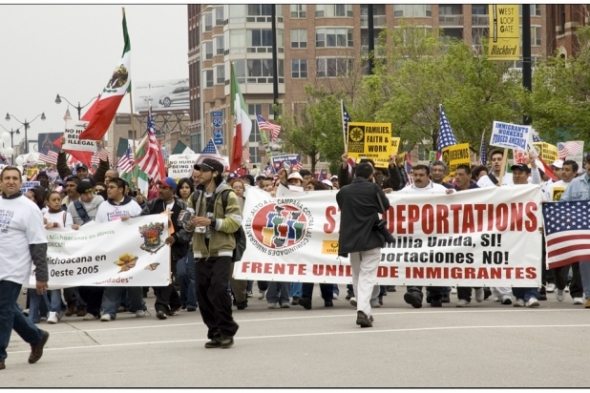
The purpose of this article is not to rehash the debate points, but to explore what impact impending immigration reform, which has been promised by the Obama administration in the upcoming second term of the president, will have on workers' compensation and the likelihood that injured newly legal immigrant workers, especially from Mexico and other Latin American countries, will avail themselves of the benefits of medical tourism to their home countries as an option if injured on the job.

According to the IIABA White Paper, which cited a Pew Hispanic Center report published in 2006, there are probably 11 to 12 million undocumented immigrants in the US, depending upon how many have "self-deported" recently due to the current US economic slowdown. Demographically, this represents 5.4 million men, 3.9 million women, and 1.8 million children. In addition, there are 3.1 million children who are US citizens, having been born here (64% of all children of the undocumented) from one or more parent.

President Obama's Executive Order last year gave many of these children a reprieve from deportation while they are attending college here and until more comprehensive reform can be achieved for all undocumented immigrants. Undocumented immigrants account for almost one-third of all foreign-born residents of the US, and about 80% of these are from Mexico and other Latin American countries.

The report also states that out of the total number of 9.3 million undocumented adults, 7.2 million (77%) are employed and account for around 5% of the US workforce. They comprise a disproportionate percentage in some industries, such as 24% of farm workers, 17% of cleaning workers, 14% of construction workers, and 12% of food preparers.

These industries typically account for much of the claims filed under the US workers' compensation system. Within a particular industry, undocumented workers comprise a higher percentage of more hazardous occupations. For example, 36% of insulation workers and 29% of all roofing employees are estimated to be undocumented.

In my blog post, The Stars Aligned, I briefly touched upon the issue of immigration reform's impact on medical tourism for workers' compensation in regard to Mexican workers in the US. But since President Obama and Florida Senator Marco Rubio have recently outlined different reform plans, which I will discuss here in this post, it is important to mention first how undocumented workers are treated under the various laws each state has established to govern their workers' compensation systems.

A document I mentioned in that blog post was a chart of the laws governing workers' compensation and undocumented workers that one of the respondents had forwarded to the discussion group.

Undocumented workers are entitled to workers' compensation benefits in thirty-eight states; however, six states have statutes that allow or restrict benefits for various reasons such as:

  • if the employment was obtained under false pretenses (Florida);
  • if disability benefits were payable or they were unable to work because of the injury (Georgia);
  • if they were entitled to medical, but not disability benefits because of a commission of a crime under the Immigration Reform and Control Act (IRCA) of 1986 signed by Ronald Reagan (Michigan);
  • if vocational rehabilitation benefits were covered since the worker could get employment outside the US (Nevada);
  • if disability payments were recoverable at US wages rather than those of the home country or if the employer was aware or should have been aware of the undocumented status (New Hampshire); or,
  • if disability benefits were not payable if the worker was unable to work due to his status and not the injury (North Carolina).

Three states — California, Georgia and Nebraska — have statutes that indicate that undocumented workers are not entitled to benefits in certain situations. California case law establishes that undocumented workers could be refused vocational rehabilitation benefits. Georgia case law establishes that disability benefits are not payable if the worker is unable to work due to his status and not his injury. And, Nebraska case law established that a worker named Ortiz could be refused vocational rehabilitation benefits because he could not legally work in the US and did not plan to return to Mexico to work.

Only Wyoming has a statute that expressly includes only "legally employed ... aliens." And case law in 1999 confirmed that undocumented workers were not entitled to benefits. Eleven states — Alaska, Delaware, Indiana, Maine, Missouri, Rhode Island, South Dakota, Vermont, Washington, West Virginia and Wisconsin — were listed in the chart as unknown as to whether or not undocumented immigrants are entitled to benefits.

As we begin the second Obama Administration, immigration reform has risen to the top of the list, only to be preceded by the debt crisis and the fiscal cliff. As I mentioned above, both President Obama and Florida Senator Marco Rubio have outlined their own versions of what immigration reform would look like. Senator Rubio's plan would rely more on skilled workers such as engineers and seasonal farm workers while tightening border enforcement and immigration law. Senator Rubio's plan would not provide blanket amnesty to those already here.

On the other hand, President Obama's plan, as outlined in a recent New York Times article, would seek to give undocumented workers a path to citizenship. Sen. Rubio's plan would focus more on merit and skill as prerequisites for entry into the US, much like earlier immigration laws passed in the 1920s and other decades. The president's plan would be broader and more immediate, and would probably have less of an impact on the economic stability of those industries that currently rely on undocumented workers.

Whatever form immigration reform will take, the opportunities to offer medical tourism as an option to injured undocumented workers, once they achieve some legal form of citizenship, will no doubt increase. The likelihood that something will be done this year has already been the topic of many news programs and even has been discussed by congressional leaders such as Harry Reid, the Senate Majority leader.

Once the currently undocumented can legally remain in the US and continue to work in the industries they occupy, it is more likely that they will opt to go to their home country for medical treatment should they get injured on the job. With the benefits of doing so, such as not having language barriers, cultural barriers, and being able to be visited by friends and family living there, they will be more open to receiving treatment at facilities they normally could never get into. And as many of these countries are fast becoming "rising stars" as medical tourism destinations, the more likely they will want to get treated at the best hospitals in their countries, which will have a huge impact on their recovery, their well-being and their standing with friends and family. And the financial burden of not having to look for a job back home and being able to return to the US will convince them to opt for medical tourism as injured workers.

Spinal Surgery Requests And The SB 863 Gap

Come July 1, 2013, many areas of Workers' Compensation that have "gap" problems will simply go away. And the parties will fully participate in the independent medical review process on all claims. Until that time, however, we must continue to infer what the legislature intended, and litigate items such as this, if necessary.

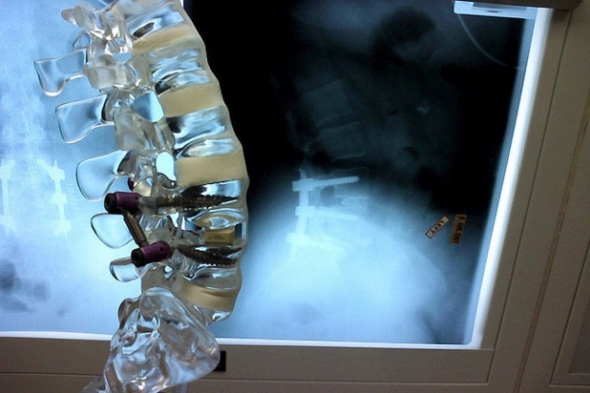
In an attempt to simplify the ever-confusing Workers' Compensation world in the great State of California, our legislative branch drafted SB 863 in 2012. With the stroke of his pen, Governor Brown enacted sweeping legislation, with effective and varying start dates for various provisions of the new law. However, with varying start dates comes confusion regarding various provisions. A spinal surgery request is one of the areas which appears to have a problem with the implementation date of July 1, 2013.

Effective January 1, 2013, provisions under Labor Code § 4062(b) pertaining to the spinal surgery second opinion process have been eliminated from the Labor Code. Overall, this is a positive result for the Defendant from SB 863. The new independent medical review (IMR) process kicks in on July 1, 2013, for dates of injury prior to January 1, 2013. However, a new question has surfaced as a result of this substantial change. How do we address spinal surgery requests for dates of injury prior to January 1, 2013?

The new regulations and the Labor Code conflict in their guidance. Labor Code § 4062 (b) reads: "For injuries on or after 1/1/2013 and for UR decisions communicated on or after 7/1/2013, regardless of date of injury, all employee objections to utilization review disputes under Lab Code § 4610 are resolved only IMR pursuant to 4610.5 and not through the QME process." Simple enough. Yet with the provisions of Labor Code § 4610.5 regarding the IMR process not starting until July 1, 2013, we have a sizeable gap of six months where the parties are seemingly unable to participate in a second opinion process as well as the independent medical review process.

Causing even more confusion is the second half of Labor Code § 4062(b) which reads: "For injuries on or after 1/1/2013 and for objections to diagnosis of treatment recommendations within the MPN, regardless of the date of injury, all employee objections to diagnosis or treatment recommendations within the MPN are also resolved only through independent medical review pursuant to § 4610.5."

Curiously, this seems to imply that the independent medical review process is the method which should be used, since a request for spinal surgery is clearly a request for care. Further, the process is to be implemented "regardless of the date of injury." That being said, we must note that the objections must come from care within the medical provider network (if applicable). Further, it appears that this section refers only to "employee" (not employer) objections.

So what is the correct answer? In my research, I consulted with numerous publications. I also consulted with fellow colleagues. All presented varying answers. Ultimately, I found the answer in Labor Code § 4610(g)(3) which provides: "(3) (A) Decisions to approve, modify, delay, or deny requests by physicians for authorization prior to, or concurrent with, the provision of medical treatment services to employees shall be communicated to the requesting physician within 24 hours of the decision. Decisions resulting in modification, delay, or denial of all or part of the requested health care service shall be communicated to physicians initially by telephone or facsimile, and to the physician and employee in writing within 24 hours for concurrent review, or within two business days of the decision for prospective review, as prescribed by the administrative director. If the request is not approved in full, disputes shall be resolved in accordance with Section 4610.5, if applicable, or otherwise in accordance with Section 4062."

As Labor Code § 4610.5 is not applicable until July 1, 2013, Labor Code § 4062 will apply and the medical-legal process takes over. Which means the Defendant would adhere to the requirements under the guidelines established under the utilization review process when we are faced with a spinal surgery request.

Upon receipt of the request, they must proceed with a timely and proper review and furthermore must properly convey the denial for care as indicated above. It is important to remember that the Defendant must notify the "employee" by a copy to the employee and their attorney. In their notice to the physician, the correct, identified physician must be served as indicated above. Finally, it is my recommendation that with any utilization review determination, a proof of service should accompany the final, written decision. Although this step may be seen as a small one and potentially burdensome, a proof of service signed under penalty of perjury usually eliminates a claim of late or improper service, and can be a very valuable tool at the time of a hearing.

Assuming the utilization review process was completed properly and a denial issued, the parties would then proceed with a medical-legal evaluation under Labor Code § 4062 to resolve the dispute.

Come July 1, 2013, many areas of Workers' Compensation that have these sorts of "gap" problems will simply go away. And the parties will fully participate in the independent medical review process on all claims. Until that time, however, we must continue to infer what the legislature intended, and litigate items such as this, if necessary.

*Special thanks to Jake Jacobsmeyer.