
Paul Carroll
Based on what I’m seeing at ITL, customer experience has become a truly hot issue in the insurance industry, especially as customers are more willing to shop around. Is that what you’re seeing, too?
Sean Eldridge
Absolutely. With the advent of many of the GenAI and agentic AI solutions that can be customer-facing—such as agentic voice for inbound and outbound calls—we're definitely seeing more interest.
Just to step back, I think "customer" is often too narrowly defined. Companies are just solving for the claimant, or just solving for the policyholder, or just solving for the client in a TPA-type experience. We've always looked at it as an ecosystem—your claimants, your policyholders, your adjusters, your supervisors, your agents, your brokers. How do you not just optimize for one group but look at them more holistically to make sure any CX solutions don't help one group but potentially hurt another.
The industry should think more broadly about how to help both our people behind the scenes, as well as that end user on the other side.
Emily Cameron
If the user has a positive experience, they understand what's going on and they feel good about what's going on, that will lead to fewer phone calls over to the adjuster, less litigation, etc. There are just so many interdependencies throughout the process.
Thinking in terms of an ecosystem and focusing on that claimant experience—even if maybe efficiency is your primary goal for the year—people are starting to understand how everything is interrelated and focus on how we can simplify things to have a more successful process and experience for everyone involved. This has been our mission from the start.
Paul Carroll
Over time, every industry becomes a technology industry. The computer industry used to be simple—if you had a problem, you called IBM. They sold the mainframe, the software, the peripherals—everything. But with personal computers came an ecosystem based on different software pieces, and solving problems became difficult. Vendors pointed fingers at each other. Insurance is even more complicated because there are two levels of customers: the broker or agent as intermediary and the end customer. How do you think about developing a plan that maps out the customer experience in a complicated industry involving lots of pieces of technology?
Sean Eldridge
When we got started six years ago, we made a deliberate decision to start with the problem, not the technology. Before writing a line of code, we spent thousands of hours with carriers, third-party administrators, self-insureds, claims teams and claimants to understand the friction points across the claims process, the service process, the underwriting process—you name it.
For us, that meant building an underlying architecture first that allowed for a wildly extensible level of configurability and interoperability. We see a lot of fantastic technology coming to bear with the advent of GenAI and agentic AI, but those are still point solutions for specific use cases that are just scratching the surface of what's possible. Without great configurability and interoperability, you can’t do a lot.
When you talk about reducing phone tag, clarifying expectations, and getting the right information to the right person in the right system, really special things can happen in our industry. And again, that starts with the problem, not the technology.
Emily Cameron
I like to think of us as a meat-and-potatoes company. It's easy to see a cool feature or solution and say, "I need that," adopt it, and then find it's just not used. So we go on-site, sit next to the adjuster, and see how their current workflow works to make sure that we're actually improving it and not adding work for them. We even go to grocery stores or hardware stores and talk to those employees to get their experience.
To your point about companies becoming tech companies: I think that's really interesting because oftentimes our main competitor is just the traditional phone call and snail mail. There is definitely a technology adoption curve. People resist. They’ve been doing this a long time. They’re used to their flow.
So we started slow, focusing on their first priority: It's difficult to communicate, so let's improve the messaging capabilities. Once people get comfortable with that, they're upset that things are taking so long. So how can we get information back faster? Well, here’s our electronic document solution to exchange forms faster. Or they say, "There are so many systems I have to deal with." So here’s our ETL solution to deeply integrate and pull in information. Once they get their foot in the door, they start seeing the value.
Paul Carroll
What are some specific examples of problems you've identified through this kind of field research?
Emily Cameron
Oftentimes the biggest struggle we've heard directly from claimants is, "I just don't know what's going on." So we get some resources and information over to them right away. We also built an automated intake solution, to make it super easy to report a claim quickly. Then we can immediately send a text or email while we're still processing their claim and figuring out who their adjuster is. This process can take 24 to 48 hours sometimes, and we don’t want claimants to just be kind of twiddling their thumbs and not quite sure what to do.
We've done virtual interviews with adjusters, and they say, "Hey, I'm fine. I'm just doing my job. No issues." Then you sit down next to them and realize they're spending hours a week just looking through files manually, and they didn't even think to bring that up.
Once we build a relationship, they’re more likely to say, "Hey, I'm having this issue. Is this something you guys could take a look at?" But at first, people just don't know what they don't know, especially if they're not used to technology.
Sean Eldridge
I can think of countless examples where we've been in the trenches side by side with claimants, policyholders, and insurance professionals to really understand their challenges. Someone says, "Oh, I have no problem keeping track of all these things." Then you see their desk, and it's got 74 Post-It notes on it. You're thinking, okay, there might be a better way here.
The devil is in the details on how those solutions come to life. There’s been an explosion of AI document processing tools over the last 18 months, but how do you think about interoperability, whether with the document management system, the core systems or whatever? How do you let claims professional configure that document processor but still within guardrails set by the organization? There are all the fine details you don't know until you're in the weeds with those individuals and teams.
Paul Carroll
Configurability has always been a bugbear. I vividly remember the early days of enterprise resource planning (ERP) systems, led by SAP. They were great, but even the biggest customers pretty quickly found that they had to redo accounting, requisitioning and other processes to fit SAP’s way of doing things, when it should have been the other way around.
Emily Cameron
Every company we've worked with likes things a different way. We call them the "special snowflake." So we try to make sure that almost everything is configurable.
It even gets down to the user level. One adjuster told us, "You know, I just don't want text or email. I like the old days when someone called me." So, we built a system that calls that person and uses what sounds like an authentic voice to let them know they have a new claim or an update.
Paul Carroll
I mostly see customers wanting claims to move faster, with regular updates, and you’ve talked about those issues. What are other key touchpoints that define a good customer experience in insurance?
Sean Eldridge
At a high level, it's reduction of uncertainty. Whether you're talking about a claimant versus a policyholder versus even the adjuster or other insurance professional—a client service rep who might be touching that claim or client in some way, shape, or form—everyone just wants to be able to set expectations. When can I expect to hear something? When I have a scratch-my-head type moment, how do I get an answer for it really quickly?
I think the industry is still just scratching the surface of what's possible on reducing uncertainty. Personal lines have probably done better than commercial lines historically, but there's a sea change coming in terms of what that's going to look like.
And I think the research-based approach—problem first, technology next—will get us there. One of our cofounders is a highly published researcher and has a focus on behavioral science. We've got the former lead out of IDEO's behavioral design division who's helped us think about, from a human factors standpoint, how do you ask the right questions at the right time to unlock insights? And I think our approach is part of a rising tide that will lift all boats in the industry.
That's very exciting in terms of improving customer experience for the long run.
Paul Carroll
Here’s hoping. Thanks, Sean and Emily.
About Sean Eldridge
 | Sean G. Eldridge is the Co-founder and CEO of Crosstie, a venture-backed insurance technology company that helps P&C carriers, TPAs, and self-insured organizations modernize claims and service workflows through configurable AI and automation. Outside of Crosstie, Sean led a private equity-backed roll-up in the disaster restoration industry, giving him firsthand exposure to the realities of claims operations, and previously held leadership roles at Johnson & Johnson, Procter & Gamble, and Weight Watchers focused on building and scaling technology-enabled services. He earned a B.S. in Management Information Systems from Rochester Institute of Technology and an MBA from Harvard Business School. He resides in Cambridge, MA with his family. |
About Emily Cameron
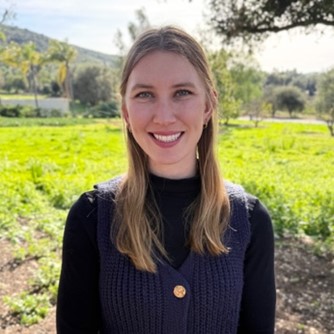 | Emily Cameron is the Head of Product and Customer Success at Crosstie, where she leads the development and adoption of technology that improves claims and service outcomes for P&C carriers and TPAs. By unifying product strategy with customer success, Emily ensures the platform delivers measurable operational efficiency, clearer communication, and better experiences for both insurance professionals and the people they serve. Emily began her career at Epic, one of the world's largest healthcare software companies, where she held escalating technical and customer-facing leadership roles supporting complex, mission-critical implementations for large organizations. She later joined Crosstie to build the product and customer success function as the company scaled its platform across P&C insurance. Emily holds a B.S. in Bioengineering, cum laude, from the University of Washington. |