Executives in every industry grapple with fragmented information streams that obscure the full picture of customers, competitors, vendors, and risks.
They want pictures of places with perils, proximity, price, sanctions, anti-corruption, regulation, crime, and compliance. Those map the playing field.
They need profiles of players on that field. Best, worst, and next customer, competitor, consortium, and criminals. Active, passive, and latent friction on the field of business and nature.
What are the risks they need to manage themselves? Which risks can be transferred with insurance? How do things change over time? When and why should they adopt new tactics?
Nobody builds or operates anything without risk management and insurance.
Some risks are well-enough understood that there are formulas on maps with data that explain:
- rate to risk – distance to coast, nearest fire line, closest body of water, feet to fire hydrant
- rules of risk – sovereign borders, zoning, taxation boundaries, legislative hellholes, politics
- range of risk – proximity to population, nearness of combustible materials, crime indexes
Some risks are still being grappled with:
- "invisible" risks – the internet is not a place, criminals lie, organized criminals lie better
- "known unknowns" risk – pandemic, war, supply chain, cyber, lawsuits, climate, tech
- "emerging" risks – aging infrastructure, connectivity, AI, casualty CATs, land use
Entity resolution and digital entity resolution are two key dimensions where massive progress is being made in transforming our understanding of the players on the field as well as navigating current and foreseeable changes in the field of play itself.
Adding entity data with geo-digital entity attributes is now a new avenue for putting risk on the map.
Are my neighbors my adversaries?
"See the battlefield, know your enemy" is a strategic imperative in conflict – some see that business competition, combating criminals, and complying with rules, regulations, and laws as necessary conflict, akin to war. Sun Tzu's "The Art of War" makes compelling sense in creating an awareness about your own situation and a diligence in understanding others with whom you interact or that are in your environment.
Tactically, assigning ultimate owner entity resolution to all the places and resources on your business battlefield makes a frustrating legacy of poor data a daily problem. Strategically, you can add more sustainability and resilience to your business by improving your knowledge of "brick and mortar, with click and order" data and clearly mapping your known trusted customers and partners as well as those you do not trust. Then everything else is open for business, with trust unknown, yet not unknowable.
Blending hyper-local with hyper-linkable on a map
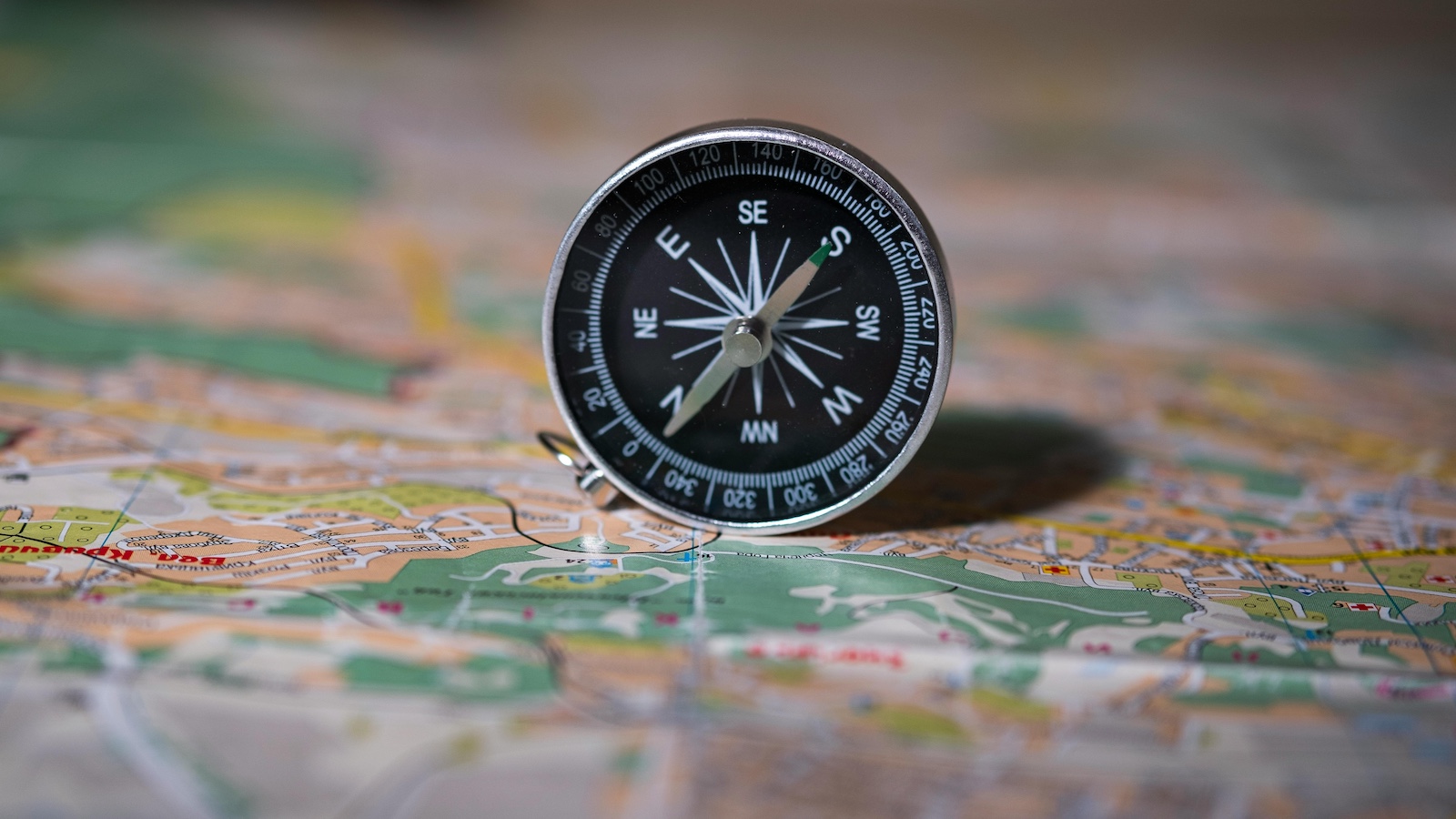
The risks you can see and those you can only know as relatable can be illustrated visually on a map now.
Visible overlap of the world and the e-world can take a picture where two worlds interact - physical names and addresses and internet names and addresses pool into entities and relationships. Perils and problems in either or both can create business risk, but a peril on the internet might manifest at multiple physical locations. A duality of risk with asymmetric shapes.
You can play these visuals forensically and in a forward-looking fashion to understand risks, supply chains and single points of failure to improve your sustainability and resiliency. It's a new frontier of both understanding risk as well as a new entrée for Predict & Prevent initiatives.
Tracking relatedness on a map when water is rising, the wind is blowing, a freeze is coming, the earth is shaking, or when a fire is raging are traditional processes now. But today's risks now include more layers of risk that extend to digital assets and brand reputation as well as cyber exposures and regulatory and compliance requirements tied to knowing your business, your customers, your vendors, and your physical/digital/legal/cyber ecosystem.
When is a bunch of dots on a map really a single organization with legitimate purpose? If you don't tie them together appropriately, then you create aggregation and accumulation risk.
When are those dots nefarious sanctioned shells, all being operated in shadowy collusion? If you don't find these accurately, then you are dealing with the wrong customers.
Only entity resolution can help you sort it and keep it sorted.
A company in New York running on servers in North Korea owned by companies controlled by criminal cartels in sanctioned and unsanctioned countries is different than a legitimate NYC business entity. The same for Frankfurt, London, Quebec, Sao Paulo, Mexico City, or any hub.
Knowing what's behind the dots on a map matters.
Entity resolution and digital domain entity mapping emerge as pivotal technologies, bridging disparate data points to reveal actionable insights.
From unmasking fraudsters and untrustworthy entities, we can now blend data and view them in maps and graph analytics like never before. These connected and resolved entities can show what is otherwise hidden – how "click&order" meets "brick&mortar" – and then relates these to maps and graphs that bring entity resolution data and GIS tools together as new ways for reshaping how businesses operate. In some regards, a GIS coordinate or polygon is the same as a street address in creating a unique identifying reference. In other regards it may be even better.
Classic geospatial information systems are mashing up with federated streams of disparate identities getting resolved with industrial grade entity resolution engines on names and addresses from the real world and modernized digital entity names and addresses from the e-world.
Unraveling Entities: The Foundation of Clarity
Entity resolution, at its core, is the art and science of identifying when different records refer to the same real-world entity, despite variations in naming, addresses, or other attributes. Think of it as a digital detective work: matching "Acme Corp." in one database with "Acme Industries" in another, accounting for typos, abbreviations, or mergers. This process relies on advanced algorithms, machine learning, and sometimes geospatial data to link entities across sources like customer databases, transaction logs, and public records.
In the business world, poor entity resolution leads to potentially costly blind spots—duplicate customer entries inflating marketing budgets or missed connections in supply chains. But when done right, it creates a unified view, often called a "Customer 360," enabling personalized experiences and efficient operations. Financial institutions, for instance, use it to consolidate profiles from multiple accounts, spotting patterns that standalone data might overlook.
Business leaders face a perennial challenge: How do you connect the dots in a sea of disconnected data? Consider a scenario where a financial institution spots unusual web traffic patterns on its site. Is it a legitimate corporate inquiry or a sophisticated fraud attempt? Or imagine a real estate firm assessing a commercial property—does the tenant's online activity signal stability or hidden vulnerabilities? These questions underscore the power of entity resolution and digital domain mapping, two opportunistically intertwining techniques that transform raw data into strategic advantage.
Mapping the Digital Footprint: From IP to Insight
Companies are complementing entity resolution with digital domain mapping, particularly in the practice of tracing web traffic back to specific companies through reverse IP lookups. When a visitor lands on your site, their IP address can be cross-referenced against databases of corporate networks, revealing not just location of the domain server, but also the operating organizational identity - using B2B signals to understand transactional behavior.
Tools like reverse IP tracking turn anonymous visits into named prospects, enriching CRM systems with firmographic data such as company size, industry, and revenue. When integrated with entity resolution, it resolves ambiguities—ensuring that traffic links correctly to the parent corporation, even if subsidiaries are involved.
Key Use Cases: Where Resolution Meets Reality
The true value shines in practical applications. Here are a few ways businesses are leveraging these technologies to drive decisions and mitigate risks.
Fraud Detection: Spotting the Anomalies
In fraud prevention, entity resolution and digital domain mapping form a dynamic duo. Banks analyze transaction data alongside web traffic to detect mismatches—say, a login from an IP tied to a known risky entity, or duplicate profiles attempting wire transfers. For example, if multiple accounts share an email but originate from disparate company IP addresses, it could flag account opening fraud. Anti-money laundering (AML) teams use this to uncover hidden networks, reducing false positives and accelerating investigations. Real-time resolution cuts fraud losses by identifying suspicious patterns across channels more accurately and faster than other means.
Property Due Diligence: Assessing Digital Vitality
For real estate investors and developers, due diligence extends beyond physical inspections. Entity resolution helps verify tenant identities by linking lease records to corporate filings, while digital domain mapping evaluates a company's web traffic footprint. High traffic from reputable IP addresses might indicate a thriving business, boosting property value; conversely, erratic patterns and patterns with "bad actors" could signal instability. In M&A contexts, this combo accelerates reviews, slashing due diligence time from weeks to hours by automating entity matches and traffic analysis. OSINT techniques further enhance this, pulling in public web data for comprehensive risk profiles.
Marketing and Lead Generation: Targeting with Precision
B2B marketers thrive on digital domain mapping to identify anonymous site visitors as potential leads. By resolving these entities, teams may personalize content—serving tailored ads or emails to decision-makers at visiting companies. Account-based marketing (ABM) benefits immensely as well, prioritizing high-value prospects based on traffic intent.
Charting the Future: Integration and Innovation
As data volumes explode, entity resolution and domain mapping will evolve with AI, incorporating real-time geospatial layers for even richer insights—think mapping traffic to physical locations for everything from trusting a transaction to supply chain optimization. Executives invest in resolving uncertainties while positioning their organizations for what's next – the unknown to the knowable.