

Download

Ogilvie: The Good, The Bad & The Ugly

The First District Court of Appeal’s opinion muddies the waters and inspires litigation. Applicants have no clear path for rebutting the scheduled diminished future earning capacity, but this case — by giving applicants three vague methods — certainly should inspire the California Applicants' Attorneys Association to believe a rebuttal can be accomplished. The defense, on the other hand, is not left without weapons and defenses — but California's employers are rightly more interested in consistency, uniformity and objectivity than expensive trial tactics. Rosa Moran was sworn-in as the Administrative Director of the Division of Workers' Compensation on July 25th. The entire industry should wish Ms. Moran good luck and God's speed as she takes on the task creating a new and improved Permanent Disability Rating Schedule that stops the permanent disability litigation craze called Ogilvie.

Don Barthel

Profile picture for user DonBarthel

Don Barthel

Donald Barthel is a founding partner of Bradford & Barthel, LLP, an industry leader in the aggressive defense of Workers' Compensation, Subrogation, and Employment, and Labor matters. His entire legal career has been dedicated to the defense of employers' rights in the arenas of labor law, employment law, and workers' compensation.

Building A High Reliability Organization

How high do the stakes have to get for us to shift into a higher mode of clarity and preparedness? As business leaders, we are the ones who get to make that decision.|

Recently I was reading about the challenging environment of a nuclear aircraft carrier. Here are some of the characteristics:
  • Manned by a bunch of 20-year olds
  • Deadly jet engines that can suck a person into the jet intake if too close
  • Jet exhausts that can severely burn a man or blow him overboard
  • Jet fighter take-offs that reach 150 mph in 2 seconds
  • Landings that essentially are controlled crashes
  • Fueling aircraft with engines running
  • Handling of explosive materials
Yet, for all the hazards, accidents on flight decks are surprisingly rare. Because so many things could go wrong but almost never do, experts consider this a "high reliability organization." The clarity about responsibility for one's performance as well as interfacing with team members is astounding. The communication and heads-up performance is crucial for success. Success is dependent on each person understanding what is expected of him, and understanding how what he does complements the work of the rest of the team. Makes sense, right? Many of us have participated in this level of preparation and attention to detail when the stakes have been high for the specific project we have been involved with. But think of what is needed to enable this level of performance every day! Okay, let's shift gears. First, I have to admit I have not seen the level of high reliability performance you find on a flight deck of an aircraft carrier in very many midmarket businesses. I have seen small units in a business that had really embraced continuous improvement make some fantastic improvements. Let's face it. For businesses, the stakes are not as high as they are on a flight deck. But, the principle is there for us to apply — clarity and preparedness escalates the predictability of success. Look at your business organization. Think about this outline of preparedness for each business unit:
  1. Prepare the description of the 3-5 most important functions of each business unit (that contribute to key results for success).
  2. What is necessary for each function to be performed optimally?
  3. What should the measured results be for each results area (success criteria)?
  4. What processes should be used to assure timely, accurate, high quality performance?
  5. How will customer satisfaction (internal & external) and targeted results be measured and achieved?
How high do the stakes have to get for us to shift into a higher mode of clarity and preparedness? As business leaders, we are the ones who get to make that decision. If this is an area of leadership you would like to read more about, please contact me, and I will send you my white paper on Performance Management - Accountability Based Job Performance (Best Practice Summary). What a great time to concentrate on building high reliability into your organization. Authors Kurt Glassman collaborated with Hal Johnson in writing this article. Hal Johnson has been CEO of eight different companies in the US and the UK. His primary focus has been building management teams to produce outstanding performance.

Kurt Glassman

Profile picture for user KurtGlassman

Kurt Glassman

Over his 30+ year career, Kurt has started, acquired, and provided counsel to a variety of businesses and owners. He has built and led international and professional service organizations; created, through acquisition, a $50 million building materials operating entity; and developed multimillion-dollar real estate projects.

Make Your Prescription Benefit Manager Work for You

The majority of large employers today do not have the necessary tools at their disposal to decipher and use to their advantage the key relationship between the actual Prescription Benefit Manager (PBM) claims pricing received and the contract language that supports those claims.|

Does your Prescription Benefit Manager contract deliver the actual pricing printed on its pages? Can you verify the actual pricing? If you can't accurately benchmark your pricing, how can you competitively analyze your program or implement any meaningful predictive strategies? The majority of large employers today do not have the necessary tools at their disposal to decipher and use to their advantage the key relationship between the actual Prescription Benefit Manager (PBM) claims pricing received and the contract language that supports those claims. It is all well and good to negotiate an average wholesale price (AWP) less 72% for a certain tier of drugs from your Prescription Benefit Manager, but how do you verify that is in fact what you are getting? Your contract may back up and document that discoun,t but does that mean you are receiving it? It is critical for the purchaser of prescription benefits to understand that what they believe they agreed to in contract negotiations and what appears to be supported by the Prescription Benefit Manager contract is not necessarily what they are receiving. In fact, discounts are often inflated making contracts look great on paper but not so good in reality. The distractions of the Prescription Benefit Manager procurement process sidetrack most employers, which shifts their focus in the wrong direction giving way to perception and not reality. Terms like pass-through, transparency, rebates and average wholesale price, combined with the presentations of the competing Prescription Benefit Managers, leave most employers with more questions then when they began. Even Prescription Benefit Manager executives become confused when comparing their own proposal to that of a competitor. Your primary concern should be to understand the discounts you are receiving or what you are actually paying. You must evaluate all Prescription Benefit Manager pricing with specific criteria that eliminates individual Prescription Benefit Manager discount methodology. This precise methodology language must be embedded into the contract so you are playing by your rules and not the rules of the Prescription Benefit Manager. Your discounts can then be validated to ensure that you are getting what you pay for. With specific pricing criteria, you can take the mystery out of prescription pricing, and by understanding the true cost of your drugs, you are in a better position to evaluate ancillary programs that Prescription Benefit Managers may offer. In addition, it is just as important to audit and validate the pricing on an annual basis to police the pricing accuracy. All Prescription Benefit Managers have their own approach to managing costs — some are better than others and may or may not be in your best interest. When you are spending millions of dollars a year on prescription drugs, you have to take a sound business approach and protect yourself through your Prescription Benefit Manager contract. Only when you really understand the costs of your drugs and true discounts you receive can you begin to evaluate the overall value that a Prescription Benefit Manager can bring to you.

Scott Martin

Profile picture for user ScottMartin

Scott Martin

Scott Martin is the founder, CEO and chairman of Remedy Analytics, a healthcare data analytics technology company that partners with employers to protect their prescription benefit interests. Martin is a three-time entrepreneur dedicated to making healthcare easily comprehensible and affordable for patients and providers.

Will the Outlook Get Worse?

Just as most of us thought things were improving and as the Dow was seemingly stabilizing with all of us hoping for a strong recovery, it happened. The elongated and painful negotiations regarding the debt limit, the downgrading of the US credit, and then a tumultuous stock market drop. What's next? The recent Health Affairs article from the CMS Office of the Actuary suggests that we are now faced with higher than average health care cost increases. One of the "hoped for" outcomes of health care reform, known as PPACA or Obamacare, was reduced health care trends and more controlled healthcare costs. Although filled with controversy, the general understanding of the overarching and primary objective for reform was the goal of achieving health care cost savings. The forecasts are not encouraging. The impact of rising health care costs on the federal budget and deficit is concerning at best, when at the same time the value of Treasury securities is declining in the financial markets. Perhaps one of the most disappointing predictions is the table below. The authors suggest that PPACA has significantly increased the costs of all of the key sectors related to health care. Other than the projected increase in government administration, the two most significantly increasing categories were prescription drugs and net cost of health insurance. These increases are concerning and something that we cannot afford. The biggest increase occurs in 2014 when a major part of the program is implemented. So what should we do? What steps should be taken to be sure we achieve some control on the rapidly escalating health care costs? I propose a three step plan, one that will reduce costs no matter what happens with health care reform. We need to take action and action that is effective! The three steps are:
  • Stronger focus on eliminating potentially avoidable health care services. We need to be sure we need to do what is being done. Ongoing studies show that as much as 50% of what is done in the hospital today is potentially avoidable. There are considerable opportunities to reduce length of stay without negatively impacting the quality of health care. Complementary information shows that as much as 35% of what physicians do in the ambulatory setting is potentially avoidable. Until we eliminate true medical "waste" we have no hope of reducing the cost of care.
  • Continue to negotiate additional discounts in reimbursement for health care services to be sure that we avoid paying for more than needed. Ideally it would be better to move to an all-payer system where health care providers are paid a common fee for their services no matter who is the payer (i.e., public or private). Studies show that the private sector has more than a 16% cost shift from public payers that are unwilling to pay their fair portion.
  • Introduce incentives that work to motivate everyone to reduce health care costs. This includes incentives to providers to limit services to those necessary, to patients to live healthier lifestyles, and employers/plan sponsors to consider appropriate plan designs that minimize over consumption of services.
Although the CMS actuaries are only projecting health care costs, the concerns they raise are important and need to be carefully considered. Our economy is fragile and it cannot survive continued surprises. Hopefully we will take the steps to avoid further problems. It is a time for action.

David Axene

Profile picture for user DavidAxene

David Axene

David Axene started Axene Health Partners in 2003 after a successful career at Ernst & Young and Milliman & Robertson. He is an internationally recognized health consultant and is recognized as a strategist and thought leader in the insurance industry.

The California Partnership For Long Term Care Insurance

Nationwide about half of all nursing home residents are on Medicaid. In California, we call it Medi‐Cal and the percentage of nursing home residents on Medi‐Cal is closer to 60%! Let's keep in mind what this means. In order for one to qualify for Medi‐Cal you have to spend down all your "countable" assets down to as little as $2,000. In other words, 60% of people in California who are in nursing homes have spent down all their assets. For most that means decades of savings have been spent down in a matter of months. In 1995 California decided to become a pioneer State in offering a "hybrid" product that would encourage more people to purchase long term care insurance (LTCI). It's called The Partnership for Long Term Care Insurance. In researching why people buy or don't buy this important coverage they found that most people have two major concerns with this type of insurance. The first is that most plans are limited in nature, meaning that they tend to pay for care in periods of time such as 3 years or 5 years of care. Considering the statistics that the average length of care is around 3 years and that 90% of people don't exceed 5 years of care, these plans do tend to protect you against the odds. However, most people still view the insurance as "catastrophic" protection and they voiced concerns of having such a policy that is not good for an unlimited amount of time. This is a valid point since the very definition of an accident involves an unanticipated event which can have long term effects for an undetermined amount of time. The second concern most people expressed involved having a claim when one is elderly and incapacitated and the challenge of dealing with an insurance company in this condition. So the Partnership with the State set about creating a product that would provide people with additional benefits to add incentives to taking out this kind of protection. Let's look at these two incentives: The Asset Guarantee The first benefit is the asset guarantee. The idea of this benefit is to allow one to buy less coverage which means a lower premium but, to have the peace of mind that the whole reason you are taking out this coverage, which is to protect your assets from having to be spent down due to a catastrophic health problem, is guaranteed to be achieved. That's a mouthful, so let's break it down to the specifics. The greatest percentage of people who would suffer the most from a long term care situation is the Middle‐Class. The poor don't really have anything to protect and they would quickly qualify for Medi‐Cal. The rich can often absorb the impact of long term care costs. So it’s the Middle‐Class who are the hardest hit when they have a stroke and suddenly have to fork out $6,000 per month for care (the average cost of full‐time care in California). When you take out a Long Term Care Insurance plan, you can either get limited or unlimited coverage. Most people cannot afford the latter, so most end up being able to afford a 3 year or a 5 year plan. With most plans on the market, if the benefits are exhausted, you then have to spend‐down your assets to Medi‐Cal levels (as low as $2,000). But, if you qualify for one of the five Partnership plans, then the State of California guarantees that if your plan runs out, you are able to protect an amount of assets equal to what was paid in benefits. So in other words, if your plan paid out $250,000 and then ran out, the State of California gives you an entitlement that guarantees that you can protect $250,000 from Medi‐Cal spend down. Once again, this allows most middle‐class people to buy less coverage with a lower, more affordable premium. But you have the peace of mind to know that the whole reason you're taking out this protection, which is to protect your assets, is guaranteed to be achieved. Care Management The second benefit the State provides as an incentive is Care Management. What this means is that when you have a claim, the State requires the insurance company to hire a local 3rd party company in your community who will work with you and your family to help file the claim, find care, set the care up and monitor the care on an ongoing basis. This takes tremendous burden off the family when they often have never been through a long term care situation before. In Conclusion When the Partnership was first made available in California, it was to be a 10 year experimental program. It was so successful that Governor Arnold Schwarzenegger signed it into permanent law in 2005. Then in 2006 Congress passed the Deficit Reduction Act which called for the creation of the National Partnership Program. Now all States either have or are in the process of creating a Partnership program modeled after our program here in California. At the most recent Long Term Care Industry Conference which was sponsored by The American Association for Long Term Care Insurance in November 2009 in Kansas City, Missouri, The National Partnership was the most talked about topic at the conference. It is the future of long term care protection in America.

Stephen Elliott

Profile picture for user StephenElliott

Stephen Elliott

Stephen Elliott is the #1 Long Term Care agent in the nation. He has more clients and more in-force premium than any other agent in the country. Steve is also a national speaker on long-term care issues and appeared on the cover of Senior Market Advisor Magazine when he was awarded Senior Market Advisor of the Year Finalist in 2006.

Healthcare Underwriting And Rating Under the Affordable Care Act

The Patient Protection and Affordable Care Act has significantly changed the way health plans do business and will do business. This creates considerable uncertainty and risk for the health plans. Since health plan costs have increased far more rapidly than anyone wishes, any further influence to increase health care costs is unwanted by most. Very recent reports suggest that US health care will exceed 20% of GDP in the very near future. How much more
can we absorb? No one really knows, but we are so close to that point that other changes are needed to help stop the rise.|

The health care reform act, known as the Patient Protection and Affordable Care Act (PPACA), was quickly passed and unfortunately includes many inconsistent and incomplete provisions. Major fix-ups are being incorporated to make it possible to actually enforce (e.g., loss ratio definitions, loss ratio oversight, integration with insurance departments, etc.). Some new provisions are being included, for example, the August 2011 addition of copay free contraceptives. Although the country is politically polarized regarding the Patient Protection and Affordable Care Act, it actually does include some significant improvements and benefits over what we have today. The Patient Protection and Affordable Care Act introduced several benefit changes including:
  • No copays, deductibles or limits on preventive services
  • Basic definitions of benefit levels (i.e., bronze, silver, gold, platinum)
  • New benefit requirements (i.e., maximum child age, contraceptives, etc.)
The Patient Protection and Affordable Care Act also formally introduced comparative effectiveness and value based benefits to improve the cost of care. As time passes, we anticipate other additions. Most of the changes increased near term costs. The Patient Protection and Affordable Care Act introduced restrictions on several aspects of underwriting and rating:
  • Medical underwriting for the purpose of setting rates (i.e., no more medical questionnaires)
  • Use of ancillary information to set rates (i.e., prior pharmacy use)
  • Rejecting coverage for prior medical reasons
  • Gender-specific premium rates or premium rating factors, even though females generally have greater costs than males.
  • Breadth of rate differences (i.e., ratio between high and low)
For at least the near term, the Patient Protection and Affordable Care Act permits other rating practices that are in place:
  • Age rating (i.e., use of age based rate differences)
  • Group experience rating (i.e., use of prior creditable experience to set rates as long as they aren’t based upon specific experience of individuals)
  • Standardized rate tables for use in exchanges
  • Use of 2-tier rating structure (i.e., single vs Family coverage). The regulation appears to outlaw the very typical 3-tier rates (i.e., single, 2Party, Family).
On the horizon we expect additional market movement to Value Based Benefit design. These have been used to somewhat of a limited extent to date, but the Patient Protection and Affordable Care Act encourages the use of these as an attempt to reduce health care costs and to “bend the trend downward. There is limited evidence these programs accomplish this, but there is great hope that it will. Groups continue to explore whether or not there are advantages by paying the penalty and terminating their benefit programs. Many have concluded that in this economy they have no choice. Exchanges are increasing in popularity and the use of private exchanges to compete with the public ones is emerging in more markets. Many experts believe that the individual mandate to purchase health insurance will be tossed out, although this is still up in the air. One of the big items impacting the health care system for the older and less fortunate individuals in the country is the Medicare professional payment levels. Medicare regulations provide the government with an opportunity to reduce payments (i.e., currently estimated at more than 30%). This adjustment has been deferred for several years, primarily from political fallout reasons and a desire to not disrupt the system. The fiscal challenges facing the government right now likely increase the probability that some adjustment such as this will occur. This will have a significant impact on the health care system with the likely result of increasing charge levels for everyone else. In addition to the financial impact of raised fees, it will likely impact the ability to access providers. The Patient Protection and Affordable Care Act has significantly changed the way health plans do business and will do business. This creates considerable uncertainty and risk for the health plans. Since health plan costs have increased far more rapidly than anyone wishes, any further influence to increase health care costs is unwanted by most. Very recent reports suggest that US health care will exceed 20% of GDP in the very near future. How much more can we absorb? No one really knows, but we are so close to that point that other changes are needed to help stop the rise.

David Axene

Profile picture for user DavidAxene

David Axene

David Axene started Axene Health Partners in 2003 after a successful career at Ernst & Young and Milliman & Robertson. He is an internationally recognized health consultant and is recognized as a strategist and thought leader in the insurance industry.

Terminating Your Temporary Disability Defense

Terminating an injured worker is just about the surest way of inspiring the injured worker and applicant's counsel to push for the full 2-year temporary disability cap. You can bet your bottom dollar that temporary disability — retro and continuing — will quickly become an expensive, hard-fought issue. What do you need to know to avoid the temporary disability trap?|

Familiarity Breeds Contempt Does this story sound familiar? The case is accepted, the injured worker has returned to a modified position and, thus, you have discontinued temporary disability. Life is great ... that is, it seemed great until you receive the "nasty gram" from applicant's counsel advising that the injured worker has been terminated and you owe temporary disability retroactively and continuing! Do you? Terminating an injured worker is just about the surest way of inspiring the injured worker and applicant's counsel to push for the full 2-year temporary disability cap. You can bet your bottom dollar that temporary disability — retro and continuing — will quickly become an expensive, hard-fought issue. What do you need to know to avoid the temporary disability trap? What's Temporary Disability All About? "The essential purpose of [temporary disability] ... is to help replace the wages the employee would have earned, but for the injury, during his/her period(s) of temporary disability" [Signature Fruit Co. v Workers' Compensation Appeals Board, (Ochoa) (2006) 142 Cal.App. 4th 790, 801]. An employer's obligation to pay temporary disability ceases when the replacement income is no longer needed, such as when the injured worker has returned to work [Huston v. Workers' Compensation Appeals Board (1979) 95 Cal. App.3d 856, 868]. If an injured worker is released to modified duty and the employer offers him/her a job within his/her work restrictions, the injured worker is no longer entitled to temporary disability, even if the injured worker doesn't accept the modified duty [Vittone v. Workers' Compensation Appeals Board (2001) 66 Cal. Comp. Cases 435 (writ den.)]. For example, in Seale v. Workers' Compensation Appeals Board (1974) 39 Cal. Comp. Cases 676, 677 (writ den.), the Workers' Compensation Appeals Board found that an injured worker who did not return to modified duty — because his union was on strike and he would not cross the picket line — was therefore not entitled to temporary disability because his action "was voluntary and for reasons other than physical inability to work." But Termination is an "Employer Thing!" The case law is clear that injured workers who refuse to accept properly tailored modified duty can be denied temporary disability. This usually involves a situation in which the employee — and the employee alone — has made the unilateral decision to stymie the employer's good faith efforts to return the injured worker to work. But what happens when it is the employer who takes the action, such as terminating the injured worker, thereby making it impossible for the injured worker to take advantage of modified duty? In other words, isn't the scenario somehow different where the lack of availability of modified duty is due to an "employer thing" (e.g. terminating the injured worker), as opposed to an "employee thing" (e.g. refusing to cross a picket line, etc.)? No!!! The Workers' Compensation Appeals Board has made this clear, time and again, in various scenarios. For example, it was held that a termination for "participation in unlawful activities" of an injured worker who had accepted an offer of modified duty, but not yet begun working, "was a 'for cause' termination justifying the termination of [injured worker's] right to vocational rehabilitation" [Anzelde v. Workers' Compensation Appeals Board, (1996) 61 Cal. Comp. Cases 1458 (writ den.)]. Not surprisingly, this reasoning has been extended to temporary disability. Think about it. While friends at CAAA may claim — as suggested above — that termination is an "employer thing," is it really?
  1. Is an employer truly free to keep an employee who, for example, participates in illegal activities? Of course not!
  2. Should California's workers' compensation laws, as they pertain to temporary disability, penalize employers for good faith firings of injured workers? Of course not!
  3. And don’t forget ... it is the injured worker's burden to prove that his/her wage loss is due to his/her industrial injury. If modified duty was or would otherwise be available but for injured worker's bad behavior requiring his/her termination, has the injured worker met his/her burden of proof?Of course not!
Test Time! So you've received the "nasty gram" from applicant's counsel advising that the injured worker has been terminated and, because he/she can no longer take advantage of the proffered modified duty, you owe temporary disability retroactively to the date of the termination and continuing! What do you need to know to assess your liability? If the employer had, prior to the termination, accommodated the injured worker's restrictions, persuasive evidence that the termination was "for good cause" should result in a defense verdict! But what if the injured worker was terminated for cause before modified duty is offered or accepted? The Workers' Compensation Appeals Board, in at least one panel decision, has suggested that "a more rigorous inquiry regarding the genuineness of the offer of modified duty is necessary" [Quiett v. System Transport, (5/15/08) OAK 0336115)]. If an employer indicates it would have offered the applicant modified duty but for applicant's termination for cause, the Workers' Compensation Judge and Appeals Board must determine... whether the ... putative offer ... is genuine, in good faith, and within the applicant's work restrictions [Robertson v. Workers' Compensation Appeals Board (2003) 112 Cal.App.4th 893]. An "Odd" Argument As you fight the good fight on temporary disability issues, expect applicant's counsel to attempt to muddy the waters by referencing the "odd lot doctrine?" What is it? The essence of the "odd lot doctrine" is that if an injured worker is temporarily partially disabled and only able to do "odd" jobs or "special work," the burden shifts to the employer to establish that there is work available that injured worker could perform. If there is no such work available, temporary total disability is owed [See Meyers v. IAC, (Titsworth) (1940) 39 Cal.App.2dd 665)]. However, when the injured worker is released to light work of a general nature, the burden does not shift to the defense; it remains with the injured worker to show that his/her inability to obtain employment is a consequence of the industrial injury (Id. At 669). Fight! The injured worker has been fired and modified duty was — or would have been — available? Expect a fight (particularly in this economy). Deny the temporary disability and collect your evidence to prove:
  1. The injured worker was terminated
  2. Termination was "for cause"
  3. Termination was in "good faith"
  4. Modified duty was (or would have been) available
  5. Modified duty was within the injured worker’s restrictions
  6. Offer (or putative offer) of modified duty was in "good faith"
Good luck!

Don Barthel

Profile picture for user DonBarthel

Don Barthel

Donald Barthel is a founding partner of Bradford & Barthel, LLP, an industry leader in the aggressive defense of Workers' Compensation, Subrogation, and Employment, and Labor matters. His entire legal career has been dedicated to the defense of employers' rights in the arenas of labor law, employment law, and workers' compensation.

Am I Good Enough?

The concept of always getting better ought to be on the leadership team agenda pretty regularly — I suggest monthly. Why? Because unless the leaders of the business keep emphasizing it — and doing it — it is so easy to get lulled into a malaise of false comfort.|

Interesting question, right? Actually, it's probably the most asked question by top performers. Further, it's a question a lot more managers should be asking themselves. It's the kind of attitude that works well in any competitive environment — sports, business or the game of life itself. The heart of the issue is really not am I good enough, but have I done all I can do to be as good as I can be?We have just come through some of the toughest economic times most of us have ever experienced. And we know we are not all the way through them yet. Many of my business colleagues are still trying to decide what strategic approach to apply to 2011. So, I am offering up here some thoughts on one very strategic move for 2011 — keep getting better. There are some stimulating thoughts to consider for our strategic thinking along this line that appear in an article in the current Harvard Business Review — "Are you a Good Boss or a Great One?" The authors point out that most managers stop working on themselves at some point in their career. They seldom ask themselves, "How good am I?" or "What do I need to do better?" unless they are shocked into it. When did you last ask those questions? It seems it does not occur to most managers to ask that question. I strongly urge my colleagues to take charge of this incredibly important responsibility and don't wait for the shock stimulus — take the initiative. Recently I was leading a workshop that included a discussion on forced ranking, a concept made popular by Jack Welch while he was at GE. The process involves ranking a group of employees into performance levels graded A, B or C. The concept carries with it the idea that we should be helping the B's and C's move up a performance grade and expand the opportunities for the A's. In other words, keep getting better. Where I have seen the concept in practice — in business literature or in live business settings, I observe it is the direct reflection of the commitment of the organization's leadership. The concept of always getting better ought to be on the leadership team agenda pretty regularly — I suggest monthly. Why? Because unless the leaders of the business keep emphasizing it — and doing it — it is so easy to get lulled into a malaise of false comfort. I cannot help but think of Coach John Wooden (UCLA basketball) when thinking about always getting better. It was one of the main elements of his coaching philosophy. Not surprising, most of his wisdom on the basketball court applies to everyday living. Here is one of his many maxims that not only resonates with always getting better but reinforces some of the most effective leadership thinking: Success comes from knowing that you did your best to become the best that you are capable of becoming. That is one of the most critical ingredients for continued success on or off the court. Wooden coached his teams to be prepared and to focus on their performance capabilities. Then they would be prepared to face their opponents, regardless. So, regardless of what the economy brings our way this year, I would argue our best strategy is to keep getting better. Here’s a closing John Wooden thought to support always getting better. Coach Wooden did not focus on winning. He focused on preparation. He taught that if his teams were better prepared than their competition, the right outcomes would be there. It's tough to argue with ten national championships and 40 winning seasons. Authors Hal Johnson collaborated with Kurt Glassman in writing this article. Kurt Glassman is an executive consultant, founding partner and president of LeadershipOne.

Hal Johnson

Profile picture for user HalJohnson

Hal Johnson

Hal Johnson has been CEO of eight different companies in the US and the UK. His primary focus has been building management teams to produce outstanding performance. In addition to serving on several boards of directors, Hal is Chairman and CEO of LeadershipOne. He consults widely and speaks regularly on how to mentor a company to greatness.


Kurt Glassman

Profile picture for user KurtGlassman

Kurt Glassman

Over his 30+ year career, Kurt has started, acquired, and provided counsel to a variety of businesses and owners. He has built and led international and professional service organizations; created, through acquisition, a $50 million building materials operating entity; and developed multimillion-dollar real estate projects.

How to Tell Board Chairs Your 'Digital Zipper' Is Down

It is important to have directors focused on what your CEO is doing or not doing on the web relative to reputation and brand management. |

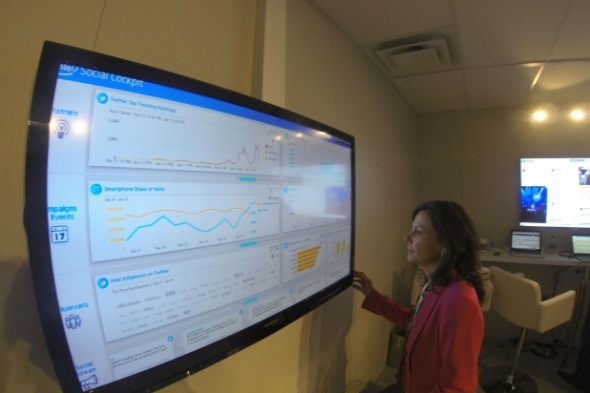
I've been thinking about what is no longer working for the 21st century modern boardroom. This was the challenge Ira Millstein issued when he said, "Good governance requires more than compliance with mandates; it requires voluntary initiatives." Board chairs are granted a unique role in setting the boardroom agenda. With the privilege of leadership, they are accountable for leading change in their boardroom and supporting their CEO to focus business strategy on the future. The KPMG 2011 Audit Committee Institute Spring Roundtable polled over 1,500 directors on managing technology risk. Here is the self-assessment. Although almost 75% of the ACI responses suggest "we’re on top of technology's rapid change," I’m seeing a different picture emerge. BRANDFog, a C-Suite advisory firm for the web's social media says for executives "If You're Not Online, You Don't Exist." As a board chair, it is important to have directors focused on what your CEO is doing/not doing on the web relative to reputation and brand management. This all reflects on the board's reputation, especially in the eyes of investors and stakeholders. Here are some indications of adoption in the C-Suite:
  • Only 5% of all Fortune 500 CEOs are on Twitter
  • 64% of CEOs are NOT engaged on company or social websites
  • Only 13 Fortune 500 CEOs have active Twitter accounts
  • Only 4% of global CEOs have a profile on Facebook or LinkedIn
This is in comparison to the growth of social networking from a society perspective. Facebook alone has:
  • More than 750 million active users
  • 50% of active users log on to Facebook in any given day
  • Average user has 130 friends
  • People spend over 700 billion minutes per month on Facebook
With a global reach:
  • More than 70 translations available on the site
  • About 70% of Facebook users are outside the United States
So, how is a board chair going to bridge this disconnect between stakeholders, their CEO and their board with their own limited knowledge of how it works? Yes, we can write white papers and frame up questions for the boardroom. I believe it begins with a private conversation with the board chair to hear about their beliefs around technology. Last week, I attended a "private event" that convened a dinner table with directors, academics, professional advisors and institutional investors from marquee brand firms. I was wearing two hats: as a board member for NACD Southern California and as an independent advisor to board chairs. I was also there to share my experience as a risk expert engaged with the Twitter corporate governance community. I was delighted to hear from the various perspectives that are adapting to a post Dodd-Frank world. More significantly, I was able to gain a better understanding from the viewpoints of others in the governance community. It is not always easy to "walk in other's shoes." I also got a chance to see some beliefs expressed about social media, risk and asymmetrical information that, when expressed in public, are the equivalent of a "your zipper's down" moment. It was brought home when I got this response about social media as a relevant board room capability:
I run companies and chair multiple boards. I have nothing to do with social media. I am a social media outcast with no Facebook or Twitter accounts and no intention of joining these things soon. I know that this is not "mainstream," but there were many people in the room who feel the same.
I shared this perspective with my Twitter community and got some social media wisdom:
Douglas Y. Park His company sure does, so he should too. MT @fayfeeney: F250 chair emails me "I ... have nothing to do with social media." #risk Dr. Richard Leblanc @fayfeeney @DougYPark is it any wonder hacking, privacy, business interruption; IT investment risk is so poor?
So, what can be done to save a board chair from embarrassment? Remember, if it is done right, you'll go up a notch for your nerve and for limiting personal exposure.
  1. Use Discretion Find a way to let them know that this belief that they don't need to learn about social media and technology negatively represents their brand and could hurt their personal reputation as a leader.
  2. Be a Colleague not just Collegial Think for a moment, if it were you. Would you rather someone tell you, or just pretend nothing was awry? We would all like for someone to alert us in a way that was discreet and didn't make us feel like it was a major focus of attention.
  3. You See This as Having Too Much Personal Political Risk
    1. This might be time for you to call in support. I consider it an honor to meet with board chairs. I find a meal together makes this an easier conversation. Telling someone their "digital zipper" is down is best done while breaking bread.
    2. Print this post and leave it in the chair's in-basket or have it sent as a pre-briefing to the board meeting.
These conversations require willingness for the board chair to see that the world is changing. Accepting the change begins with leading the way for new thinking. My approach is to listen to the belief usually around changing (no time, not important, someone else knows about it, I get my information by management, I get emails, etc.). Board chairs operate with a belief system that has served them well in the past, very well. When asking them to look at these beliefs, the Risk for Good model is risk-based. We talk about their perceptions around:
  • Susceptibility: belief that not focusing on technology risk on their business could cause loss.
  • Severity: consequences of not taking action are serious enough to be avoided.
  • Barriers: institutional, people, resources, resistance to change, belief and attitudes, education, training, etc.
  • Benefits: connecting to real-time data and extending relationship reach are necessary for future strategy and performance.
Our next step to engage is to get the board chair to consider replacing the beliefs we identified with a willingness to see "how it works." This includes a personal tour of Google and other social networks specific to them, their board, company and competitors. This is a time of great change for all of us. Some of us are faster and others are taking their time. For all, this is just the beginning and not too late for anyone to grasp the fundamentals. It reminds me of boarding a plane; we all take off together at the same time. However, you do need to get to the airport to board. The mistake to avoid is to not say anything. The cost of not telling could be high if it appears that you knew and kept quiet. Good leaders want feedback to improve their performance. So, here's hoping all your "digital zippers" are right where you want them. In today's global, 24/7, digitally-connected work, you want to be connected to what is being said on social media about you, your board or your industry.

Fay Feeney

Profile picture for user FayFeeney

Fay Feeney

Fay Feeney is a trusted adviser to corporate boards, directors and executives on emerging business trends that optimize strategy. She provides strategic insights on how to connect to real time information whether found on LinkedIn, Twitter, YouTube or Google. Fay brings her extensive SH&E, risk management and human resource expertise to this exciting and important area for business.

Series LLCs And Section 831(b) Captives

Ever since the Department of Treasury issued Proposed Regulations in September 2011, there has been increased awareness and “hype” surrounding the use of Series LLCs and their accompanying Special Business Units (“SBUs”) for the formation of captive insurance companies. It seems that many captive providers think this new structure is “better than sliced bread.” In our view, it is just bread.|

Ever since the Department of Treasury issued Proposed Regulations in September 2010, there has been increased awareness and “hype” surrounding the use of Series LLCs and their accompanying Special Business Units (“SBUs”) for the formation of captive insurance companies. It seems that many captive providers think this new structure is “better than sliced bread.” In our view, it is just bread. A Series LLC is a Special Purpose Captive allowed under the captive insurance statutes of a few states, most notably Delaware. The Special Purpose Captive acts as a “core” company under which are created SBUs, with each SBU insuring a different company (or each insuring different risks of one company). Although each SBU is managed by the core company, for tax and legal purposes, each SBU is “owned” by the persons who bear the “economic benefits and burdens of ownership” in the SBU. The Proposed IRS Regulations, for the first time, contemplates recognizing cells and SBUs as “stand alone” corporate entities for tax purposes, allowing each of them to make elections such as those available under section 831(b) of the Code. (Although the Service has not yet issued Final Regulations, every indication is that they will do so soon with few changes, if any from the Proposed Regs). This has created some of the hype about SBUs. Section 831(b) of the Code allows an insurance company with no more than $1,200,000 in annual premiums to exclude those premiums (and thus the net underwriting profits) from taxation. An insurance company choosing to take advantage of this section must attach a written election to its first tax return (an1120-PC). Section 831(b)(2)(B) of the Code sets forth complex “attribution rules” that must be carefully followed so that two or more captives (or SBUs) are not deemed to be owned together, thus adding their gross premiums together and perhaps violating the annual $1,200,000 limit for electing insurance companies. So, do SBUs work for section 831(b) captives? The answer is “yes,” but using the Series LLC structure does not offer as many advantages as some providers would like you to believe. First, since each SBU is treated as an independent entity, the attribution rules of section 831(b) still apply. Some providers believe that just because each SBU is separate, a company can have several of them, each making the 831(b) election. This is not true unless each SBU is deemed to be owned by separate adults (or some combination of adults) that satisfy the attribution rules. These rules have not been suspended just because one uses a Series LLC. Second, although set-up costs for each SBU will be less than for a stand-alone captive insurance company, the savings will not be enormous. Delaware is proposing that each new SBU pay a set-up fee of $2,400 (although this remains under discussion) as compared to $3,200 for a stand-alone captive. But each new SBU will still need an actuarial opinion, business plan and biographical affidavits. And clients will likely incur higher legal fees as their counsel must review the SBU and LLC agreements. The only other savings will be the lack of a filing for a new corporate charter, but that fee is minimal. Does an SBU need its own capital? Some providers advertise that this type of captive needs no capital (unlike a stand-alone captive that must have a minimum of $250,000 in capital by statute). It is true that current statutes do not require capital other than at the core company. (Delaware, however, has circulated a proposed administrative order requiring that each SBU have capital, but the amount is nominal.) The IRS has, however, always viewed inadequate capital as one element in finding that an entity is not an insurance company for tax purposes (thus denying the deduction for premium paid to that entity). Since each SBU will be treated as a single entity for tax purposes, it is logical to assume that the IRS will not be pleased if an SBU has zero or inadequate capital relative to premiums received. Annual costs for an SBU will be approximately 10-15% less than for a stand-alone. This reduction is based on the annual premium tax being allocated among all of the SBUs under a single core and because annual accounting and actuarial costs will be somewhat lower than that for a stand-alone company. The Series LLC structure therefore does hold some advantages over a stand-alone captive. But all of the basic rules still apply. First and foremost, each SBU must be an insurance company with qualified, diversified and properly priced risks. Second, the Series LLC does add some complication to the entire concept of creating one’s own insurance company. We have seen some presentations by captive providers that are a maze of boxes and arrows. Is this complication for complication’s sake? We believe so. Entrepreneurs interested in owning a private insurance company are often quite cautious (as they should be) about new ventures, particularly ones with significant tax benefits. For many it remains difficult to comprehend how one “owns” a captive in the legal sense while technically the SBU is part of a Series LLC owned by others. Perhaps the (few) benefits of a Series LLC outweigh these complications. However everyone should beware of captive insurance providers that exaggerate these benefits and those that ignore the important basic details that make the difference between a true insurance company and a sloppy structure that may be viewed as a sham by the IRS. After all, if it quacks like a duck…it probably is. Authors James Landis collaborated with Rick Eldridge in writing this article. Rick Eldridge is the President & CEO of Intuitive Insurance Corporation and the Managing Partner of Intuitive Captive Solutions, LLC.

James Landis

Profile picture for user JamesLandis

James Landis

James P. Landis, JD, CPA, MBA is principal of UniCaptive Advisors, LLC, an independent consultant to the captive industry. He has been involved in the formation and management of captive insurance companies for more than 25 years, is the former managing partner of Intuitive Captive Solutions and is a member of the board of directors of the Delaware Captive Insurance Association.