Download

Section 831(b) Captives - Where is the Common Sense?

Aggressive captive providers have proliferated recently who are ignoring common sense risk management and taxation issues to the potential peril of their clients. And they hide behind actuarial opinions and regulatory acceptance arguing that their plans and pricing are perfectly acceptable.

A captive insurance company that qualifies for the tax exemption found in section 831(b) of the Internal Revenue Code is a time-tested and useful risk management mechanism that offers the entrepreneur excellent tax and financial planning benefits.

It looks simple — form a small insurance company and pay no more than $1,200,000 in annual premiums to it, which are fully tax-deductible and then later remove the profits of the captive at more favorable dividend (for now) or capital gains rates.

But it is not so simple. There are many pitfalls. Aggressive captive providers have proliferated recently who are ignoring common sense risk management and taxation issues to the potential peril of their clients. And they hide behind actuarial opinions and regulatory acceptance arguing that their plans and pricing are perfectly acceptable.

The problem is that actuarial opinions are only as good as the assumptions that the actuaries are given. And regulators examine different issues than the IRS when they are approving a captive's license. The existence of an actuarial opinion or a license does not assure the client that their captive is truly compliant with the complicated tax issues that are involved.

There are two current "hot buttons" that anyone contemplating forming a captive should consider:

Pricing of Risk: Once the types of risks to be transferred to the captive are identified, the next challenge is to properly calculate the premium for such risk. Underwriting is as much an art as it is a science, with factors such as coverage details, loss history, limits, deductibles, exclusions and the financial strength of the issuing insurance company all coming into play along with sound actuarial practices.

Given these variables, it is easy for different people to offer diverse opinions on what an appropriate premium may be. But common sense must prevail. For tax purposes, the IRS will only allow a deduction for premiums that are reasonable in amount. The starting point for "reasonable" is the market rates for the coverages in question. However, market rates are not the end point for small captives, but they absolutely do create a benchmark. If a taxpayer is considering paying premiums that are vastly beyond that benchmark, they had better have very strong and well documented arguments for doing so.

Let's take an actual case in point. A captive provider suggested that a client's captive issue a $3,000,000 excess policy for Employment Practices Liability for a premium of over $250,000. Yet the client already had a $3,000,000 primary layer for this type of coverage for which he had paid less than $12,000.

Given that the primary layer would have to pay out full limits of $3,000,000 in order to trigger a loss on the excess layer, insurance companies would normally charge less than the premium paid for the primary layer of the same size. And when we compared what actual clients paid for this type of excess coverage, we found a rate of about $3.00 per employee. The suggested premium for the captive, however, equated to $808.50 per employee. A review of the actual excess policy language did not reveal any special provisions that could possibly justify such a high premium.

While it is true that a small insurance company may need to charge more than market rates because it has a very low capital base, common sense (and the IRS) would never accept a premium that is 269 times the market rate as in any way "reasonable." [When presented with this argument, the captive provider in question simply stated that they felt that they could defend the premium in the event of an audit. The client was not comforted.]

Terrorism insurance is another area of controversy in the small captive market. It is a coverage that can legitimately be placed in a captive insurance company, but pricing is a serious issue. Given the fact that TRIA does not cover loss of income from a terrorist attack and that such coverage is not easily available in the domestic market, some captive providers have suggested that small captives can charge $500,000 to $600,000 for a $5,000,000 limit of such coverage.

In fact, such a policy is available from Lloyds of London at rates significantly lower than those used by these captive providers. For example, one of our clients, a $100 million (revenues) company in Dallas, Texas was recently quoted a price of $10,000 for $5,000,000 of terrorism coverage that includes loss of income as a result of a terrorist attack anywhere in the United States, not just in Dallas. Lloyds obviously has the financial strength to price risks lower than the average captive, but the disparity between the real market price and the pricing quoted by captive providers with little or no insurance experience once again defies common sense.

One of the basic tenets of risk management is that if the risk of loss is severe, and coverage can be purchased at a low price from the third-party market, it is not a sound business decision to self-insure that exposure. If a client is truly concerned about a terrorism related loss, it therefore would make more sense to buy the coverage from Lloyds rather than self-insure it in their own captive. Except, of course, for the tax benefits of doing so. Thus, the decision to form and fund such a captive clearly indicates a lack of economic substance and is motivated primarily by tax considerations. Such a captive would most likely fail an audit by the IRS.

Of course, even Lloyds might not have the ability to pay a claim in the event of an enormous terrorist event, which could be a reason to self-insure this risk in a captive. But pricing the premium at a "worst case plus" rate is not sensible and would likely not survive an IRS audit.

Finally, terrorism quotes in the captive market rarely take into account individual risk characteristics. If the client is located in a "target rich" area, such as near a nuclear facility, some higher rates certainly can be justified, but common sense says that such a rate is not applicable to everyone, particularly in lower exposure areas.

What about an actuarial opinion? Certainly an opinion that is specific to the actual policy coverages in question and to the client's unique risk characteristics can go a long way to justifying the given premium. But clients must be careful that a proffered opinion truly relates specifically to them and not just to the type of coverage in general. When it comes to terrorism insurance, however, we submit that there can be no such "coverage in general" that makes economic or common sense.

Life Insurance: Whole life insurance can be an acceptable part of a captive's investment portfolio. But that statement has opened the door to abuses — abuses that the IRS is well aware of and is determined to quash. A captive must be formed first and foremost for risk management purposes. The tax benefits that follow are wonderful, but must be secondary, and the investment portfolio then ranks third.

Some life insurance agents (who likely know nothing about property & casualty risk management) are touting the formation of a captive for (effectively) the benefit of purchasing life insurance with the premiums received by the captive. This, in effect, allows life insurance to be purchased with pre-tax dollars. Not only does this approach likely violate section 264 of the Internal Revenue Code (that disallows the deduction, directly or indirectly, of premiums paid for life insurance), it violates the economic substance doctrine.

Again, common sense would show that if the primary purpose of forming a captive insurance company is to buy life insurance with pre-tax dollars, that would not constitute a valid reason to become involved with what is, first and foremost, a risk management vehicle.

It is our understanding that the Internal Revenue Service has a specific internal mandate to find and close captives that are marketed in this manner.

To avoid this issue, we suggest the following: (a) do not purchase a captive from anyone promoting it as a vehicle for the purchase of life insurance, particularly an immediate purchase; (b) make any life insurance decisions a part of an overall investment strategy; (c) do not use any unearned premium to purchase life insurance (which means no purchases in the first year); and, (d) do not use more than 50% of the captive's premiums in such an investment.

These issues of pricing and the use of life insurance are particularly important to the CPAs who are being asked to sign the client's tax return showing deductions to a captive. CPAs now have a higher financial and professional risk when signing a tax return and must be acutely aware of these potential issues with respect to their clients' captives.

Historically, many good business ideas that have tax benefits have been abused and distorted by greedy promoters and unsuspecting taxpayers. The end result is often a complete closure of the benefit by Congress or the IRS. We hope that the few "bad actors" in the 831(b) space do not cause the same result with this excellent risk management and financial planning tool.

Authors
James Landis collaborated with Rick Eldridge in writing this article. Rick Eldridge is the President & CEO of Intuitive Insurance Corporation and, along with James Landis, a Managing Partner of Intuitive Captive Solutions, LLC.

Construction Defects: A Primer For Construction Financial Managers

Until recently, Construction Financial Managers outside the homebuilding sector may not have heard of or thought much about construction defects. However, these defects are now an industry-wide issue.

The construction industry's reputation has been tarnished by poor quality performance. Construction defects decrease the satisfaction of property owners and erode the confidence of the financiers, buyers, and end users of construction projects.

Total construction costs are increased by lost productivity, and higher rework and insurance costs. Defective construction undermines the reputations of affected contractors and threatens their profitability.

Until recently, Construction Financial Managers outside the homebuilding sector may not have heard of or thought much about construction defects. However, these defects are now an industry-wide issue.

Likewise, while formerly concentrated in the western states, construction defects are now a national concern to all Construction Financial Managers involved in either general contracting or the specialty trades within commercial building.

With a rise in reported construction defects, companies — now more than ever — need to improve quality during the construction life cycle.

This article discusses the basics of construction defects, and presents the barriers to and indicators of quality construction — in addition to the risk management consequences of poor quality performance.

The Origins of Construction Defects

Construction defects occur at the intersection of construction operations, real estate transactions, contract law, and business insurance.

A construction defect is a component of construction that is not built according to plan, specification, or in conformance to established construction codes and industry standards of care.

To be considered a construction defect in the eyes of the legal and judicial systems, physical damage to tangible property or bodily injury must result from the alleged defective construction.1 Construction defects can also include the loss of use of the "impaired property" — property that is not physically damaged, but is rendered unusable due to defective construction work.

Unfortunately, in our litigious judicial system, reality does not always match theory. Sometimes, "alleged" construction defects are pursued because attorneys think there's a good chance of winning a verdict or receiving a settlement. This can also happen when a group of people, such as a homeowners association, is "unified" for the purpose of class-action litigation.

In the U.S., the general legal doctrine that governs the sale of property is caveat emptor, or "let the buyer beware." In order to receive legal protection, buyers have a general duty to inspect their prospective purchases before taking possession. The legal system recognizes the inherent limitations of such inspections, and therefore distinguishes between two types of defects: patent vs. latent.

There is a fundamental and legal difference between patent defects found during the course of construction and latent defects that manifest later.

Patent defects are regarded as conditions that can clearly be observed or detected in a reasonably thorough inspection prior to the sale or transfer of the property from the seller to the buyer. In contrast, latent defects are faulty conditions in a property that could not have been discovered during a reasonably thorough inspection.

Types of Construction Defects

The types and causes of construction defects vary and are influenced by many factors, which are commonly categorized into the following eight types:

  1. Improper design;
  2. Poor workmanship that leads to poor finishing quality;
  3. Improper means or methods of installation or fastening;
  4. Improper materials;
  5. Defective material or poor material performance;
  6. Missing or inadequate protection from weather or environmental conditions;
  7. Water intrusion/infiltration and moisture; and
  8. Soil subsidence or settlement.

These types of construction defects result from one or more common causal factors. Researchers at the University of Florida reviewed the common causes and types of building occupancies most often implicated in construction defects.

This study revealed that 45% of all construction defect claims occurred in multifamily housing.2 (A large percentage of which presumably relates to condominiums, given the potential for class-action litigation by homeowners associations.)

Another major study found that "...84% of claims are associated with moisture-related defects in building envelope systems (69%) and building mechanical systems (15%)."3

Causes of Construction Defects

The most common causes of construction defects are: 1) the nature of the construction industry itself, and 2) climate, weather, and environmental factors. Let's look at how scheduling pressures and sequencing issues are driven by both causes, and review their potential negative impact on construction quality.

Scheduling Pressures
Contractors face increasing demands for shorter schedules and faster project completion. The potential adverse effects of these types of pressures include cost overruns and nonconformance to specifications, as well as other quality issues.

As these increased schedule pressures contribute to compromised quality performance, the number of construction defects increases. The rework necessary to rectify these quality issues also adversely impacts productivity — and jeopardizes the project's overall profitability, as well as the profitability of all parties involved.

Sequencing Issues
A problem related to scheduling pressures is the improper sequencing of material delivery and/or subcontractor trades. Construction projects require precise coordination of various suppliers and subcontractors. Conditions are ripe for latent construction defects when weather-sensitive materials, such as drywall boards, are delivered to a jobsite before the building has been enclosed and is weather-tight.

For example, if a load of drywall is exposed to moisture from humidity, dew, or rain, then the likelihood of mildew or mold increases. Likewise, if the various subcontractor trades are not properly sequenced, then additional punch list items or rework can result.

Exhibit 1 below summarizes quality management barriers and lists the factors that contribute to construction defects at the industry, company, and project levels.

Exhibit 1: Barriers of Implementing Quality Management in the Construction Industry

Industry Factors Company Factors Project Factors
Traditional split between design, engineering, and construction functions Type of company: GC vs. Specialty Trade contractor Multiple parties involved in construction (subcontractors, sub-tiers, and suppliers)
No uniform definition for quality or quality management Percentage of lump sum (hard bid) vs. negotiated work Design factors, especially the building envelope
Increasing number of fast-track projects Typical project delivery method used: Design/Bid/Build vs. Design/Build Tight scheduling and sequencing of trades and tasks
Historically thin profit margins that shift priorities away from quality Owner selection process and percentage of work for repeat owners Jobsite geotechnical factors: water table, drainage, and soil type
Conflicting definitions of what constitutes rework Commitment to a zero defects and management accountability culture No overall assigned responsibility for quality management at the project level
Long tail before latent construction defects manifest as completed operations claims Historical performance with liability insurance, especially completed operations claims for latent construction defects Third-party design review completed and course of construction conformance inspections scheduled
Contractual risk transfer of liability through indemnification and additional insured contract requirements Insurance program structure: deductible vs. guaranteed cost program, limits purchased, and premiums paid Weather (especially wind-driven rain) and climate factors (including differential thermal vapor transfer due to temperature, humidity, air flow, and ventilation)
Lack of uniform quality management metrics to establish performance baselines or benchmark comparisons Quality control and quality assurance staffing, programs, policies, procedures, and protocols Lack of uniform methods to measure or monitor quality performance during the course of construction
Lack of systematic method for allocating uninsured indirect costs of poor quality Failure to develop job costing method to capture and chargeback indirect costs of poor quality Indirect costs not captured and charged-back to project in job costing

The Role of Insurance

Risk Financing
Insurance is a financial risk transfer method that may help resolve construction disputes or litigation that involves alleged defective construction. Insurance pays on behalf of an individual or business when two conditions are met:

  1. It is proven that one party is liable for causing or contributing to the construction defect; and
  2. It is determined that the party has a legal duty to correct or otherwise remedy the defective conditions.

Commercial General Liability Coverage
Specifically, Commercial General Liability Insurance is purchased to cover payments for bodily injury and property damage sustained by third parties arising out of business operations. These damage claims are known as third-party liability claims.4

Construction-related Commercial General Liability property damage losses are further divided into losses that occur during two different timeframes: the course of construction and completed operations.

Course of Construction
The course of construction involves construction operations from the inception of building activity until a certificate of occupancy (CO) is issued for the facility.

Completed Operations
The completed operations aspect of Commercial General Liability coverage responds to allegations of construction defects. The completed operations component provides coverage from the time a certificate of occupancy is issued through coverage termination.

The increased severity and volatility of losses in construction insurance primarily stems from losses with a "long tail" — the length of insurance coverage extending beyond the term of the policy.

It's common for the coverage period to extend between 3-10 years (often to match the length of the statute of repose and/or statute of limitation). During the extended coverage period, latent conditions often manifest as insurance claims with associated monetary losses. In construction insurance, the long tail results from alleged and actual construction defects.

Completed Operations vs. Products-Related Coverage
While coverage for completed operations and products are included in the same limit of the policy, there is a distinction between the two types of coverage.

A general rule of thumb: Once a product is incorporated into real property, it loses its characteristic as a product and is considered a "completed operation."

For example, a contractor that is also a supplier of ready-mix concrete has a "products liability" exposure until the time the concrete is incorporated into the building. At that point, it becomes a "completed operation," and is subject to all of the provisions of that coverage part — including the potential to respond to construction defect claims.

Statute Of Repose vs. Statute Of Limitation
Generally, companies involved in construction seek to purchase completed operations insurance to correspond with either the legal statute of repose or statute of limitation. Both the statutes of repose and limitation restrict the total time period contractors are subject to liability.

What's the difference? The statute of repose is a specific legal limitation or length of time following the completion of the project in order to provide the owner or occupants an opportunity to discover if defects or non-conformance to specifications need to be rectified by the contractor. The statute of limitation bars legal action after a specified length of time following the discovery of a deficiency.

These statutes are state-specific and are used to adjudicate alleged construction defect cases in state court systems. After the expiration of the statute of repose, buyers have no standing to bring legal suit against the property seller.

The statutes of repose range from a low of four years in Tennessee to a high of 15 years in Iowa.5 The most common length of statutes of repose is either seven or ten years.

However, statutes of limitation are shorter for bringing suits once damage is discovered and usually range from 1-3 years.6

Subcontractors & Contractual Risk Transfer
Contracts govern how expectations are communicated, responsibilities are assigned, and risks are allocated to facilitate successful project execution.

Generally, subcontractors are expected to assume responsibility for the work they perform (both financially and legally). One of their legal responsibilities is to purchase insurance as a means to protect the owner and all other parties.

A gap between legal and financial risk transfer can occur if subcontractors are not able to obtain the required types of insurance coverage. This gap can also occur if the required policy limits cannot be obtained or if the coverage has exclusions for particular perils or exposures that are likely to occur during the course of construction.

Quality Management In The Construction Industry

When strictly adhered to, quality management systems instituted by contractors can minimize the need for rework on construction projects.

As the amount of rework decreases, a contractor's performance increases in the areas of quality, productivity, and profitability. Unfortunately, a universal or standard definition of "quality" does not exist within the industry. Instead, many competing definitions are used, including:

  • Customer satisfaction
  • Contract requirements met
  • On-time completion
  • Conformance to specifications
  • Project completed within budget
  • No rework required within warranty period
  • Zero punch list items at project turnover
  • Continuous quality improvement

Leading Indicators
In my article on "Risk Performance Metrics" (in the September/October 2007 issue of CFMA Building Profits), lagging indicators were defined as "passive metrics of prior results without consideration of the activities that influence the results." So, lagging indicators are retrospective and trigger reactive, tactical responses.

In contrast, leading indicators are metrics established to gauge the effect of activities designed to prevent or counter the metrics that are monitored by the lagging indicators. Accordingly, leading indicators are drivers of strategic and proactive activities consistent with continuous improvement. Exhibit 2 below presents leading indicators for project quality management for the three distinct phases of construction: pre-construction, course of construction, and post-construction.

Exhibit 2: Representative Examples of Leading Project Quality Indicators

Phase of Construction Leading Indicators or Metrics
Pre-Construction

Number of third-party expert reviews on building envelope designs and materials

Number of subcontractors with pre-approved quality programs

Number of projects with site-specific quality plans

Architect approval for changes to specified materials or design specifications

Course of Construction

Number of projects completed with zero punch list items open

Percent of documented moisture evaluations of incoming materials

Number of quality assurance inspections completed

Percent of discovered defects corrected

Percent of notifications on moisture, water intrusion, mold, or other key events

Post-Construction

Percent of completed project files with documented inspections and corrections

Percent of project turnover video training programs documented

Number of signed and certified receipt of turnover documents by owners

Scheduled follow-up inspection process with owners verifying no quality issues

Number of maintenance callbacks during warranty period

The ability to deliver a quality project safely provides a significant competitive advantage among contractors. The integration of safety with quality management enables projects to be built within budget and schedule constraints.

Safety performance is improved through the quality management discipline of "continuous improvement" that increases communication and feedback among workers and supervisors. Similarly, projects with reduced safety incidents experience improved quality, schedule, and cost performance.3

As a risk management professional, I've seen proactive construction companies take various actions to minimize the adverse effects of quality issues.

These actions are divided into the following stages or phases:

  • Awareness
  • Prevention
  • Detection and measurement
  • Mitigation
  • Documentation for defense

The 5 Ps & 5 Rs
Similar to the 6P model as described in my article on "Return to Work: The Foundation for Successful Workforce Development" (in the September/October 2008 issue of CFMA Building Profits), the 5P and 5R models are offered to help increase awareness of construction defect prevention and response. (See Exhibit 3 below)

Exhibit 3: Strategic Processes for Construction Defect Prevention

  • Vision and culture for zero defects, zero punch lists, and/or zero rework
  • Quality management organizational structure and staffing
  • Owner selection practices and risk-adjusted process for project approval
  • Prevention measures throughout the construction life cycle
  • Subcontractor prequalification and oversight process
  • Insurance and contractual risk transfer review
  • Conformance verification vs. nonconformance detection during course of construction
  • Project closeout and owner education processes
  • Warranty period and maintenance callback processes
  • Response and mitigation of known or suspected problems
  • Claim coordination and documentation for defense
  • Measurement and continuous process improvement
  • Management accountability systems that include quality measurement in personnel performance evaluations and decisions about bonuses
  • Quality awareness education and staff training

The 5 Ps are proactive steps focused on quality control and assurance that help prevent construction defects: Program, Policies, Procedures, Protocols, and Practices.

The 5 Rs are reactive steps taken in response to potential or suspected occurrences of defective construction: Report; Response/Investigate; Root Cause Analysis; Remediate, Repair, or other Recourse; and Recordkeeping.

For construction companies, there are potential consequences of not implementing effective quality management systems. One adverse consequence is unintended and undesirable exposure to risk.

As shown in Exhibit 4 below, poor quality performance impacts a company's reputation and has financial, operational, insurance, and legal consequences.

Exhibit 4: Risk Management Consequences of Poor Quality Performance

Consequences Primary Risk Secondary Risk
Decreased productivity due to required rework Operational Financial
Diminished profit margin (or loss) on project Financial Reputation
Delayed turnover of completed projects Operational Reputation
Loss of key clients due to dissatisfaction Reputation Financial
Possible liquidated damages from delayed completion Financial Legal
Higher deductibles, increased premiums, and/or lower limits for liability insurance Insurance Financial
Increased legal costs to defend against alleged construction defect claims Financial Insurance/Legal
Damaged partnerships between GCs and subcontractors Reputation Operational
Fewer opportunities to bid or negotiate for future work due to damaged reputation Financial Reputation
Type and size of projects limited for future work due to lowered surety bond credit line Financial Reputation
Surety bond default and company survival threatened due to decreased corporate profitability Financial Reputation

Industry Changes Since 2009: Proceed with Caution

Since this article first appeared (in the January/February 2009 issue of CFMA Building Profits), the construction industry has experienced challenges and changes that have led to the continued emergence of construction defects as a pressing industry issue. Most notably, the U.S. and global financial crises have contributed to the protracted economic recession and lingering recovery.

There have been some positive outcomes as a result of these changes, including growing awareness of supply chain risk management practices, improvements in building envelope design, the adoption of controls for moisture and water damage prevention, and other construction quality improvement methods and techniques.

However, the aftermath of these challenges includes such negative effects as the precipitous decline in the residential housing and construction markets and marked shifts between private and public construction funding and hard bid vs. negotiated work.

As always, contractors must consider the financial, operational, risk management, and insurance impacts from these and other changes to avoid increased risk.

Specifically, unique challenges occur when contractors pursue business in new states and/or with new partners (owners, subcontractors, and/or joint ventures), use new delivery methods, and involve new types of projects/occupancies and new products and/or materials, with which they have less experience and are beyond their core competencies.

Shifting Sands & Slippery Slopes
The resulting and ever-changing landscape of construction defects has been caused by such factors as:8

  • State legislation and judicial case law interpretations to the legal definitions of an occurrence, property damage, and resulting loss under CGL policies;
  • Increased contention between GCs and subcontractors on matters of contractual risk transfer;
  • The expansion of "business risk" exclusions and exclusionary insurance endorsements vs. the growing availability of construction defect coverage;
  • Unproven impacts of innovative design features, new products, and integrated technologies involved in Leadership in Energy and Environmental Design (LEED) and green construction; and
  • The emergence of e-discovery in construction litigation.

Unfortunately, the lack of aggregated industry data on alleged vs. actual construction defects increases the challenge of finding proven proactive solutions that are focused on prevention. As a result, information has been focused on reactive mitigation strategies based on lessons learned from construction defect litigation outcomes.

Moving Forward

The adoption of quality management systems can positively influence the construction industry's reputation and contractors' bottom lines.

Moreover, those companies that elect to implement quality management systems are more likely to gain a competitive advantage in the form of improved productivity and reduced rework, which leads to higher profitability.

Upfront coordination and rigorous pre-project planning can reduce schedule dynamics that disrupt the entire system of a construction project. Successful project management entails quality, risk, and safety management among owners, designers, engineers, contractors, subcontractors, and suppliers.

Ultimately, with respect to construction defects, prevention is a better strategy than mitigation, and mitigation is a better strategy than litigation.

As incidents of alleged construction defects rise, they pose a serious risk to your company's tangible and intangible assets.

It's critical for contractors to fully understand the specific state legislation and case law that governs construction defects in the jurisdictions in which their companies have completed projects or plan to perform work.

Active, ongoing collaboration with construction specialty professionals in the areas of law, insurance, surety, and accounting can help your company stay abreast of the ever-changing landscape and make informed business decisions.

Endnotes:

1 Wielinski, Patrick J. Insurance for Defective Construction, 2nd Edition, 2005. International Risk Management Institute, Inc. (IRMI). Dallas, TX.

2 Grosskopf, K.R. & Lucas, D.E. "Identifying the Causes of Moisture- Related Defect Litigation in U.S. Building Construction." www.rics.org/site/download_feed.aspx?fileID=3158&fileExtension=PDF.

3Grosskopf, K.R., Oppenheim, P. & Brennan, T. "Preventing Defect Claims in Hot, Humid Climates." ASHRAE Journal, July 2008, 40-52.

4 For more information on Commercial General Liability, see Wm. Cary Wright's article, "The Anatomy of a CGL Policy," CFMA Building Profits, January/February 2009.

5 "Statute of Repose Limitations for Construction Projects." American Insurance Association, Inc., January 7, 2007.

6Ibid.

7 Chang, A.S., & Leu, S.S. "Data Mining Model for Identifying Project Profitability Variables." International Journal of Project Management, April 2006, Volume 24, Issue 3, 199-206.

8 "Construction defects: Managing risk, covering exposure." Business Insurance, www.businessinsurance.com/section/NEWS070102.

© 2012 by the Construction Financial Management Association. All right reserved. This article first appeared in CFMA Building Profits. Used with permission.

Teach Your Data to Spot Creeping Catastrophic Claims

Smart systems that monitor current and historic data for combinations that portend complexity and cost can significantly recharge managed care initiatives. They are the next generation business solutions that are available now for those who are serious about controlling costs.

"One of the biggest cost drivers in Workers' Compensation is seemingly 'average' claims that take a turn for the worst and result in several years of medical treatment and disability."1

Too often seemingly innocuous claims lay under the radar, unnoticed until the damage is done. In this article, Mark Walls does an excellent job of pointing to several conditions that should serve as indicators of impending trouble. He discusses issues such as return to work, comorbidities, and psycho-social factors that can contribute to claim deterioration. His ideas are good and there are many more indicators that can be added to the list to recognize creeping calamity.

More Indicators
In fact, there are many subtle tip-offs in claims that could lead to effective prevention if noticed earlier. Delayed injury reporting and treatment is one. We know from industry research that a delay between the date of injury and first medical treatment is a predictor of claim complexity, regardless of the reason. Speculation regarding motivators of delay in filing a claim or to seeking medical treatment may not be as important as actually identifying the situation early and intensifying scrutiny of the claim. The opportunity is to discover claims with migrating intensity early, thereby avoiding unnecessary cost.

Knowing Is Not Enough
Unfortunately, knowing what conditions in claims might lead to trouble is not quite enough. Trying to apply the knowledge without a defined process has variable results. Manually identifying claims with perilous conditions is an inconsistent and inefficient endeavor because mere humans simply cannot do it well. Professionals, busy with a myriad of tasks, cannot monitor claims consistently enough to detect insidious conditions. Better process tools are needed and, happily, they are available.

Computer-Aided Medical Management
Technology can be made a powerful work tool in Workers' Compensation. A specially designed computer software program will monitor current claim data combined with historic data continuously, something mere humans cannot do. A custom computer program will detect trouble every time and notify the appropriate person in the organization so that focused intervention is mobilized.

A software program designed to spot combinations of data elements that portend risk and cost is a powerful cost control tool. It continually searches the data without human involvement. When an adverse situation is discovered, it automatically notifies the right persons.

Work-In-Progress Tool
Computer-aided medical management programs are designed to be work-in-progress tools that inform the claims management process in real time. They are driven by combinations of data elements that when they appear together in a claim, portend developing risk. Importantly, the computer-aided management tool must continually monitor current and historic data to uncover risk from the broad spectrum. For instance, ICD-9's in a claim are data elements that can reveal impending trouble in near real time when monitored by a specialized program.

ICD-9's As Windows Into Risk
ICD-9's (The International Classification of Diseases, 9th Revision), the medical description of the injury or illness in a claim, can disclose much more than previously thought. ICD-9's are documented in each bill submitted by treating medical doctors and other providers. They are windows into claim complexity at the start, but they are also powerful real time predictors of impending trouble.

Migrating Claim Severity
One true thing about claims is as they migrate from medical-only status to increasing complexity they accrue ICD-9's. As the situation deteriorates, more medical providers enter the picture, more medical services are provided, and more ICD-9's are added to the data. Stated simply, monitoring current and accumulated ICD-9's will reveal those claims that are unstable and migrating downward. A system designed to monitor ICD-9's for severity (seriousness) will spot migrating claims.

Smart Systems
A system designed to monitor ICD-9's is a smart system containing information about how serious individual ICD-9's are. Like pharmacy programs that alert for unsafe drug combinations, an ICD-9 scoring system will alert for dangerous combinations of comorbidities, age, and accumulated diagnoses. A claim is dynamically and continuously scored for severity and the right persons are notified automatically.

Smart systems that monitor current and historic data for combinations that portend complexity and cost can significantly recharge managed care initiatives. They are the next generation business solutions that are available now for those who are serious about controlling costs.

1Walls, Mark. Creeping Catastrophic Claims-How to Spot Them and Stop Them. Business Insurance. June, 12, 2012. http://www.businessinsurance.com/article/99999999/NEWS080105/120609913

Risks Plan Sponsors And Fiduciaries Face When Employee Benefit Responsibilities Are Mishandled

In light of the significant liability risks, employer, association and other employee benefit plan sponsors and their management, plan fiduciaries, service providers and consultants should exercise care when selecting plan fiduciaries and service providers, establishing their compensation and making other related arrangements.

A $27 million plus settlement announced by the Department of Labor on July 7 shows the big liability that employer, union or association plan sponsors and their fiduciaries risk by failing to take appropriate steps when deciding who will serve as fiduciaries or other plan sponsors or setting the compensation paid by the plan for those services.

The settlement announced last week against the National Rural Electric Cooperative Association (NRECA), like the $1.2 million plus judgment obtained by Labor Department litigators against the California fruit and nut company, Western Mixers Inc., and its owners and management in late May, shows the significant risks that employer, union and association health plan sponsors and fiduciaries run from mishandling employee benefit responsibilities.

Companies And Fiduciaries Often Face Significant, Under-Recognized Fiduciary Exposures
Employee benefit plan vendor selection and compensation arrangements made by employer or union, association or other employee benefit plan sponsors, fiduciaries and service providers are coming under increasing scrutiny by the Employee Benefits Security Administration (EBSA). While the Employee Retirement Income Security Act of 1974 (ERISA) technically grants plan sponsors and fiduciaries wide latitude to make these choices, the exercise of these powers comes with great responsibility (see these three additional articles: Plan Sponsors. Their Owners & Management & Others Risk Personal Liability If Others Defraud Plans or Mismanage Employee Benefit Plan Responsibilities, New Rules Give Employee Benefit Plan Fiduciaries & Investment Advisors New Investment Advice Options, and DOL Proposes To Expand Investment Related Services Giving Rise to ERISA Fiduciary Status As Investment Fiduciary).

Associations, employer and other plan sponsors, and other entities and individuals who in name or in function possess or exercise discretionary responsibility or authority over the selection of plan fiduciaries, administrative or investment service providers or other services to the plan or the establishment of their compensation generally must make those decisions in accordance with the fiduciary responsibility and prohibited transaction rules of the Employee Retirement Income Security Act. Among other things, these rules generally require that fiduciaries exercising discretion over these and other plan matters:

  • Must act prudently for the exclusive benefit of plan participants and beneficiaries;
  • Must not involve the plan or its assets in any arrangement that is listed as a prohibited transaction under ERISA § 406; and
  • Must not act for the benefit of themselves or any third party.

Although often misunderstood by companies and their management, these responsibilities generally attach whenever a company or individual is either named as a fiduciary or in fact possesses or exercises discretionary responsibility or authority over plan investments, assets, administration or other fiduciary matters, including but not limited to the selection of fiduciaries and service providers, investments or expenditures of funds or other discretionary matters.

Since the earliest days of the Employee Retirement Income Security Act, the Employee Benefits Security Administration as well as private plaintiffs have aggressively enforced these and other fiduciary responsibility rules. In recent years, the Employee Benefits Security Administration has taken further steps to tighten and enforce these protections such as the new fee disclosure rules recently implemented by the Employee Benefits Security Administration and other fiduciary guidance (see, for example, Western Mixers & Officers Ordered To Pay $1.2M+ For Improperly Using Benefit Plan Funds For Company Operations, Other ERISA Violations. See also Plan Administrator Faces Civil & Criminal Prosecution For Allegedly Making Prohibited $3.2 Million Real Estate Investment and Tough Times Are No Excuse For ERISA Shortcuts).

As illustrated by the NRECA Settlement and the Western Mixers, Inc. judgment, plan sponsors or fiduciaries that violate these rules risk personal liability to the plans for the greater of profits realized or losses sustained by the plan, plus attorneys' fees and costs, as well as exposure to an EBSA-assessed ERISA civil penalty equal to 20% of the amount of the fiduciary breach.

$27+ Million NRECA Settlement
According to a July 5, 2012 announcement, the National Rural Electric Cooperative Association will restore $27,272,727 to three association-sponsored employee benefit plans covered by the Employee Retirement Income Security Act to settle U.S. Department of Labor Employee Benefits Security Administration charges that the association violated the Employee Retirement Income Security Act by selecting itself as a service provider to the plans, determining its own compensation and making payments to itself that exceeded the National Rural Electric Cooperative Association's direct expenses in providing services to the employee benefit plans.

Following an investigation, the Employee Benefits Security Administration accused the National Rural Electric Cooperative Association of violating the Employee Retirement Income Security Act by selecting itself to act as the administrator of various association employee benefit plans and arranging for the National Rural Electric Cooperative Association to receive unreasonable compensation for these services which the National Rural Electric Cooperative Association set without the use of independent parties to prudently verify the appropriateness of the selection or compensation arrangements. The Employee Benefits Security Administration said these arrangements violated the self-dealing and other fiduciary responsibility requirements of the Employee Retirement Income Security Act.

Headquartered in Arlington, the National Rural Electric Cooperative Association is a nonprofit trade association for electric power cooperatives. The sponsored plans are open to members of the trade association as well as the association's employees. As of 2010, the latest information available, the National Rural Electric Cooperative Association 401(k) Plan had 68,970 participants, the National Rural Electric Cooperative Association Retirement Security Plan had 64,286 participants and the National Rural Electric Cooperative Association Group Benefits Plan had 73,644 participants.

Under the terms of the agreement, the National Rural Electric Cooperative Association will not provide administrative services to the National Rural Electric Cooperative Association Retirement Security Plan, the National Rural Electric Cooperative Association 401(k) Plan and the National Rural Electric Cooperative Association Group Benefits Plan without entering into a written contract or agreement with the plans that must be approved by an independent fiduciary. The independent fiduciary must determine whether the use of the National Rural Electric Cooperative Association to provide administrative services to the plans is prudent and reasonable, determine the categories of direct expenses that the National Rural Electric Cooperative Association may charge to the plans and the methods of calculating those expenses, and monitor the National Rural Electric Cooperative Association's compliance with certain terms of the agreement.

The agreement also provides that during a 60-month period following the implementation date, the National Rural Electric Cooperative Association shall discount the amount of permissible direct expenses for which it seeks reimbursement from all three plans in the amount of $22,727,272. The balance of the settlement payment, $4,545,455, already has been paid directly to the National Rural Electric Cooperative Association 401(k) Plan. In addition to the amounts returned to the plans, the National Rural Electric Cooperative Association will pay $2,727,276 in civil penalties.

"This settlement sends a clear message to plan fiduciaries that they cannot profit from selecting themselves to provide services to plans," said Phyllis Borzi, assistant secretary of labor for employee benefits security in announcing the settlement.

Western Mixers $1.2+ Million Judgment
In May, the Department of Labor got a judgment against a California fruit and nut supplier Western Mixers Inc., its owners and certain officers for failing to properly handle their company's retirement, health and other employee benefit plans moneys and other responsibilities. Under the judgment entered in Solis v. Frank L. Rudy et. al. and Western Mixers Inc. Money Purchase Pension Plan, Western Mixers Inc., its owners and officers will pay a total of $1,287,901 to the company's pension plan, plus a 20 percent penalty to the Department of Labor.

Following an investigation by the Labor Department's Employee Benefits Security Administration, the Labor Department charged that Western Mixers Inc. and two officers who served as trustees of the plan failed to make approximately $952,511 in mandatory employer contributions for the benefit of participants and beneficiaries. Investigators also found that the same two officers as well as the company's chief financial officer made $565,000 in unauthorized withdrawals from the plan accounts, comingling those funds in the company's general accounts and using them for the benefit of the business.

Labor Department officials sued the company and the officers for violation of the fiduciary responsibility rules of the Employee Retirement Income Security Act. The Employee Retirement Income Security Act generally requires that plan trustees and other plan fiduciaries carry out duties with respect to an employee benefit plan assets prudently for the exclusive benefit of participants.

Pursuant to the consent judgment, the company and its officers admitted to violation of the Employee Retirement Income Security Act. During the course of the investigation leading up to the lawsuit, the company previously repaid to the plan $485,000 of the total funds identified as missing by the Labor Department. According to an announcement of the U.S. Department of Labor on May 14, 2012, Midwest Mixers Inc.'s officers agreed to repay $802,901 to participants' accounts within 10 day of the judgment.

In addition to repaying the missing funds with interest, defendants also must pay a penalty equal to 20 percent of the recovered amount. The court also has appointed an independent fiduciary to terminate the plan and to collect, marshal, pay out and administer plan assets. Frank L. Rudy and David H. Bolstad, owners of the company, are removed as plan trustees and fiduciaries. Together with Robert J. Fischer, Western Mixers, Inc.'s chief financial officer, they are permanently enjoined and restrained from violating the Employee Retirement Income Security Act and from serving as fiduciary or service providers to any ERISA-covered plan in the future.

Despite these well-document fiduciary exposures and a well-established pattern of enforcement by the Labor Department and private plaintiffs, many companies and their business leaders fail to appreciate the responsibilities and liabilities associated with the establishment and administration of employee benefit plans.

Frequently, employer and other employee benefit plan sponsors fail adequately to follow or document their administration of appropriate procedures to be in a position to demonstrate their fulfillment of these requirements when selecting plan fiduciaries and service providers, determining the compensation paid for their services, overseeing the performance of these parties, or engaging in other dealings with respect to plan design or administration.

In other instances, businesses and their leaders do not realize that the functional definition that the Employee Retirement Income Security Act uses to determine fiduciary status means that individuals participating in discretionary decisions relating to the employee benefit plan, as well as the plan sponsor, may bear liability under many commonly occurring situations if appropriate care is not exercised to protect participants or beneficiaries in these plans.

For this reason, businesses and associations providing employee benefits to employees or dependents, as well as members of management participating in, or having responsibility to oversee or influence decisions concerning the establishment, maintenance, funding, and administration of their organization's employee benefit programs need a clear understanding of their responsibilities with respect to such programs, the steps that they should take to demonstrate their fulfillment of these responsibilities, and their other options for preventing or mitigating their otherwise applicable fiduciary risks.

In light of the significant liability risks, employer, association and other employee benefit plan sponsors and their management, plan fiduciaries, service providers and consultants should exercise care when selecting plan fiduciaries and service providers, establishing their compensation and making other related arrangements.

To minimize fiduciary exposures, parties participating in these activities should seek the advice of competent legal counsel concerning their potential fiduciary status and responsibilities relating to these activities and take appropriate steps to minimize potential exposures.

Privacy Enforcement In The Healthcare Arena​

The current regulatory oversight and monetary implications surrounding a loss of private health information means that firms in the healthcare arena should be more aware than most of privacy enforcement and how to protect their clients, constituents, reputation, and organization.

The Exposure
Organizations that deal with private health information (PHI) should know how to properly handle such data in absence of a breach as well as how to respond after a breach occurs. According to the 2011 Computer Security Institute Crime and Security Survey, 97% of organizations report using anti-virus software, 95% use firewalls, 85% use anti-spyware software, 66% use data encryption and 62% use intrusion detection systems.

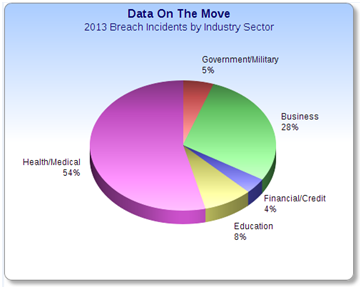
The Open Security Foundation's website, www.datalossdb.org, shows that despite taking meaningful steps to prevent security breaches, healthcare organizations accounted for 18% of the 1,032 data breaches reported in 2011 and 15% of all time. Further, according to the Ponemon Institute's 2011 Cost of Breach Study, the per capita costs of a breach for healthcare organizations average around $240 per record. When compared to retail, which averages $174 per record, education which averages $142 per record, and an average of $194 per record for all industries, healthcare organizations clearly have cause to be concerned about breach response expenses.

A healthcare organization or business associate1 should also be aware of the increased standards that have been imposed by the Health Insurance Portability and Accountability Act of 1996 (HIPAA), the Health Information Technology for Economic and Clinical Health Act (HITECH), the Privacy Rule and the Security Rule. One aspect of the Health Information Technology for Economic and Clinical Health Act act that may surprise many is the potential for the Office of Civil Rights (OCR) to fine an organization in absence of a breach.

In 2012, the Office of Civil Rights will conduct 150 audits of Covered Entities. If material security weaknesses are reported, a formal compliance review will follow. If that review uncovers blatant security violations, civil monetary fines could follow. Enforcement action around data breaches has been on the rise, and fines and penalties are being levied more frequently than in the past. The Department of Health & Human Services (DHHS) posts examples of resolutions including fines on their website. These initial audits are likely only the beginning of expanding regulatory oversight related to private health information.

Theodore Kobus III of Baker & Hostetler LLP, one of the national leaders of their Privacy, Security and Social Media Practice, advises the following regarding the current regulatory environment:

Data security extends beyond breach response and we are seeing an increasing number of regulatory investigations and fines stemming from how an organization responds to changes in its risks. A big part of being prepared includes understanding the nature and scope of the information you hold and how that data needs to be protected as risks in the organization evolve. For example, if you store data in an area that was once monitored by a security guard, but that area is now unoccupied, you may want to consider implementing other security measures.

Reducing The Exposure
In a previous article regarding lost laptops, we provided basic tips for handling a privacy breach.

With the type and volume of private health information that organizations in the healthcare arena touch, they are expected to take even more comprehensive steps to anticipate, prevent, respond to, and survive a breach. While many organizations are large enough to have entire departments dedicated to this issue, the complexity of the privacy laws means that, regardless of the organization's ability to dedicate resources, it is important to work with legal counsel that is solely focused on privacy related issues. Similarly, healthcare providers should also seek out specialized network security risk management providers who can help answer important questions like:

  • Am I prepared to show that I took the proper steps before a data breach occurred?
  • Do I have an effective incident response plan in place when there is a problem?
  • Am I protecting digital records as well as paper records under the requirements of the Health Insurance Portability and Accountability Act of 1996 and the Health Information Technology for Economic and Clinical Health Act?
  • Are my vendors and business associates also in compliance with the proper standards?

Many insurers have existing relationships with computer forensic firms, notification vendors, credit monitoring providers, legal forensic firms, public relations firms and others to help navigate the huge distractions following a data breach. To this end, we have seen insureds purchase cyberliability coverage solely for the value-added services provided by the insurer. Many of these buyers feel that they can afford a security breach, but that they don't have the time to line up all the necessary critical response vendors if a breach occurs.

Neeraj Sahni of Kroll Advisory Solutions points out:

The ease of access to electronic data, anywhere-anytime, makes security a challenge as negligence leads to recurring data breaches. Preventive preparation is the most important loss control mechanism for any organization that has sensitive data. Thus waiting for a breach to occur is reactive and may incur more liability for any company. An incident response plan potentially helps lessen the impact of a breach. Also note, being compliant with security and privacy regulations does not provide assurance to an organization against a data breach.

Contractual Risk Transfer May Not Be Enough
Contracts with business associates and other trading partners may be part of the solution, but not the whole solution, as observed by Theodore Kobus III:

Many organizations think that a contract shifting liability to a third party is all that you need to protect the organization in the event that a vendor causes a breach. This type of protection is good, but it does not solve all of the organization's issues. Notwithstanding the public relations issues the organization may face after a breach by a vendor, laws such as HITECH and various state laws still hold the organization who owns the data ultimately responsible for the breach. Another consideration about shifting all responsibility for a breach to the vendor is the lack of control about the messaging after a breach occurs. Remember, even though the vendor may have caused the breach, these are still your customers and your reputation is at risk.

Mr. Kobus brings up a dangerous situation. If a healthcare provider has fully shifted post-breach responsibilities to a vendor that caused the breach, the treatment of its customers or patients is in the hands of the vendor. To shift financial responsibility is one thing, but the provision of post-breach services such as call centers and identity/credit services should remain in the healthcare provider's control. When it comes to the handling of an organization's reputation, the preferred approach is to proactively protect its reputation rather than scramble to restore it after a poorly handled data breach.

The Right Insurance To Survive A Breach
Healthcare providers and business associates should have their own policy to protect their organization. The company's own employees are a significant cause of data breaches, as are external hacks. The organization will not be able to unfailingly transfer that risk to other parties.

Organizations should also ensure their vendors have the financial assets or insurance to back up their contractual promises. If an entity is going to rely on a third party vendor to hold on to private health information for which they are responsible, they should be reviewing the vendor's professional liability insurance rather than just asking if they have a policy.

Types Of Risk Transfer Vehicles
Cyberliability is the generic description of the type of policy healthcare organizations will need. In a prior article, we went into some detail about what is available. Here are some of the typical insuring agreements in a Cyberliability policy:

  • 1st Party Business Interruption — Covers lost business income in the event a virus infection or hacker shuts down your network.
  • 1st Party Data Asset — Covers the expense to recover lost data and other expenses.
  • Cyberextortion — Covers expenses and ransom if a hacker threatens your network or data.
  • 3rd Party Network Security — Covers your liability when hackers use your system to inflict damage on others.
  • 1st Party Privacy
    • Notification Expenses — When data is lost, you must notify all potential victims within a very brief period of time and in accordance with the state laws where the potential victims reside.
    • Forensic Expenses — The insurer will cover the expenses associated with bringing in computer experts to determine the cause of a breach and list of potential victims. Some insurers also cover legal forensic experts.
    • Credit Monitoring — The insurer may cover one to two years of credit monitoring services for those exposed.
    • Credit or Identity Repair Services — The insurer will cover the expenses for up to one year to restore compromised identities and repair a victim's credit rating following an actual identity theft.
    • Crisis Management — Public Relations expense coverage to protect the image of the organization.
  • Regulatory Defense and Expenses — Many new regulations exist related to the protection of confidential data. The insurance will provide defense cost coverage and in many cases cover fines, penalties and restitution funds levied by a regulatory body, where insurable. This coverage is designed to help healthcare organizations respond to actions brought by state agencies, state attorneys general, the Department of Health and Human Services, the Office of Civil Rights and other regulatory agencies.

There are now more than 30 different insurers with dedicated cyberliability policies, and no two insuring agreements are the same. It is important to be diligent in making sure the coverage sought is the coverage bought.

Conclusion
The current regulatory oversight and monetary implications surrounding a loss of private health information means that firms in the healthcare arena should be more aware than most of privacy enforcement and how to protect their clients, constituents, reputation, and organization.

1 A "business associate" is a person or entity that performs certain functions or activities that involve the use or disclosure of protected health information on behalf of, or provides services to, a covered entity. A member of the covered entity's workforce is not a business associate. (For more information, see hhs.gov.)

Medical Provider Networks – Valdez v. Zurich North America

The Second District Court of Appeal recently issued their decision on Valdez v. Zurich North America which involves in part, the admissibility of non-Medical Provider Network doctor's reports. It says in part that non-Medical Provider Network diagnosis, treatment and attendant reports which are paid for by the employee are admissible. This article offers one strategy to retain medical control under the Medical Provider Network while at the same time avoiding lengthy litigation over the admissibility of the employee's non-Medical Provider Network doctor's report.

The Second District Court of Appeal recently issued their decision on this case which involves in part, the admissibility of non-Medical Provider Network doctor's reports. This is an unpublished decision and therefore has no precedential value. In other words, it cannot be cited in other cases with the same or similar issues. In summary, it says in part that employee-requested visits to his/her own physician under L/C 4605, i.e. non-Medical Provider Network diagnosis, treatment and attendant reports which are paid for by the employee are admissible.

While the applicant's attorney will ask the court to publish it, the probability seems very low in that the case was remanded to the trial court to deal with the admissibility issue as well as other issues left unsettled by the Workers Compensation Judge at the time of trial.

Background
Labor Code (L/C) 4605 was first enacted in 1917 under the Insurance and Safety Act. Sec. 9(a) is most interesting in that it reads:

"Such medical, surgical and hospital treatment, including nursing, medicines, medical and surgical supplies, crutches and apparatus, including artificial members, as may reasonably be required to cure and relieve from the effects of the injury, the same to be provided by the employer, and in case of his neglect or refusal seasonably to do so, the employer to be liable for the reasonable expense incurred by or on behalf of the employee in providing the same: provided, that if the employee so requests, the employer shall tender him one change of physicians and shall nominate at least three additional practicing physicians competent to treat the particular case, or as many as may be available if three cannot reasonably be named, from whom the employee may choose: the employee shall also be entitled, in any serious case, upon request, to the services of a consulting physician to be provided by the employer: all of said treatment to be at the expense of the employer. If the employee so requests, the employer must procure certification by the commission or the commissioner of the competency for the particular case of the consulting or additional physicians; provided, further, that the foregoing provisions regarding a change of physicians shall not apply to those cases where the employer maintains, for his own employees, a hospital and hospital staff, the adequacy and competency of which have been approved by the commission. Nothing contained in this section shall be construed to limit the right of the employee to provide, in any case, at his own expense, a consulting physician or any attending physicians whom he may desire (my emphasis). The same general language as to responsibilities will now be found in L/C 4600(a); 4601 and 4605.

The reason this section is important is that Section 9(a) pre-dates L/C 4616, the Medical Provider Network statute. As such, any attempt to harmonize the rights of the employee to seek their own doctor at their own expense against the later enacted Medical Provider Network statute will have to give precedent to the later enacted labor code section. I therefore offer the following as one strategy to retain medical control under the Medical Provider Network while at the same time avoiding lengthy litigation over the admissibility of the employee's non-Medical Provider Network doctor's report.

Strategy for Medical Provider Networks Going Forward
On all new claims, employers and their claims administrators (carrier or TPA) should continue to assert medical control under their Medical Provider Network. Employers will need to make sure that the notice process to the employee is complete and well documented. That is one of the issues currently facing the trial judge on remand, i.e. was there a valid Medical Provider Network in place. Had there been better documentation on the employer's notification process presented at trial, the issue of applicant attorneys' attempt to seize medical control may have been avoided.

However, the real question deals with the use by applicant attorney of L/C 4605 as a means to get his non-Medical Provider Network doctors reports admitted and relied upon. What is most interesting is the caption for that section:

"Consulting or attending physicians provided at employee's expense."

"Nothing contained in this chapter shall limit the right of the employee to provide, at his own expense, a consulting or any attending physicians whom he desires."

It must again be noted that this language was in the Labor Code long before L/C 4616, i.e. the Medical Provider Network enabling statute which became effective in 2004. As noted above, under the rules of statutory construction, the later enacted takes precedent over the former when seeking to harmonize the two as to current legislative intent.

Recommended Procedure
I therefore recommend that the injured employee be informed, as part of the employer's or carrier's acknowledgment of the claim, that a valid Medical Provider Network is in place and that the employee's cooperation is expected. Next, it should state "that they are free under L/C 4605 to seek their own consulting or attending physician, at their own expense. They will be told at that time that if they do avail themselves of this option under L/C 4605, their consulting or attending physicians medical reports will be tendered to the Primary Treating Physician for this injury who, under the Medical Provider Network statute is the controlling doctor (L/C 4061.5) This way, the consulting physician's report will have been admitted for use by the Primary Treating Physician as he/she deems appropriate.

At the same time, the normal Medical Provider Network process will be enforced as is current policy. Demand will be made that the employee continues to be seen for diagnosis and treatment by a Medical Provider Network doctor. If there is a dispute as to diagnosis or treatment by either the applicant's attorney or the L/C 4605 obtained consulting report, that dispute over the diagnosis and/or treatment will be handled under the Medical Provider Network's 2nd, 3rd and if necessary, the Independent Medical Review process.

We will also be requesting from the employee an acknowledgement, under penalty of perjury that the employee has already paid or understands that he/she is the ultimate responsible party for paying their L/C 4605 obtained physicians as well as any other related bills for testing and other costs. We will object to the fronting of said costs by the applicant's attorney or any liens from the consulting physician unless it is clear that they understand the applicant's obligation to pay their costs.

Under this scenario, employers and their carriers or Third Party Administrators will be able to use the full weight of the Medical Provider Network process while at the same time, dealing with non-Medical Provider Network procured medical diagnosis and treatment. This will help keep the employee within the Medical Provider Network and, if handled in a swift and judicious manner, help hasten a timely closure of the claim.

Reduce The Cost Of Your Claims By 70 Percent

In the event of a claim, the employer can have a dramatic positive impact on the cost of their claims - reducing the claim by as much as 70% - by making sure they have collected the proper documentation and provided it to the carrier claims adjuster within the first seven days of a claim.

sixthings
This is the fifth and final article in a five-part series on risk management. Earlier articles in this series can be found here: Part 1Part 2Part 3, and Part 4. In our last segment, we discussed how important the "Pre-Claim" process was to your bottom line relating to some policies and procedures that should be in place before you sustain your next Workers' Compensation claim. The fourth step in the "4P" plan is known as the Post-Claim step. At this stage, you should be asking yourself this question, "What policies and procedures should we have in place when we have our next Workers' Comp claim?" Most everyone knows that when you have your next Workers' Compensation claim, you must report it immediately to your insurance carrier. One thing you may want to keep in mind is that some states, such as Florida, are considered "fee scheduled" states. This means that for any medical service that is performed that is deemed to be a Workers' Compensation injury, the medical facility can only charge you the state-mandated fees based upon the type of injury. These fees are typically much less then they would charge for a non-Workers' Compensation injury. Bottom line, make sure you let the medical facility know that you're filing a Workers' Compensation claim, and be certain they charge you the lower Workers' Compensation fees from the fee schedule. In the event of a claim, the employer can have a dramatic positive impact on the cost of their claims — reducing the claim by as much as 70% — by making sure they have collected the proper documentation and provided it to the carrier claims adjuster within the first seven days of a claim. First and foremost, make sure your company uses a detailed accident investigation form on all claims. This form should be completed by all parties to the claim: the injured worker, witnesses, their supervisor and management. You should also provide the adjuster with the Medical Health questionnaire and job descriptions we mentioned earlier. Chances are an employee will have an injury which may be related to a prior injury they have sustained. To help speed up the process, arm the adjuster with a medical release so they can retrieve prior medical records in doing their research on the claim. At the time of the claim, you should provide some information to the adjuster relating to what are called "Red Flag Indicators" and "Route Cause Analysis" information. This will not only help the adjuster in mitigating the cost of your claim, but can be an excellent tool to help you seek out relevant training for loss trends your company may be developing. Having the proper documentation in the hands of the adjuster in the first seven days will go a long way toward re-tooling their time to be more effective in lowering your claim costs and toward avoiding clerical delays which could end up costing you money. What some will tell you is that the most important part of the Post-Claim process lies in how you deal with your injured employees. If, for whatever reason, you're just not comfortable with the viability of the claim and it's just not passing the "smell test" for you, heed these four words: "Kill them with kindness." Studies have shown that time after time, if an employee feels you do not care about them, they will seek outside legal help on their claim which will increase the cost to your claim, further stealing your profits.

What's Next - Emerging Trends In Managing Population Health

Our 20-year experiment with modern day corporate sponsored health and wellness has not saved money. While some people have been helped by it, in the end it has not been effective in controlling health costs.

New promising trends in managing population health are emerging.

Our 20-year experiment with modern day corporate sponsored health and wellness has not saved money.* While some people have been helped by it ... no doubt ... in the end it has not been effective in controlling health costs. The facts on this have been known for several years yet many Human Resources managers have clung to the notion that health and wellness will eventually turn their spending trends down if they can just find the right mix of incentives, communications, prizes, games, or whatever.

I've been speaking on this topic for years. Last week I gave a speech in front of an audience of corporate benefit managers and something surprising happened. For the first time much, or even most, of the audience agreed!

This is really good news as it paves the way for getting past trying to implement solutions that don't work and start doing things that DO work. What does work? Micromanaging the outlier population in plans, i.e., the 6-8% of plan members who are spending 80% of plan dollars.

There is much confusion about who the outliers are. It's not averages that are important but rather distributions. Using averages in population health matters is a fallacy-rich proposition. Actuaries understand that well. Distribution analyses reveals outliers.

Let me explain by an example. Benefit executives tell me they are devoted to managing their diabetes cases because the average diabetic spends about $30k per year.

That $30k figure is kind of correct, but not really.

90% of the diabetics may be spending $7k per year but 10% (outliers) may be spending $240k per year. The average is about $30k, but that does not describe the diabetic cases well, does it?

What do you want to manage? The $7k cases? Or the $240k cases? Hint: A good size proportion of the $240k cases are having tests and surgical procedures which offer no mortality or lifestyle advantage.

Another example: The average age of a group of people may be age 50. But if the group is made up people half of whom are age 10 and half age 90, then saying the average age is 50 is misleading. (By the way, we are not supposed to do averages on bimodal populations like these examples.)

Promising trends:

  • Some benefit managers are starting to think like risk managers.
  • People are realizing that health and wellness will not save money.
  • Some companies are digging deep into their data.
  • Companies are starting to look at distributions of spending, not just averages.
  • Companies are starting to understand the needs of their outlier populations.
  • Some companies are starting to develop special solutions for their outliers.

That is all good news.

*Having said all this, promoting health and wellness in your company is a good thing. Just don't expect dollar savings.

The Medical Provider Network Battle Continues: Life after Valdez

In an attempt to bring some finality to the issues presented in the Valdez decision (at least for the time being), the California Court of Appeal recently addressed the admissibility of non-Medical Provider Network (MPN) reports.

In an attempt to bring some finality to the issues presented in the Valdez decision (at least for the time being), the California Court of Appeal recently addressed the admissibility of non-Medical Provider Network (MPN) reports.

In their May 29, 2012 decision (Elayne Valdez v. WCAB and Warehouse Demo Services, 2012 Cal. App. Unpub. LEXIS 4023), the Court of Appeal reversed a Workers' Compensation Appeals Board holding that precludes the use of non-Medical Provider Network treating physician reports. They concluded that "If the Legislature intended to exclude all non-MPN medical reports, the Legislature could have said so; it did not."

In reaching their decision, the court partially dissected Labor Code § 4616 to address what they believe is the true intent behind the establishment of Medical Provider Networks. In particular, they focused attention on Labor Code § 4616.6, which discusses the limitation of additional examinations beyond that which is found in Labor Code § 4616.4. § 4616.4 describes in detail the process of obtaining independent medical examinations after the applicant has sought out second and third opinion examinations upon disagreement with treatment recommendations or medical determinations of the primary treating physician.

The court also focused on the Tenet decision (Tenet/Centinela Hosp. Medical Ctr. v. Workers' Comp. Appeals Bd. (2000) 80 Cal.App.4th 1041) and argued that the case does not imply that the applicant cannot select someone outside the Medical Provider Network to serve as the primary treating physician. They concluded that Tenet does not support the conclusion that "[a]ccordingly, the non-MPN reports are inadmissible to determine an applicant's eligibility for compensation." Valdez, supra, 2012 Cal. App. Unpub. LEXIS 4023, 15.

In sum the Valdez decision annulled the lower court ruling and remanded the case back to the lower court for further proceedings. On its face, this seems like a huge victory for the applicant. But is it really? Did the Court of Appeal provide us with any information we did not already know? The original Valdez decision focused on the attempts of one applicant to bring in non-Medical Provider Network reporting to the claim, despite being provided with the opportunity for treatment within the Medical Provider Network. The Court of Appeals appears to expand the original Valdez findings. Regardless, if non-Medical Provider Network reports are to be permitted, then the defense against these reports simply shifts focus.

In preparation for this article, I found out that my colleague Michael D. Peabody of Bradford & Barthel's Tarzana office was in the process of litigating a nearly identical case I was working on that involved non-Medical Provider Network care.

In both cases, the applicant was participating in an established Medical Provider Network and was receiving care from a Medical Provider Network physician. In both cases, this promptly ended when the applicant obtained representation. Treatment promptly started with a non-Medical Provider Network physician.

We are both litigating the admissibility of these reports for purposes of further medical discovery, settlement, and for consideration and review by the Workers' Compensation Appeals Board should our cases go all the way to trial. We both are ultimately asking for the judge to either find the reports inadmissible, or have applicant's attorney to agree that payment will be the responsibility of the applicant.

On my current case, applicant's attorney has demanded I notify my client to re-start benefits and to allow treatment with his selected physician in light of this decision. I informed him I would be doing no such thing. As our case is nearing the end of litigation, my strategy and thoughts can be mentioned here.

The Court of Appeal identified a few of the types of non-Medical Provider Network reports which may be considered. They mention treating physician reports to the Agreed Medical Evaluator (AME) or Qualified Medical Evaluator (QME) under Labor Code § 4062.3(a). Self procured medical reporting under Labor Code § 4605 is permitted. A properly pre-designated treating physician prior to the start of a claim is another. Court ordered evaluations and independent medical examination reports may also be allowed. Treating physician reports obtained when the Medical Provider Network is not properly established, or notice under the Knight decision is not properly provided is another option. And, we have the AME/QME report process under Labor Code § 4061 and § 4062.

Again, these are all reports which were already known to be admissible. The trick is to identify which of these categories the non-Medical Provider Network care falls under. If the reporting does not fall under one of these categories, you should always consider litigation on the admissibility of the report(s).

It is important to remember that the original Valdez decision focused time and time again on the fact that the applicant left an established Medical Provider Network to obtain non-Medical Provider Network care. The court took issue with applicant attorney's attempt to circumvent the established program, only to argue later that the care was self-procured. In reality, the applicant simply began treatment outside of the Medical Provider Network.

The Workers' Compensation Appeals Board initially found that the medical care sought in that particular case was inadmissible because it strayed from within the Medical Provider Network. The Court of Appeal punted on the issue of proper notice to the applicant. As did the Workers' Compensation Appeals Board when deciding the original decision. Lip service to proper notification was provided, and it was "assumed" the notices to the applicant were proper.

If your goal is to defend non-Medical Provider Network care that is not self-procured, not ordered by the court and not part of the medical-legal process, then your Medical Provider Network house must be in order.

Always Follow The Knight Decision And Establish Your Medical Provider Network
The Workers' Compensation Appeals Board stated in their original opinion that "it is those applicants who have chosen to disregard a validly established and properly noticed MPN, despite the many options to change treating physicians and to challenge diagnosis or treatment determinations within the MPN, who have removed themselves from the benefits provided by the Labor Code." Elayne Valdez v. Warehouse Demo Services, America 76 Cal. Comp. Cases 970, 980.

Employers are required to provide workers' compensation information to their employees. Their duty to provide notice of workers' compensation information begins prior to an injury. New employees are required to be provided with written information about the workers' compensation process and where and how to obtain medical treatment at the time of hire or before the end of the first pay period. Lab. Code § 3551; Cal. Code Regs., tit. 8, § 9880.

Other employees must be provided documentation prior to injury as well, including at the time of transfer into an existing Medical Provider Network, or at the time a new Medical Provider Network is created. The employer must also post the California State approved Notice of Information about the workers' compensation process and where and how to obtain medical treatment. Lab. Code § 3550; Cal. Code Regs., tit. 8, § § 9881 and 9881.1. If the employer fails to do so, the employee is permitted to treat with their personal physician. Lab. Code, § 3550(e).

Second, notice must be provided at the time of injury. Under Labor Code § 5401 and § 5402, within one working day of receiving notice of injury, the employer must provide the applicant with a claim form, information about benefits available to the applicant and the workers' compensation process. For additional reference, see California Code Regs., tit. 8, § § 9810 through 9812.

Additionally, the employer is required to give the applicant notice of information about use of the Medical Provider Network and provide them information on the right to be treated by a Medical Provider Network physician of choice after the first visit. They must also provide information on the Medical Provider Network and how to access it, and must also discuss the second and third opinion process.

Establishment and proper documentation of the Medical Provider Network is important. We frequently see challenges to documentation that was allegedly not provided to the applicant at the proper time. Or, claims that the documentation was incomplete, or in an improper language. The challenges will only increase due to extra scrutiny. Attorneys will challenge the Medical Provider Network paperwork as an attempt to treat outside of the Medical Provider Network. It becomes even more important for employers to work with carriers and Third Party Administrators to document when and how paperwork was provided.

I cannot stress enough the importance of adhering to these guidelines in order to mount a proper Medical Provider Network defense. This is the foundation which all additional layers of defense are built upon. While defects can be corrected (See the Helen B. Jakes panel decision and Babbitt v. Ow Jing (2007) 72 Cal.Comp.Cases 70 (Appeals Board en banc)), one should not make it a point to start to defend their position by cleaning up a mess.

Look At The Other Non-MPN Treatment Options
Fortunately, most of the remaining options for non-Medical Provider Network care are simple to review and digest. An independent medical examination, or other discovery ordered by the Court is just that, a court order. As long as the decision is sound and rational, the discovery will likely move forward.

The § 4061/4062 process is another large animal that has many facets and issues. This does not need to be addressed in detail, except to make mention that the request for a Qualified Medical Evaluator must be made after a valid Agreed Medical Evaluator offer is rejected or not responded to. The timeframes under Messele must be adhered to. Replacement panels must comply with the code of regulations. The strike process and applicable guidelines must be followed.

Information presented to the Agreed Medical Evaluator or Qualified Medical Evaluator is an area that will bring about litigation as a result of this decision. If a Medical Provider Network was not properly established, treatment can commence until the issue is resolved (see above). And, we have instances where the Medical Provider Network cannot be enforced due to limitations in the number of physicians or specialties in a geographic region.

Argue Against The Claim Of "All Relevant Medical Evidence" Being Admissible
The Court of Appeal spent a decent amount of time addressing Labor Code § 4062.3(a) and the language "any party may provide to the qualified medical evaluator selected from a panel any of the following information: (1) Records prepared or maintained by the employees treating physician or physicians (2) Medical and nonmedical records relevant to determination of the medical issue".

If non-Medical Provider Network reports are to be submitted in this manner, then we must first clarify how they are being submitted and what category they fall under. One option for applicants is to argue Labor Code § 4600 and treatment "that is reasonably required to cure or relieve the injured worker from the effects of his or her injury." Which, they claim includes non-Medical Provider Network treatment reports.

The Court of Appeal focused quite a bit on legislative intent and the use of particular wording in prior decisions. We can now apply the same method of thinking. The Court of Appeal may have clarified the use of non-Medical Provider Network care, but they did not do two things. First, they did not do away with Medical Provider Networks, or their relevance. They did not say a Medical Provider Network could not be enforced and benefits made contingent on compliance within it. Second, they did not provide for non-Medical Provider Network reports to be admissible aside from the options listed above.

As an added bonus, I included some other non-Medical Provider Network options for reference. Contrary to the opinion of a growing number of applicant attorneys, the 5/29/12 decision did not say that any non-Medical Provider Network treatment was permitted. It simply clarified what non-Medical Provider Network treatment is permitted.

Labor Code § 4605 And Self-Procured Medical Treatment
In the limited time since 5/29/12, and even prior to this decision, I have seen this as the most contentious and likely litigated issue. As my esteemed colleague Mr. Peabody so eloquently stated, there will be a thin line between the interpretation of what is "self-procured" and lien claimants who risk not being paid.

In the case I am presently litigating, this is an important distinction. Labor Code § 4605 specifically mentions care provided at the applicant's own expense will be permitted. The applicant was treating with a non-Medical Provider Network provider despite being provided with proper documentation and compliance under the Knight decision. They started their claim with treatment in the Medical Provider Network. Our Medical Provider Network will stand up under scrutiny.

When I filed for a conference to address the non-Medical Provider Network care, applicant's counsel produced a miraculous Permanent & Stationary report just prior to the conference. His new argument was that the matter was now moot and we could proceed with settlement or review by the Qualified Medical Evaluator given our objection to the report.

Not so fast. I argued that if we are to go to a Qualified Medical Evaluator, I did not believe the reporting of the non-Medical Provider Network should be reviewed. He argued the care was self-procured and alternatively, it was a lien issue. This is a complete contradiction. How can treatment be paid for by his client, yet there is also a demand that we pay?

When I asked for something in writing to confirm that the lien would be withdrawn as the applicant would assume financial responsibility for the "self procured" medical care, applicant's attorney would not agree to this.

At our hearing, the Judge was hesitant to set the matter for further litigation as well. My argument remained the same the payment of the services and person responsible for the same must be resolved prior to further discovery or settlement. If the medical reporting truly is self-procured, then the reports are admissible and we can continue. If the treatment was provided on a lien basis, then I have a Medical Provider Network argument to address, and I wanted a judge to rule on whether or not we are responsible for payment, or if the reports were admissible. The matter cannot be deferred until after settlement as a medical-legal evaluator may comment on them. And if I consider any of the disputed reporting for settlement, then I give merit to the charges and open my client to exposure.

To clarify, we must distinguish between treatment resulting in a lien and self procured care. Treatment that results in a lien includes a demand that the defendant pay for the medical care.

The medical provider is arguing that the care is reasonable, necessary and proper. They have a dispute with the complete lack of payment or approval, or a partial denial of payment or approval. At the conclusion of the claim, they expect the Defendant to come out of pocket to resolve their billing dispute.

Self-procured care is quite different. Labor Code § 4605 specifically mentions the cost of the self procured care is to be the responsibility of the applicant, not the defendant. There is also a difference between "self-procured" care and "free choice" in treatment.

If the Medical Provider Network in question is properly established and noticed, the employer retains significant medical control. Changes of treating physicians within the Medical Provider Network and second or third opinions are the options the applicant has to exercise their "free choice" within the Medical Provider Network itself.

Contrary to the narrow interpretation of Labor Code § 4903(b), medical expenses incurred under the Labor Code § 4600 series should not include § 4605 specifically. Why? The right to reimbursement for self-procured medical expense arises only when the employer has neglected or refused to exercise their duty to provide medical treatment. This generally occurs in an outright claim denial. The Medical Provider Network treatment they are offering and providing is satisfying their obligation to provide medical care. Referring to the original Valdez decision, recall that the employer provided multiple options to the applicant within their Medical Provider Network. The applicant ignored the offer.

So What Can Defendants Do?
Multiple steps to a proper defense have been addressed above. Further recommendations are as follows:

  • Never be afraid to litigate an issue in which you believe you are correct, and in which you have solid case law and the Labor Code on your side. Despite various interpretations, I do not see the most recent decision by the Court of Appeal discarding Medical Provider Networks. They remain a powerful and effective tool defendants should use.
  • As a practice tip, the Workers' Compensation Appeals Board can take judicial notice of the Medical Provider Networks listed on the State web site of participating programs.
  • Involve the employer in the process. Make sure they provide proper documentation of their attempts to provide the proper paperwork in compliance with Knight. Simply having someone testify as to the proper procedure is not always sufficient. Maintaining written documentation in a personnel file is always best.
  • Keep quality claims file documentation. I always recommend sending important documents, even "form" documents with a proof of service to verify the document and any attachments included were actually sent.
  • Fix Medical Provider Network defects as seen in the Jakes and Babbit decisions. Be aware of any claims for "chronic" conditions during this process, as it could affect your ability to return the applicant to the Medical Provider Network.
  • Make sure your defense attorney is aggressive and researches the issues thoroughly.
  • Attempt to compromise if there is some error in the notification process or Medical Provider Network specialists are not available in the region of the applicant.
  • If the applicant insists the care is self-procured, then obtain this in writing before you agree to send any documentation for review by a medical provider or settle the claim.
  • If possible, try to get the lien withdrawn.
  • If you have a properly established Medical Provider Network and applicants refuse to use it, make the liens their problem — not yours. Go to trial on the issue of whether non-network treatment is truly "at the applicant's own expense."
  • If the reports are sent for review without consent, argue the admissibility of not only the non-Medical Provider Network reporting, but also of any further report that is tainted.

Valdez may be remanded at this point, but it is not dead. And the core issues presented in the original case still stand strong. Use them to your advantage.

With special thanks to Michael D. Peabody, Esq.

Are You Well Positioned For What's Ahead?

Are the policies and procedures you have in place (before your next Workers' Comp claim) going to keep you out of hot water?

This is the fourth article in a five-part series on risk management. Additional articles in this series can be found here: Part 1, Part 2, Part 3, and Part 5.

In our last segment, we discussed how important the "Post-Offer" process was to your bottom line relating to some policies and procedures that should be done with all new hire applicants.

The third step in the "4P" plan is known as the Pre-Claim step. At this stage, you should be asking yourself this question, "Are the policies and procedures we have in place (before we have our next Workers' Comp claim) going to keep us out of hot water?"

One of the first programs successful companies deploy is a Drug-Free Workplace. You do not want to be the "path of least resistance" for a substance abuser to find work at your company.

Studies have shown that those "under the influence" are eight times more likely to have an accident. Don't take that chance. Bottom line, make sure you have your Drug-Free Workplace policy reviewed periodically and made current.

We all know the economy is still trying to get back on its feet. Another strategy to consider that can help insulate you from hiring the proverbial "worm in the apple" is to use a "Temp–to–Perm" strategy. This gives you the ability to see the work ethic of the individual over a period of time to see if you'd like to have them join your company permanently.

A huge cost driver to the cost of your Workers' Comp claims and your subsequent profitability is whether or not you have an effective "return to work" program in place. This is important and here's why. Depending upon the type of Workers' Comp claim you sustain and how it is handled will determine whether or not that claim will cost you one times or four times the cost of that claim.

Let me give you an example. If one of your employees is out of work for 14 days, and incurs medical bills and lost wages total $7,000, your Return to Work program and how that claim gets managed will determine if that claim will cost you $7,000 or $28,000+. Many people do not realize that in many states, regardless of what premiums you pay for your Workers' Comp insurance, you end up paying back the cost of that claim in the form of increased premium caused by the increase in your experience modification factor.

In having a successful Return to Work program, you can dramatically reduce the cost of your claim. With proper professional guidance, you can effectively kill the trigger that would quadruple the cost of the claim as we shared earlier.

Another key item that you should keep current is your job descriptions. Bottom line, you should work to get your injured employees back to work as quickly as possible, and having good job descriptions can help you in two ways. First, they can help keep you out of trouble from asking wrong questions in the interviewing process that don't relate to the job descriptions. But secondly, doctors entrusted with the care of your injured employee can help create transitional work for the injured employee while they are healing.

In the final article in this series, we'll look at the fourth part of the "4P" plan — "The Post-Claim" process and its importance to your profitability.